
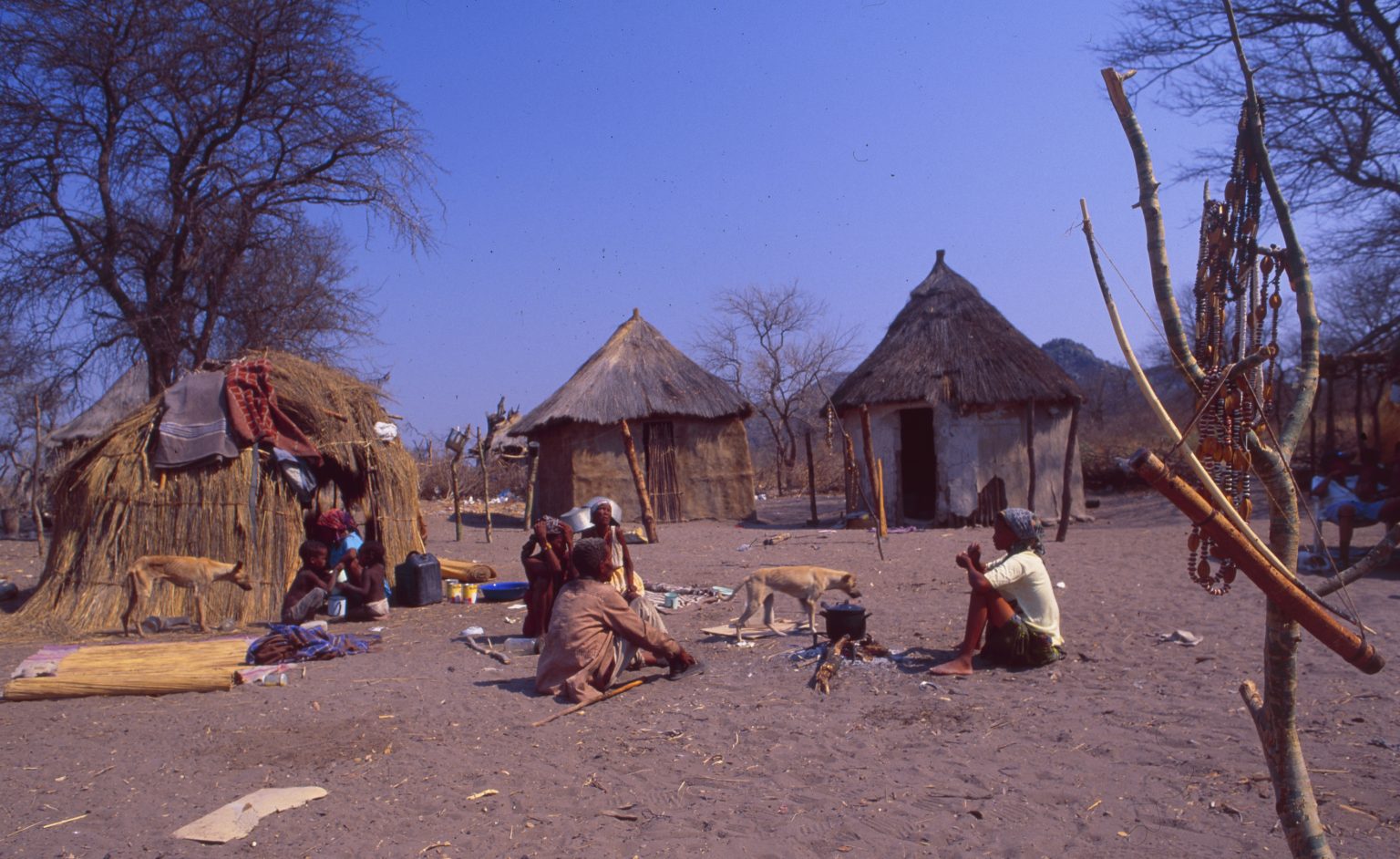
The Kalahari region of Botswana is home to communities with distinct traditions shaped by their histories, livelihoods, and relationships with the land. Botswana desert culture includes San cultural practices, Tswana community customs, and the heritage of other groups living across the country’s dry regions. Exploring Kalahari cultural traditions offers insight into family life, oral history, hospitality, ceremonies, and the continuing role of traditional life in Botswana today.
- The History of Desert Life
- The San: Cultural Knowledge and Community Traditions
- The Tswana: Family, Community, and Public Life
- Family and Social Relationships
- The Kgotla: A Traditional Meeting Place
- Marriage and Family Celebrations
- Herero Heritage in Botswana
- Shared Values and Cultural Differences
- Hospitality and Sharing Food
- Important Life Events and Ceremonies
- Work, Craft, and Traditional Skills
- Hunting, Gathering, and Environmental Knowledge
- Weaving, Leatherwork, and Handicrafts
- Beadwork and Personal Decoration
- Festivals and Community Celebrations
- Religion and Spiritual Life
- Values, Responsibilities, and Social Life
- Traditional Culture and Modern Life in Botswana
- Preserving Traditions in a Changing Society
- Museums and Community Organizations
- Younger Generations and Cultural Expression
- Understanding Kalahari Culture Today
The History of Desert Life
Living with the Natural Environment
Life in Botswana’s dry regions depends on knowledge of the local environment. Water availability, seasonal rainfall, vegetation, and wildlife influence how people travel, work, raise livestock, and obtain food.
San communities have developed detailed knowledge of local plants, animals, and seasonal conditions. Their traditions vary among different San groups, so beliefs and practices should not be treated as identical throughout the Kalahari.
For communities across Botswana, knowledge of the land has practical value. It can help people identify useful plants, understand animal behaviour, and make decisions about movement and resources.
Community and Cooperation
Cooperation plays an important role in many rural communities. Families and neighbours may share resources, help with work, and support one another during difficult periods.
Social organization differs between groups. Some San communities have traditionally relied on relatively small, flexible social networks, while Tswana communities have their own established systems of family relations, leadership, and public decision-making.
These differences are important when discussing community life in Botswana. There is no single social structure shared by every group living in the country’s dry regions.
Ancestral Traditions and Oral History
Oral traditions help preserve family histories, community knowledge, and cultural values. Stories, songs, and ceremonies may communicate ideas about relationships, responsibilities, and the past.
Beliefs concerning ancestors and spiritual life differ among San, Tswana, Herero, and other communities. Some traditions include ceremonies that acknowledge ancestors, while others reflect different religious and cultural influences.
Rather than assuming that all communities share the same beliefs, it is more accurate to understand these practices within their specific cultural settings.
The San: Cultural Knowledge and Community Traditions
The San are Indigenous peoples of southern Africa who belong to different communities with distinct languages and traditions. In Botswana, San communities have long-standing connections to parts of the Kalahari and surrounding areas.
Their cultural heritage includes detailed environmental knowledge, oral storytelling, music, dance, and different ways of organizing community life. These practices have changed over time and continue to vary between communities.
Community Organization
Traditional San social organization has often placed importance on cooperation, personal relationships, and shared knowledge. In some communities, decisions are discussed collectively rather than being made through a rigid hierarchy.
The size and organization of San settlements vary according to location and historical circumstances. There is no single village size or leadership model that applies to every San community.
Knowledge of plants, animals, weather, and local routes can be highly valued. Elders and experienced community members may pass this knowledge to younger generations through conversation, practical activities, and storytelling.
Healing Ceremonies and Trance Dance
Some San communities practise ceremonies in which singing and dancing are associated with healing and spiritual life. These may involve repeated rhythms, group singing, clapping, and sustained dancing.
The details and meanings of San healing dances differ between communities. They should not be presented as a universal practice followed by all San people.
Music can play an important role in these ceremonies, bringing participants together and supporting the ritual. For communities that maintain these traditions, such events form part of a wider system of cultural knowledge and belief.
Storytelling and Oral Traditions
Storytelling is an important way of sharing knowledge in many San communities. Stories may feature people, animals, the natural environment, and events from the past.
Oral traditions can communicate practical information as well as cultural values. Stories about animals, for example, may convey observations about behaviour, while other narratives explore relationships and community expectations.
Although written records and modern media are increasingly used, oral transmission remains significant in many communities. The specific stories and methods of teaching vary by language and group.
The Tswana: Family, Community, and Public Life
The Tswana are a major cultural and linguistic group in Botswana. Their traditions include established forms of family organization, community leadership, ceremonies, and public discussion.
Tswana culture should not be described simply as a product of desert life. It has developed across different parts of Botswana and reflects a broad history of settlement, social organization, and cultural change.
Family and Social Relationships
Family relationships are important in Tswana society. Wider family networks can provide practical support, maintain social connections, and help organize major life events.
Hospitality is valued in many Botswana communities, although customs vary between households and circumstances. Welcoming visitors may involve offering refreshments, sharing a meal, or making time for conversation.
These practices are part of a wider social tradition rather than a rule that every household follows in exactly the same way.
The Kgotla: A Traditional Meeting Place
The kgotla is an important traditional public meeting place in many Tswana communities. It can be used for community discussions, announcements, consultations, and other matters of local importance.
The kgotla has a significant role in Botswana’s traditional systems of public participation and leadership. Its procedures and authority can differ according to the community and the issue being discussed.
It is best understood as a particular institution within Tswana public life, not as proof that every community in the Kalahari follows the same political system.
Marriage and Family Celebrations
Marriage can involve families from both sides and may include discussions, exchanges, celebrations, singing, and dancing. The customs surrounding marriage vary between families and have changed over time.
In many Tswana contexts, bogadi, often involving cattle or other agreed contributions, has traditionally formed part of marriage arrangements. Its meaning and form depend on family expectations and contemporary circumstances.
Wedding celebrations can bring relatives and friends together through food, music, and shared activities. Specific songs, dances, and ceremonial practices should be understood within the families and communities that use them.
Herero Heritage in Botswana
Herero communities have a history across parts of southern Africa, including Botswana and Namibia. Their cultural traditions include distinctive forms of dress, livestock-related customs, oral history, and ceremonial practices.
The Herero should not be described simply as a nomadic group that crossed the Kalahari. Their history is more complex and includes migration, settlement, and relationships with other communities.
Clothing and Cultural Identity
Herero women’s dress is widely recognized for its long skirts, layered fabric, and Victorian-inspired forms. The distinctive head covering known as the otjikaiva is shaped to resemble cattle horns, reflecting the cultural importance of cattle in Herero life.
Clothing can express cultural identity and continuity, particularly during ceremonies and public events. Its design and use have historical roots and have also evolved over time.
Cattle and Family Traditions
Cattle have long held economic and cultural importance in many Herero communities. They can be associated with family wealth, social relationships, and ceremonial life.
The meaning of cattle varies according to context, and not every family follows identical customs. Herero traditions should therefore be discussed on their own terms rather than grouped together with San or Tswana practices.
Shared Values and Cultural Differences
Communities in Botswana may share some broad values, such as maintaining family relationships, supporting neighbours, and respecting older generations. However, shared values do not mean that all groups have the same beliefs, customs, or social structures.
Important areas of cultural life include:
- Relationships with the environment: Local knowledge can help people manage resources and respond to seasonal conditions.
- Community cooperation: Families and neighbours may share work and provide support.
- Oral history: Stories and spoken accounts can pass knowledge between generations.
- Ceremonies and celebrations: Music, food, dance, and family gatherings mark different occasions.
- Cultural identity: Language, dress, customs, and shared histories help communities maintain distinct identities.
These themes appear in different forms across Botswana. Their meanings depend on the specific community and its history.
Hospitality and Sharing Food
Hospitality is an important social value in many communities across Botswana. Offering food or refreshments to visitors can be a way to welcome guests and maintain relationships.
In rural areas, sharing resources may also have practical importance. Travel between settlements can involve long distances, and access to supplies varies by location. However, hospitality customs are not identical across all communities or households.
Welcoming Guests
A visit may involve conversation, refreshments, or a shared meal, depending on the household and circumstances. Guests should follow the host’s lead and respect local expectations.
Visitors interested in Botswana cultural experiences should remember that everyday family life is not a performance for tourists. Community-led visits and cultural programmes offer better opportunities to learn when they are organized with the consent and participation of local people.
Sharing Meals
Food traditions differ across Botswana’s communities and regions. Sorghum and maize are important ingredients in many local diets, while other foods depend on availability, household preferences, and cultural practice.
Meals may be shared during family gatherings, celebrations, and visits. It would be inaccurate to assume that all communities eat from one communal bowl or follow one fixed set of rules about serving food.
Important Life Events and Ceremonies
Life events such as birth, coming of age, marriage, and death may be marked by family gatherings or ceremonies. The customs involved vary across San, Tswana, Herero, and other communities.
Birth and Naming
Naming practices differ between families and cultural groups. Names may reflect family relationships, personal circumstances, language, or other considerations.
Some families hold gatherings to welcome a child, while the timing and form of these events depend on local customs and individual circumstances. There is no single naming ceremony followed throughout Botswana.
Growing Up and Learning Responsibilities
Young people learn practical and social skills through family life, education, observation, and participation in community activities. The responsibilities expected of them depend on the household, cultural setting, and changing social conditions.
Traditional knowledge may be passed on through activities such as food preparation, craftwork, livestock care, environmental observation, and storytelling. Formal schooling and modern employment also shape how younger generations learn and prepare for adulthood.
Marriage Celebrations
Marriage celebrations may bring together relatives and friends for food, music, dancing, and speeches. The form of the event depends on family preferences, cultural traditions, and religious influences.
Although celebrations can share some features, there is no single wedding format common to every community in Botswana.
Death and Remembrance
Funeral customs and beliefs about death vary across Botswana. Ceremonies may involve family gatherings, prayers, songs, speeches, and other forms of remembrance.
Some practices reflect Christian traditions, while others draw on different cultural beliefs or combine influences. Specific beliefs about ancestors, the soul, and the afterlife should not be attributed to all San or Tswana people without clear evidence.
Work, Craft, and Traditional Skills
Traditional skills have developed in response to local materials, livelihoods, and cultural needs. Their use varies by community and has changed with access to modern tools, markets, education, and employment.
Hunting, Gathering, and Environmental Knowledge
Some San communities have traditions of hunting and gathering, supported by detailed knowledge of plants, animals, and seasonal conditions. Today, livelihoods vary widely, and many San people also engage in wage employment, small-scale farming, education, tourism, and other activities.
Traditional ecological knowledge can include identifying edible plants, recognizing animal tracks, and understanding the availability of resources. Practices differ between communities and should not be treated as a single unchanged way of life.
Weaving, Leatherwork, and Handicrafts
Craft traditions across Botswana include forms of basketry, leatherwork, beadwork, and other handmade objects. Materials and techniques vary according to local resources and cultural practice.
Some San craft traditions include the use of natural fibres, leather, and ostrich-shell beads. Tswana and other communities have their own craft histories, including basketry and pottery in particular regions.
Craftwork can serve practical, cultural, and economic purposes. Items may be made for household use, cultural occasions, sale to visitors, or wider markets. Patterns do not necessarily have one fixed meaning, so claims about symbols should be tied to documented local traditions.
Beadwork and Personal Decoration
Beads and other forms of personal decoration can be used in jewellery, clothing, and ceremonial dress. Materials, designs, and meanings vary among communities.
It would be misleading to claim that tattoos, scarification, or particular colours always indicate marriage, bravery, or another life event across Botswana. Such interpretations require evidence from the specific cultural group concerned.
Festivals and Community Celebrations
Public cultural events can provide opportunities to learn about music, dance, crafts, and oral traditions. Their programmes and participating communities may vary from year to year.
The Kuru Dance Festival
The Kuru Dance Festival is associated with San communities in Botswana and is held in the D’Kar area. It has provided a platform for cultural performances, including traditional music and dance.
The festival can help performers share traditions and bring attention to San cultural expression. It is important to check current event information before planning a visit, as dates and arrangements may change.
The festival represents participating communities and performers, but no single event can capture the full diversity of San cultures.
Rain-Related Ceremonies and Seasonal Events
Rain and seasonal changes are important in dry regions, where rainfall influences vegetation, water availability, and livestock conditions. Some communities have ceremonies or customs connected with rain, farming, or seasonal transitions.
The timing, purpose, and form of these practices vary. Specific songs, foods, or rituals should not be presented as universal Botswana traditions unless they are documented across the communities being discussed.
Weddings and Shared Celebrations
Music, dancing, and food can form part of weddings and other social gatherings. Performances may include songs in local languages and styles associated with particular communities.
Specific dances, including named forms such as phathisi, should be explained only when their cultural context and use are established. They should not be assigned to all groups in Botswana.
Religion and Spiritual Life
Religious life in Botswana is diverse. Christianity is widespread, while traditional beliefs and practices continue to influence some families and communities in different ways.
Beliefs and Cultural Practices
San, Tswana, and Herero communities do not share one uniform spiritual system. Beliefs may involve Christian teachings, ancestors, local spiritual traditions, or combinations of influences, depending on the community and individual.
For this reason, it is inaccurate to describe all desert communities as following one mixture of animism and ancestor worship. Their religious practices have distinct histories and continue to change.
Sacred Places and Natural Features
Certain trees, hills, caves, or other places may have cultural or spiritual significance to particular communities. Such significance depends on local traditions rather than a single national belief system.
The baobab is a recognizable feature of parts of Botswana and has practical and cultural importance in some settings. However, it should not automatically be described as a sacred tree for every community.
Traditional Healing
Traditional healing practices vary across Botswana. Some practitioners use medicinal plants, consultation, ritual, or other methods within particular systems of knowledge.
The term dingaka is associated with traditional healers in Tswana contexts, but the role and methods of healers differ. Claims about specific treatments or beliefs should be linked to the relevant tradition rather than generalized across all communities.
Traditional healing should also be distinguished from modern medical care. Descriptions of cultural practice do not establish that a treatment is medically effective.
Values, Responsibilities, and Social Life
Ideas about generosity, responsibility, honesty, and cooperation appear in many cultural settings, although the ways they are expressed differ between individuals and communities.
Honesty and Cooperation
Sharing information, helping relatives, and cooperating with neighbours can strengthen social relationships. These practices are influenced by family expectations, community needs, and personal circumstances.
It is more accurate to describe them as important values in particular contexts than as fixed rules followed by every person living in Botswana’s dry regions.
Respect for Older Generations
Older people may play important roles in family life, oral history, and cultural education. They can pass on language, stories, practical knowledge, and customs to younger generations.
Their responsibilities and influence vary between households and communities. Modern education, employment, and changes in family structure also affect how knowledge is shared.
Gender Roles and Change
Traditional divisions of work have varied across communities and historical periods. In some settings, women have been responsible for gathering, food preparation, craftwork, and childcare, while men have undertaken particular hunting or livestock tasks.
These descriptions should not be treated as universal or unchanging. Women and men both contribute to cultural life, and responsibilities today are shaped by education, employment, household circumstances, and personal choices.
Traditional Culture and Modern Life in Botswana
Life in Botswana has changed through urbanization, education, technology, tourism, and changing employment opportunities. These developments affect how people maintain and pass on cultural traditions.
Preserving Traditions in a Changing Society
Families may continue to practise customs, use local languages, attend ceremonies, and share oral histories while also participating in modern education and employment.
Cultural continuity does not require every tradition to remain unchanged. Communities may choose which practices to maintain, adapt, document, or share with wider audiences.
Museums and Community Organizations
Museums, cultural organizations, and community-led initiatives can help document oral histories, support cultural education, and create opportunities for public learning. The Botswana National Museum and the Kuru Development Trust are examples of organizations associated with cultural heritage and community initiatives.
The nature and availability of their programmes can change, so visitors and researchers should consult current information before making plans or attributing a specific project to an organization.
Younger Generations and Cultural Expression
Younger people may engage with cultural heritage through music, film, visual art, fashion, education, and digital media. Some use contemporary formats to share traditional knowledge, while others develop new forms of expression connected to their own experiences.
These changes show that Botswana’s cultural heritage is not limited to the past. Its future depends in part on how communities choose to maintain and reinterpret their traditions.
Understanding Kalahari Culture Today
The cultural life of Botswana’s dry regions cannot be reduced to a single set of customs. San, Tswana, Herero, and other communities have different histories, social systems, languages, and traditions. Their relationships with the Kalahari and the wider environment are equally varied.
Learning about San traditions in Botswana, Tswana community institutions, and Herero cultural heritage requires attention to these differences. Oral history, family relationships, music, ceremonies, craftwork, and contemporary cultural projects all offer ways to understand the country’s diverse communities.
For visitors, the most respectful approach is to learn from reliable sources and community-led initiatives, ask permission before photographing or recording people, and avoid treating cultural practices as performances intended solely for tourists.
Botswana’s cultural heritage continues through the people who practise, teach, adapt, and share it. Understanding that diversity offers a more accurate picture of life in the Kalahari than any single description of desert customs.