
The Namib Desert stretches along Namibia’s Atlantic coast and is one of the world’s oldest desert environments, with an estimated age of at least 55 million years. Its landscape includes towering red dunes, gravel plains, rocky valleys, and a foggy coastline.
- What the Namibian Desert Looks Like
- Animals That Live in the Namibian Desert
- The Desert Plants of Namibia
- Best Places to See Nature in Namibia’s Desert
- Getting Up Close to Desert Animals
- Early Morning Hikes on the Dunes
- Desert Elephants in Damaraland
- Exploring the Skeleton Coast
- Stargazing in the Namib
- What the Weather Is Like and When to Go
- Staying Safe in Namibia’s Desert
- A Desert of Dunes, Wildlife, and Coastal Fog
Despite its extreme aridity, the Namibian desert supports a surprising range of wildlife and plants. Oryx, desert elephants, lions, reptiles, insects, and the ancient Welwitschia plant have all adapted to its harsh conditions, making Namib Desert wildlife one of the main reasons to explore this remarkable region.
What the Namibian Desert Looks Like
Namibia’s desert contains several distinct landscapes, from the red dunes of the interior to the rugged Atlantic coastline.
In the central Namib, Sossusvlei is surrounded by some of the region’s highest dunes. The red sand contrasts sharply with the pale salt and clay surface of the pan, while wind gradually reshapes the dunes.
Nearby, Deadvlei is a dry clay pan known for its dark, dead camelthorn trees. The trees died centuries ago after changes in water availability, but the extremely dry conditions have slowed their decomposition.
Farther west, the Namib reaches the Skeleton Coast, where cold Atlantic air and ocean fog influence the coastal desert. The fog provides an important source of moisture for some plants and animals.
North of the central Namib, the landscape becomes increasingly rugged, with gravel plains, mountains, dry river valleys, and rocky terrain. Around the Kunene region, desert-adapted elephants move through riverbeds where seasonal vegetation provides food and water.
The Namib’s main landscape types include:
- Red sand dunes
- Gravel plains
- Rocky mountains and valleys
- Dry riverbeds
- Salt and clay pans
- Atlantic coastal desert
- Fog-influenced coastal areas
Animals That Live in the Namibian Desert
Namibia’s desert supports wildlife that has developed specialized ways of coping with heat, limited water, and scarce vegetation.
Desert-Adapted Mammals
The oryx, or gemsbok, is one of the Namib’s most recognizable animals. Its long horns and distinctive black-and-white facial markings make it easy to identify. It can survive for long periods with little direct access to water by obtaining moisture from food and using physiological adaptations that help reduce water loss.
Other mammals found in Namibia’s dry regions include:
- Springboks
- Black-backed jackals
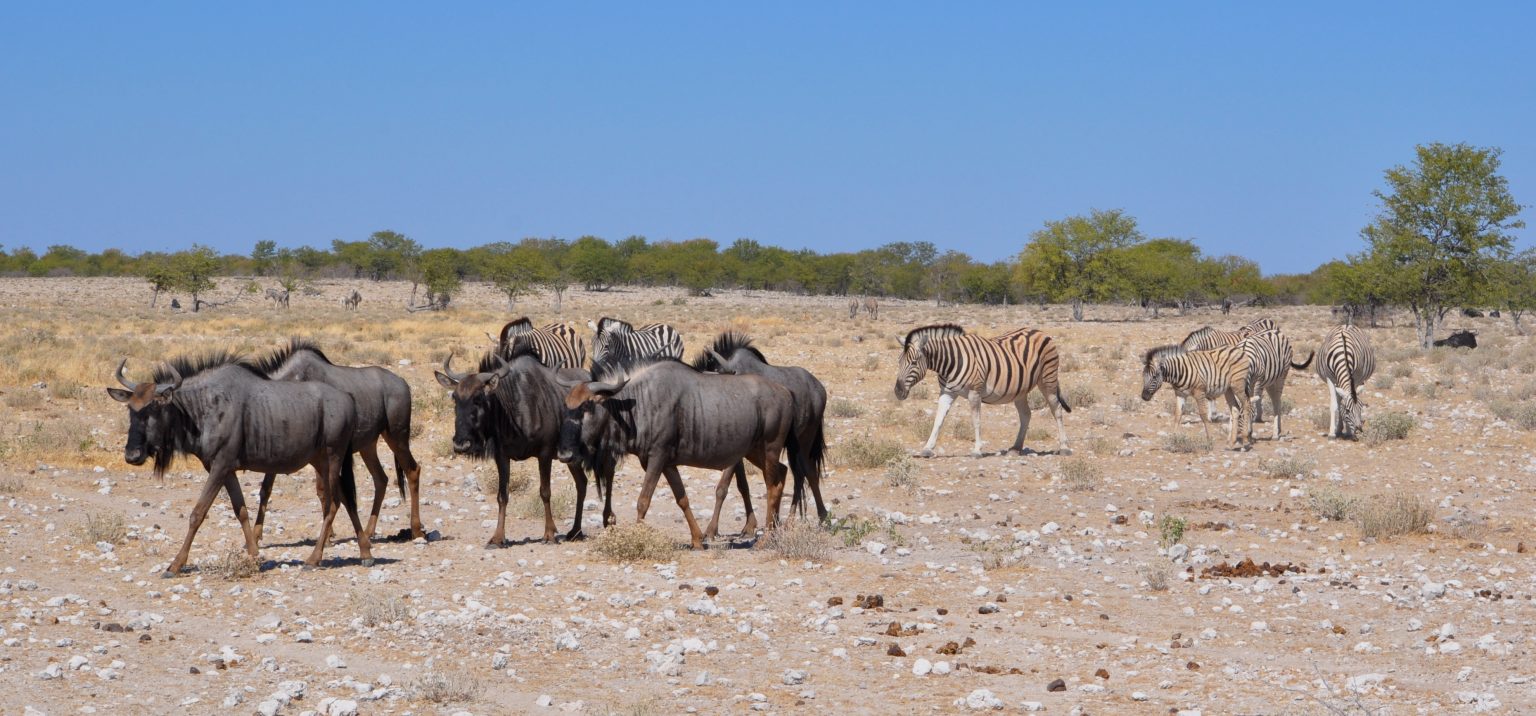
- Hartmann’s mountain zebras
- Bat-eared foxes
- Brown hyenas
- Aardwolves
- Porcupines
The desert-adapted elephants of Damaraland and the Kunene region are particularly notable. They travel through dry riverbeds and rugged terrain in search of food and water, covering large distances when conditions are difficult.
Desert-adapted lions are also found in parts of northwestern Namibia. These lions range across large territories and depend heavily on the availability of prey and water in an extremely dry environment.
Birds of the Namib Desert
The Namib supports a wide variety of bird species despite its limited rainfall. Open plains, dunes, river valleys, and coastal wetlands provide different habitats for resident and migratory birds.
Species found in the region include:
- Rüppell’s korhaan
- Larks
- Pale chanting goshawks
- Lanner falcons
- Black eagles
- Ostriches
The coastal areas around Walvis Bay and other wetlands can attract flamingos, pelicans, herons, and other waterbirds. Seasonal water and coastal conditions make these areas particularly important for birdlife.
Reptiles and Desert Insects
The Namib is home to a range of reptiles and insects adapted to its sandy and rocky environments.
Among the species visitors may encounter are:
- Namib sand geckos
- Chameleons
- Skinks
- Snakes
- Scorpions
- Spiders
- Beetles
The fog-basking beetle is one of the Namib’s best-known insects. It can collect moisture from fog using its body surface, an adaptation that allows it to survive in one of the driest environments on Earth.
The Desert Plants of Namibia
Plants of the Namib have developed highly specialized adaptations to limited rainfall, high temperatures, and strong winds.
The Welwitschia mirabilis is perhaps the most famous plant in the region. It is native to the Namib and can live for many centuries. Some exceptionally old specimens are estimated to be more than a thousand years old.
Other vegetation found across different parts of the desert includes:
- Camelthorn trees
- Acacia species
- Saltbush
- Drought-resistant grasses
- Seasonal wildflowers
Near the Atlantic coast, fog provides an important source of moisture for certain plants and organisms. In areas that receive occasional rainfall, grasses and wildflowers can appear for short periods, adding color to otherwise dry landscapes.
Best Places to See Nature in Namibia’s Desert
Namibia offers several excellent locations for experiencing desert landscapes and wildlife.
Sossusvlei and Deadvlei are among the most recognizable destinations in the Namib. Their combination of red dunes, pale pans, and ancient camelthorn trees makes them particularly popular with photographers and hikers.
Damaraland is one of the best areas for searching for desert-adapted elephants. Depending on the season and location, visitors may also encounter other wildlife, including lions.
The Skeleton Coast combines desert scenery with Atlantic wildlife and coastal fog. Seals, seabirds, shipwrecks, dunes, and rocky shoreline create a very different environment from the inland Namib.
Much of the central Namib is protected within Namib-Naukluft National Park, which covers extensive areas of dunes, gravel plains, mountains, and desert habitats.
In the northwestern region around Kaokoland, visitors can explore remote valleys and rugged landscapes while learning about the traditional way of life of Himba communities.
Getting Up Close to Desert Animals
Early Morning Hikes on the Dunes
Climbing Big Daddy or Dune 45 near Sossusvlei can be a rewarding experience, particularly in the early morning when temperatures are lower and the dunes receive softer light.
Starting early is also important because temperatures can rise quickly later in the day.
Desert Elephants in Damaraland
Guided excursions through the dry riverbeds of Damaraland offer opportunities to search for desert-adapted elephants. Experienced guides can track signs of elephant activity and explain how these animals use the river valleys.
Wild elephants should always be observed from a safe distance and according to local wildlife guidelines.
Exploring the Skeleton Coast
The Skeleton Coast offers a combination of dunes, rocky coastline, fog, marine wildlife, and historic shipwrecks. Guided tours are recommended in remote sections because access can be difficult and conditions can change quickly.
Stargazing in the Namib
The Namib’s remote location and low population density provide excellent conditions for stargazing in many areas. On clear nights, visitors can see the Milky Way and a large number of stars with relatively little artificial light.
What the Weather Is Like and When to Go
The Namib is extremely dry throughout the year, but temperatures vary considerably between day and night and between inland and coastal areas.
May to October is generally a popular period for visiting because temperatures are more comfortable and wildlife viewing conditions are often favorable.
During the warmer months:
- Daytime temperatures can become very high in inland areas.
- Summer rainfall is possible in some parts of the desert.
- Vegetation can respond quickly to rainfall.
- Coastal areas remain strongly influenced by Atlantic fog.
Winter nights can become cold, especially inland, so visitors should bring warm layers even when daytime temperatures are pleasant.
Staying Safe in Namibia’s Desert
The Namib covers enormous and remote areas, so preparation is essential.
- Carry enough drinking water for the planned journey.
- Use sunscreen, a hat, and protective clothing.
- Follow marked routes and park regulations.
- Avoid approaching or feeding wild animals.
- Use an experienced guide when visiting remote areas.
- Carry suitable navigation and emergency equipment on self-drive trips.
- Avoid climbing or hiking in extreme midday heat.
- Check road and weather conditions before entering remote areas.
- Take extra care along the Skeleton Coast, where fog can reduce visibility.
Remote desert travel should never be treated like an ordinary road trip. Distances between services can be considerable, and some areas have limited mobile coverage.
A Desert of Dunes, Wildlife, and Coastal Fog
The Namib Desert brings together several environments within one vast region: red dunes around Sossusvlei, ancient vegetation, gravel plains, rugged mountains, dry river valleys, and the foggy Atlantic coast.
Its wildlife reflects the same range of conditions. Oryx, desert elephants, lions, springboks, reptiles, insects, and birds have adapted to an environment where water is limited and temperatures can change sharply.
For travelers, the Namib offers more than its famous dunes. A visit can include sunrise on the sands of Sossusvlei, wildlife tracking in Damaraland, exploration along the Skeleton Coast, or stargazing far from major settlements. Together, these experiences show why Namibia’s desert is one of Africa’s most distinctive natural destinations.