
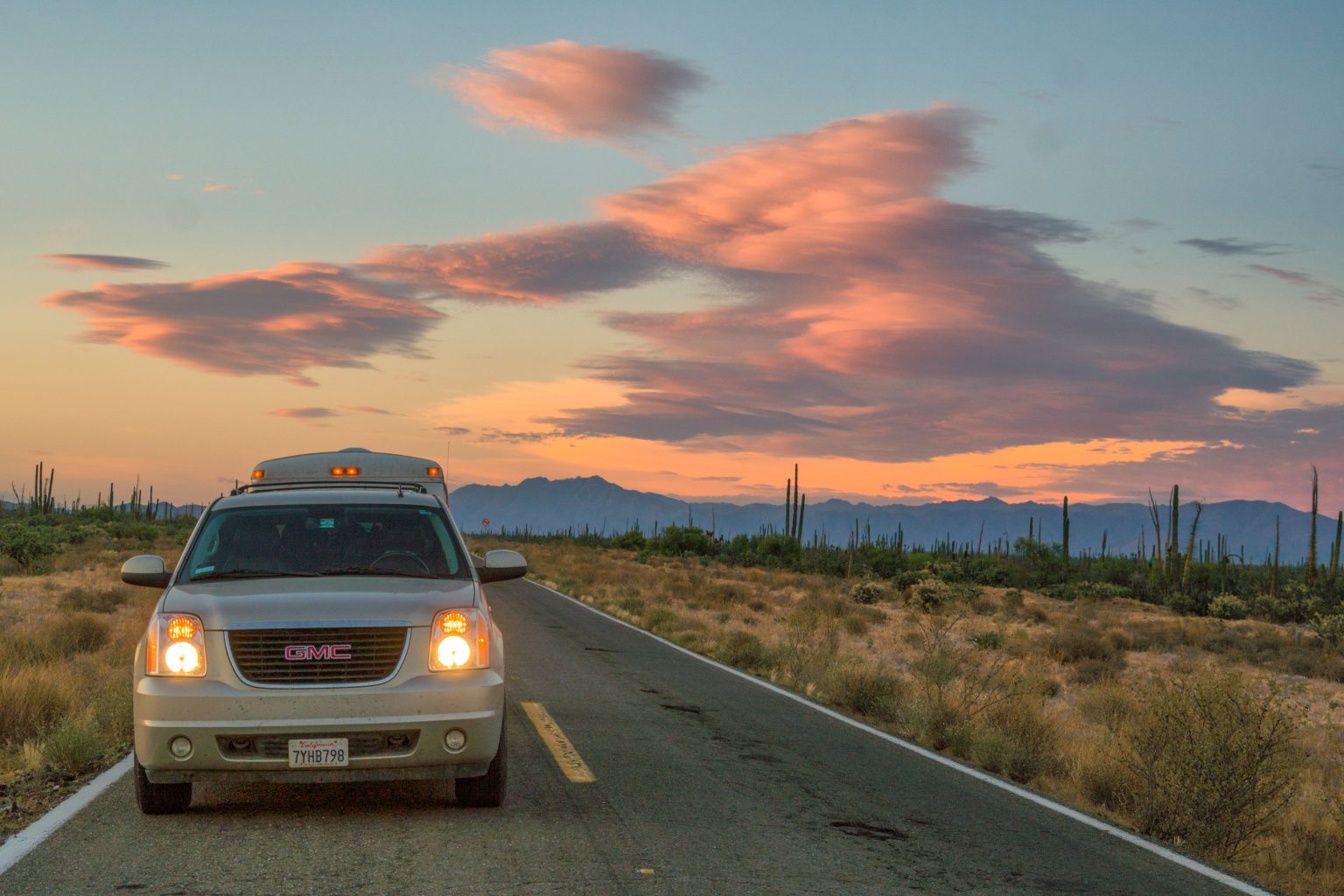
Mexico offers a remarkable variety of terrain for off-road travelers, from the rocky tracks of Baja California to the volcanic formations of Sonora and the shifting sands of Chihuahua. A 4×4 desert adventure in Mexico can combine remote mountain roads, coastal landscapes and expansive dunes, provided you choose routes suited to your vehicle and experience.
- Why Mexico Is a Standout Destination for 4×4 Travel
- The Best 4×4 Destinations in Mexico
- 1. Baja California: Desert Trails and Coastal Routes
- 2. Gran Desierto de Altar and El Pinacate, Sonora
- 3. Samalayuca Dunes, Chihuahua
- 4. Valle de los Cirios, Baja California
- 5. Dunas de Bilbao and Desert Trails in Coahuila
- What Off-Road Driving in Mexico Is Really Like
- Essential Safety and Preparation
- The Best Time for a Mexico Desert 4×4 Trip
- What to Pack for a Mexico 4×4 Expedition
- Responsible Off-Road Driving
- Sample Three-Day Baja California Road Trip
- Why Mexico’s Desert Routes Are Worth Exploring
The country’s off-road culture is closely associated with the Baja California Peninsula, home to the famous Baja 1000 race. Beyond the racing scene, destinations such as the Gran Desierto de Altar, Samalayuca and Valle de los Cirios offer very different environments to explore. This guide covers notable routes, preparation, seasonal conditions and responsible ways to travel through Mexico’s deserts.
Why Mexico Is a Standout Destination for 4×4 Travel
Mexico’s desert regions are not one continuous landscape. They include sandy plains, rocky mountains, volcanic fields, dry riverbeds and coastal tracks, with different access rules and driving conditions in each area.
What makes Mexico off-road driving appealing includes:
- Diverse terrain: Explore sand dunes, rocky trails, volcanic formations and desert valleys on different trips.
- A strong off-road tradition: Baja California hosts internationally known races, including the Baja 1000 and Baja 500.
- Remote landscapes: Some routes pass through sparsely populated areas where fuel, accommodation and vehicle assistance are limited.
- Wildlife and natural features: Desert plants, geological formations and native wildlife add interest beyond the driving itself.
- Options for different experience levels: Scenic public roads and established gravel routes can suit less experienced travelers, while remote sand tracks demand advanced skills and proper recovery equipment.
A successful trip depends on matching the route to your abilities. Not every scenic desert road requires a 4×4, and not every sandy landscape is suitable for independent dune driving.
The Best 4×4 Destinations in Mexico
1. Baja California: Desert Trails and Coastal Routes
The Baja California Peninsula is one of Mexico’s best-known destinations for off-road travel. Its long coastline, rugged interior and isolated settlements offer opportunities for road trips ranging from relatively accessible scenic drives to demanding expeditions.
Highlights include:
- San Felipe: A coastal base for exploring nearby desert landscapes and arranging suitable off-road excursions.
- Gonzaga Bay: Known for its remote coastline and access to rugged tracks in the surrounding region. Check current conditions before leaving established roads.
- Bahía de los Ángeles: A scenic Gulf of California destination surrounded by arid mountains and desert terrain.
- Cataviña: A distinctive area of granite boulders, desert vegetation and towering cirio trees along the peninsula’s highway corridor.
- The Baja 1000 legacy: Learn about the region’s off-road racing culture, while remembering that race courses change and are not automatically public recreational routes.
Some travelers explore the peninsula in stages, using paved highways and established gravel roads between towns. Others arrange guided excursions on more demanding terrain.
Do not assume that every section of a famous race route is open to public driving. Confirm access, land permissions and road conditions before attempting a particular track.
Best for: Overlanders, experienced off-road drivers, photographers and travelers who enjoy combining desert landscapes with coastal scenery.
2. Gran Desierto de Altar and El Pinacate, Sonora
The Gran Desierto de Altar contains extensive dune fields, while the nearby El Pinacate volcanic landscape features lava flows, volcanic cones and large craters. Together, they form one of northern Mexico’s most striking desert environments.
The El Pinacate and Gran Desierto de Altar Biosphere Reserve is a protected area and a UNESCO World Heritage Site. Visitors must follow its designated access procedures and conservation rules.
Highlights include:
- El Elegante Crater: A major volcanic feature accessible through the reserve’s designated visitor route.
- The Altar dunes: Large sand formations that illustrate the scale and variety of the Sonoran Desert.
- Volcanic landscapes: Dark lava fields and crater formations that contrast with the surrounding sand.
- Desert wildlife: The reserve supports species such as desert bighorn sheep, Sonoran pronghorn and numerous desert birds, although sightings are never guaranteed.
Before visiting, register at the designated access point, pay any required entrance fee and follow instructions from reserve staff. Access to the dunes may require specific authorization, and driving outside designated routes is prohibited. Camping is permitted only in designated areas under the reserve’s rules. <Cite refs={[“turn306137search0″,”turn306137search1″,”turn306137search8”]}/>
The reserve’s internal vehicle route is not an unrestricted dune-driving playground. Check current regulations before planning a vehicle-based visit.
Best for: Geology enthusiasts, landscape photographers and travelers interested in protected desert environments.
3. Samalayuca Dunes, Chihuahua
Located south of Ciudad Juárez, the Samalayuca Dunes are known for their broad fields of pale sand and rolling dune formations. The area offers a distinctive desert experience within Chihuahua’s wider arid landscape.
Possible activities, subject to local access rules and conditions, include:
- Sandboarding on suitable slopes.
- Guided dune excursions with experienced local operators.
- Landscape photography during the softer light of morning or late afternoon.
- Exploring the surrounding desert scenery from established access points.
Sand can conceal soft patches and sudden changes in slope, so dune driving requires appropriate tires, suitable equipment and experience in sand recovery. Visitors should confirm which areas are open to motor vehicles and whether permits or organized access are required.
Camping should be arranged only where it is permitted, rather than assuming that any open dune area is available for overnight stays.
Best for: Experienced sand drivers, adventure travelers and visitors interested in combining off-road excursions with sandboarding.
4. Valle de los Cirios, Baja California
The Valle de los Cirios is a protected natural area in Baja California known for its striking cirio plants, rocky terrain and vast arid landscapes. The unusual silhouettes of these plants, together with large boulders and open desert valleys, make the region especially appealing to photographers.
The principal highway corridor provides access to parts of the area, while some side tracks are rough, remote or subject to access restrictions.
Highlights include:
- Cirio forests: Distinctive desert plants that give the landscape its name.
- Cataviña’s rock formations: Granite boulders and rugged terrain around the highway corridor.
- Desert vegetation: A mix of plants adapted to the region’s dry conditions.
- Remote scenic drives: Opportunities to explore the peninsula at a slower pace, with suitable planning.
Stay on established routes, avoid damaging vegetation and check whether a planned detour crosses protected or privately managed land. Fuel, supplies and vehicle assistance may be limited in remote sections, so do not leave the main corridor without a clear plan.
Best for: Nature photographers, overlanders and travelers who prefer remote scenery to technical dune driving.
5. Dunas de Bilbao and Desert Trails in Coahuila
The Dunas de Bilbao, near Viesca in Coahuila, offer a different desert experience from the volcanic terrain of Sonora or the coastal landscapes of Baja California. The sand formations provide opportunities for photography and, where locally permitted, guided recreational activities.
Before arranging a vehicle excursion, confirm the current access rules and whether motorized driving is allowed in the specific area you intend to visit.
For a responsible visit:
- Use authorized access points and established routes.
- Check local rules for vehicles, camping and recreational activities.
- Avoid fragile vegetation and wildlife habitat.
- Arrange suitable local guidance if the route crosses unfamiliar terrain.
Coahuila’s desert landscapes can also be explored through scenic drives and visits to nearby communities, without necessarily taking a vehicle onto the dunes.
Best for: Travelers seeking a less internationally familiar desert destination and visitors interested in regional landscapes.
What Off-Road Driving in Mexico Is Really Like
Desert travel is not simply a matter of finding a sandy track and accelerating. Conditions can change within a short distance, and the driving technique needed for loose sand differs from what works on gravel, rock or hard-packed dirt.
Depending on your route, you may encounter:
- Loose sand that can trap a vehicle if tire pressure and momentum are poorly managed.
- Rocky tracks that demand careful wheel placement and adequate ground clearance.
- Dry washes that become hazardous during rainfall.
- Remote stretches with little or no mobile coverage.
- Long distances between fuel stations, shops and mechanical assistance.
Plan time for stops and delays rather than setting a schedule based on highway driving speeds. Wildlife sightings and encounters with local communities may enrich the journey, but they should never be treated as guaranteed attractions.
Essential Safety and Preparation
Prepare Your Vehicle
A well-maintained vehicle is the foundation of a safe desert expedition. Check the route requirements before deciding whether a high-clearance vehicle, four-wheel drive or low-range gearing is necessary.
Useful equipment includes:
- Recovery gear: Suitable recovery straps, rated recovery points, traction boards and a shovel. Learn safe recovery procedures before traveling.
- Tire equipment: A compressor, pressure gauge, puncture-repair kit and a suitable spare tire.
- Navigation: Downloaded offline maps, a GPS device and a paper map or compass as backup.
- Communication: A satellite communicator or satellite phone for remote areas without reliable mobile service.
- Vehicle supplies: Basic tools, appropriate fluids and spare parts suited to your vehicle and route.
- Emergency provisions: A first-aid kit, headlamp, sun protection, warm clothing and extra drinking water.
Carry additional fuel when the route requires it, but use approved containers and secure them safely. Calculate fuel needs using realistic consumption figures for your loaded vehicle and the terrain, not normal highway mileage.
Travel With a Suitable Plan
For isolated tracks or demanding dune terrain, traveling with an experienced guide or a second suitable vehicle can reduce risk. If you travel independently, share your itinerary and expected return time with someone reliable.
Before departure:
- Check weather forecasts and road conditions.
- Confirm fuel availability and opening hours at planned stops.
- Verify land access and protected-area regulations.
- Identify safe turnaround points and alternative routes.
- Avoid entering remote terrain late in the day without sufficient time and daylight.
Manage Heat, Water and Tire Pressure
Carry enough drinking water for every traveler, plus a reserve for delays. Do not rely on finding water along remote desert routes.
Adjust tire pressure only according to the terrain, tire specifications, vehicle load and guidance from an experienced operator. Lower pressure can help on soft sand, but excessive deflation increases the risk of tire damage and bead separation. Reinflate before returning to faster, firmer roads.
Avoid driving during dangerous heat or poor visibility. If a sandstorm develops, stop in a safe location away from traffic and exposed hazards, and follow local emergency guidance.
The Best Time for a Mexico Desert 4×4 Trip
There is no single ideal season for every Mexican desert. Conditions vary between the northern mainland, Baja California and different elevations.
Winter: November to March
Winter is often a comfortable period for exploring many lowland desert destinations, with cooler daytime conditions than in the hottest months. Nights can still be cold, especially in exposed areas.
Potential advantages include:
- More comfortable daytime conditions for driving and walking.
- Better opportunities for photography during clear weather.
- A practical season for longer trips through many desert regions.
Always check local forecasts, since cold fronts, wind and occasional rain can affect road conditions.
Spring: April to May
Spring can offer good conditions for desert travel, although daytime temperatures rise as the season progresses.
- Plan outdoor activities for morning or late afternoon.
- Carry sufficient water and sun protection.
- Check for seasonal restrictions and local access changes before visiting protected areas.
Summer: June to September
Summer can bring intense heat across much of northern Mexico, and some regions experience seasonal rainfall.
- Avoid strenuous activities during the hottest part of the day.
- Watch for thunderstorms, flash floods and damaged tracks.
- Do not enter dry washes when heavy rain is possible upstream.
- Consider postponing remote trips if weather or heat creates unacceptable risk.
For many visitors, December to February can be a comfortable starting point for planning a desert road trip, but actual conditions should determine the final dates.
What to Pack for a Mexico 4×4 Expedition
Essential Items
- A suitable, well-maintained vehicle and route-appropriate recovery equipment.
- Sufficient drinking water, food and emergency supplies.
- A first-aid kit and personal medications.
- Sun protection, breathable clothing and warmer layers for cold evenings.
- Offline maps, navigation equipment and backup communication.
- A tire compressor, pressure gauge, repair kit and spare tire.
- Camping equipment if overnight stays are permitted and planned.
Useful Extras
- A camera and tripod for landscape photography.
- Portable power banks and charging cables.
- Binoculars for observing wildlife from a respectful distance.
- A field guide to regional desert plants and animals.
- Dust-resistant storage for electronics and documents.
Fuel planning is especially important in remote parts of Baja California. Confirm the location and operating hours of fuel stations before departure, and carry a suitable reserve where necessary.
Responsible Off-Road Driving
Desert ecosystems can be damaged by vehicle tracks that cut across fragile vegetation, disturb wildlife or scar dune surfaces. Responsible driving means understanding where vehicles are allowed, not simply minimizing visible damage.
Follow these principles:
- Stay on authorized routes: Do not create new tracks across dunes, vegetation or protected habitats.
- Respect protected areas: Follow vehicle restrictions, registration procedures and camping rules.
- Protect wildlife: Keep a safe distance and never chase animals for photographs.
- Respect local communities and land rights: Ask permission before entering private land or photographing people.
- Take all waste with you: Do not bury rubbish or leave food scraps behind.
- Use designated campsites: Campfires may be restricted or prohibited, particularly in protected areas.
- Avoid unnecessary noise: Keep music and engines from disturbing wildlife and nearby communities.
The goal is to enjoy the landscape without making your visit a permanent part of it.
Sample Three-Day Baja California Road Trip
This itinerary follows a general north-to-south route through parts of the peninsula. It uses established highway corridors and scenic stops rather than claiming that every section is an off-road trail. Actual driving times depend on road conditions, stops and the season.
Day 1: Ensenada to Cataviña
Leave Ensenada with sufficient daylight for the drive south. Along the way, enjoy the changing desert scenery and plan a stop around Cataviña, known for its boulder fields and cirio plants.
Stay in suitable accommodation or a designated campsite, confirming availability before departure. Carry enough water and fuel for the next section.
Day 2: Cataviña Toward San Ignacio
Continue south along the peninsula’s main highway corridor, allowing time for stops at approved viewpoints and nearby communities. Avoid unverified shortcuts across remote terrain.
San Ignacio offers a useful overnight base, with a different landscape from the rocky desert around Cataviña. Confirm accommodation and fuel availability before setting out.
Day 3: San Ignacio to Guerrero Negro
Continue toward Guerrero Negro, where the desert meets the Pacific coastal region and the surrounding area includes salt-production landscapes and coastal habitats.
Use designated viewpoints and authorized access routes. If you plan wildlife excursions, check seasonal availability and local rules in advance.
Important: This is a one-way three-day route ending near Guerrero Negro, not a return loop to Ensenada. Allow additional days for the return journey or arrange onward transportation. For a more technical off-road expedition, plan a separate route with verified track access, suitable recovery support and enough time to respond to changing conditions.
Why Mexico’s Desert Routes Are Worth Exploring
Mexico’s deserts offer more than a test of driving ability. The volcanic craters of Sonora, the dunes of Chihuahua, the rock formations of Baja California and the sandy landscapes of Coahuila each reveal a different side of the country’s arid regions.
The best Mexico 4×4 desert adventure is built around realistic distances, suitable equipment and respect for local access rules. Choose a route that matches your experience, prepare for limited services, and leave enough time to appreciate the landscape beyond the steering wheel. The journey becomes far more rewarding when exploration and responsibility travel together.