
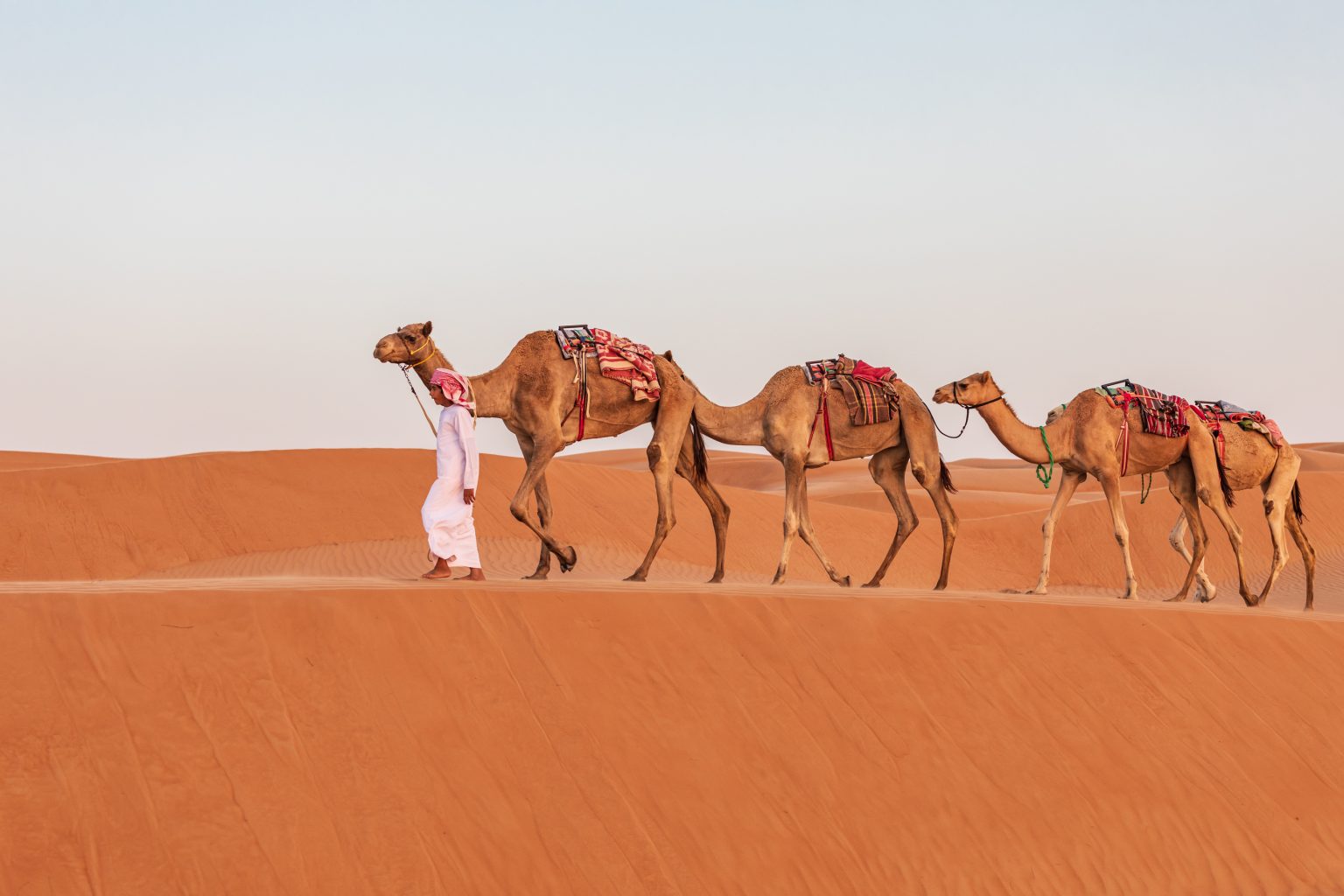
As the sun rises over Oman’s desert, the dunes of Al Sharqiyah Sands begin to glow in shades of orange and gold. The cooler morning air and slow rhythm of a camel ride offer a different way to experience the landscape, far removed from the pace of modern roads and busy towns.
- The Camel as Oman’s Desert Companion
- Where to Go Camel Trekking in Oman
- Al Sharqiyah Sands, Formerly Known as Wahiba Sands
- The Empty Quarter in Southern Oman
- Al Ashkharah and the Eastern Coast
- Bidiya and Al Mintarib: Gateways to the Desert
- What to Expect on a Camel Trek
- Bedouin Heritage and Local Hospitality
- What to Bring for Camel Trekking in Oman
- Best Time for Camel Trekking in Oman
- Responsible Camel Trekking and Animal Welfare
- A Two-Day Camel Trekking Experience in Al Sharqiyah Sands
- Discovering Oman’s Desert at a Slower Pace
Camel trekking in Oman connects visitors with an animal that has played an important role in desert transport, trade, and local traditions for generations. Experiences range from short guided rides across the dunes to camel encounters arranged as part of a longer desert safari.
From the accessible sands of eastern Oman to the remote landscapes of the Rub’ al Khali, or Empty Quarter, each destination offers a different setting. Choosing a suitable route, respecting local customs, and ensuring that the animals are properly cared for can make the experience both rewarding and responsible.
The Camel as Oman’s Desert Companion
The Arabian dromedary has long been adapted to the conditions of the Arabian Peninsula. Camels historically helped people travel across dry landscapes, transport goods, and support livelihoods in regions where other forms of transport were less practical.
In Oman, camels also have a place in contemporary cultural life. Breeding, racing, and camel beauty competitions remain important in some communities, although traditions and levels of participation vary by region and family.
Camels have several associations with Omani desert heritage:
- Transport and trade: Camels helped carry people and goods across desert routes.
- Livelihoods: Camel keeping has supported families through breeding and other traditional uses.
- Racing and cultural events: Organized camel races and beauty competitions continue to attract participants and spectators.
- Local identity: Camels feature in regional traditions, stories, and cultural celebrations.
A guided ride offers a glimpse into this heritage, but it is not a complete representation of Bedouin life. The communities of Oman have diverse histories and contemporary lifestyles, and visitors should approach cultural encounters with curiosity rather than assumptions.
Where to Go Camel Trekking in Oman
Al Sharqiyah Sands, Formerly Known as Wahiba Sands
Al Sharqiyah Sands, widely known to travelers as Wahiba Sands, is one of Oman’s best-known destinations for desert adventures. Its rolling dunes, accessible entry points, and established desert camps make it a practical choice for first-time camel riders.
Camel rides can be arranged through selected camps and local tour operators, often as part of a broader desert experience.
Highlights may include:
- Short camel rides across the dunes.
- Sunrise or sunset photography.
- Overnight stays at desert camps.
- Traditional meals and refreshments arranged by the host.
- Guided 4×4 excursions across suitable terrain.
The villages of Bidiya and Al Mintarib serve as useful access points for exploring the surrounding area. Arrange the camel ride in advance and confirm its duration, route, and included services.
This region is especially suitable for travelers who want to combine a camel ride with desert camping without committing to a remote multi-day expedition.
The Empty Quarter in Southern Oman
The Empty Quarter, known in Arabic as Rub’ al Khali, extends across parts of Oman, Saudi Arabia, the United Arab Emirates, and Yemen. Its Omani section lies in the southern part of the country, within the wider Dhofar region.
The area is known for extensive sand dunes, remote landscapes, and a strong connection with the history of desert travel and caravan routes. Visitors can explore it through organized 4×4 safaris, desert camping experiences, and selected camel-related activities.
Possible experiences include:
- Guided drives across designated desert routes.
- Visits to camel camps or local camel-keeping facilities where offered.
- Sunset views over the dunes.
- Overnight desert camping arranged by an experienced operator.
- Learning about regional history, including the historic frankincense trade.
A long-distance camel trek across the Empty Quarter should not be assumed to be a standard tourist activity. Availability depends on the operator, route, season, and local arrangements. Travelers seeking an extended journey should confirm that the provider actually offers camel trekking, rather than a 4×4 safari with a short camel ride.
Because the area is remote, visitors should not attempt to cross deep desert terrain independently without appropriate experience, equipment, and authorization.
Al Ashkharah and the Eastern Coast
Al Ashkharah, in South Al Sharqiyah Governorate, combines coastal scenery with nearby desert landscapes. Its sandy beaches, fishing heritage, and surrounding dunes create a different setting from the inland sands.
Visitors can explore the coast, arrange suitable outdoor activities, and look for camel-riding experiences offered by local providers. However, camel rides directly along the beach are not guaranteed, and access rules may differ between coastal areas and nearby desert routes.
The region is worth considering for travelers who want to combine:
- Coastal photography and beach walks.
- Visits to fishing communities and local settlements.
- Desert excursions in the surrounding area.
- Camping at locations where overnight stays are permitted.
- Local seafood and regional Omani dishes.
Check the exact location and activity arrangements before booking, particularly if riding a camel beside the sea is a priority.
Bidiya and Al Mintarib: Gateways to the Desert
Bidiya and Al Mintarib are useful starting points for exploring Al Sharqiyah Sands. They offer access to nearby desert camps and organized activities, including camel rides where available.
Depending on the host and package, visitors may be able to:
- Learn basic camel-riding techniques.
- Take a short guided ride across the dunes.
- Learn about camel care and traditional uses.
- Enjoy Omani coffee and dates.
- Stay overnight at a desert camp.
Cultural experiences differ between providers. Some are hosted by local families, while others are organized by commercial camps and tour operators. Ask who will lead the activity and what cultural or educational elements are actually included.
What to Expect on a Camel Trek
Camel experiences in Oman range from brief rides to longer outings arranged by specialist providers. The pace is generally slower than motorized travel, allowing visitors to observe the dunes, vegetation, and changing light along the route.
Typical options include:
- Short rides: Often arranged around sunrise, sunset, or a desert camp visit.
- Half-day experiences: May combine camel riding with refreshments, photography stops, or a broader desert excursion.
- Overnight packages: Can include a camel ride alongside camping, dinner, and stargazing.
- Longer journeys: Require specific arrangements, suitable animal care, experienced handlers, and a realistic itinerary.
Before booking, ask about the riding duration, terrain, group size, and whether the activity is suitable for children or first-time riders.
Preparing for the Ride
A camel’s movement can feel unfamiliar, particularly when it stands up or kneels. Listen carefully to the handler’s instructions and hold the provided support securely.
For a more comfortable experience:
- Wear long trousers to reduce rubbing against the saddle.
- Choose closed shoes that are comfortable for mounting and dismounting.
- Follow the handler’s guidance when the camel rises or kneels.
- Keep a safe distance from other animals unless instructed otherwise.
- Tell the operator about relevant mobility concerns before the ride.
- Avoid sudden movements or shouting around the animals.
Camel riding is not suitable for everyone. If you feel uncomfortable, ask about a shorter ride or enjoy the desert on foot instead.
Bedouin Heritage and Local Hospitality
Desert tourism can create opportunities to learn about Omani hospitality and the history of communities connected with desert travel. The experience depends on the host and the location, so it is best to approach each visit as an individual cultural encounter.
Depending on the arrangement, visitors may experience:
- Omani kahwa and dates: Coffee and dates are widely associated with hospitality in Oman.
- Traditional food: Some camps and local hosts serve regional dishes.
- Stories and local history: Guides may explain desert travel, camel keeping, or life in the surrounding region.
- Music and poetry: Cultural performances may be offered at selected camps or events.
Not every camp includes music, storytelling, or direct interaction with a local family. Confirm what is included rather than assuming that all desert experiences follow the same traditions.
Cultural Etiquette
- Dress respectfully and consider local expectations.
- Ask permission before photographing people.
- Follow the host’s guidance when entering a private home or family area.
- Accept or decline refreshments politely.
- Ask before photographing animals, belongings, or cultural activities.
- Respect requests for privacy and avoid treating residents as part of a staged attraction.
A thoughtful visit gives hosts control over how their culture and daily lives are shared.
What to Bring for Camel Trekking in Oman
Essential Items
- Lightweight, breathable clothing that covers the shoulders and legs.
- A scarf or head covering for sun and blowing sand.
- Sunscreen and UV-protective sunglasses.
- Comfortable closed shoes.
- Drinking water.
- A small daypack.
- A camera or phone stored securely during the ride.
For overnight experiences, also bring warm layers, a headlamp, personal medication, and any additional equipment recommended by the operator.
Optional but Useful
- A lightweight jacket for cooler evenings.
- A reusable water bottle.
- A small power bank.
- A compact camera strap or protective camera bag.
- A notebook for recording observations.
- Light snacks for longer outings, if permitted.
Neutral-colored clothing can work well for desert photography, but comfort, sun protection, and suitability for the activity matter more than color.
Best Time for Camel Trekking in Oman
October to March
The cooler months are generally the most comfortable time for camel riding and other outdoor activities in Al Sharqiyah Sands. Morning and late-afternoon rides are often preferable because temperatures are lower and the light is well suited to photography.
November through February can be particularly pleasant, although nighttime temperatures may fall enough to require a jacket or additional bedding.
April and May
Conditions become warmer as summer approaches. Short rides may still be possible during cooler hours, but travelers should check the forecast and avoid prolonged exposure to midday heat.
June to September
Summer heat can make strenuous outdoor activities dangerous, particularly in exposed desert areas. Long camel rides may be unsuitable during hot periods, and operators may change schedules or restrict activities.
For safety:
- Choose early-morning or late-afternoon activities when conditions allow.
- Carry drinking water and wear sun protection.
- Follow the guide’s advice about heat and animal welfare.
- Postpone the ride if temperatures or weather conditions are unsafe.
Seasonal conditions vary across Oman, so confirm the forecast for the specific destination rather than relying on a single temperature range for the entire country.
Responsible Camel Trekking and Animal Welfare
A responsible camel experience places the animal’s welfare ahead of the visitor’s convenience. Camels are adapted to arid environments, but they still require appropriate food, water, rest, handling, and veterinary care.
Before booking, look for operators who:
- Use healthy animals that appear alert and in suitable physical condition.
- Avoid overloading animals or extending rides in excessive heat.
- Provide appropriate rest and access to water.
- Handle camels calmly and safely.
- Give clear instructions to riders.
- Allow visitors to decline an activity without pressure.
Avoid rides if an animal appears injured, severely underweight, distressed, or unable to move comfortably. Ask the operator about the length of the route, rest periods, and how the animals are cared for between excursions.
Responsible travel also includes environmental care:
- Carry reusable water bottles where practical.
- Take all rubbish away.
- Avoid damaging vegetation or driving outside permitted routes.
- Respect local customs and private property.
- Choose local operators who provide clear information about their activities.
Animal welfare and environmental responsibility are essential parts of a worthwhile desert experience.
A Two-Day Camel Trekking Experience in Al Sharqiyah Sands
This sample itinerary is intended for travelers booking a guided experience through a local camp or tour operator. The exact activities depend on availability, weather, and the provider’s arrangements.
Day One: Arrival and Sunset Ride
Afternoon
- Arrive in the Bidiya or Al Mintarib area.
- Meet the guide and confirm the riding arrangements.
- Settle into the desert camp and prepare for the outing.
Late afternoon and evening
- Take a guided camel ride if conditions and animal welfare allow.
- Stop at an appropriate viewpoint to photograph the dunes.
- Enjoy dinner and refreshments arranged by the host.
- Spend the evening relaxing at camp or observing the night sky.
Day Two: Morning Ride and Departure
Early morning
- Enjoy breakfast and prepare for a short ride if included.
- Observe the changing light over the dunes.
- Ask the guide about the local landscape and camel traditions.
Before departure
- Pack your belongings and check the camp area for rubbish.
- Confirm onward transport and any planned stops.
- Continue your journey to another destination in Oman or return to your starting point.
A two-day trip offers an introduction to camel riding and desert hospitality without requiring a long, remote expedition. Travelers seeking a multi-day camel trek should arrange a specific itinerary with a provider experienced in that form of travel.
Discovering Oman’s Desert at a Slower Pace
Camel trekking offers a distinctive way to experience Oman’s desert landscapes, from the accessible dunes of Al Sharqiyah Sands to the remote scenery of the Empty Quarter. The activity can combine outdoor adventure with insights into camel keeping, local history, and the traditions associated with desert travel.
The best experience is one that matches your ability, respects local communities, and places animal welfare first. Choose a reputable operator, confirm what the itinerary actually includes, and plan around seasonal heat and the demands of the terrain.
With thoughtful preparation, camel riding in Oman can become a memorable part of a wider journey through the country’s dunes, coastal landscapes, and living cultural heritage.