
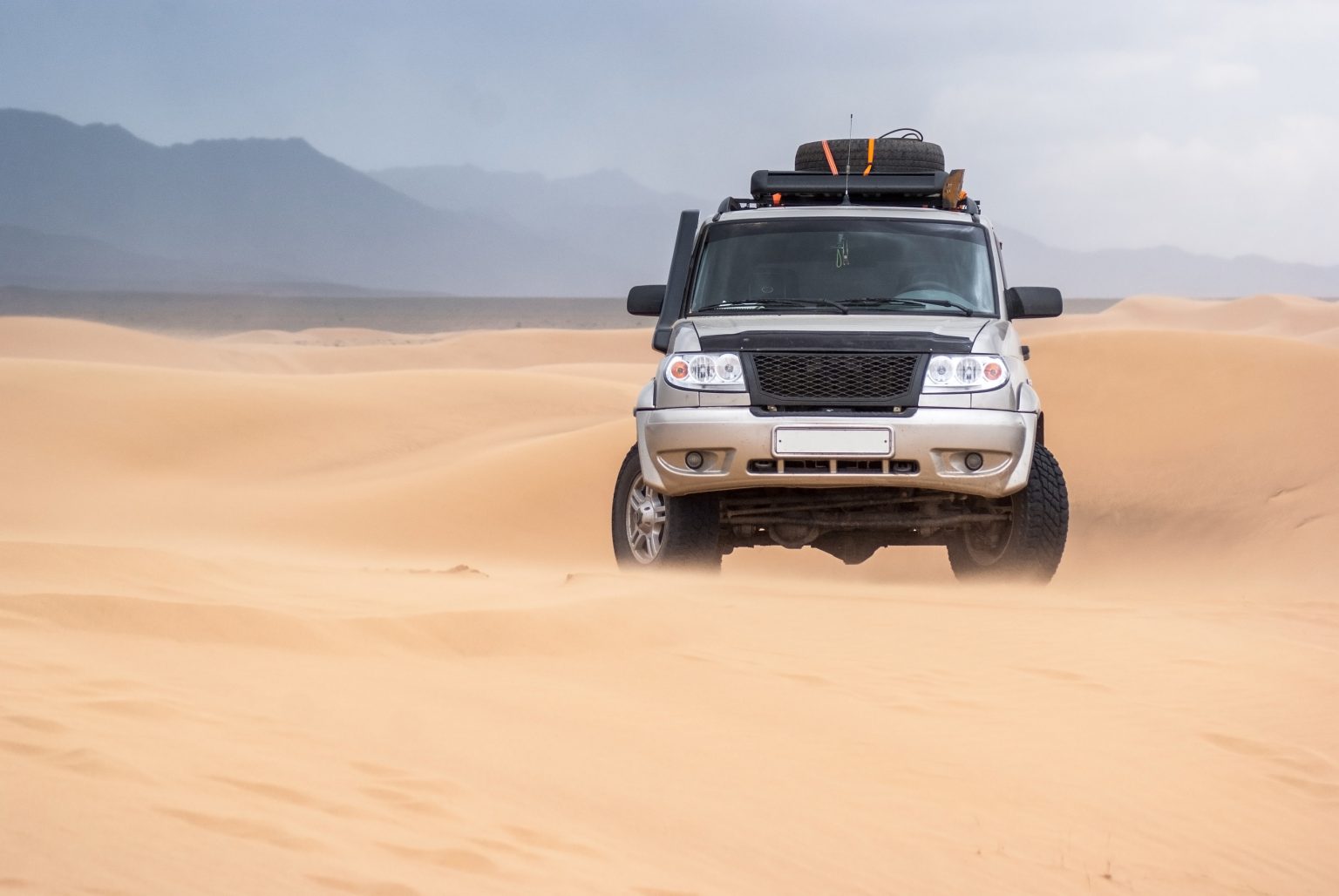
4×4 desert adventures in China reveal a striking mix of vast sand seas, rocky plains, volcanic-looking terrain and historic routes through the country’s northwest. From the open landscapes of the Gobi to the shifting dunes of the Taklamakan and the towering sand mountains of Badain Jaran, each region offers a different perspective on desert travel.
- Why China Is a Remarkable Destination for 4×4 Desert Adventures
- Three Major Chinese Deserts for 4×4 Exploration
- 1. The Gobi Desert: Gravel Plains, Mountains and Historic Routes
- 2. The Taklamakan Desert: A Vast Sand Sea in Xinjiang
- 3. The Badain Jaran Desert: Giant Dunes and Desert Lakes
- Following the Silk Road Through China’s Desert Regions
- What to Expect on a China 4×4 Desert Journey
- Best Time for 4×4 Driving in China’s Deserts
- What to Pack for a China Desert 4×4 Expedition
- Safety and Responsible Desert Driving
- Where to Stay During a China Desert Trip
- A Seven-Day 4×4 Desert Itinerary in Gansu and Inner Mongolia
- Day 1: Arrive in Dunhuang
- Day 2: Explore Dunhuang’s Desert and Cultural Sites
- Day 3: Travel Toward the Alxa Region
- Day 4: Begin a Guided Badain Jaran Excursion
- Day 5: Continue Exploring Badain Jaran
- Day 6: Return to the Alxa Region
- Day 7: Depart or Continue by Road
- Discover China’s Deserts with Careful Planning
A China desert 4×4 expedition requires more than a capable vehicle. Travelers must understand local access rules, prepare for long distances and changing weather, and arrange suitable support for remote areas. This China desert travel guide explores three major desert regions, practical preparation, seasonal conditions and a realistic itinerary for discovering the landscapes responsibly.
Why China Is a Remarkable Destination for 4×4 Desert Adventures
China’s deserts are not all vast fields of sand. Some contain gravel plains, rocky terrain and dry basins, while others feature immense dunes, isolated lakes and vegetation adapted to arid conditions.
Several features make these landscapes especially interesting for off-road travelers:
- Varied terrain: Explore designated gravel routes, sandy tracks, dry valleys and mountain landscapes.
- Silk Road heritage: Visit historic settlements and landmarks associated with trade routes that connected China with Central Asia and beyond.
- Distinctive geology: Discover eroded rock formations, shifting dunes and desert lakes.
- Wildlife and plant life: Observe desert-adapted species from a respectful distance.
- Remote scenery: Some destinations offer expansive views and relatively little artificial light, creating opportunities for landscape photography and stargazing.
However, a desert destination is not automatically an off-road driving area. Some of the best-known attractions are reached by paved roads or organized excursions, while remote routes may require permits, authorized guides or specific vehicle arrangements. Confirm the current rules before planning a self-drive expedition.
Three Major Chinese Deserts for 4×4 Exploration
1. The Gobi Desert: Gravel Plains, Mountains and Historic Routes
The Gobi Desert extends across parts of northern China and southern Mongolia. In China, its landscapes include areas of Inner Mongolia and Gansu, with terrain that ranges from gravel plains and rocky outcrops to sandy areas and dry basins.
For travelers, the Gobi is as much about the changing landscape and cultural history as it is about driving.
Places and experiences to consider:
- Dunhuang: A useful base for visiting the Mingsha Shan dunes, Crescent Moon Spring and the Mogao Caves.
- Jiayuguan: Explore the historic fortress associated with the western end of the Ming Great Wall.
- Zhangye: Visit the Zhangye Danxia landforms, known for their colorful geological layers.
- Remote Gobi landscapes: Arrange an authorized 4×4 excursion with a local operator familiar with the terrain and access rules.
- Silk Road heritage: Learn about the historic routes, settlements and cultural exchanges that shaped the region.
Not all of these attractions are deep in the Gobi, and they should not be treated as a single continuous off-road trail. Dunhuang, Jiayuguan and Zhangye are connected by established roads, making them suitable for a road trip with selected guided desert excursions.
Wildlife sightings are possible in some remote areas, but they are never guaranteed. Do not leave authorized routes in pursuit of animals or attempt to reach isolated terrain without reliable navigation and local knowledge.
Best for: Travelers who want to combine desert scenery, geology and Silk Road history with selected off-road experiences.
2. The Taklamakan Desert: A Vast Sand Sea in Xinjiang
The Taklamakan Desert, located in the Xinjiang Uyghur Autonomous Region, is one of China’s largest deserts and a major landscape of the Tarim Basin. It is known for extensive shifting dunes, extreme dryness and the oases that developed around its edges.
For most visitors, the safest practical introduction is a journey along established roads, combined with authorized excursions from nearby towns.
Highlights include:
- Taklamakan Desert Highway: A major road crossing the desert between the northern and southern parts of the Tarim Basin. It offers views of the desert landscape but is not an unrestricted off-road route.
- Hotan: An oasis city with a long history of trade, crafts and Uyghur cultural traditions.
- Korla: A regional urban center that can serve as a base for exploring parts of the wider Tarim Basin.
- Tarim Basin landscapes: Discover desert-edge settlements, agricultural oases and distinctive vegetation.
- Guided desert excursions: Where permitted, local operators can arrange visits to suitable desert areas away from the main road network.
The main Taklamakan highway is approximately 522 km long, but driving this road is different from crossing the shifting dunes in a 4×4. Unplanned dune driving can be dangerous because of soft sand, limited landmarks, heat and unreliable communication.
Travelers should also verify current access and documentation requirements for Xinjiang, particularly for remote areas and routes near border regions. Some locations may have restrictions or require special arrangements.
Best for: Experienced travelers interested in the scale of the desert, oasis settlements and long-distance journeys through Xinjiang.
3. The Badain Jaran Desert: Giant Dunes and Desert Lakes
The Badain Jaran Desert, in Inner Mongolia’s Alxa region, is famous for its enormous dunes and lakes lying between the sand mountains. It was added to the UNESCO World Heritage List in 2024 for its exceptional dune and lake landscapes.
Some dunes rise approximately 460 metres above their surroundings, making this one of the most remarkable dune environments in the world. The lakes vary in color and salinity, so they should not all be described as freshwater lakes.
What makes Badain Jaran special?
- Giant dunes: Experience some of the tallest stabilized sand dunes recorded in a desert environment.
- Interdunal lakes: Observe lakes surrounded by towering dunes, with colors influenced by their water chemistry and biological communities.
- Desert photography: Capture contrasts between pale sand, dark shadows and lake surfaces.
- Badain Jaran Temple: Visit this historic site when access and tour arrangements permit.
- Guided 4×4 excursions: Explore authorized routes with operators experienced in the area’s sandy terrain.
Badain Jaran is not an ordinary self-drive destination. Large sections are remote, roads are limited and tourism access is managed to protect the environment. Arrange transport and overnight stays through a reputable local operator, and confirm which areas are open to visitors.
Best for: Photographers and experienced desert travelers seeking dramatic dunes and unusual geological scenery.
Following the Silk Road Through China’s Desert Regions
The Silk Road was a network of historic trade routes rather than one continuous road. Several of its important branches passed through the oases and settlements of northwestern China, linking communities across Central Asia.
A modern trip can combine selected historic sites with desert excursions, but the destinations span considerable distances.
Places worth considering include:
- Dunhuang and the Mogao Caves: Explore a major center of Buddhist art and historic cultural exchange.
- Mingsha Shan and Crescent Moon Spring: Visit a well-known dune landscape near Dunhuang.
- Jiayuguan Fortress: Discover a major defensive structure associated with the Ming Great Wall.
- Zhangye Danxia: See colorful rock formations created by geological processes.
- Hotan: Learn about the region’s oasis history, traditional crafts and Uyghur culture.
- Desert-edge settlements: Explore local communities through authorized tours that respect cultural and access restrictions.
These places are not all located within the same desert, and reaching them may involve long drives or domestic transport connections. Plan a route around a specific region rather than attempting to combine every major desert in one short trip.
What to Expect on a China 4×4 Desert Journey
The experience depends on the terrain and the type of expedition you book. A guided drive over sandy dunes requires different skills and equipment from a road trip along the Taklamakan Desert Highway.
Vehicle and Route Preparation
- Suitable 4×4 vehicle: Choose a vehicle with the ground clearance, low-range capability and equipment required for the specific route.
- Local route knowledge: Use a qualified local operator for remote terrain, especially where access rules are complex.
- Navigation: Carry offline maps and a backup navigation method.
- Fuel planning: Check the distance between fuel stations and carry an appropriate reserve when permitted.
- Vehicle recovery equipment: For authorized off-road routes, carry suitable recovery gear and know how to use it.
- Support arrangements: Confirm whether a second vehicle, guide or communication device is required.
A capable vehicle alone does not make a remote crossing safe. Route selection, weather, local restrictions and the experience of the driver all matter.
Daily Travel and Accommodation
Daily driving distances vary considerably. A paved-road journey may cover more ground than a difficult sandy trail, where progress can be slow.
Depending on the itinerary, overnight options may include:
- Hotels and guesthouses in oasis towns.
- Established camps or organized desert accommodation where available.
- Authorized tourist camps near selected dune areas.
- Guided overnight excursions with accommodation arranged by the operator.
Do not assume that wild camping is permitted in Badain Jaran, the Taklamakan or protected areas of the Gobi. Confirm the rules and facilities for each overnight stop before departure.
Best Time for 4×4 Driving in China’s Deserts
There is no single best season for all three deserts. Conditions depend on location, elevation and terrain, and temperatures can change sharply between day and night.
April to June
Spring can be suitable for many desert road trips, although daytime temperatures rise as summer approaches.
- Check forecasts for wind, dust and possible sandstorms.
- Bring layers for cool mornings and evenings.
- Confirm access to remote routes before departure.
July to August
Summer can bring extreme heat, particularly in the Taklamakan and other low-elevation desert areas.
- Avoid strenuous outdoor activities during peak heat.
- Carry adequate water and plan stops carefully.
- Check for thunderstorms or other weather events that may affect roads.
- Do not assume that all remote routes remain accessible throughout summer.
September to October
Early autumn is often a useful period to consider for desert travel, with more moderate conditions in many locations. However, temperatures and weather patterns vary across the northwest.
- Plan for cold evenings as well as warm daytime conditions.
- Check current route and road information.
- Confirm whether guided excursions and camps are operating.
November to March
Winter can bring freezing temperatures, snow or ice in some regions, and very cold nights in exposed desert terrain.
- Use suitable cold-weather clothing and sleeping equipment.
- Check road conditions and the availability of services.
- Avoid remote winter routes without the necessary experience and support.
For many travelers, spring or early autumn is a sensible starting point. The final choice should depend on the specific desert, current forecast and the kind of driving you intend to do.
What to Pack for a China Desert 4×4 Expedition
Preparation should account for heat, cold, dust, long distances and the possibility of delays.
Essential Items
- Layered clothing: Include breathable daytime clothing, warm layers and a wind-resistant outer shell.
- Sun protection: Bring a hat, sunglasses and high-SPF sunscreen.
- Dust protection: A suitable mask and protective bags can help when wind lifts sand and dust.
- Drinking water: Carry enough for the full journey and an emergency reserve.
- Food: Pack supplies for the planned itinerary and possible delays.
- Navigation: Download offline maps and carry a backup.
- First-aid kit: Include personal medication and supplies appropriate for remote travel.
- Communication equipment: Consider a satellite communicator where legally permitted and suitable for the route.
- Vehicle spares: Carry a suitable spare tyre, repair equipment and the tools required for your vehicle.
- Lighting: Bring a headlamp, flashlight and spare batteries.
Useful Extras
- A camera and tripod for landscape photography.
- Binoculars for wildlife observation.
- A power bank and charging cables.
- A paper map and written route details.
- Camping equipment suited to the expected overnight temperatures, if camping is authorized.
A universal water allowance cannot cover every situation. Heat, activity level, duration and access to resupply all affect requirements. Plan generously and do not rely on finding water or fuel in remote areas.
Important: Drone use in China is subject to national rules and local restrictions. Check registration, airspace and site-specific requirements before bringing or operating a drone, particularly near border areas, protected landscapes or sensitive facilities.
Safety and Responsible Desert Driving
Remote desert travel can involve soft sand, sudden weather changes, limited communications and long distances from medical assistance. A careful itinerary is essential.
Follow these precautions:
- Use authorized routes: Do not enter closed or undeveloped areas without permission.
- Travel with qualified local support: Remote dune routes are not suitable for improvised solo driving.
- Check local requirements: Verify travel documentation, permits, road access and restrictions before entering sensitive or border areas.
- Monitor weather: Sandstorms, extreme heat and heavy rain can make travel unsafe.
- Adjust tyre pressure only when appropriate: Follow guidance from the vehicle manufacturer or qualified guide for the terrain, load and tyres.
- Carry emergency supplies: Include extra water, food, fuel where permitted and a way to communicate.
- Respect wildlife and vegetation: Avoid damaging fragile habitats or disturbing animals.
- Leave no trace: Remove all rubbish and use authorized camping areas.
- Respect local communities: Ask permission before photographing people or entering private land.
The Badain Jaran landscape is internationally recognized for its geological features and lakes. Keeping vehicle activity within authorized areas helps protect the desert’s fragile ecosystems and reduces unnecessary disturbance.
Where to Stay During a China Desert Trip
Accommodation depends on the route, the season and the level of access permitted.
Around Dunhuang
Dunhuang offers hotels and guesthouses, making it a practical base for visiting Mingsha Shan, Crescent Moon Spring and nearby historic sites. Organized excursions can provide access to selected desert experiences without requiring visitors to camp in remote terrain.
Around the Taklamakan Desert
Oasis towns such as Hotan and Korla provide accommodation and services for travelers exploring the wider Tarim Basin. If you plan to drive the desert highway, confirm fuel stops, overnight options and road conditions in advance.
Around Badain Jaran
Arrange accommodation and desert excursions through an operator familiar with current access rules. Overnight options may include designated camps or other authorized arrangements, depending on the route and season.
Around Zhangye and Jiayuguan
Hotels and guesthouses make these cities useful bases for exploring nearby geological and historical attractions. They can also be included in a wider road trip through Gansu.
Always verify the location, facilities and availability of any camp before relying on it in a remote itinerary.
A Seven-Day 4×4 Desert Itinerary in Gansu and Inner Mongolia
A seven-day trip is better focused on one broad region rather than attempting to cross the Gobi, Badain Jaran and Taklamakan in a single journey. The following example combines the Dunhuang area with a planned excursion into Badain Jaran, subject to current transport connections and authorized access.
Day 1: Arrive in Dunhuang
Arrive in Dunhuang and prepare for the trip. Check the weather, confirm excursion bookings and visit Mingsha Shan and Crescent Moon Spring if time and operating hours allow.
Stay overnight in Dunhuang.
Day 2: Explore Dunhuang’s Desert and Cultural Sites
Spend the day exploring the dunes and selected historic attractions. Visit the Mogao Caves only with the appropriate booking and follow the site’s visitor rules.
Use the evening to prepare for the next leg of the journey.
Day 3: Travel Toward the Alxa Region
Travel toward the Alxa region of Inner Mongolia using confirmed transport and road arrangements. This is a transfer day, and actual travel time depends on the route and connections available.
Stay at a confirmed accommodation option near your planned departure point for the desert excursion.
Day 4: Begin a Guided Badain Jaran Excursion
Join a locally arranged 4×4 excursion into the Badain Jaran Desert, following authorized routes and the operator’s safety instructions.
Spend time observing the dunes and interdunal lakes, with overnight arrangements determined by the permitted itinerary.
Day 5: Continue Exploring Badain Jaran
Continue the guided excursion, visiting additional approved viewpoints or cultural sites where access is available. The exact route depends on local conditions and the operator’s arrangements.
Return to the designated overnight location.
Day 6: Return to the Alxa Region
Leave the desert according to the planned route and return to your confirmed accommodation. Allow time for slow driving and any changes caused by weather or access conditions.
Day 7: Depart or Continue by Road
Use the final day for onward travel or departure. If you want to include Zhangye or Jiayuguan, allow additional time or redesign the itinerary around those destinations rather than treating them as quick stops on the same route.
Planning note: This itinerary requires advance coordination because Dunhuang and Badain Jaran are not neighboring attractions. The Taklamakan Desert is in Xinjiang and is best planned as a separate trip with its own transport, access checks and overnight arrangements.
Discover China’s Deserts with Careful Planning
China’s deserts offer a remarkable combination of giant dunes, rocky plains, historic settlements and distinctive ecosystems. The Gobi provides opportunities to combine geological landscapes with Silk Road heritage, the Taklamakan reveals the scale of Xinjiang’s desert environment, and Badain Jaran stands out for its immense dunes and lakes.
A rewarding China 4×4 desert adventure begins with choosing the right region, confirming access and arranging suitable local support. Prepare for temperature changes, long distances and limited services, and respect the regulations that protect these landscapes.
With realistic planning and responsible driving, a desert journey in China can offer an extraordinary view of the country’s northwestern landscapes and the communities connected to them.