
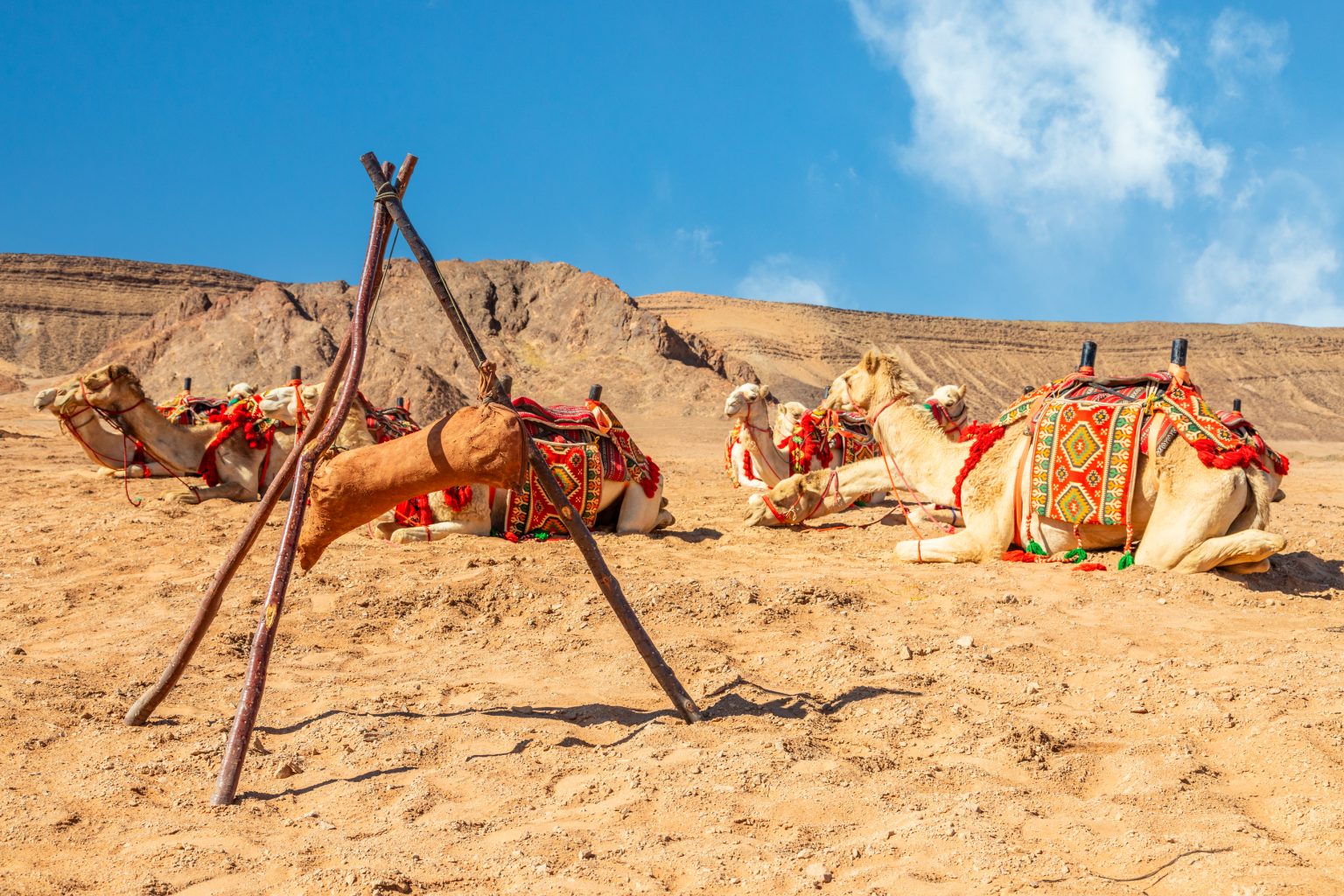
The Camel Trekking in the Saudi Desert experience connects travellers with the landscapes and traditions of the Arabian Peninsula. From the sandstone valleys of AlUla to the remote dunes of the Empty Quarter, Saudi Arabia’s desert environments offer different ways to explore on camelback, depending on local operators and available routes. This guide covers the best places for camel trekking in the Saudi Desert, the cultural significance of camels, and practical advice for planning responsible desert adventures.
- The Camel at the Heart of Arabian Culture
- Best Places for Camel Trekking in the Saudi Desert
- 1. AlUla: Camel Rides Among Sandstone Landscapes
- 2. The Empty Quarter: Rub al Khali
- 3. Najran: Desert Heritage and Southern Arabian Culture
- 4. Wadi Al Disah and the Tabuk Region
- What to Expect on a Camel Trek in the Saudi Desert
- Sharing Cultural Experiences with Bedouin Communities
- What to Bring on a Camel Trek
- Best Time for Camel Trekking in the Saudi Desert
- Responsible and Ethical Camel Trekking
- A Two-Day Camel Trek Itinerary in AlUla
- Why Camel Trekking in the Saudi Desert Is Worth Discovering
The Camel at the Heart of Arabian Culture
The camel, known in Arabic as jamal, has played an important role in Arabian life for centuries. Before modern roads and motorised transport, camels carried people, food and trade goods across arid landscapes where water and supplies could be scarce.
Their ability to travel long distances with careful management made them valuable to pastoral communities and traders. Camels also provided milk, meat, hair for textiles and other useful resources, creating a close relationship between people and animals.
The Cultural Significance of Camels
- Desert transport: Camels helped people cross dry landscapes and connect settlements separated by long distances.
- Food and materials: Camel milk, meat and hair have been used in different regional traditions.
- Poetry and storytelling: Camels feature in Arabian poetry, oral traditions, proverbs and descriptions of desert life.
- Festivals and heritage events: Camel beauty competitions, racing and other activities celebrate the animal’s place in Saudi culture.
- The King Abdulaziz Camel Festival: This major annual event brings together camel competitions and cultural activities, although dates and programmes vary each year.
Today, camels remain an important symbol of Arabian heritage. Modern camel trekking offers visitors one way to learn about this history, but the experience differs from the long-distance journeys undertaken by earlier travellers and pastoral communities.
Best Places for Camel Trekking in the Saudi Desert
1. AlUla: Camel Rides Among Sandstone Landscapes
AlUla is one of Saudi Arabia’s most distinctive destinations for combining desert scenery with archaeological heritage. Its landscape includes sandstone formations, open valleys, historic settlements and cultivated oasis areas.
Camel experiences may be available through local tourism providers, depending on the season and current programme. Confirm the route, duration and departure point before booking, rather than assuming that every archaeological site or valley can be explored on camelback.
Highlights of an AlUla visit include:
- Sandstone scenery: Explore the region’s dramatic rock formations and desert landscapes.
- Hegra: Visit Saudi Arabia’s first UNESCO World Heritage Site, known for its Nabataean tombs carved into sandstone. Access is managed through organised tours.
- AlUla Old Town: Discover the historic settlement and learn about the area’s role in regional trade and community life.
- Local cultural experiences: Ask about activities that introduce visitors to Saudi heritage and the history of camel husbandry.
- Golden-hour photography: Early morning and late afternoon can provide softer light across the rocks and surrounding landscape.
AlUla is suitable for travellers who want to combine cultural sightseeing with a camel experience where one is available. A camel ride should be booked as a separate activity unless the operator explicitly includes it in a wider itinerary.
Best for: First-time visitors, photographers and travellers interested in desert landscapes and archaeological heritage.
2. The Empty Quarter: Rub al Khali
The Rub al Khali, or Empty Quarter, is one of the largest continuous sand deserts in the world. It extends across parts of Saudi Arabia, Oman, the United Arab Emirates and Yemen, with enormous dune fields and vast areas far from major settlements.
Exploring its remote interior requires specialist planning. A multi-day camel expedition is not a standard activity available everywhere in the desert, so travellers should confirm that an operator actually offers a camel-supported itinerary before making plans.
What a properly organised desert expedition may involve:
- Travelling through selected dune landscapes with experienced local support.
- Learning about desert navigation, supplies and traditional camel care.
- Staying overnight at authorised or agreed campsites.
- Observing the night sky away from artificial lighting.
- Discovering how people have adapted to the region’s demanding environment.
Important considerations:
- Confirm the exact route, duration, transport arrangements and level of physical effort.
- Check how drinking water, food, communications and emergency support will be provided.
- Ask whether the journey involves riding camels, travelling alongside a camel caravan or using support vehicles.
- Prepare for heat, cold nights and limited services.
- Do not attempt to enter remote dunes independently without suitable experience and professional support.
The Empty Quarter is best suited to travellers joining a specialist expedition rather than those looking for a short introductory ride. In some itineraries, a 4×4 vehicle may be more appropriate than camel travel.
Best for: Experienced desert travellers and those seeking a carefully organised expedition into remote terrain.
3. Najran: Desert Heritage and Southern Arabian Culture
Najran, in southwestern Saudi Arabia near the Yemeni border, has a distinctive cultural and architectural heritage. Its wider region includes historic settlements, traditional buildings, agricultural areas and desert landscapes.
Camel-related experiences may be arranged through local providers, but availability and routes should be confirmed directly. Visitors can also explore the area’s heritage without joining a camel trek.
Things to discover in the Najran region:
- Traditional architecture: Learn about regional building styles and historic settlement patterns.
- Local markets and crafts: Discover products and traditions associated with southern Saudi Arabia.
- Historic sites: Explore accessible heritage attractions and learn about the region’s history as a meeting point for trade and cultural exchange.
- Desert-edge landscapes: Visit suitable outdoor areas with local guidance.
- Regional food: Try local dishes and learn about the ingredients and traditions associated with the area.
Najran’s cultural heritage is distinct from the traditions of every other Saudi region. A local guide can provide a more accurate understanding of its history, communities and customs.
Best for: Travellers interested in cultural heritage, architecture and a less familiar part of Saudi Arabia.
4. Wadi Al Disah and the Tabuk Region
Wadi Al Disah, also known as Wadi Damah, lies in the Tabuk region of northwestern Saudi Arabia. It is known for its towering sandstone cliffs, palm trees, springs and seasonal waterways. Its landscape differs from the open sand dunes of the Empty Quarter.
The valley is a destination for hiking, photography and nature-focused excursions. Camel trekking should only be included if a local operator confirms that the activity is available on a suitable route.
What to experience in the area:
- Sandstone cliffs: View the dramatic rock formations that frame the valley.
- Palm-lined sections: Explore the greener parts of the landscape where water and vegetation are present.
- Walking excursions: Join a suitable guided walk to learn about the valley’s terrain and natural features.
- Historical traces: Look for ancient inscriptions and other heritage features where visits are permitted.
- Local guiding: Ask experienced guides about safe access, seasonal conditions and available activities.
Wadi Al Disah is not simply a sandy desert riding route. The terrain includes narrow valley sections and natural features that require appropriate access planning. Check current conditions, vehicle requirements and any restrictions before visiting.
Best for: Nature lovers, hikers and travellers who want to explore a different side of Saudi Arabia’s arid landscapes.
What to Expect on a Camel Trek in the Saudi Desert
The experience depends on the destination, the operator and whether you book a short ride or a longer expedition. Some visitors join a brief camel ride near a tourist attraction, while others arrange a more substantial journey with guides and support.
A typical organised experience may include:
- A safety briefing: Instructions on approaching, mounting and dismounting the camel.
- An introduction to the route: Information about the terrain, duration and expected conditions.
- A guided ride: Travel along a route chosen for the activity and the group’s experience.
- Rest stops: Opportunities to drink water, rest and take photographs.
- Cultural interpretation: An explanation of local history or camel husbandry, when included by the guide.
- Optional refreshments: Tea, dates or a meal, depending on the operator and package.
Early morning and late afternoon can be more comfortable than the hottest part of the day. However, departures depend on local conditions, the season and the operator’s arrangements.
Before booking, ask about the expected riding time, group size, weight or age restrictions, safety equipment and the camel’s working conditions.
Sharing Cultural Experiences with Bedouin Communities
Bedouin heritage forms an important part of Arabian history, including traditions associated with pastoral life, hospitality, poetry and travel across arid landscapes. However, customs vary between communities and regions, and modern Bedouin life is diverse.
When an experience is hosted by local residents, visitors may have opportunities to learn about regional traditions through conversation, food or demonstrations.
Possible cultural experiences include:
- Arabic coffee and dates: These are widely associated with Saudi hospitality, although customs differ between hosts.
- Storytelling and poetry: Learn about oral traditions and the role of poetry in Arabian cultural life.
- Camel care: Discover how camels are fed, handled and prepared for travel.
- Traditional food: Sample regional dishes when meals are part of the experience.
- Local knowledge: Hear how people understand weather, landscapes and travel across dry environments.
Treat cultural visits as opportunities to listen and learn rather than as performances that every community is expected to provide. Ask permission before photographing people, respect privacy and follow the host’s guidance.
Choose operators that work respectfully with local communities and explain clearly how cultural activities are organised.
What to Bring on a Camel Trek
The right equipment depends on the duration, season and remoteness of the route.
Essential Items
- Lightweight, breathable clothing that covers the skin comfortably.
- A scarf or other protection against sun and blowing sand.
- A wide-brimmed hat, sunglasses and high-SPF sunscreen.
- Comfortable closed shoes suitable for walking on sand and uneven ground.
- Drinking water in a reusable bottle.
- A small daypack for personal items.
- Personal medication and basic first-aid supplies.
- A fully charged phone and emergency contact details.
Useful Extras for Longer Trips
- Warm layers for cold desert evenings.
- A headlamp or torch for overnight stays.
- A power bank or suitable charging equipment.
- Offline maps or another navigation backup for remote journeys.
- Binoculars for observing wildlife from a distance.
- A sleeping bag and personal camping equipment if these are not provided.
Ask the operator what will be supplied before packing. For remote expeditions, the guide should explain the water, food, communications and emergency arrangements.
Camel Welfare and Personal Comfort
Follow the handler’s instructions when approaching or mounting a camel. Avoid sudden movements, do not approach an animal from behind without guidance, and never attempt to handle equipment without permission.
Choose an operator that provides suitable rest, water, appropriate loads and humane handling. Avoid rides where animals appear injured, distressed or visibly exhausted.
There is no universal perfume rule that applies to every camel. The practical priority is to follow the handler’s advice and avoid behaviours that may startle or distress the animal.
Best Time for Camel Trekking in the Saudi Desert
Saudi Arabia’s climate varies by region and elevation, so the best time for a camel trek depends on the destination and the length of the activity.
November to March
These months are often suitable for outdoor exploration in many desert regions, with more comfortable daytime conditions than during the peak of summer. Nights can be cold, particularly in exposed areas.
This period is a practical choice for travellers planning desert walks, cultural visits and longer outdoor activities.
April to May
Temperatures rise as summer approaches. Short rides may remain comfortable during cooler hours, but longer excursions require attention to heat, shade, water and rest breaks.
June to September
Summer can bring extreme heat to many desert areas. Avoid strenuous rides during the hottest hours and do not proceed when conditions are unsafe. A responsible operator should adjust or cancel activities when necessary.
Choosing Your Travel Dates
For many travellers, November to February is a useful period to consider, although local weather conditions vary.
Before booking, check:
- The forecast for the exact destination.
- The planned departure and return times.
- Whether the operator changes routes or schedules during hot weather.
- The availability of suitable accommodation for overnight trips.
- Any seasonal access restrictions or local advisories.
Responsible and Ethical Camel Trekking
A good camel trekking experience protects both visitors and the animals involved. Responsible travel also respects local communities and the environments in which these activities take place.
- Choose reputable operators: Look for clear safety procedures and evidence of appropriate animal care.
- Avoid extreme heat: Do not pressure guides to continue when conditions are unsafe.
- Check the itinerary: Make sure the route, duration and facilities match the advertised experience.
- Respect local customs: Follow guidance on clothing, photography and behaviour at cultural sites.
- Reduce waste: Carry rubbish out and avoid leaving food or plastic in the desert.
- Protect natural areas: Stay on permitted routes and do not disturb wildlife.
- Support local businesses: Where possible, choose operators and accommodation that provide fair benefits to local communities.
Ethical travel is not just about the experience offered to visitors. It also depends on how the animals are treated and how the activity affects the people and landscapes involved.
A Two-Day Camel Trek Itinerary in AlUla
This sample itinerary combines AlUla’s desert scenery with its cultural heritage. Camel trekking must be confirmed separately with an operator, as not every attraction or archaeological area offers camel rides.
Day 1: Discover AlUla’s Desert Landscapes
Arrive in AlUla and settle into your accommodation. Spend part of the day exploring accessible desert viewpoints or joining an organised outdoor excursion.
If a suitable camel ride is available, schedule it for the cooler part of the day and confirm the route, duration and animal-welfare arrangements beforehand.
In the evening, enjoy a regional meal or a stargazing experience where available. Choose an established campsite or other authorised accommodation if you plan to stay outside town.
Day 2: Explore Hegra and the Region’s Heritage
Join an organised visit to Hegra, Saudi Arabia’s first UNESCO World Heritage Site. The archaeological site is managed, and visitors must follow the designated tour arrangements and access rules.
Afterwards, explore AlUla Old Town or another suitable heritage attraction, depending on the time available. If you prefer a longer camel expedition, arrange it as a separate activity with a provider that confirms the route and required preparation.
This itinerary offers a balanced introduction to AlUla without assuming that camel trekking is permitted inside Hegra or that every desert experience includes an overnight camel journey.
Why Camel Trekking in the Saudi Desert Is Worth Discovering
Camel trekking in the Saudi Desert can provide a meaningful way to explore desert landscapes and learn about the historical relationship between people and camels. AlUla offers sandstone scenery and ancient heritage, the Empty Quarter presents a demanding remote environment, Najran adds a distinct cultural perspective, and Wadi Al Disah reveals the variety of the country’s northwestern landscapes.
The right experience depends on your interests, fitness, the season and the route available. Choose a responsible operator, prepare for local conditions and approach cultural encounters with respect.
A camel journey does not need to cover vast distances to be memorable. Sometimes, a carefully chosen route and the chance to understand the landscape are enough to make the experience worthwhile.