
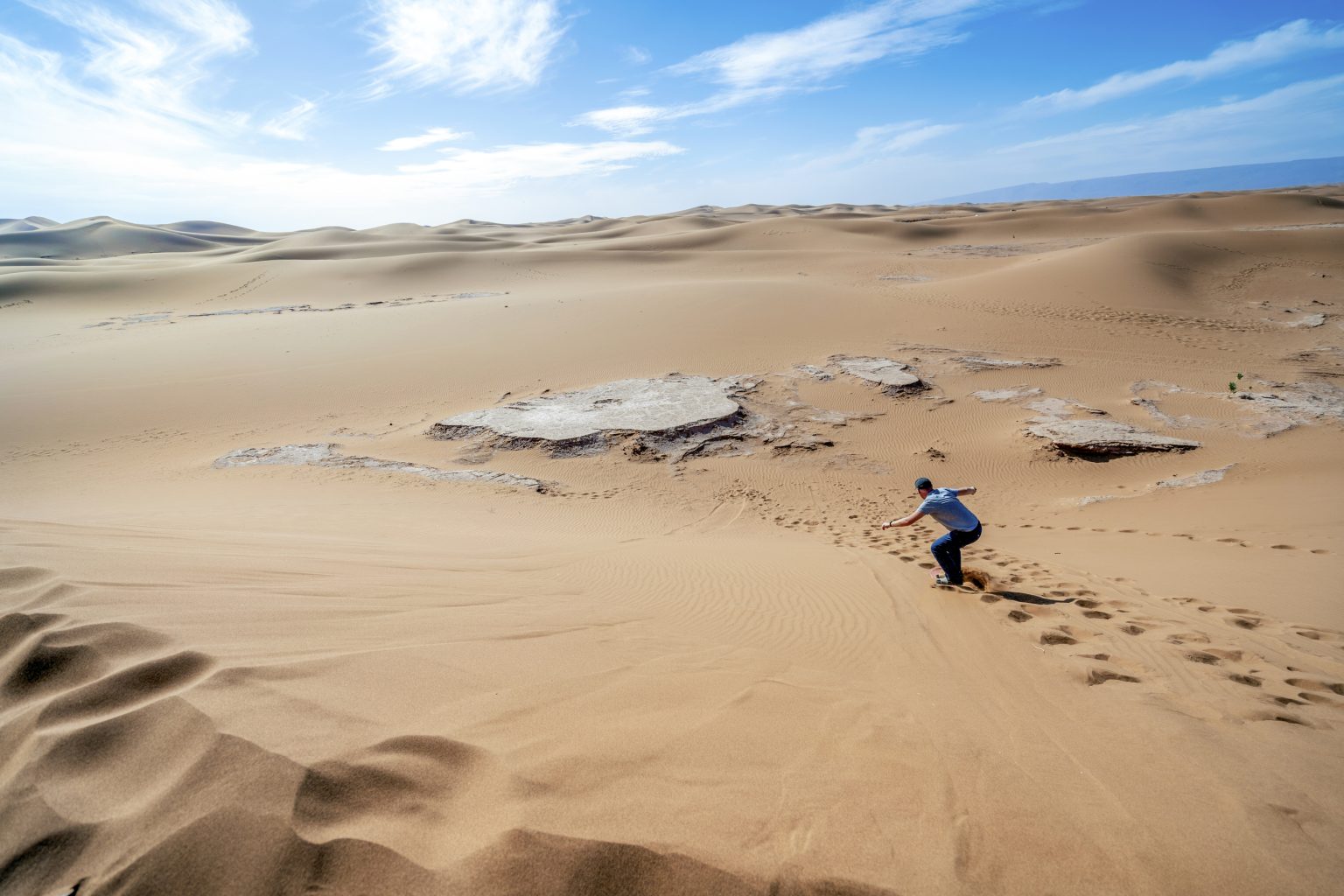
As the sun turns the dunes gold and red, Morocco’s Sahara offers a different kind of outdoor adventure. Around Merzouga, the sweeping sands of Erg Chebbi provide accessible slopes for sandboarding, while the more remote dunes of Erg Chigaga offer a quieter setting for travelers willing to venture farther from established routes.
- Why Sandboarding in Morocco Is Worth Trying
- Best Places for Sandboarding in Morocco
- Erg Chebbi near Merzouga
- Erg Chigaga near M’Hamid El Ghizlane
- Tinfou Dunes near Zagora
- Erg Lihoudi near M’Hamid El Ghizlane
- Sandboarding Equipment and Essentials
- How to Sandboard Safely in the Sahara
- Combine Sandboarding with Other Desert Experiences
- Best Time for Sandboarding in Morocco
- Responsible Sandboarding in the Sahara
- Sandboarding Prices and Booking Tips
- Photography and Video Tips
- A Sample Sandboarding Day in Erg Chebbi
- Plan Your Morocco Sandboarding Adventure
For visitors seeking sandboarding in Morocco, the experience combines outdoor activity with desert scenery and the chance to discover southern Morocco’s landscapes and local culture. Beginners can start on suitable gentle slopes, while experienced riders can look for longer descents with guidance from local operators.
This guide covers the best places to try sandboarding, what to bring, when to go, and how to enjoy the activity safely while respecting the Sahara’s fragile environment.
Why Sandboarding in Morocco Is Worth Trying
Morocco offers several destinations where large dunes and established desert tourism make sandboarding possible. The experience differs according to the terrain, the available equipment, and how easily the dunes can be reached.
What makes the activity appealing?
- Distinctive dune landscapes: Erg Chebbi near Merzouga is known for its prominent orange dunes, while Erg Chigaga offers a more remote setting near M’Hamid El Ghizlane.
- Options for different skill levels: Suitable slopes allow beginners to learn the basics before attempting more challenging descents.
- Flexible excursions: Sandboarding can often be arranged alongside a camel ride, a 4×4 excursion, or a stay at a desert camp.
- Desert photography: Sunrise and late-afternoon light create opportunities to photograph dune patterns and riders in motion.
- Cultural experiences: Visits to southern Moroccan villages and locally operated camps can add regional food, hospitality, and Amazigh cultural experiences to the trip.
Sandboarding is not equally available at every dune or camp. Confirm that boards are provided or can be rented before booking, especially if the activity is the main reason for your visit.
Best Places for Sandboarding in Morocco
Erg Chebbi near Merzouga
Erg Chebbi is one of Morocco’s best-known dune areas and a practical starting point for first-time sandboarders. Located near Merzouga and Hassilabied in southeastern Morocco, it has established tourism services, desert camps, and operators offering a range of activities.
What to expect:
- Sandboarding sessions on suitable dune slopes.
- Board rental or equipment provided through selected camps and activity operators.
- Opportunities to combine sandboarding with camel trekking or guided 4×4 excursions.
- Sunrise and sunset photography across the dunes.
- Accommodation ranging from guesthouses in the surrounding settlements to desert camps.
Not every slope is appropriate for beginners. Choose a clean, suitable descent with enough space to stop safely, and ask your guide to recommend a route based on your experience.
Practical tip: Early morning and late afternoon are often more comfortable than the middle of the day. Ask the operator whether the board is ready for use and whether any maintenance or waxing is needed.
Erg Chigaga near M’Hamid El Ghizlane
For travelers looking for a more remote desert experience, Erg Chigaga lies roughly 50 kilometres west of M’Hamid El Ghizlane. Reaching the main dune area generally requires a suitable 4×4 vehicle, a camel expedition, or a longer journey on foot with appropriate support.
Why consider this destination?
- Extensive dunes in a less developed tourism setting than Erg Chebbi.
- Opportunities to combine sandboarding with a guided off-road expedition.
- Desert camps offering overnight stays and access to surrounding landscapes.
- Photography and walking opportunities away from the main village areas.
The journey to Erg Chigaga is part of the experience, but it also requires more planning. Remote tracks can be difficult, and mobile coverage and other services may be limited.
Sandboard availability varies by camp and operator. Confirm whether boards are included, whether the planned dunes are suitable for the activity, and what transport and safety arrangements are provided.
Tinfou Dunes near Zagora
The Tinfou Dunes, near Zagora, offer a smaller-scale introduction to Morocco’s sandy landscapes. They can be a convenient stop for travelers exploring the Draa Valley and the desert routes around Zagora.
Possible activities include:
- Walking on the dunes and enjoying the surrounding views.
- Sandboarding where local providers offer suitable equipment.
- Camel rides arranged through local operators.
- Photography around sunrise or sunset.
Tinfou can suit travelers who want a shorter dune experience rather than a remote expedition. However, it should not automatically be described as the easiest destination to reach from every major Moroccan city. Travel time depends on the starting point and the route.
If sandboarding is essential to your itinerary, confirm that a board and a suitable slope will be available on your chosen date.
Erg Lihoudi near M’Hamid El Ghizlane
Erg Lihoudi is another dune area near M’Hamid El Ghizlane. It is often included in desert itineraries that combine camping, camel trekking, and exploration of the surrounding sandy landscape.
Reasons to consider the area include:
- A quieter alternative to some of the busier desert tourism locations.
- Opportunities for dune walks and landscape photography.
- Overnight stays through selected desert camps.
- The possibility of combining sandboarding with a guided excursion, depending on local equipment and conditions.
The availability of sandboarding should be confirmed directly with the camp or tour operator. Do not assume that every camp has boards or that every dune is suitable for sliding.
Sandboarding Equipment and Essentials
Equipment requirements depend on the riding style, the slope, and whether the excursion is guided. Many visitors rent a board rather than bringing one from home.
What You Need
- A suitable sandboard: Confirm whether the operator provides a standing board or a board designed for seated descents.
- Eye protection: Sunglasses or suitable protective eyewear help shield your eyes from bright sunlight and blowing sand.
- Closed footwear: Trainers or lightweight hiking shoes are useful for climbing dunes and protecting your feet.
- Sun protection: Bring sunscreen, a hat, and clothing that covers your skin.
- Drinking water: Carry enough for the activity, the weather, and the time spent away from facilities.
- A small first-aid kit: Particularly useful on independent trips, although guided operators should also have appropriate safety arrangements.
A helmet and additional protective equipment may be appropriate, especially for steeper descents or particular riding styles. Ask the operator what is provided and what is recommended for the activity.
What to Wear
- Lightweight, breathable clothing suitable for the season.
- Long sleeves to help protect against the sun.
- A scarf or bandana to reduce exposure to blowing sand.
- Closed shoes that are comfortable for walking uphill.
- Sunglasses and high-SPF sunscreen.
- A warm layer for winter mornings and evenings.
Sand can become very hot under direct sunlight, while desert temperatures may fall considerably after sunset. Pack according to the time of day and the season rather than relying on daytime temperatures alone.
Board maintenance: Sandboards need a suitable base to slide effectively, but the correct treatment depends on the board. Ask the rental provider about preparation and maintenance instead of applying an unapproved wax or product yourself.
How to Sandboard Safely in the Sahara
Sandboarding can be enjoyable for beginners, but falls, collisions, and injuries are possible. A suitable slope and clear instructions matter more than attempting the steepest dune.
Follow these precautions:
- Start on a gentle slope: Learn how the board moves before trying a longer descent.
- Listen to your guide: Follow instructions about body position, starting points, stopping, and where to walk back up.
- Check the landing area: Avoid slopes with rocks, vegetation, equipment, or other people in the runout zone.
- Keep enough distance: Wait until the previous rider has cleared the slope before starting.
- Choose cooler hours: Early morning or late afternoon is often more comfortable than midday.
- Stay hydrated: Take water breaks, especially when climbing dunes repeatedly.
- Avoid riding alone in remote areas: A guide or companion can help if you become injured or need assistance.
- Stop when conditions deteriorate: Strong winds, poor visibility, or excessive heat can make a session unsuitable.
Do not assume that a dune is safe simply because it is sandy. Steepness, surface conditions, obstacles, and the space available at the bottom all affect whether a descent is appropriate.
Combine Sandboarding with Other Desert Experiences
Sandboarding can be one part of a wider journey through southern Morocco. Depending on your destination, you can combine the activity with cultural visits, guided driving, or an overnight stay.
- Camel trekking: Explore suitable dunes at a slower pace with a local operator.
- 4×4 desert excursions: Travel along approved routes with a driver familiar with the terrain.
- Desert camping: Stay overnight at a camp and experience the changing temperatures and light.
- Stargazing: Enjoy the night sky when conditions are clear and artificial lighting is limited.
- Amazigh cultural experiences: Learn about local traditions through respectful visits and activities arranged by local hosts.
- Draa Valley sightseeing: Combine a trip around Zagora with visits to oasis settlements and traditional architecture.
Not every activity is available at every location. Confirm what is included in your package and whether additional transport, equipment, or fees are required.
Best Time for Sandboarding in Morocco
Sandboarding is possible during much of the year, but seasonal temperatures influence comfort and safety. Conditions also vary between Merzouga, Zagora, and the more remote dunes near M’Hamid.
- October to November: Temperatures generally become more comfortable for outdoor activities, although warm afternoons remain possible.
- December to February: Cooler weather often suits desert excursions, but mornings and nights can be cold.
- March to April: A useful period for many travelers, with rising daytime temperatures as spring progresses.
- May to June: Early-morning or late-afternoon sessions are preferable as the heat increases.
- July to August: Extreme daytime temperatures can make outdoor activity hazardous. Avoid the hottest hours and follow local advice.
- September: Conditions begin to improve in many areas, although daytime heat can persist.
For many visitors, October to April offers a useful planning window, but there is no guarantee of ideal weather. Check the forecast for your exact destination and arrange activities around current conditions.
Responsible Sandboarding in the Sahara
Morocco’s desert environments include fragile vegetation, wildlife habitats, and landscapes affected by wind and water. Responsible recreation helps reduce the impact of tourism.
- Use suitable, established activity areas: Avoid protected locations and fragile vegetated surfaces.
- Take all waste with you: Do not leave plastic bottles, food packaging, or other rubbish in the dunes.
- Respect wildlife: Observe animals from a distance and avoid disturbing their habitats.
- Choose responsible operators: Look for providers who explain safety procedures and follow local access rules.
- Respect local communities: Ask permission before photographing people or private property.
- Avoid unnecessary vehicle tracks: Use authorized routes rather than driving across sensitive areas.
- Ask about equipment practices: Reuse and maintain boards where appropriate, and avoid leaving damaged equipment in the desert.
Some camps and operators may use recycled materials for equipment, but this should not be assumed to be a widespread practice without confirmation. Supporting local businesses and following their guidance are practical ways to make your visit more responsible.
Sandboarding Prices and Booking Tips
Costs depend on the destination, duration, equipment, transport, and whether sandboarding is part of a larger excursion. Prices can also differ between independent board rental and guided packages.
When comparing offers, check:
- Whether the board rental is included or charged separately.
- How long the sandboarding session lasts.
- Whether a guide and transport to the dunes are included.
- Whether protective equipment is available.
- Whether the excursion includes a meal, camel ride, or other activities.
- What happens if weather conditions make the session unsuitable.
As an indicative reference, recent listings for Erg Chebbi have quoted board rental at around 100 to 200 MAD for a half-day, while some guided or combined activities cost more. These figures are not fixed rates, and prices may change by season, provider, and package.
Before booking, request the total price in Moroccan dirhams and confirm exactly what is included. For Erg Chigaga, also check whether the price covers the 4×4 journey and any overnight accommodation.
Photography and Video Tips
Sandboarding offers opportunities for action photography as well as wide desert landscapes. A few practical adjustments can help you capture the experience without distracting from safety.
- Photograph during softer light: Sunrise and late afternoon often bring out the shapes and colors of the dunes.
- Use a wide-angle lens: This can help show the scale of the landscape.
- Try slow-motion video: It can capture the movement of sand during a descent.
- Protect your equipment: Keep cameras and lenses in a dust-resistant bag when not in use.
- Choose a safe position: Photograph from outside the rider’s path and never stand in the landing area.
- Ask before filming people: Respect local privacy and obtain permission when appropriate.
A strong shot often combines the rider with the dune’s natural curves, giving the image a sense of scale without requiring a dangerous descent.
A Sample Sandboarding Day in Erg Chebbi
This flexible itinerary is designed for travelers staying in Merzouga or at a nearby camp. Adjust the timing to the weather, the operator’s arrangements, and the group’s experience.
Morning: Reach the Dunes
Meet your local operator and travel to a suitable sandboarding area. Receive a briefing, check the equipment, and begin with a gentle slope.
- Practise the basic riding position.
- Take breaks between descents.
- Drink water regularly.
- Move to a more challenging slope only if the guide considers it suitable.
Afternoon: Rest and Explore
Return to your accommodation or take a break in a shaded area. If conditions are comfortable, you may arrange a short walk, a camel ride, or another activity through your operator.
Avoid prolonged exertion during the hottest part of the day.
Late Afternoon: Photography and a Desert Evening
If conditions permit, enjoy another short sandboarding session before sunset. Afterwards, return to your camp or accommodation for dinner and an evening under the desert sky.
This plan is only an example. Not every camp offers sandboards, and a 4×4 transfer may be needed to reach the chosen slope. Confirm the details before setting out.
Plan Your Morocco Sandboarding Adventure
Sandboarding in Morocco combines the excitement of sliding down sandy slopes with the landscapes and hospitality of the Sahara. Erg Chebbi is a practical starting point for many visitors, while Erg Chigaga and Erg Lihoudi offer alternatives for travelers interested in a more remote desert setting. Tinfou can also fit into an itinerary around Zagora.
Choose a location that matches your experience, confirm equipment and costs before booking, and schedule your session around the weather. A suitable slope, a knowledgeable local guide, and respect for the environment will do more for your experience than chasing the highest dune.
The Sahara offers plenty of room to explore. The best ride is the one you can enjoy safely, with time left to appreciate the landscape after the sand settles.