
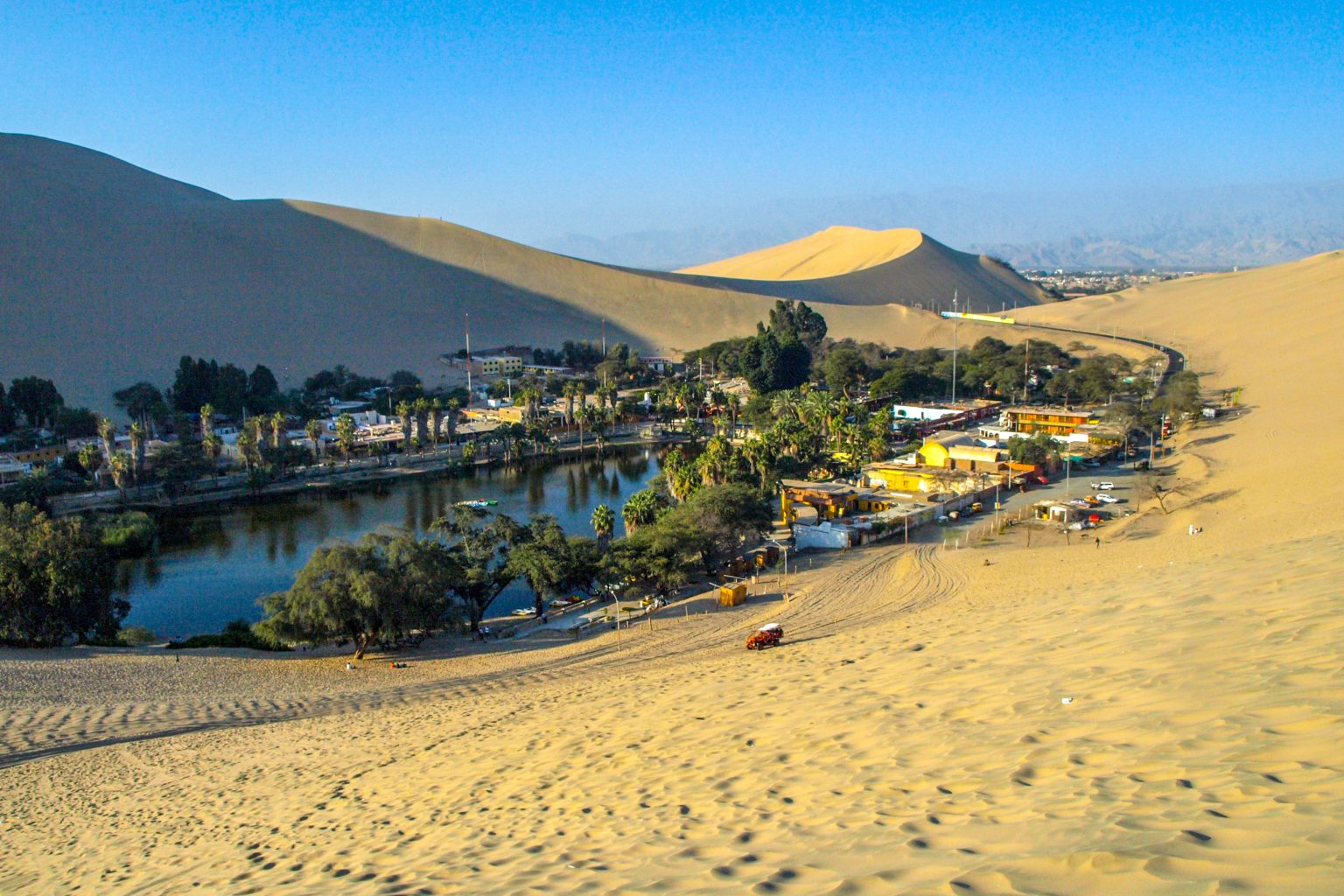
In southern Peru, the Huacachina Desert surrounds one of the country’s best-known desert oases. Located near the city of Ica, the area combines large coastal-desert dunes with the palm-lined Huacachina Lagoon, creating a landscape that is unusual even within Peru’s extensive coastal desert.
- Where Is the Huacachina Desert Located?
- Huacachina Desert Landscape: Dunes, Valleys, and Water
- Climate and Environmental Conditions
- The Legend of Huacachina Lagoon
- Best Things to Do in the Huacachina Desert
- Explore Huacachina Oasis
- Dune Buggy Rides and Sandboarding
- Cerro Blanco Dune
- Ica Valley and Pisco Vineyards
- Paracas National Reserve
- Two-Day Huacachina Desert Itinerary
- Where to Stay Near Huacachina
- Ecology and Wildlife
- Practical Travel Tips
- Hidden Gems Near Huacachina
- Exploring Huacachina and the Ica Desert
The surrounding dunes provide ideal terrain for sandboarding and dune buggy excursions, while the oasis itself offers a more relaxed setting close to restaurants, accommodation, and local attractions. Huacachina also provides a convenient base for exploring the wider Ica region, including vineyards, pisco producers, archaeological sites, and the coastal landscapes of Paracas.
Where Is the Huacachina Desert Located?
Huacachina is located in the Ica Desert on Peru’s southern Pacific coast, approximately 300 kilometers (186 miles) south of Lima.
Geographic Overview
- Coordinates: approximately 14°S, 75°W
- Elevation: around 400 meters (1,312 feet) above sea level
The area forms part of Peru’s extensive Coastal Desert, which runs along much of the country’s western side.
The wider Ica region connects the coastal desert with the Andean foothills and agricultural valleys around Ica. The Pacific coast lies farther west, while the desert continues south toward the Nazca region.
Huacachina Desert Landscape: Dunes, Valleys, and Water
The Ica Desert is characterized by broad sandy areas and large dunes shaped by wind and long-term arid conditions. Some dunes in the wider region reach several hundred meters above their surrounding terrain.
Well-known formations include Cerro Blanco and Duna Grande, while the dunes immediately surrounding Huacachina create the area’s distinctive backdrop.
At the center of the settlement is the Huacachina Lagoon, surrounded by palm trees and vegetation. The contrast between the green oasis and the surrounding sand is one of the main reasons Huacachina has become such a recognizable destination.
Climate and Environmental Conditions
Huacachina has a very dry desert climate, with little annual rainfall and generally warm conditions.
Typical conditions include:
- Annual rainfall of only a few millimeters
- Temperatures commonly ranging from around 20–35°C (68–95°F)
- Dry air throughout most of the year
- Cooler evenings during the winter months
Best Seasons
Huacachina can be visited throughout the year, but seasonal conditions can influence the experience:
- December to April: Generally warmer, suitable for dune activities and outdoor excursions.
- May to November: Cooler conditions, particularly in the evenings, with comfortable temperatures for sightseeing and photography.
Early morning and late afternoon are the best periods for longer outdoor activities because temperatures are lower and the light is more suitable for photography.
The Legend of Huacachina Lagoon
Huacachina is associated with a well-known local legend about a princess who became connected to the lagoon after fleeing into the desert. Different versions of the story vary, but the tale has become an important part of the identity of the oasis.
The lagoon itself has long been central to the area’s tourism and local folklore. Its palm trees, water, and surrounding dunes create a landscape that has helped make Huacachina one of Peru’s most recognizable desert destinations.
Best Things to Do in the Huacachina Desert
Explore Huacachina Oasis
The lagoon and surrounding promenade are the natural starting point for exploring Huacachina.
Visitors can walk around the lagoon, relax beneath the palm trees, visit nearby restaurants, and climb the surrounding dunes for views over the oasis and Ica Desert.
Dune Buggy Rides and Sandboarding
Sandboarding is one of Huacachina’s main attractions. Local operators take visitors into the surrounding dunes by specialized dune buggy before stopping at suitable slopes for sandboarding.
Beginners can start on smaller dunes, while experienced riders may prefer steeper slopes. Always use reputable operators and follow safety instructions during buggy excursions.
Cerro Blanco Dune
Located in the wider Nazca region, Cerro Blanco is one of Peru’s most famous high sand dunes, reaching approximately 2,078 meters (6,817 feet) above sea level.
Its height above sea level should not be confused with its height from the surrounding desert floor. The dune is particularly well known among experienced sandboarders and adventure travelers.
Ica Valley and Pisco Vineyards
The nearby Ica Valley is one of Peru’s important wine and pisco-producing regions.
Visitors can explore vineyards and distilleries such as Tacama, a historic producer with roots dating back to the colonial period. Tours can include tastings and explanations of traditional pisco production.
Paracas National Reserve
Paracas National Reserve, located on Peru’s southern coast, combines desert landscapes with marine ecosystems.
The reserve protects coastal habitats where visitors may encounter:
- Sea lions
- Pelicans
- Flamingos
- Other coastal and migratory birds
Its cliffs, beaches, and marine environments provide a useful contrast to the inland dunes around Huacachina.
Two-Day Huacachina Desert Itinerary
Day 1: Dunes and Adventure
- Morning: Travel from Lima to Huacachina or Ica
- Afternoon: Take a guided dune buggy excursion and try sandboarding
- Evening: Watch sunset from the surrounding dunes
- Night: Dinner and overnight stay in Huacachina
Day 2: Culture and Nature
- Morning: Visit an Ica vineyard or pisco producer
- Afternoon: Choose between exploring the wider desert, visiting archaeological sites, or traveling toward Paracas
- Evening: Return to Huacachina or continue to Ica
Where to Stay Near Huacachina
In Huacachina
- Hotel Mossone, a historic-style property close to the lagoon
- Desert Nights Hostel, a budget-oriented option popular with younger and adventure-focused travelers
In Ica
- Hotel Viñas Queirolo, associated with a vineyard setting
- Hotel Las Dunas, a larger resort-style property outside the oasis
Camping and organized desert camps are also available in the wider region, although travelers should use established operators and follow local regulations.
Ecology and Wildlife
The desert around Huacachina supports a limited but specialized range of plant and animal life.
Wildlife may include:
- Herons and other birds
- Falcons and other birds of prey
- Hummingbirds
- Desert lizards
- Bats
- Foxes in the wider desert region
Vegetation around the oasis includes palms and other cultivated or drought-tolerant plants. In some parts of Peru’s coastal desert, seasonal coastal fog can support specialized ecosystems known as lomas, although these are separate from the oasis environment around Huacachina.
Practical Travel Tips
Keep these points in mind when planning your visit:
- Best period: Huacachina is accessible year-round, with April to October offering generally cooler conditions.
- Travel from Lima: Approximately 4–5 hours by road, depending on traffic and transport.
- Access to Ica: Standard cars and buses can reach Ica and Huacachina.
- Dune access: Use organized 4×4 or dune buggy excursions for remote sandy terrain.
- Sun protection: Bring sunscreen, sunglasses, a hat, and sufficient water.
- Electronics: Protect cameras and phones from fine sand.
- Dune buggies: Choose licensed or reputable operators and follow all safety instructions.
- Timing: Schedule dune activities around the cooler parts of the day.
Hidden Gems Near Huacachina
Travelers with extra time can explore several nearby destinations:
- Cachiche Village, associated with local folklore and traditional stories
- Las Brujas Lagoon, a quieter wetland and recreational area near Ica
- Ocucaje Desert, known for important fossil discoveries
- Tambo Colorado, an important archaeological site associated with the Inca period
- El Catador, a traditional pisco producer offering insight into regional production
Exploring Huacachina and the Ica Desert
The Huacachina Desert combines three elements that make the region particularly distinctive: the large dunes of the Ica Desert, the palm-lined oasis, and the nearby agricultural and cultural landscape of Ica.
For visitors, the area offers a wide range of experiences within a relatively compact destination. Sandboarding and dune buggy excursions provide the main adventure activities, while the lagoon, vineyards, archaeological sites, and nearby Paracas coast add variety to a longer stay.
Huacachina is therefore more than a stop for desert photography. It is a practical base for exploring one of Peru’s most distinctive coastal desert regions.