
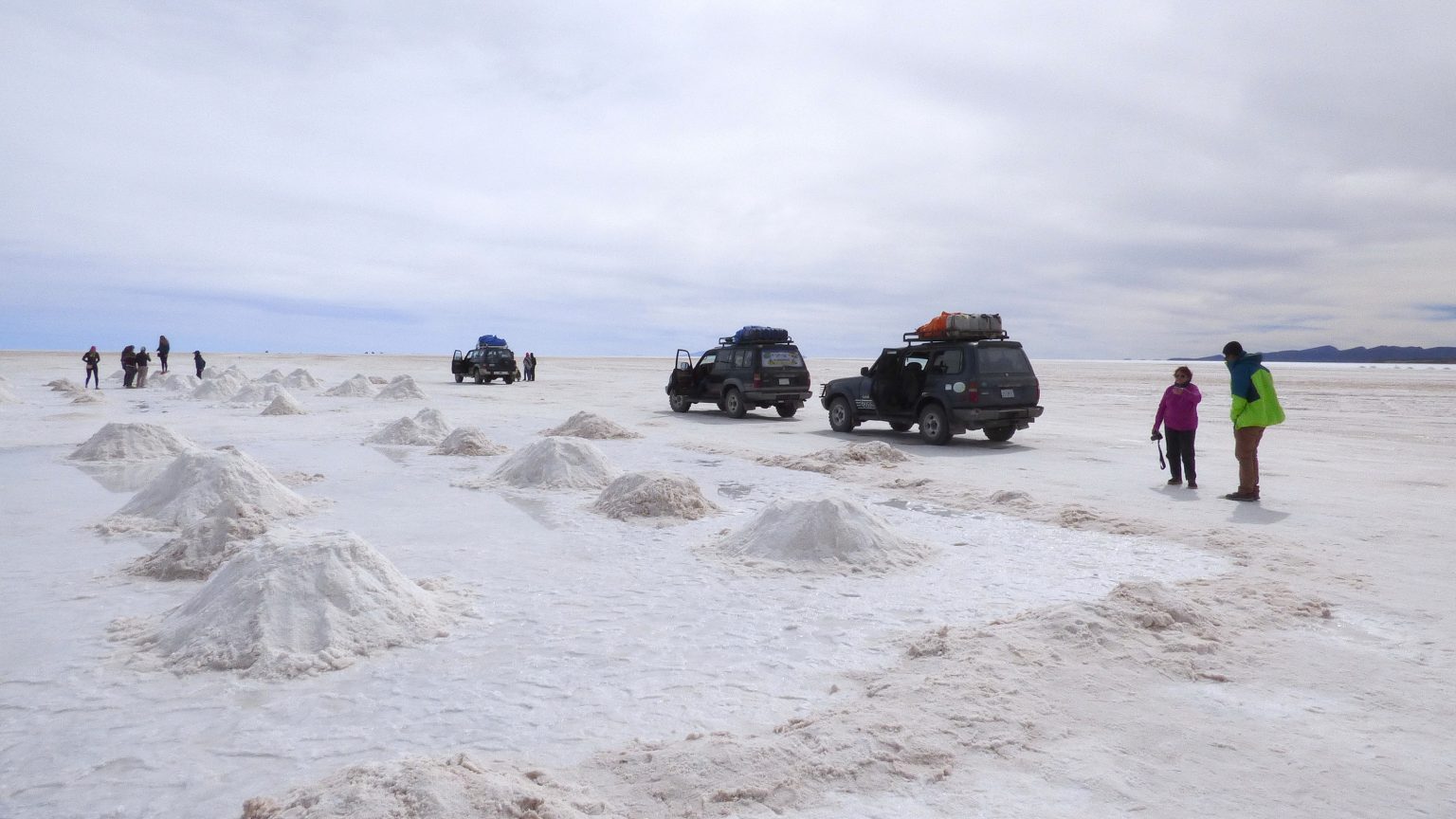
Salar de Uyuni in Bolivia is one of South America’s most remarkable natural landscapes. This immense salt flat stretches across the Andean Altiplano, creating a white horizon that seems to merge with the sky. During the rainy season, a thin layer of water can transform the surface into a spectacular natural mirror, while the dry months reveal geometric salt patterns across the plain. From Uyuni Salt Flats to the cactus-covered Isla Incahuasi and the colorful lagoons of the surrounding highlands, this region offers extraordinary scenery, wildlife, and opportunities for photography.
- Geography, Climate, and Natural Wonders of the Uyuni Salt Flats
- The Infinite Mirror of Salar de Uyuni
- The Train Cemetery Near Uyuni
- Eduardo Avaroa Andean Fauna National Reserve
- The Siloli Desert and High Andean Landscapes
- When Is the Best Time to Visit Salar de Uyuni?
- How to Explore the Uyuni Desert
- What to Bring for a Uyuni Adventure
- A Suggested Three-Day Salar de Uyuni Itinerary
- Day 1: Uyuni, the Train Cemetery, and the Salt Flat
- Day 2: Lagoons and the Siloli Desert
- Day 3: Sol de Mañana and Laguna Verde
- Responsible Travel in the Uyuni Desert
- Experience the Changing Landscapes of Salar de Uyuni
Geography, Climate, and Natural Wonders of the Uyuni Salt Flats
Located in southwestern Bolivia in the Department of Potosí, Salar de Uyuni covers approximately 10,582 square kilometers, making it the largest salt flat in the world. It lies at an elevation of around 3,656 meters above sea level, so visitors should prepare for both a high-altitude environment and substantial temperature changes.
The salt flat developed as prehistoric lakes gradually disappeared, leaving behind extensive deposits of salt and other minerals. Today, its remarkably flat surface forms the centerpiece of a wider region of volcanoes, high-altitude lagoons, desert plains, and geothermal landscapes.
Key facts about Salar de Uyuni include:
- Surface area: Approximately 10,582 km².
- Elevation: Around 3,656 meters above sea level.
- Location: Potosí Department, southwestern Bolivia.
- Geological origin: Ancient lakes gradually evaporated, leaving mineral-rich deposits.
- Seasonal landscape: Water-covered sections can create mirror reflections, while the dry season reveals a hard salt crust with polygonal patterns.
Beyond the salt flat itself, the wider region contains flamingo habitats, volcanic peaks, geothermal fields, and remote desert landscapes. These attractions are spread across a large area, so exploring them usually requires more than a single day.
The altitude deserves particular attention. Walking and climbing can feel more strenuous than expected, and some destinations on multi-day excursions rise above 4,000 meters. Allow time to acclimatize and plan your itinerary around your physical condition.
The Infinite Mirror of Salar de Uyuni
The mirror effect is one of the main reasons travelers visit the Uyuni Salt Flats. After sufficient rainfall, a shallow layer of water can cover parts of the exceptionally flat surface, reflecting clouds, mountains, and the sky.
The result depends on recent weather and local conditions rather than the calendar alone.
Highlights of the salt flat include:
- Mirror photography: Shallow, calm water can create reflections that make the horizon almost disappear.
- Dry-season salt patterns: Polygonal shapes form as the salt crust develops and dries.
- Isla Incahuasi: A rocky island in the salt flat known for its large cacti and panoramic views.
- Traditional salt harvesting: Around the margins of the salar, visitors may see evidence of local salt production and processing.
- Sunrise and sunset: Changing light can produce striking colors across the white landscape.
When Can You See the Mirror Effect?
The rainy season generally runs from around November or December through March or April, although its timing and intensity vary each year.
- January to February: Often the strongest period for mirror photography, provided rainfall has produced suitable shallow water.
- March to April: Reflections may continue, but access conditions can change as water levels rise or recede.
- May to November: The salt crust is generally dry, revealing the white expanse and its geometric patterns.
The mirror effect is never guaranteed. Too little water may leave the surface dry, while excessive water can make some areas inaccessible to vehicles. Strong winds can also disturb reflections.
Access to Isla Incahuasi may be restricted when water levels are high. If visiting the island is a priority, the dry season is generally the more reliable choice. If your main goal is mirror photography, ask tour operators in Uyuni about recent rainfall and the current condition of the salar before booking.
The Train Cemetery Near Uyuni
Just outside Uyuni town, the Cementerio de Trenes, or Train Cemetery, contains abandoned locomotives and railway equipment associated with Bolivia’s historic mining and transport industries.
The site provides an interesting contrast to the natural scenery of the salt flat. Rusted metal, weathered machinery, and open desert surroundings make it popular with photographers and visitors interested in industrial history.
Reasons to visit include:
- Railway heritage: Learn about the region’s historic role in mineral transport and railway development.
- Photography: The weathered locomotives create distinctive subjects, particularly in soft morning light.
- Convenient access: The cemetery is close to Uyuni and is often included in organized salt-flat tours.
- A different perspective: The site adds historical context to a trip otherwise focused on natural landscapes.
Visit respectfully, follow any access restrictions, and avoid climbing on unstable machinery or entering restricted sections. The cemetery is commonly visited at the beginning of a day tour before travelers continue toward the salt flats.
Eduardo Avaroa Andean Fauna National Reserve
South of Salar de Uyuni, the Eduardo Avaroa Andean Fauna National Reserve protects a dramatic high-altitude landscape of colorful lagoons, volcanic terrain, desert plains, and geothermal features. It is a major highlight of multi-day 4×4 expeditions through southwestern Bolivia.
Notable attractions include:
- Laguna Colorada: A reddish lagoon known for its mineral-rich waters and flamingos. The intensity of its color varies with conditions.
- Laguna Verde: A high-altitude lake near Licancabur Volcano, famous for its changing green hues.
- Sol de Mañana: A geothermal area with steam vents, bubbling mud, and volcanic activity at an elevation approaching 5,000 meters.
- High-altitude wildlife: Flamingos, vicuñas, and other animals adapted to the Andean environment.
- Volcanic scenery: Mountain peaks, mineral deposits, and open plains create striking contrasts.
These sites are not immediately next to the town of Uyuni. Reaching them generally requires a longer guided excursion, often over several days, with overnight stops in remote accommodation.
The high elevation can cause altitude-related illness, and temperatures may fall below freezing. Travel with an experienced operator, follow guidance on acclimatization, and avoid strenuous activity if you develop symptoms such as a headache, dizziness, nausea, or unusual fatigue. Severe symptoms require urgent medical attention and descent to a lower altitude.
The Siloli Desert and High Andean Landscapes
The Siloli Desert is a remote, high-altitude landscape known for its wind-shaped rock formations, colorful terrain, and sparse vegetation. It is often included in multi-day trips connecting the salt flats with the lagoons and geothermal areas farther south.
One of its best-known landmarks is the Árbol de Piedra, or Stone Tree, a rock formation shaped by erosion that resembles a solitary tree standing on the desert plain.
Other highlights in the wider region include:
- Laguna Hedionda: A high-altitude lagoon where flamingos and other birds may be observed.
- Laguna Blanca: A pale lake near the volcanic landscapes of the southwestern Altiplano.
- Tunupa Volcano: A prominent landmark on the northern side of the salar, with views over the salt flat from suitable viewpoints and hiking routes.
- Ollagüe Volcano: An active volcanic complex near the Bolivia-Chile border.
- Vicuñas and Andean wildlife: Animals adapted to cold, dry conditions may be seen along remote routes.
Wildlife sightings are never guaranteed, and access to hiking routes can depend on weather, road conditions, and local restrictions. Tunupa is in a different part of the region from the Siloli Desert, so it is generally better planned as a separate excursion or a carefully designed extension rather than an automatic stop on every southern circuit.
When Is the Best Time to Visit Salar de Uyuni?
The best time to visit depends on whether you want the mirror effect, the dry salt patterns, or a multi-day journey through the high-altitude lagoons.
- December to February: The rainy season may produce the famous mirror effect, although heavy rainfall can restrict access to parts of the salt flat.
- March to April: Water may remain in some areas, while conditions gradually change toward the dry season.
- May to August: The salt crust is generally dry and accessible, but nights can be extremely cold, especially on the southern high-altitude circuit.
- September to November: Often a useful period for dry salt landscapes, clear skies, and comparatively comfortable daytime conditions, although the first rains can arrive unpredictably.
For mirror photography, January and February are often the strongest candidates. For a broader 4×4 expedition with access to Isla Incahuasi and the southwestern lagoons, the dry season is generally more reliable.
There is no single best month for every traveler. Check current conditions with a local operator before choosing your dates, particularly if you want to see both reflections and specific attractions.
How to Explore the Uyuni Desert
Travel options range from short excursions across the salt flat to multi-day expeditions through the remote Andean landscapes.
Day Trips from Uyuni
A typical day trip may include:
- The Train Cemetery near Uyuni.
- The Colchani area, associated with salt processing and local handicrafts.
- Selected sections of Salar de Uyuni.
- Isla Incahuasi when access is permitted.
- Stops for photography and sunset viewing, depending on the tour.
The exact route varies with the season and the condition of the salt flat. During the rainy season, operators may substitute other locations if water blocks access to particular areas.
Three-Day 4×4 Expeditions
Multi-day excursions explore the salt flat and continue south toward the lagoons, volcanic landscapes, and geothermal features of the Altiplano.
A typical itinerary may include:
- Day 1: The Train Cemetery, Colchani, Salar de Uyuni, and an overnight stay near the salt flat.
- Day 2: Travel through the southwestern highlands, visiting selected lagoons and the Siloli Desert, with an overnight stop near the reserve.
- Day 3: Visit attractions such as Sol de Mañana and Laguna Verde, depending on the route, before returning to Uyuni or continuing toward the Chilean border if arranged in advance.
The order of stops varies by operator, and the full route involves long drives at high altitude. Confirm the itinerary, overnight accommodation, border arrangements, and return transport before booking.
Private and Self-Drive Travel
Private tours offer more flexibility for photography and overnight stops. However, independent driving across the salt flat and remote highlands requires substantial preparation.
For most visitors, an experienced local 4×4 guide is the safer option. Routes can be difficult to navigate, landmarks are widely spaced, mobile coverage is unreliable in remote areas, and seasonal flooding can change access quickly.
What to Bring for a Uyuni Adventure
The high-altitude environment combines strong sunlight, dry air, cold nights, and substantial changes in temperature. Packing for these conditions is essential.
Essential Items
- Sunglasses: Protect your eyes from intense sunlight reflected by the white salt surface.
- Sunscreen and a hat: Ultraviolet exposure can be strong at high altitude.
- Layered clothing: Bring warm base layers, an insulated jacket, and wind protection.
- Comfortable footwear: Choose suitable shoes for walking on salt crust, rocky ground, and uneven terrain.
- Drinking water and snacks: Carry enough for long drives and remote stops.
- Lip balm and moisturizer: Dry air and wind can irritate the skin.
- Cash in Bolivianos: Useful for small purchases and certain entrance fees where card payments may not be accepted.
Optional Equipment
- Camera and tripod: Helpful for sunrise, sunset, and low-light photography.
- Waterproof footwear: Useful for shallow-water visits during mirror season.
- Binoculars: Useful for observing birds and distant wildlife.
- Power bank: Helpful when charging opportunities are limited.
- Star map or astronomy app: Useful for identifying constellations during clear nights.
If you are traveling during the colder months, check whether your accommodation supplies adequate bedding or whether you need to bring or rent a suitable sleeping bag.
Altitude medication is not a substitute for acclimatization. If you are considering medication to prevent altitude sickness, discuss it with a qualified healthcare professional before traveling.
A Suggested Three-Day Salar de Uyuni Itinerary
This itinerary illustrates how a multi-day tour can combine the salt flat with the surrounding highlands. Actual stops and overnight locations depend on the operator, seasonal access, and weather.
Day 1: Uyuni, the Train Cemetery, and the Salt Flat
Begin in Uyuni and visit the Train Cemetery before continuing toward Colchani. Explore the salt flat with your guide, stopping for photographs and learning about the region’s geology and salt production.
If conditions allow, visit Isla Incahuasi to see its giant cacti and panoramic views. During the rainy season, the island may be inaccessible, so confirm the day’s route before departure.
Spend the night at accommodation arranged by your tour operator.
Day 2: Lagoons and the Siloli Desert
Continue south through the high-altitude landscapes of southwestern Bolivia. Depending on the route, stops may include colorful lagoons, flamingo habitats, and the Árbol de Piedra.
Allow time for photographs, rest breaks, and the effects of altitude. The drive can be long, and overnight accommodation in this region is often basic.
Day 3: Sol de Mañana and Laguna Verde
Start early if the itinerary includes the Sol de Mañana geothermal area. Continue toward Laguna Verde and the surrounding volcanic landscape when conditions permit.
Arrange your return to Uyuni or onward transfer to Chile in advance. These options involve different travel arrangements, so do not assume a border transfer is included in a standard tour.
Planning note: Tunupa Volcano is north of the salt flat, while the Siloli Desert and Eduardo Avaroa Reserve lie to the south. Visiting both sides of the region may require additional time or a different itinerary.
Responsible Travel in the Uyuni Desert
Salar de Uyuni is a fragile environment, and its remote location makes responsible travel particularly important.
Help protect the region by following these practices:
- Stay on authorized routes: Avoid driving across restricted areas or entering flooded sections without professional guidance.
- Take all rubbish with you: Waste disposal facilities are limited in remote locations.
- Reduce single-use plastics: Bring a reusable water bottle where practical.
- Respect wildlife: Observe flamingos and other animals from a distance and avoid disturbing their habitats.
- Support local businesses: Choose responsible local guides, accommodation providers, and craft sellers.
- Respect local communities: Ask permission before photographing people or private property.
- Follow safety instructions: Weather, altitude, and road conditions can change rapidly, so listen to your guide and local authorities.
During the rainy season, never attempt to cross flooded areas independently. Water can conceal changes in the salt crust and make driving dangerous.
Experience the Changing Landscapes of Salar de Uyuni
Salar de Uyuni offers two strikingly different landscapes: a reflective surface that can merge sky and ground during the rainy season, and an immense white salt plain marked by geometric patterns during the dry months. Beyond the salar, the highlands reveal colorful lagoons, volcanic formations, wildlife, and remote desert scenery.
Choose your travel dates according to the experience you want, allow time to adjust to the altitude, and confirm access conditions before booking a tour. Whether you visit for mirror photography, explore Isla Incahuasi, or travel south into the Andean highlands, Salar de Uyuni in Bolivia rewards careful planning with a remarkable journey through one of the world’s most distinctive landscapes.