
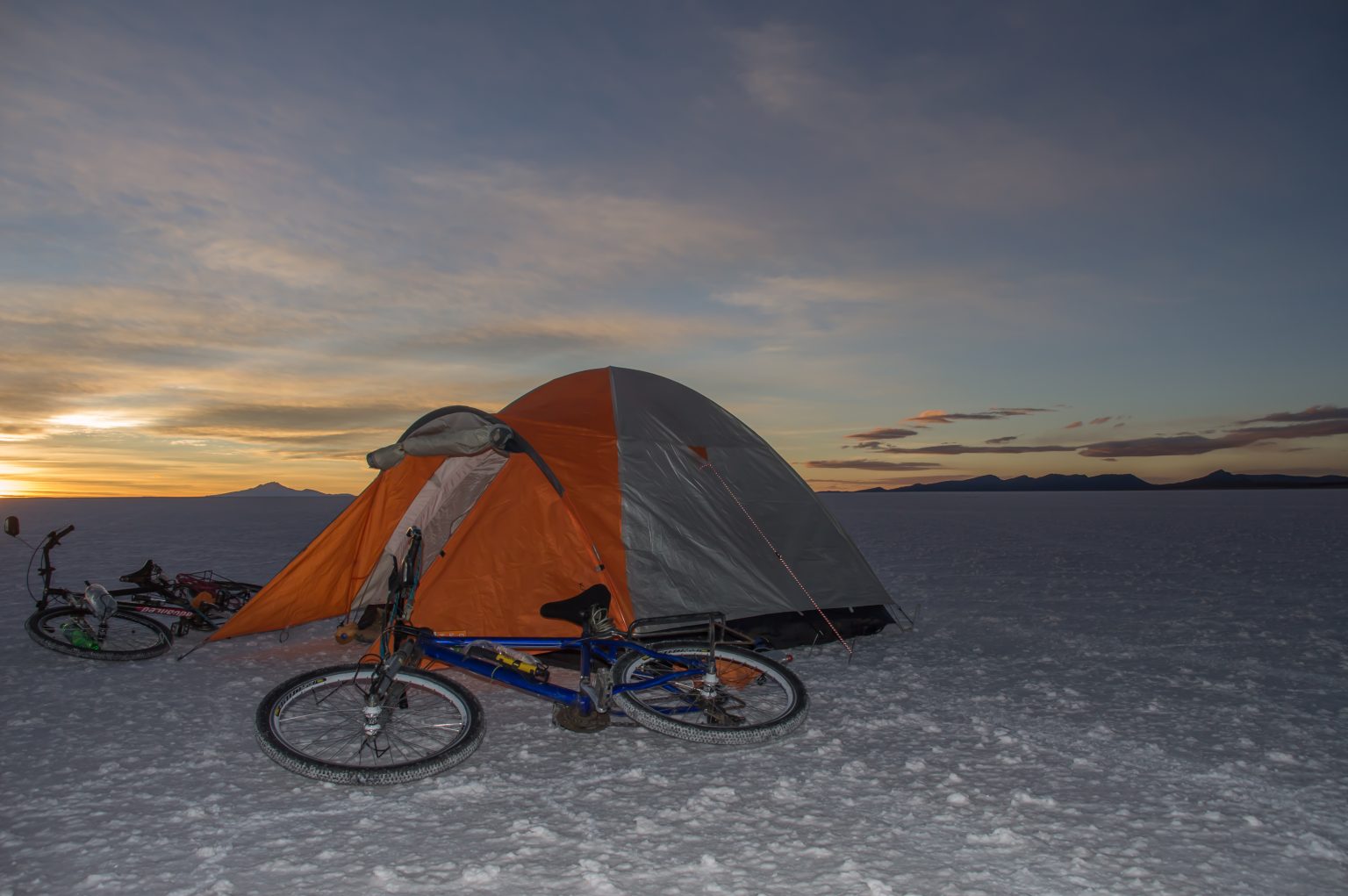
Bolivia’s high-altitude desert landscapes combine immense salt flats, volcanic mountains, colorful lagoons, and some of the most striking scenery in the Andes. From the pale expanse of the Salar de Uyuni to the wind-shaped formations of the Siloli Desert, the region offers travelers a distinctive mix of remote landscapes, wildlife, and opportunities for night-sky photography.
- Why Camping in the Bolivian Desert Is Unique
- Best Places to Experience Bolivia’s Desert Landscapes
- Salar de Uyuni, Potosí Department
- Siloli Desert, Eduardo Avaroa Andean Fauna National Reserve
- Laguna Colorada
- Tunupa Volcano and the Northern Salar
- Laguna Verde and the Licancabur Volcano Area
- What You Need for Desert Camping in Bolivia
- Best Time to Camp in the Bolivian Desert
- Eco-Lodges and Salt Hotels as Alternatives
- A Three-Day Journey Through Bolivia’s High-Altitude Landscapes
- Day One: Uyuni and the Salt Flat
- Day Two: Siloli Desert and Laguna Colorada
- Day Three: Geothermal Landscapes and Laguna Verde
- High-Altitude Safety and Responsible Camping
- Acclimatization and Altitude Awareness
- Cold, Weather, and Remote Conditions
- Protecting the Environment
- Experiencing Bolivia’s Desert Landscapes Responsibly
Camping in the Bolivian desert requires more preparation than an ordinary overnight trip. Many destinations lie above 3,500 meters, where cold temperatures, reduced oxygen, and changing weather can affect even experienced travelers. Understanding these conditions is essential when planning stargazing and desert photography in Bolivia, particularly if your itinerary includes remote roads and overnight stays.
Why Camping in the Bolivian Desert Is Unique
Bolivia’s southwestern highlands combine salt flats, volcanic terrain, mineral-rich lagoons, and broad open plateaus. The combination of altitude and limited artificial lighting in remote areas can create excellent conditions for observing the night sky when the weather cooperates.
What makes the experience special:
- Salar de Uyuni: An enormous salt flat that can develop mirror-like reflections when a shallow layer of water covers its surface.
- High-altitude landscapes: Volcanic peaks, colorful lagoons, and open plains create dramatic scenery.
- Stargazing opportunities: Remote locations may offer dark skies, although clouds, haze, moonlight, and nearby lighting affect visibility.
- Wildlife observation: The lagoons of the Eduardo Avaroa Andean Fauna National Reserve support flamingos and other high-Andean wildlife.
- Distinctive photography: Contrasting salt patterns, mineral colors, and volcanic formations provide subjects throughout the journey.
These landscapes are not uniformly accessible. Weather, road conditions, protected-area rules, and seasonal flooding can change which places visitors can reach or where overnight stays are permitted.
Best Places to Experience Bolivia’s Desert Landscapes
Salar de Uyuni, Potosí Department
Covering approximately 10,500 square kilometers, the Salar de Uyuni is the world’s largest salt flat. Its enormous white surface creates a striking landscape that changes considerably between the dry and rainy seasons.
During the dry season, the salt crust forms geometric patterns across the plain. After sufficient rainfall, shallow water can create the famous mirror effect, reflecting clouds and the surrounding sky.
Highlights include:
- Photographing the salt crust and its geometric patterns.
- Visiting Isla Incahuasi, known for its large cacti, when access is open.
- Exploring approved routes across the salt flat with an experienced driver.
- Capturing reflections when water, weather, and access conditions allow.
- Observing the changing colors of the landscape around sunrise and sunset.
Camping directly on the salt flat should never be assumed to be available. Overnight arrangements depend on local rules, weather, and the condition of the crust. During periods of flooding, sections may become inaccessible, and some routes or islands may be closed.
For most visitors, an organized excursion with an established accommodation plan is more practical than attempting an independent overnight camp on the salt surface.
Siloli Desert, Eduardo Avaroa Andean Fauna National Reserve
The Siloli Desert is known for its arid highland terrain, unusual rock formations, and expansive views. It is commonly included in multi-day 4×4 tours through southwestern Bolivia.
One of its best-known landmarks is Árbol de Piedra, a naturally sculpted rock formation shaped by erosion. The surrounding landscape features sandy and rocky ground, distant volcanoes, and open views across the high plateau.
Highlights include:
- Photographing Árbol de Piedra and other wind-shaped formations.
- Exploring the region on an organized 4×4 itinerary.
- Observing high-Andean landscapes and wildlife from designated areas.
- Enjoying sunset photography when weather and visibility are favorable.
- Stargazing from authorized accommodation or camping locations.
The Siloli area is remote, and overnight options may be basic. Travelers should confirm where their tour will stay, what heating and bedding are provided, and whether camping is actually included. Cold, wind, and altitude make appropriate shelter essential.
Laguna Colorada
Laguna Colorada, within the Eduardo Avaroa Andean Fauna National Reserve, is a striking high-altitude lagoon known for its reddish water. Its coloration is associated with algae, sediments, and mineral conditions, while its shallow waters provide habitat for flamingos.
The landscape combines red and white tones with distant mountains, creating excellent opportunities for nature and landscape photography.
Visitors may be able to:
- Observe flamingos from permitted viewpoints.
- Photograph the lagoon in changing daylight.
- Learn about the area’s high-Andean ecology.
- Explore nearby attractions as part of a guided circuit.
Wildlife sightings vary, and visitors should keep their distance from birds and avoid disturbing nesting or feeding areas.
Laguna Colorada is not a guaranteed stargazing campsite. Overnight accommodation is generally arranged at designated facilities in the surrounding region, according to the tour itinerary. Do not assume that camping beside the water is permitted.
Tunupa Volcano and the Northern Salar
Tunupa Volcano rises above the northern side of the Salar de Uyuni and provides a different perspective on the salt flat. The surrounding area includes viewpoints, volcanic terrain, and the community of Coquesa.
Experiences may include:
- Scenic views across the salt flat.
- Photography of the volcano and surrounding landscape.
- A visit to Coquesa and its archaeological attractions, where access is permitted.
- Learning about local history and the relationship between communities and the salt flat.
Some excursions include visits to archaeological sites or caves containing ancient remains. Follow local guidance and never touch or remove artifacts.
Conditions and access vary, so confirm the route and any walking requirements before booking. The area is high above sea level, and even a relatively short hike can feel demanding.
Laguna Verde and the Licancabur Volcano Area
Laguna Verde, near the Chilean border, is famous for its greenish color and its setting beneath the imposing Licancabur Volcano. The appearance of the water can vary with wind and changing environmental conditions.
The surrounding landscape includes volcanic slopes, high-altitude plains, and other attractions commonly visited on the southwestern circuit.
Travelers may combine a visit with:
- Scenic stops around Laguna Verde.
- Views of Licancabur Volcano.
- Visits to other lagoons and geothermal landscapes along an organized route.
- Photography of the mineral colors and volcanic scenery.
The area is exposed and remote, with very limited services. It should not be treated as a casual camping destination, especially for travelers who have not acclimatized to high altitude. Arrange transport and overnight accommodation with a reputable operator, and confirm border-area access requirements before departure.
What You Need for Desert Camping in Bolivia
Essential Equipment
Cold nights and strong winds are important considerations in Bolivia’s high-altitude desert regions. Equipment should match the expected temperature and the facilities available at your campsite.
Pack the following:
- A sturdy, wind-resistant tent if camping is authorized.
- A sleeping bag rated for the expected overnight temperatures.
- An insulated sleeping mat.
- Thermal base layers, warm trousers, gloves, and a hat.
- A windproof and water-resistant outer layer.
- A headlamp with spare batteries.
- A first-aid kit and personal medication.
- A power bank and offline navigation tools.
- Suitable footwear for rocky, sandy, and uneven terrain.
A sleeping bag rated to around -10°C may be appropriate for some cold-season trips, but it is not a universal guarantee of comfort or safety. Check the forecast and the expected overnight elevation, and ask your operator what equipment is provided.
Water, Food, and Cooking Supplies
Bring sufficient drinking water for the planned journey, with additional reserves for delays. Requirements depend on temperature, physical activity, individual needs, and the availability of safe drinking water.
Useful supplies include:
- Drinking water in secure containers.
- Portable meals and high-energy snacks.
- A suitable outdoor stove and cooking equipment, where permitted.
- Food storage containers.
- A thermos for warm drinks.
- Rubbish bags for carrying waste away.
Do not rely on finding drinking water at remote campsites. Confirm whether your tour provides water, meals, and cooking equipment before departure.
Photography Equipment
The region is well suited to landscape and night-sky photography, but cold temperatures and dust can affect equipment.
Consider bringing:
- A tripod for long exposures.
- A wide-angle lens for expansive landscapes.
- Spare batteries stored in a warm, dry place.
- Protective bags for cameras and lenses.
- A lens-cleaning cloth and basic cleaning supplies.
- A headlamp with a low-light setting.
Allow your camera to adjust gradually when moving between cold outdoor air and warmer indoor spaces, reducing the risk of condensation.
Best Time to Camp in the Bolivian Desert
Dry Season: May to October
The dry season generally offers firmer salt-flat surfaces and better access to many established routes. Clear skies can provide excellent conditions for landscape photography and stargazing, although cloud cover and wind are still possible.
Night temperatures can fall below freezing, especially on the high-altitude southwestern circuit. Warm clothing, insulated bedding, and suitable accommodation are essential.
Rainy Season: November to April
Rainfall can transform parts of the Salar de Uyuni into a reflective surface, creating the famous mirror effect. However, the effect depends on the amount and distribution of water, wind, and weather conditions.
The rainy season can also bring:
- Flooded or inaccessible sections of the salt flat.
- Changes to tour routes and island access.
- Delays caused by road and weather conditions.
- Greater uncertainty around overnight arrangements.
A reflective surface is not guaranteed, and the wettest conditions may prevent access to locations that are accessible during the dry season.
Choosing the Right Travel Window
June to September is often suitable for travelers prioritizing dry conditions and access to established routes, but these months can bring particularly cold nights. Travelers seeking the mirror effect should discuss their dates and route with an experienced local operator rather than relying on a fixed calendar promise.
Eco-Lodges and Salt Hotels as Alternatives
Camping is not the only way to experience Bolivia’s high-altitude landscapes. Hotels and lodges can provide greater protection from cold, wind, and unpredictable weather.
Accommodation options around the Salar de Uyuni and its surrounding region may include:
- Palacio de Sal: A distinctive hotel constructed using salt as a building material.
- Hotel Luna Salada: A salt-built hotel overlooking the Salar de Uyuni area.
- Kachi Lodge: A luxury accommodation experience in the Uyuni region, with panoramic views and a focus on the surrounding landscape.
Availability, prices, facilities, and exact locations vary. Confirm current arrangements directly with the property before booking.
Choosing a lodge can be particularly helpful for travelers who are sensitive to cold or who want to photograph the landscape without spending the night in a tent. However, accommodation does not eliminate the effects of altitude, so acclimatization remains important.
A Three-Day Journey Through Bolivia’s High-Altitude Landscapes
A three-day 4×4 circuit can connect the Salar de Uyuni with the Siloli Desert and the lagoons of the Eduardo Avaroa reserve. This is a demanding itinerary involving long drives and high elevations, so it should be arranged with an experienced local operator.
Day One: Uyuni and the Salt Flat
- Arrive in Uyuni and confirm the tour arrangements.
- Explore approved sections of the Salar de Uyuni.
- Visit Isla Incahuasi if access and conditions permit.
- Photograph the salt patterns or reflections, depending on the season.
- Stay at authorized accommodation or a permitted campsite.
Day Two: Siloli Desert and Laguna Colorada
- Travel through the high-altitude landscapes toward the Siloli Desert.
- Stop at Árbol de Piedra and other designated viewpoints.
- Visit Laguna Colorada when access and conditions allow.
- Observe flamingos from permitted viewing areas.
- Stay at the accommodation arranged for the tour.
Day Three: Geothermal Landscapes and Laguna Verde
- Visit Sol de Mañana and its geothermal features if included in the itinerary.
- Continue toward Laguna Verde and the Licancabur Volcano area.
- Explore authorized viewpoints and photography stops.
- Return toward Uyuni or continue toward the Chilean border only if the transport and border arrangements have been confirmed.
This schedule is an example rather than a guaranteed route. Weather, road conditions, altitude, and access restrictions may require changes. Travelers should avoid adding long walks or strenuous activities without considering the effects of altitude and the time available.
High-Altitude Safety and Responsible Camping
The greatest challenge in Bolivia’s desert regions is not simply the cold or remoteness. It is the combination of high altitude, long distances, limited services, and rapidly changing conditions.
Acclimatization and Altitude Awareness
Many destinations on the southwestern circuit are above 3,500 meters, and some approach or exceed 4,500 meters. Altitude illness can affect travelers who feel fit at lower elevations.
To reduce risk:
- Ascend gradually when possible.
- Allow time to acclimatize before traveling to higher sleeping elevations.
- Avoid strenuous activity during the initial period at altitude.
- Do not use alcohol to help you sleep at high altitude.
- Discuss preventive medication with a qualified healthcare professional before travel if appropriate.
- Never continue ascending when symptoms of altitude illness are developing.
Headache, nausea, unusual fatigue, and dizziness may indicate altitude illness. Confusion, loss of coordination, severe breathlessness, or worsening symptoms require urgent assistance and descent to a lower elevation. Hydration alone does not prevent altitude illness. <Cite refs={[“turn421696search0″,”turn421696search2”]} />
Cold, Weather, and Remote Conditions
- Check forecasts before each stage of the journey.
- Carry warm layers and suitable sleeping equipment.
- Keep essential supplies accessible in case of delays.
- Follow the guide’s instructions around salt crusts, lagoons, and geothermal areas.
- Never approach geysers or unstable ground beyond designated viewing areas.
- Confirm emergency communications and evacuation arrangements with your operator.
Protecting the Environment
The high-Andean environment is fragile, and many lagoons are important wildlife habitats.
- Carry out all rubbish.
- Avoid disturbing flamingos and other wildlife.
- Stay on authorized routes.
- Do not collect salt, rocks, fossils, or other natural materials from protected areas.
- Use stoves rather than open fires where permitted.
- Respect local communities and follow reserve regulations.
Responsible travel helps protect the landscapes that make Bolivia’s southwestern desert region so distinctive.
Experiencing Bolivia’s Desert Landscapes Responsibly
From the geometric salt crust of the Salar de Uyuni to the sculpted rocks of Siloli and the mineral colors of Laguna Verde, southwestern Bolivia offers an extraordinary range of high-altitude scenery. Each destination presents different opportunities for camping, photography, and wildlife observation, but conditions can change significantly with the season.
Plan around the actual experience you want, whether that means a dry salt flat, a possible mirror effect, or a multi-day 4×4 circuit through the highlands. Confirm access and overnight arrangements, prepare for freezing temperatures, and allow sufficient time to acclimatize.
With experienced local guidance and thoughtful preparation, Bolivia desert camping can become a memorable way to discover the country’s salt flats, volcanic landscapes, and remarkable night skies without compromising safety or the fragile environment.