
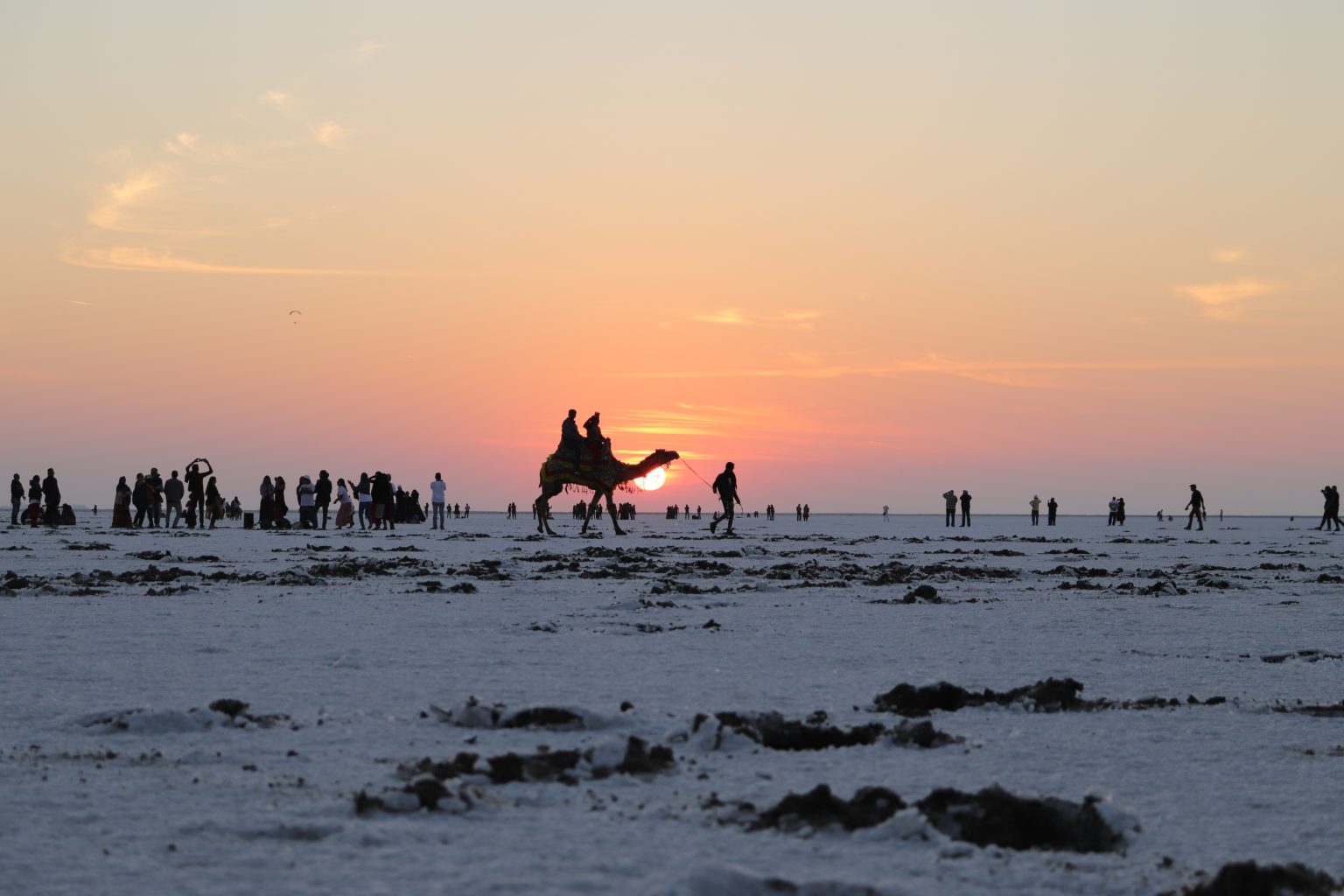
The Rann of Kutch, in western India, is a vast seasonal salt-marsh landscape shaped by the interaction of water, salt, and extreme seasonal changes. Located in Gujarat near the border with Pakistan, the region changes dramatically throughout the year, from a flooded wetland during the monsoon to a broad white salt plain during the dry season.
- Where Is the Rann of Kutch Located?
- A Landscape of Salt, Water, and Seasonal Change
- Climate: A Desert of Extremes
- Flora: Life That Endures Salinity
- Fauna: A Major Wildlife Landscape
- People and Life in Kutch
- Trade Routes and History
- Best Things to Do in the Rann of Kutch
- Walk the White Rann
- Experience Rann Utsav
- Wildlife Safari
- Visit Kutch Villages
- Explore the Rann After Dark
- Where to Stay
- Best Places to Visit
- Suggested 2-Day Itinerary
- Hidden Gems
- Practical Travel Tips
- Exploring India’s Great Salt Desert
Unlike conventional sandy deserts, the Rann is largely flat and dominated by salt deposits, seasonal wetlands, and elevated islands known as bets. These features support wildlife, pastoral communities, traditional villages, and one of India’s most distinctive craft traditions.
The region is divided into the Great Rann of Kutch and the Little Rann of Kutch, each offering different landscapes and experiences. Together, they form one of India’s most unusual desert environments.
Where Is the Rann of Kutch Located?
The Rann of Kutch lies in the western Indian state of Gujarat, along the border with Sindh, Pakistan.
Its geographic setting includes:
- North and west: Sindh, Pakistan
- East: Mainland Gujarat
- South: Gulf of Kutch
- Northeast: Thar Desert
Approximate coordinates: 23°45′N, 69°45′E
The region is divided into two major areas:
- Great Rann of Kutch: a vast seasonal salt marsh in the north
- Little Rann of Kutch: a smaller salt-marsh and desert landscape in the south, known particularly for its wildlife
Together, these landscapes form one of the world’s largest and most distinctive salt-flat regions.
A Landscape of Salt, Water, and Seasonal Change
The Rann of Kutch changes considerably between the monsoon and dry seasons.
Salt Flats
During the dry season, much of the Great Rann becomes a broad white salt plain.
- Extensive salt crusts cover the flat surface
- The terrain is remarkably level
- Bright sunlight creates intense glare
- Thin salt layers can produce strong reflections after moisture remains on the surface
- The white landscape extends across large areas of the Rann
These conditions make the dry-season Rann particularly popular for photography and sightseeing.
Seasonal Wetlands
During the monsoon season, rainfall floods large parts of the Rann. Tidal influence also affects some areas, particularly closer to the Gulf of Kutch.
As water gradually evaporates during the following dry season, salt accumulates on the surface and produces the characteristic white landscape.
This annual cycle of flooding, evaporation, and salt deposition is one of the defining characteristics of the Rann.
Bet Islands
Scattered across the Rann are elevated areas known as bets. These natural or slightly raised islands remain above surrounding floodwaters and provide important habitat for vegetation, wildlife, and human activity.
Some bets are used for grazing and settlement, while others provide refuge for animals during periods of flooding.
Climate: A Desert of Extremes
The Rann of Kutch experiences major seasonal changes in temperature and rainfall.
- Summer temperatures: can reach around 50°C (122°F)
- Winter temperatures: can fall to around 5°C (41°F)
- Annual rainfall: approximately 300–500 mm, concentrated mainly during the monsoon
The best time to visit the main salt-flat areas is generally November to February, when the Rann is largely dry and temperatures are more comfortable.
Winter nights can become surprisingly cold, particularly in open areas away from settlements.
Flora: Life That Endures Salinity
Vegetation is limited across the most saline parts of the Rann, but plants survive in areas with lower salinity, seasonal moisture, or elevated ground.
Common vegetation includes:
- Salt-tolerant grasses and shrubs
- Mangroves around suitable coastal areas
- Prosopis and other hardy shrubs
- Desert plants on elevated bet islands
These plants provide grazing, shelter, and food for wildlife and pastoral communities.
Fauna: A Major Wildlife Landscape
The Rann of Kutch and its surrounding areas support a diverse range of wildlife, particularly in the Little Rann and associated wetlands.
Mammals
- Indian wild ass (Khur), one of the region’s best-known animals
- Nilgai
- Desert foxes
- Jackals
The Little Rann of Kutch Wild Ass Sanctuary is especially important for conservation of the Indian wild ass.
Birds
The wetlands and salt-marsh environments attract large numbers of resident and migratory birds.
Species can include:
- Greater and lesser flamingos
- Pelicans
- Cranes
- Storks
- Other migratory birds from Central Asia and surrounding regions
Flamingos are particularly associated with the wider Kutch region and can gather in large numbers when feeding and nesting conditions are favorable.
Reptiles
Lizards and snakes occur around the Rann’s margins, where vegetation and less saline habitats provide suitable shelter and food.
People and Life in Kutch
The Rann is closely connected to the communities living around its margins and on the more stable elevated areas.
Pastoral Communities
Traditional pastoral communities include groups such as:
- Rabari
- Maldhari
- Ahir
Livestock keeping remains important in parts of Kutch, with communities adapting their movements and grazing practices to the seasonal availability of water and vegetation.
World-Famous Crafts
Kutch is particularly well known for its textile and decorative arts.
Important traditions include:
- Kutchi embroidery
- Bandhani tie-dye
- Rogan painting
- Silver jewelry
- Mirror work
- Traditional woven textiles
Many villages have workshops and family businesses where visitors can see these crafts and purchase locally made products.
Trade Routes and History
The Rann and the wider Kutch region have long been connected to regional trade networks linking inland India with coastal ports and neighboring regions.
Historically, salt was an important resource, while the broader Kutch area supported trade through its ports and overland routes.
The region’s position between inland Gujarat, Sindh, and the Arabian Sea also contributed to long-standing cultural and commercial connections across western India.
Best Things to Do in the Rann of Kutch
Walk the White Rann
Explore the dry salt flats during the cooler months and experience the scale of the open landscape. Sunrise and sunset are particularly suitable for photography.
Experience Rann Utsav
Rann Utsav is a major seasonal cultural festival featuring music, dance, crafts, food, and performances connected with the culture of Kutch.
Wildlife Safari
Visit the Wild Ass Sanctuary in the Little Rann to look for Indian wild asses, antelope, birds, and other wildlife.
Visit Kutch Villages
Travel through artisan villages to see traditional embroidery, textiles, pottery, painting, and jewelry production.
Explore the Rann After Dark
Moonlight can illuminate the white salt surface, but visitors should explore only with appropriate local guidance and within permitted areas.
Where to Stay
Accommodation options around the Rann include:
- Rann Utsav Tent City
- Eco-resorts near Hodka and Bhirandiyara
- Heritage-style homestays in Kutch villages
- Guesthouses around Bhuj and other regional towns
Staying in or near local villages provides easier access to artisan communities and surrounding attractions.
Best Places to Visit
- White Rann salt flats
- Little Rann of Kutch Wild Ass Sanctuary
- Bhuj museums and historic sites
- Hodka artisan village
- Bhirandiyara and surrounding craft communities
- Suitable birdwatching areas around seasonal wetlands
Suggested 2-Day Itinerary
Day 1
Morning: Explore museums and historic sites in Bhuj.
Afternoon: Visit nearby artisan villages and learn about traditional Kutch crafts.
Evening: Travel toward the White Rann for sunset and return to your accommodation.
Day 2
Morning: Join a wildlife safari in or around the Little Rann.
Afternoon: Explore salt-flat landscapes or visit additional craft villages.
Evening: Attend cultural performances or seasonal Rann Utsav activities when available.
A longer itinerary is preferable for travelers who want to combine the White Rann, wildlife areas, and several craft villages without rushing between locations.
Hidden Gems
Travelers looking beyond the main attractions can explore:
- Bet islands, which provide a different perspective on the Rann’s ecology
- Salt-worker settlements and traditional salt-production areas
- Less crowded birdwatching locations around seasonal wetlands
- Remote sections of the salt flats accessible with local guidance
Practical Travel Tips
- Best months: November to February
- Wear sunglasses because salt surfaces can create intense glare.
- Carry enough water, even during the cooler season.
- Bring warm clothing for winter mornings and evenings.
- Respect wildlife and keep a safe distance from animals.
- Follow local access rules, particularly near the international border and protected areas.
- Check whether a permit is required for the area you plan to visit.
- Use local guides for remote sections of the Rann.
Exploring India’s Great Salt Desert
The Rann of Kutch is defined by seasonal change rather than permanent dunes or rocky terrain. Monsoon water covers large sections of the region, while evaporation later leaves behind extensive salt flats. Elevated bets provide habitat for vegetation and wildlife, while communities around the Rann maintain strong pastoral and craft traditions.
The Great Rann is best known for its vast white salt landscape, while the Little Rann adds an important wildlife dimension through the Indian wild ass and its seasonal wetlands. Around both areas, Kutch’s villages contribute a rich cultural layer through embroidery, textiles, painting, jewelry, and other traditional crafts.
For travelers, the Rann offers a combination of salt landscapes, seasonal wetlands, wildlife, and living Kutch culture, making it one of India’s most distinctive desert environments.