
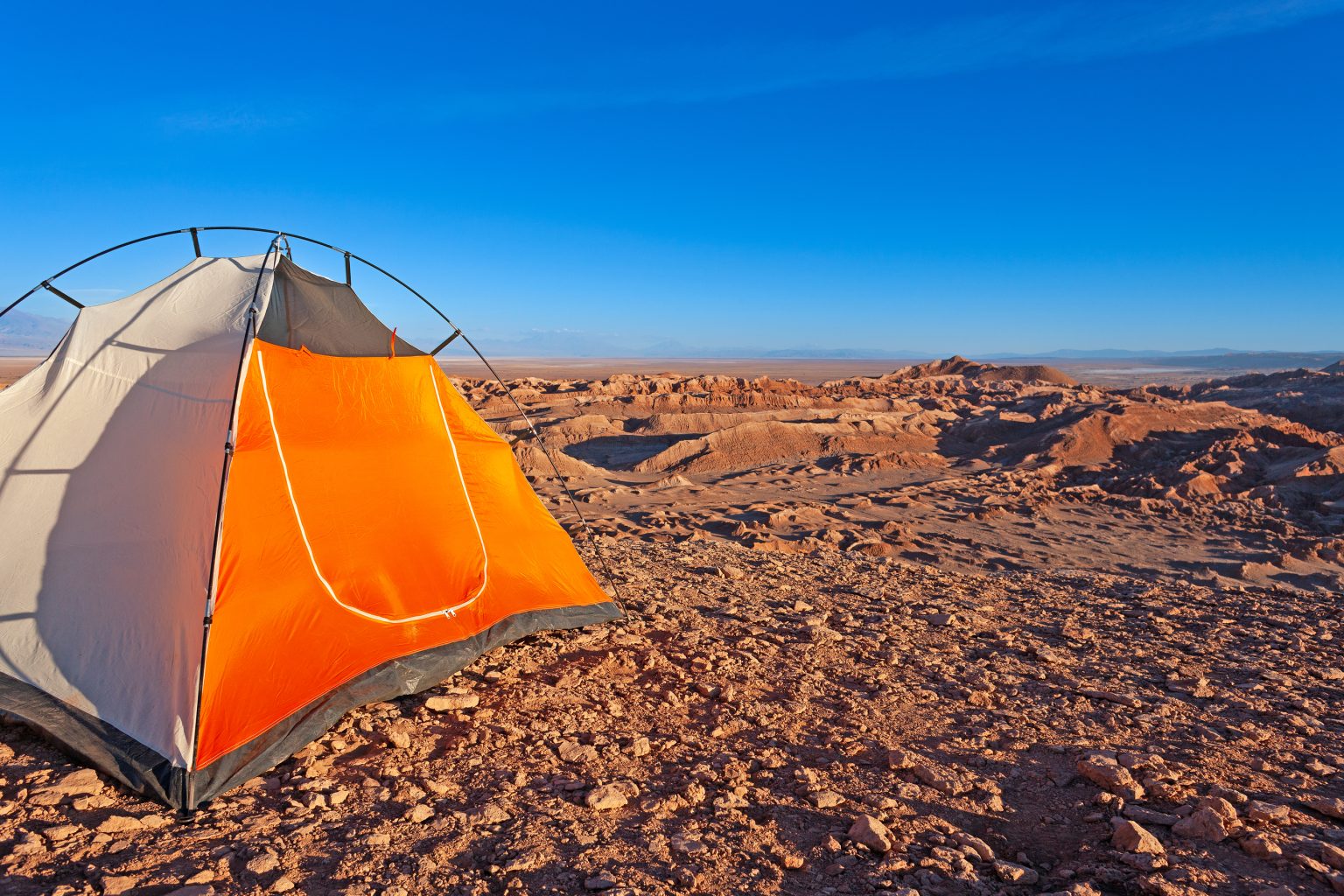
The Atacama Desert offers a rare combination of dramatic landscapes, exceptionally dark skies, and wide-open spaces for outdoor exploration. From salt formations and sandy valleys to high-Andean lagoons, desert camping in Chile gives travelers a chance to experience one of South America’s most distinctive environments. With the right campsite and a well-planned itinerary, you can explore the region by day and enjoy its remarkable night skies after dark.
- Why Camp in the Atacama Desert?
- Best Places to Explore While Camping in the Atacama Desert
- Valle de la Luna: Salt Formations and Sunset Views
- Valle de la Muerte: Dunes and Sandboarding
- Laguna Cejar and the Salar de Atacama
- El Tatio Geysers: A High-Altitude Excursion
- Miscanti and Miñiques Lagoons: High-Andean Landscapes
- What You Need for Desert Camping
- Best Time for Atacama Desert Camping
- April to October: The Drier Season
- November to March: Warmer Days and Possible Summer Rain
- Choosing the Best Dates
- Safety and Environmental Care
- Daytime Adventures Beyond the Campsite
- A Practical Three-Day Atacama Itinerary
- Experience the Atacama After Dark
Camping here requires more preparation than a typical outdoor stay. Temperatures can drop sharply after sunset, high-altitude excursions need careful planning, and many popular attractions restrict overnight stays. This guide covers the best places to explore, essential camping equipment, seasonal conditions, and practical ways to experience the Atacama responsibly.
Why Camp in the Atacama Desert?
The Atacama is widely recognized as the driest non-polar desert on Earth. Its terrain includes salt flats, sand dunes, volcanic rock, and mountain lagoons, creating a variety of landscapes within reach of San Pedro de Atacama.
One of the region’s main attractions is its dark night skies. Away from artificial lighting, stars and the Milky Way can be remarkably visible when the weather and moon phase cooperate. The dry climate often provides favorable viewing conditions, although cloud cover and atmospheric conditions can still affect visibility.
The desert also has a deep cultural history. The Atacameño, or Lickanantay, people have longstanding connections to the region’s oases, water sources, and high-Andean landscapes. Community-led visits offer opportunities to learn about local heritage while supporting the people who continue to care for this territory.
Camping near San Pedro de Atacama offers several advantages:
- Stargazing in areas with limited artificial light.
- Exploring salt formations, dunes, and volcanic landscapes.
- Visiting high-Andean lagoons and geothermal attractions on day trips.
- Photographing changing colors at sunrise and sunset.
- Discovering local heritage through respectful, community-led experiences.
Best Places to Explore While Camping in the Atacama Desert
Not every scenic location in the Atacama allows overnight camping. Several well-known attractions are protected areas with designated routes, visiting hours, and access restrictions. Choose an authorized campground or approved accommodation near San Pedro de Atacama, then explore the surrounding landscapes during the day.
Valle de la Luna: Salt Formations and Sunset Views
Valle de la Luna, or Moon Valley, is famous for its unusual ridges, eroded rock formations, salt deposits, and dunes. As the sun sets, the landscape shifts through shades of orange, red, and purple, creating excellent opportunities for landscape photography.
The valley is part of Reserva Nacional Los Flamencos, where access is regulated. Visitors should check current entry requirements and opening hours before arriving. Overnight camping is not permitted inside the reserve, so plan to return to an authorized campsite or accommodation outside the protected area.
For a rewarding visit:
- Arrive in the afternoon if permitted by the current visiting schedule.
- Stay on marked routes and respect barriers around fragile formations.
- Carry drinking water, sun protection, and a warm layer for the evening.
- Arrange transportation back to San Pedro de Atacama in advance.
Valle de la Luna is an excellent choice for travelers who want to experience the Atacama’s distinctive geology without undertaking a demanding hike.
Valle de la Muerte: Dunes and Sandboarding
Valle de la Muerte, also known as Death Valley, features sandy slopes, eroded rock, and open desert scenery close to San Pedro de Atacama. It is a popular setting for photography, short walks, and sandboarding excursions.
Despite its open appearance, visitors should not assume that camping is permitted anywhere in the valley. Check current access rules and use an authorized campsite outside restricted areas.
When visiting:
- Consider a guided sandboarding excursion if you are unfamiliar with the terrain.
- Wear closed shoes and carry enough drinking water.
- Avoid exposed slopes during strong winds.
- Confirm vehicle access and parking arrangements before setting out.
The valley makes a practical daytime adventure before returning to camp for dinner and stargazing.
Laguna Cejar and the Salar de Atacama
The Salar de Atacama is an extensive salt basin surrounded by striking desert scenery. Near its northern section, Laguna Cejar and the neighboring Laguna Piedra attract visitors with their mineral-rich waters and contrasting blue and white colors.
Access to the lagoons is managed, and activities are restricted to designated areas. Laguna Cejar is primarily for observation, while swimming or floating is permitted only in the specifically authorized area of Laguna Piedra, subject to current site rules.
Camping is not permitted at the lagoon complex. Plan a daytime visit and return to your authorized overnight base.
Keep these tips in mind:
- Check ticket availability and opening times before departure.
- Follow local instructions and stay on designated walkways.
- Keep salt water away from your eyes and use designated facilities where available.
- Observe flamingos and other wildlife from a respectful distance.
- Bring sun protection because shade can be limited.
The salt flats and lagoons are particularly attractive for photography in soft morning or late-afternoon light. Reflections depend on local conditions and are not guaranteed.
El Tatio Geysers: A High-Altitude Excursion
At approximately 4,300 meters above sea level, El Tatio is one of the Atacama’s best-known geothermal attractions. Steam is especially visible in the cold early-morning air, making dawn a popular time to visit.
El Tatio is best treated as a high-altitude excursion rather than a camping destination. Temperatures can fall well below freezing, and the combination of elevation, cold, and rough road conditions calls for careful preparation. Most visitors travel from San Pedro de Atacama and return the same day.
Before going:
- Allow time to acclimatize at a lower elevation.
- Wear warm layers, gloves, a hat, and suitable footwear.
- Stay on designated paths and keep away from geothermal features.
- Check road conditions, weather alerts, and opening information.
- Arrange transport with an experienced driver if you are unfamiliar with the route.
Do not assume that thermal pools are available for swimming or that overnight stays are permitted near the geysers. Follow the current rules set by local authorities and site operators.
Miscanti and Miñiques Lagoons: High-Andean Landscapes
The Miscanti and Miñiques lagoons lie in the high Andes, surrounded by volcanic peaks and open mountain terrain. Their deep blue water contrasts with the pale ground and sparse vegetation. Vicuñas and Andean birds may also be seen in the surrounding landscape.
The lagoons form part of Reserva Nacional Los Flamencos. Visitors must follow designated routes, entry procedures, and local access requirements. Overnight camping is not permitted in this sector unless specifically authorized.
Plan your visit carefully:
- Check access conditions and weather before leaving San Pedro de Atacama.
- Confirm current ticket arrangements and any required registration in Socaire.
- Allow time to acclimatize to the altitude.
- Carry warm clothing even when the weather is mild in town.
- Observe wildlife from a distance and remain on established routes.
These lagoons are best visited as a day trip. Their elevation and exposure make them unsuitable for casual overnight camping.
What You Need for Desert Camping
The Atacama’s dry climate can be deceptive. Days may feel warm under direct sunlight, while temperatures fall sharply after sunset. Conditions become colder at higher elevations, and wind can make a campsite uncomfortable if your equipment is inadequate.
Choose your gear according to the season, altitude, forecast, and facilities available at your campsite.
Essential Camping Equipment
- A suitable tent: Choose a sturdy model with reliable wind resistance and secure anchoring. A four-season tent can be useful in exposed or colder locations, although it is not necessary for every low-altitude campsite.
- A warm sleeping bag: Select a bag with a comfort rating suitable for the expected overnight temperature. Freezing conditions are possible, particularly at elevation.
- An insulated sleeping mat: Ground insulation helps reduce heat loss during cold nights.
- Layered clothing: Pack thermal base layers, an insulating mid-layer, a windproof outer layer, warm socks, and a hat.
- Cooking equipment: Use a camping stove only where the campground permits it, and follow all fuel and fire regulations.
- Drinking water and food: Carry sufficient supplies for your itinerary, plus extra for delays and strenuous activities. Four liters of water per person per day can be a useful starting estimate in some conditions, but requirements vary with exertion, temperature, and altitude.
- Lighting and power: Bring a headlamp, spare batteries, and a suitable power bank or solar charger.
- Navigation and communication: Download offline maps, keep your phone charged, and consider additional communication equipment for remote routes with limited mobile coverage.
- Sun protection: Bring sunscreen, sunglasses, and a wide-brimmed hat to protect against intense sunlight.
Binoculars, a camera tripod, or a small telescope can enhance a stargazing trip. However, reliable safety equipment and warm clothing should take priority over optional photography gear.
Set up camp during daylight, secure loose equipment against wind, and check the forecast before traveling into remote areas.
Best Time for Atacama Desert Camping
The Atacama can be visited throughout much of the year, but the best conditions depend on whether you prioritize warmer nights, clear skies, or high-Andean excursions.
April to October: The Drier Season
April through October is generally part of the drier period around San Pedro de Atacama. Clear skies can make these months attractive for desert camping and stargazing, although nights can be cold and high-altitude conditions may be severe in winter.
Pack warm layers and check forecasts before traveling into the Andes. Temperatures vary considerably with elevation, season, and local weather, so a single temperature range cannot describe the entire region.
November to March: Warmer Days and Possible Summer Rain
Summer brings warmer conditions to lower elevations, but the Altiplano can experience occasional rainfall and thunderstorms, particularly during the regional summer rainy period. These conditions may affect roads, visibility, and access to remote sites.
If you travel during these months:
- Check local weather forecasts before setting out.
- Confirm road and attraction access with operators or local authorities.
- Avoid flooded roads and never drive through water of uncertain depth.
- Keep your itinerary flexible when planning high-altitude excursions.
Choosing the Best Dates
May through September can provide excellent opportunities for stargazing, but nighttime temperatures may be particularly low. Travelers who prefer milder conditions can consider the shoulder months, depending on the forecast.
For astronomy, clear weather is only one factor. Moon phase and timing also affect visibility, so check lunar conditions if observing the Milky Way is a priority.
Safety and Environmental Care
Remote desert travel requires preparation. Long distances between services, cold nights, and high-altitude routes can create challenges even for experienced outdoor travelers. Responsible camping also means recognizing that many local landscapes are protected or culturally significant.
Stay Safe in Dry and Remote Areas
- Plan your route: Share your itinerary and expected return time with someone, particularly when traveling beyond established tourist areas.
- Carry enough water: Bring additional supplies for unexpected delays and do not rely on natural water sources.
- Acclimatize gradually: High altitude can cause headaches, nausea, dizziness, and unusual fatigue. Do not continue ascending if symptoms develop or worsen.
- Prepare for cold: Protect yourself against wind and freezing overnight temperatures, even after a warm afternoon.
- Check road conditions: Some routes require suitable vehicles, experienced drivers, or guided transport. Four-wheel drive does not eliminate the risks of remote travel.
- Respect geothermal areas: At El Tatio, remain on designated paths and avoid unstable ground and hot water.
- Check local restrictions: Access rules, opening hours, and weather-related closures can change.
Seek urgent medical assistance for severe altitude symptoms, especially confusion, difficulty breathing at rest, or difficulty walking normally.
Protect the Desert Environment
The Atacama’s ecosystems are fragile, and recovery from disturbance can be slow. Use established campsites and follow the rules of protected areas and community-managed attractions.
- Take all rubbish with you and dispose of it at appropriate facilities.
- Avoid open fires. Use a camping stove only where expressly permitted.
- Do not remove salt, rocks, plants, archaeological objects, or other natural materials.
- Stay on marked roads and trails instead of driving across untracked terrain.
- Keep noise low at night and avoid shining bright lights at wildlife.
- Respect local communities, cultural sites, and photography restrictions.
A responsible trip leaves the landscape undisturbed and helps preserve it for future visitors and the communities connected to it.
Daytime Adventures Beyond the Campsite
Camping near San Pedro de Atacama provides a convenient base for exploring several different environments. Travel times and access conditions vary, so allow enough time between excursions rather than trying to visit every attraction in a single day.
Popular activities include:
- Sandboarding: Explore suitable dunes near Valle de la Muerte with a reputable operator and appropriate safety equipment.
- Salt-flat photography: Visit designated viewpoints around the Salar de Atacama and observe birdlife without disturbing it.
- High-Andean excursions: Explore the Miscanti and Miñiques lagoons on a planned day trip.
- Geothermal sightseeing: Visit El Tatio early in the morning, allowing time for the high-altitude journey.
- Astronomy experiences: Join a guided stargazing session to learn about southern-hemisphere constellations and the Milky Way.
- Local cultural visits: Choose community-led experiences that share Atacameño heritage while respecting local customs and traditions.
Volcano hikes, including routes around Licancabur or Lascar, require separate planning. These are not casual additions to a camping itinerary. Some routes involve significant altitude, technical challenges, or access restrictions, so check current conditions and use qualified guides when appropriate.
A Practical Three-Day Atacama Itinerary
This itinerary uses an authorized campground or accommodation near San Pedro de Atacama as the overnight base. It does not assume that camping is allowed inside protected attractions.
Day 1: Moon Valley and Sunset
Arrive in San Pedro de Atacama, organize your supplies, and settle into your chosen campsite. Spend the afternoon visiting Valle de la Luna, checking entry hours and transport arrangements in advance.
After sunset, return to camp for dinner and, if the sky is clear, an evening of stargazing. Keep lighting low and prepare for falling temperatures.
Day 2: Lagoons and Desert Dunes
Begin with a planned visit to Laguna Cejar and the authorized swimming area at Laguna Piedra, if open and operating under suitable conditions. Follow the site’s rules and allow enough time to return to town.
Later, explore Valle de la Muerte with a local operator or through an activity suited to your experience level. Return to your campsite for the evening rather than attempting an unapproved overnight stay in the dunes.
Day 3: The High Andes
If you have acclimatized and the weather is suitable, dedicate the day to the Miscanti and Miñiques lagoons. Check access requirements and road conditions before departure, and bring warm clothing and drinking water.
Alternatively, choose El Tatio for an early-morning geothermal excursion, provided the site is open and conditions are safe. These high-altitude attractions are better treated as separate excursions if you need additional time to rest or acclimatize.
Return to San Pedro de Atacama before continuing your journey.
Experience the Atacama After Dark
The Atacama Desert combines dark skies, salt landscapes, volcanic scenery, and high-Andean lagoons in a setting unlike most camping destinations. A successful trip does not depend on sleeping in the most remote location. It depends on choosing a suitable campsite, preparing for cold and altitude, and planning visits around local access rules.
With a reliable base near San Pedro de Atacama, you can explore the desert by day and enjoy its night sky after dark. Respect for protected landscapes and Atacameño communities helps preserve the qualities that make this region worth discovering.