
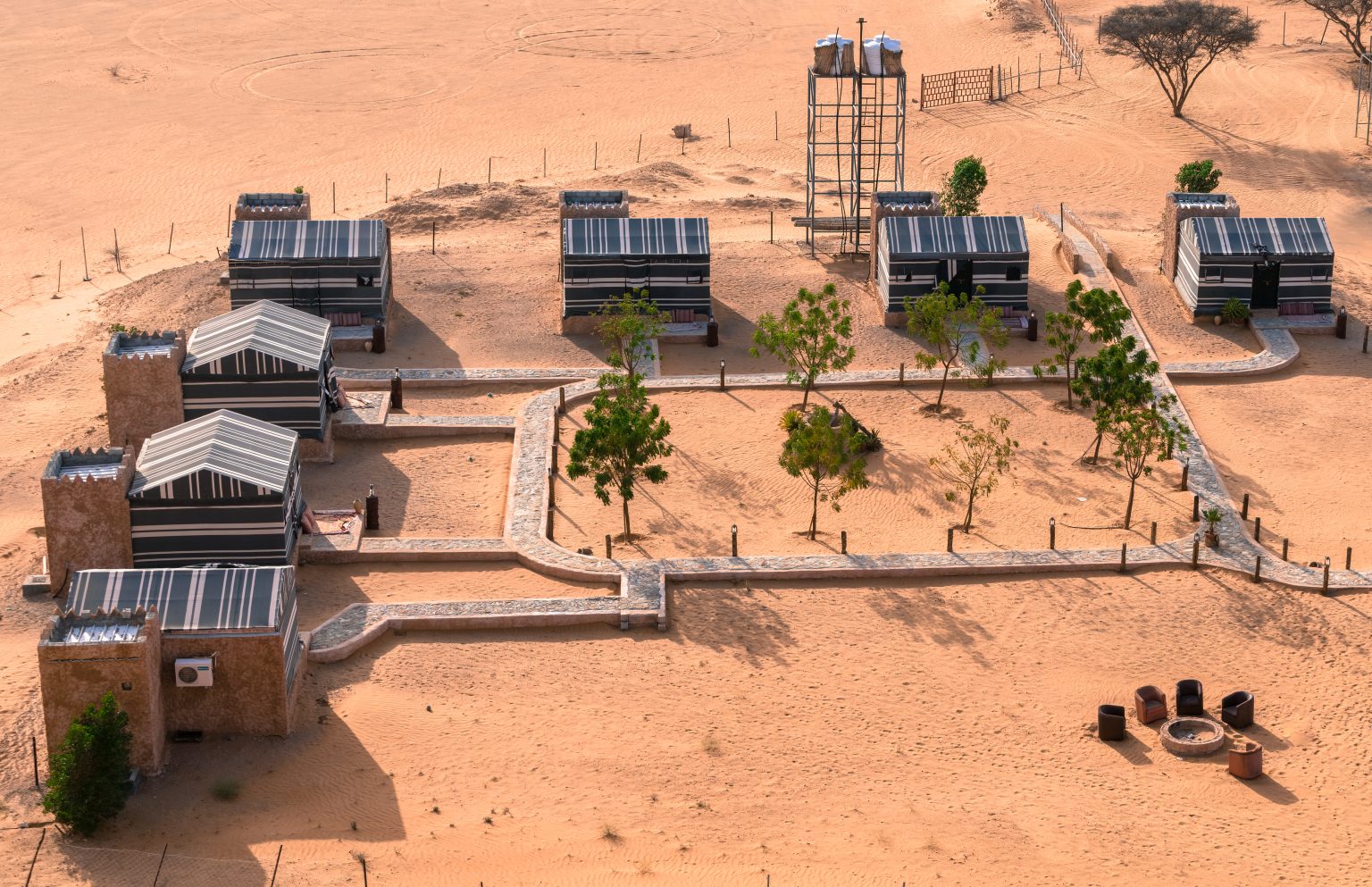
As daylight fades, the dunes change color and the desert begins to cool. The last light settles over the sand, the evening meal is prepared, and the first stars appear above the horizon. Away from busy towns, a night in the desert offers time to slow down and experience Oman’s landscapes after sunset.
- What Makes Camping in Oman’s Desert Unique
- Best Places for Desert Camping in Oman
- Wahiba Sands (Sharqiya Sands)
- Rub’ al Khali (The Empty Quarter)
- Al Khaluf Sugar Dunes
- Salmah Plateau and the Eastern Sharqiya Region
- What to Expect When Camping in Oman’s Desert
- What to Pack for Desert Camping
- Stargazing in Oman’s Desert
- Best Time to Camp in Oman’s Desert
- October to March: The Main Camping Season
- April and May: Warmer Conditions
- June to September: The Hottest Period
- Desert Camping Safety and Respect
- Two-Day Wahiba Sands Camping Itinerary
- Make Your Desert Camping Experience in Oman Count
Desert camping in Oman offers several ways to experience the country’s dry interior, from organized camps in Wahiba Sands (Sharqiya Sands) to remote excursions into the Empty Quarter and coastal scenery near Al Khaluf. Whether you prefer a comfortable desert camp or a more independent outdoor experience, choosing the right location, preparing for changing temperatures, and following local guidance will help you plan a safe and rewarding stay.
What Makes Camping in Oman’s Desert Unique
Oman’s desert landscapes range from rolling sand dunes to rocky plateaus and white coastal sands. Each setting offers a different experience, and facilities vary considerably between established camps and remote locations.
A night in the desert can combine outdoor exploration with local food, regional hospitality, and opportunities to observe the night sky. Some organized camps offer private tents and prepared meals, while more remote excursions require additional equipment and careful planning.
Reasons to consider camping in Oman include:
- Diverse desert landscapes: Explore red and golden dunes, rocky terrain, and coastal sand formations.
- Stargazing: Away from major settlements, clear nights can offer excellent views of the stars.
- Local hospitality: Some tours include Omani coffee, dates, regional meals, or visits arranged with local hosts.
- Outdoor activities: Depending on the destination, visitors may try camel riding, sandboarding, or guided dune driving.
- Different camping styles: Choose between established desert camps, guided overnight excursions, and independent camping where permitted.
Desert environments are not identical, and neither are local customs. Experiences depend on the location and operator, so confirm what is included before booking.
Best Places for Desert Camping in Oman
Wahiba Sands (Sharqiya Sands)
Wahiba Sands, also known as Sharqiya Sands, is one of Oman’s best-known destinations for desert camping. Located in the eastern part of the country, it features extensive dunes and a range of accommodation, from simple tents to camps with private facilities.
The journey from Muscat commonly takes around three to four hours, depending on the camp, traffic, and road conditions. Many visitors travel through the Bidiyah area before continuing to their accommodation.
Activities offered by camps and local operators may include:
- Sunset and sunrise viewing: Watch the colors of the dunes change throughout the day.
- Sandboarding: Try selected slopes with suitable equipment and guidance.
- Dune driving: Join an experienced driver for a trip across appropriate sandy terrain.
- Camel rides: Ask local operators about available routes and ride duration.
- Local food and hospitality: Some stays include Omani coffee, dates, or meals prepared at the camp.
- Stargazing: Spend the evening outdoors when weather and visibility permit.
Several accommodation options serve the area, including Desert Nights Camp and 1000 Nights Camp. Facilities, prices, and activities differ, so compare the specific package rather than assuming all camps provide the same experience.
You do not necessarily need to drive a 4×4 for the entire journey to a desert camp. Some properties are accessible by paved roads and firm tracks, while the final approach to others may require a suitable vehicle or a transfer arranged by the camp. Confirm the route with your accommodation before setting off.
Wahiba Sands is suitable for couples, families, photographers, and first-time desert visitors who want an organized overnight stay without traveling into the most remote parts of Oman.
Rub’ al Khali (The Empty Quarter)
The Rub’ al Khali, or Empty Quarter, is one of the world’s largest continuous sand seas. Its vast dune fields extend across parts of Oman, Saudi Arabia, the United Arab Emirates, and Yemen.
In Oman, the desert lies in the western part of Dhofar Governorate. Organized journeys commonly depart from the Salalah area and travel north toward remote dune regions, including Al Hashman and Al Khadhf. The route and travel time depend on the destination and tour arrangements.
Possible experiences include:
- High sand dunes: Observe the scale and changing shapes of the dunes from suitable locations.
- Desert camping: Stay at a location arranged by an experienced operator.
- Stargazing: Enjoy the night sky when conditions are clear and light pollution is limited.
- Camel riding: Ask whether a ride is available as part of the itinerary.
- Local history: Some tours include the archaeological area associated with the ancient settlement of Ubar.
The Empty Quarter is a remote environment where navigation, fuel, water, communications, and recovery arrangements matter. Independent travelers should not assume that a normal rental vehicle or standard navigation app is sufficient.
For most visitors, an organized trip with a specialist desert operator is the practical choice. Confirm the vehicle, overnight arrangements, supplies, and emergency procedures before departure.
Al Khaluf Sugar Dunes
The Sugar Dunes of Al Khaluf, on Oman’s central coast, offer a striking contrast between pale sand and the Arabian Sea. The white dunes and coastal setting create a different atmosphere from the inland sands of Wahiba and the Empty Quarter.
Al Khaluf is a substantial drive from Muscat, and travel time varies according to the route and the exact camping location. Visitors should plan the journey carefully rather than relying on a single fixed travel-time estimate.
Things to enjoy include:
- White coastal dunes: Explore the landscape from suitable access points.
- Coastal photography: Capture the contrast between pale sand, sea, and rocky sections of the coastline.
- Sunrise and sunset: Changing light can bring out the textures of the dunes.
- Quiet outdoor evenings: The coastal setting offers a different atmosphere from inland desert camps.
Camping arrangements and facilities can be limited compared with established resorts. Before staying overnight, check access conditions, local restrictions, tides where relevant, and the availability of suitable water and sanitation facilities.
Do not assume that every section of the dunes is open for vehicle access or camping. Use permitted routes, avoid damaging vegetation, and carry all rubbish away.
Al Khaluf is particularly appealing to photographers and travelers interested in combining desert scenery with a coastal landscape.
Salmah Plateau and the Eastern Sharqiya Region
The Salmah Plateau and surrounding eastern mountain landscapes provide a different type of outdoor experience from the large sandy deserts. Rocky terrain, elevated viewpoints, and exposed areas make route selection and weather preparation important.
This is not a substitute for a classic dune-camping destination. Travelers interested in camping here should first identify a specific permitted site and verify access with local authorities or an experienced operator.
Planning considerations include:
- Terrain: Rocky surfaces and uneven access roads may require appropriate footwear and a suitable vehicle.
- Weather: Wind and falling temperatures can affect exposed overnight locations.
- Navigation: Do not rely solely on mobile coverage in isolated areas.
- Camping permissions: Confirm where overnight stays and open fires are allowed.
- Supplies: Carry adequate water, food, warm clothing, and equipment for the planned duration.
The plateau may appeal to experienced outdoor travelers seeking elevated scenery and a quieter setting. However, facilities and services can be limited, so preparation is essential.
What to Expect When Camping in Oman’s Desert
The experience depends on whether you choose an established camp or a more remote overnight trip.
At organized camps, accommodation may include furnished tents, beds, bathrooms, meals, and scheduled activities. More basic camps may offer fewer facilities, while independent camping requires you to provide your own equipment and supplies.
An organized evening may include:
- Dinner: Some camps serve Omani or regional dishes, with menus varying by property.
- Omani coffee and dates: These may be offered as part of the welcome or hospitality experience.
- Outdoor relaxation: Guests can spend time outside when weather conditions are suitable.
- Stargazing: Clear skies provide opportunities to observe constellations and the Milky Way.
- Optional activities: Camel rides, sandboarding, and dune driving may be available at an additional cost.
Some traditional cooking methods use heated sand or underground ovens, but dishes such as shuwa and other regional specialties are not included at every camp. Ask about the actual menu and activities before booking.
Respect local hosts and their customs, ask permission before photographing people, and follow any camp rules regarding noise, clothing, and shared spaces.
What to Pack for Desert Camping
Desert conditions can change noticeably between daytime and nighttime. The equipment required also depends on whether you are staying at a serviced camp or camping independently.
Essential Clothing and Equipment
- Tent and sleeping equipment: For independent camping, choose a tent suitable for the expected wind and terrain, along with an appropriate sleeping bag and mat.
- Warm clothing: Even when days are warm, nights can become cool, especially during winter or at exposed sites.
- Drinking water: Carry enough for everyone for the full trip, including a reserve for delays.
- Food and snacks: Bring sufficient supplies if meals are not provided.
- Headlamp or flashlight: Useful around camp after dark.
- Sun protection: Pack sunscreen, sunglasses, and a hat.
- Closed footwear: Suitable shoes help with walking across sand and rocky ground.
- First-aid supplies: Bring a basic kit and any personal medication you need.
- Rubbish bags: Pack out all waste, including food packaging.
- Navigation and communication: Carry offline maps and a charged phone; remote trips may require a satellite messenger or satellite phone.
Additional Items for Remote Trips
For the Empty Quarter or other isolated areas, consider:
- A suitable vehicle with sufficient fuel and a serviceable spare tire.
- Extra water and food for unexpected delays.
- A power bank and backup lighting.
- A reliable navigation device and a backup route plan.
- Emergency communication equipment appropriate to the remoteness.
- A clear itinerary shared with someone who knows when you expect to return.
If you are staying at an established camp, confirm which items are already provided. There is no need to carry a full camping setup when your accommodation supplies it.
Stargazing in Oman’s Desert
Away from major settlements, Oman’s desert regions can provide good conditions for stargazing in Oman, particularly on clear nights with limited moonlight. Visibility depends on weather, dust, humidity, and the amount of artificial light nearby.
Possible sights include:
- The Milky Way: It may be visible under sufficiently dark and clear skies, especially when the moon is not bright.
- Constellations: Their visibility changes with the season and time of night.
- Meteor showers: Annual showers can offer additional viewing opportunities when the timing and sky conditions are favorable.
- Planetary views: Bright planets may be visible depending on their position in the sky.
Wahiba Sands, the Empty Quarter, and remote sections of the Al Khaluf area may offer opportunities for night-sky observation, but conditions differ by campsite.
For better viewing:
- Plan around the new moon or a period when moonlight is limited.
- Check the weather and visibility forecast.
- Move away from camp lighting when it is safe and permitted.
- Allow your eyes time to adjust to the darkness.
- Use a tripod for long-exposure photography, and keep lighting low around other visitors.
Do not wander far from camp in the dark without a reliable light and a clear way to return.
Best Time to Camp in Oman’s Desert
The cooler months are generally the most comfortable for outdoor activities in Oman’s lowland desert regions. Official Omani tourism guidance identifies the winter period as a favorable season for camping and other outdoor experiences. Conditions still vary by region and year. <Cite refs={[“turn818394search3″,”turn818394search6”]}/>
October to March: The Main Camping Season
Autumn and winter are generally suitable for desert excursions, with more comfortable daytime conditions than during the hottest months. Nights can still be cool, so bring layers and check the forecast for your chosen location.
This period is popular for:
- Overnight stays in Wahiba Sands.
- Guided excursions into the Empty Quarter.
- Stargazing and desert photography.
- Outdoor meals and evening activities.
Book ahead during busy holiday periods and confirm the operator’s schedule before traveling.
April and May: Warmer Conditions
Temperatures rise during spring, particularly in inland areas. Shorter activities and early or late departures may be more comfortable than spending long periods outdoors during the heat of the day.
Before traveling, check local conditions and ensure that you have enough water and shade.
June to September: The Hottest Period
Summer heat can make desert camping uncomfortable and, in some conditions, hazardous. Lowland desert temperatures may reach very high levels, while the weather in southern Oman differs during the Khareef season.
If considering a summer trip:
- Check the forecast for the exact destination.
- Ask the operator whether overnight camping is running safely.
- Avoid strenuous activity during peak heat.
- Carry sufficient drinking water and sun protection.
- Postpone the trip if weather conditions or operator advice indicate that it is unsafe.
For many visitors, November through February offers a practical balance of cooler daytime conditions and pleasant opportunities for outdoor evenings. However, no month guarantees clear skies or ideal temperatures at every destination.
Desert Camping Safety and Respect
Responsible desert camping in Oman means preparing for the environment and respecting the land and people who live nearby.
Follow these precautions:
- Carry out all rubbish: Leave the campsite clean and take waste to an appropriate disposal point.
- Use fires responsibly: Make a fire only where permitted, use a suitable fire container, and extinguish it completely before leaving.
- Respect local access rules: Do not camp on private land or in restricted areas without permission.
- Plan water and fuel carefully: Remote routes may have few or no services.
- Check weather conditions: Wind, heat, and occasional rainfall can affect desert travel.
- Avoid unnecessary night driving: Poor visibility, soft sand, and remote conditions increase risk.
- Use experienced guides where appropriate: This is particularly important for remote journeys into the Empty Quarter.
- Respect local communities: Ask before photographing people or entering private property.
For dune driving, use a suitable vehicle and a qualified driver. Do not attempt remote sand routes without the appropriate experience, equipment, and recovery support.
Two-Day Wahiba Sands Camping Itinerary
This sample plan focuses on an overnight stay in Wahiba Sands, one of Oman’s most accessible established desert-camping regions. Actual activities depend on the camp, road conditions, and current availability.
Day 1: Travel from Muscat to Wahiba Sands
Leave Muscat in the morning and travel toward the Bidiyah area. If time allows, arrange a stop in Ibra or another suitable settlement along the route.
Continue to your chosen camp using the access arrangements confirmed in advance. Some camps provide a transfer for the final sandy section, while others may be reached by a suitable road or firm track.
In the afternoon, consider an optional activity such as sandboarding, a camel ride, or a guided dune drive. At sunset, return to camp for dinner and an evening outdoors. If the sky is clear, spend some time stargazing.
Day 2: Sunrise and Return Journey
Wake early if you want to see the dunes in the morning light. Join a camel ride if the camp offers one, or take a short walk in an authorized area.
After breakfast, pack your belongings and confirm the return transport or driving route. Leave enough time for the journey back to Muscat, allowing for stops and road conditions.
A two-day trip is a practical introduction to desert camping without requiring an extended expedition into remote terrain.
Make Your Desert Camping Experience in Oman Count
From the rolling sands of Wahiba Sands to the remote dunes of the Empty Quarter and the pale coastal landscapes near Al Khaluf, Oman desert camping offers a range of ways to experience the country’s natural environment.
The best trip depends on the setting you want, the level of comfort you prefer, and how much preparation the journey requires. Choose an established camp for convenience, or arrange a specialist guided excursion for more remote destinations.
Pack for changing temperatures, confirm access and camping rules, and treat the landscape and local communities with respect. With thoughtful planning, a night in Oman’s desert can become a memorable part of a wider journey through the Sultanate.