
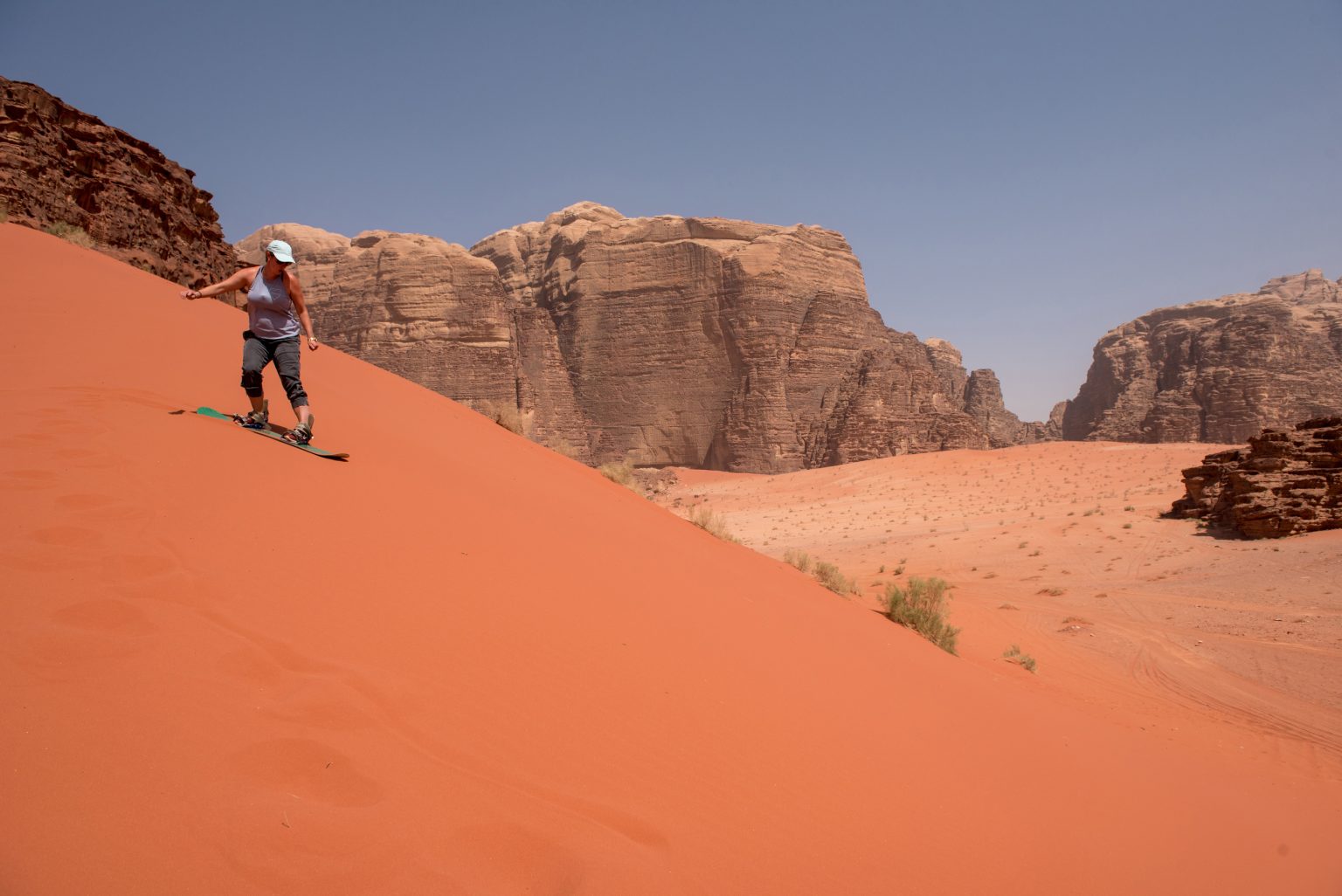
The red dunes of Wadi Rum in Jordan offer a memorable setting for sandboarding, combining outdoor adventure with views of sandstone mountains and wide desert valleys. With a suitable dune, the right board and guidance from a local operator, visitors can try sliding down sandy slopes while discovering one of Jordan’s most distinctive landscapes.
- Why Wadi Rum Is a Great Place for Sandboarding
- Where to Try Sandboarding in Wadi Rum
- Alhassani Dune
- Abu Khashaba Canyon
- Sand Dunes Near Jabal Um Ishrin
- Choose the Right Dune With Your Guide
- What to Know Before Sandboarding in Wadi Rum
- How to Sandboard Safely: A Beginner’s Guide
- 1. Inspect the Slope
- 2. Check Your Board
- 3. Start With a Simple Position
- 4. Follow the Guide’s Instructions
- 5. Keep the Landing Area Clear
- 6. Stop When Conditions Change
- Combine Sandboarding With Other Wadi Rum Experiences
- Best Time to Go Sandboarding in Jordan
- Safety and Environmental Responsibility
- A Half-Day Sandboarding Itinerary in Wadi Rum
- Morning or Afternoon: Meet Your Guide
- Sandboarding Session
- Explore the Surrounding Landscape
- Return to Camp
- Why Sandboarding Adds Something Different to Wadi Rum
Known as the Valley of the Moon, Wadi Rum is famous for its rock formations, desert camps, jeep tours and clear night skies. Sandboarding adds an active element to a visit, whether you are trying it for the first time or looking for another way to explore the dunes.
This guide explains where to ask about sandboarding in Wadi Rum, what equipment to bring, how to prepare for your first ride and how to enjoy the desert responsibly.
Why Wadi Rum Is a Great Place for Sandboarding
Wadi Rum Protected Area lies in southern Jordan and is known for its red and golden sand, towering sandstone formations and broad valleys. The landscape has featured in films set on other planets, but its appeal extends well beyond its dramatic appearance.
Visitors often explore the area by 4×4, on foot or by camel. Sandboarding can be added to some desert excursions when the operator can provide a suitable slope, equipment and safe conditions.
What Makes Sandboarding in Wadi Rum Special
- Distinctive desert scenery: Red sand and sandstone mountains create striking surroundings for riding and photography.
- Different slope options: Some dunes have gentler gradients suitable for beginners, while others may be too steep or uneven for casual riders.
- Guided access: Local Bedouin operators know the terrain and can help identify suitable locations.
- Flexible itineraries: Sandboarding may be combined with a jeep tour, a sunset stop or a stay at a desert camp.
- Photography opportunities: The changing light around sunrise and sunset brings out the colors and contours of the dunes.
Not every Wadi Rum tour includes sandboarding, and not every dune is suitable for it. Confirm the activity, equipment and location with your operator before booking.
Where to Try Sandboarding in Wadi Rum
Wadi Rum contains several sandy areas that visitors explore during guided excursions. The best location for sandboarding depends on the slope, the condition of the sand, current access arrangements and the experience of the group.
Alhassani Dune
Alhassani Dune, near Jabal Um Ishrin, is among the sandy features identified by local tourism information for hiking and dune exploration in Wadi Rum.
Its suitability for sandboarding depends on the particular slope selected by the guide. Ask your operator whether the planned excursion includes a board and whether the available terrain is appropriate for your ability.
This can be an option for visitors who want to combine a dune stop with a broader tour of the protected area.
Abu Khashaba Canyon
The sandy areas around Abu Khashaba Canyon are another location worth discussing with a local guide. The canyon is known for its desert scenery and walking opportunities, but the availability of sandboarding depends on the specific slope and tour arrangements.
Before including it in your itinerary, confirm whether sandboarding is permitted and practical at the intended location. Do not assume that every sandy section inside the canyon is suitable for riding.
Sand Dunes Near Jabal Um Ishrin
The wider area around Jabal Um Ishrin includes sandy slopes and striking sandstone scenery. Some excursions visit nearby dunes, including areas around Alhassani and other established stops.
A local guide can help assess whether the sand is firm enough for the board to glide, whether the slope has a clear runout and whether the route is suitable for beginners.
The presence of a dune alone does not make it safe for sandboarding. Rocks, exposed bedrock, uneven ground and other visitors can make a slope unsuitable.
Choose the Right Dune With Your Guide
Rather than relying on a fixed list of supposedly ideal dunes, ask your operator to choose a suitable slope on the day. Conditions can change with wind, recent use and the route taken.
Before riding, check that:
- The slope has a clear, unobstructed runout.
- The landing area is free of rocks, vehicles and people.
- The gradient matches your experience.
- Your board is designed for sandboarding and is in good condition.
- The guide has explained how to start, control your speed and stop.
This approach is more reliable than assuming that a particular dune is always suitable for every rider.
What to Know Before Sandboarding in Wadi Rum
Sandboarding requires relatively little equipment, but the desert environment calls for preparation. Sun exposure, loose sand, wind and uneven ground can all affect the experience.
Essential Gear
Bring or confirm the availability of the following:
- Sandboard: Check with your camp or tour operator whether boards are included or need to be arranged separately.
- Sun protection: Use sunscreen, sunglasses and a hat before and after your ride.
- Lightweight clothing: Choose comfortable clothes that protect your skin from the sun and abrasive sand.
- Closed footwear: Wear footwear that protects your feet from hot sand and rough ground, unless your guide has a specific, safe arrangement for the activity.
- Drinking water: Carry enough for the excursion and drink regularly.
- Small first-aid supplies: Useful for minor scrapes and other small problems during outdoor activities.
Knee or elbow protection may be helpful for beginners if recommended by the operator. An action camera can capture the ride, but secure it properly and avoid handling a camera while moving.
Early morning and late afternoon often provide more comfortable temperatures and attractive light. However, conditions vary, so follow the guide’s advice on timing.
How to Sandboard Safely: A Beginner’s Guide
If this is your first time sandboarding in Jordan, start with a gentle slope and follow the instructions of someone familiar with the equipment and terrain.
1. Inspect the Slope
Walk around the starting point and landing area with your guide. Avoid slopes that end near rocks, cliffs, vehicles or other obstacles. Do not ride where people are walking uphill.
2. Check Your Board
Make sure the board is suitable for sand, with a secure riding surface and no obvious damage. Use only the wax or treatment recommended for that board. Household soap or candle wax should not be applied unless the equipment provider specifically approves it.
3. Start With a Simple Position
Beginners may find it easier to start seated or kneeling if the board and guide allow that approach. Standing requires more balance and control. Learn the basic position and stopping technique before attempting a standing ride.
4. Follow the Guide’s Instructions
Listen carefully to the explanation of how to start, steer and stop. Do not assume that techniques used on snowboards transfer directly to sandboards, because the surface and equipment behave differently.
5. Keep the Landing Area Clear
Ride only when the slope is clear. Wait until the previous rider has reached the bottom and moved away before starting your turn.
6. Stop When Conditions Change
Strong wind, poor visibility, loose obstacles or excessive heat can make the activity less comfortable or safe. Pause the session if the guide identifies a problem.
Falling can happen, especially when learning, so choose a slope where a fall is unlikely to result in a collision or a slide into dangerous terrain.
Combine Sandboarding With Other Wadi Rum Experiences
Sandboarding is often most convenient as one part of a wider visit to Wadi Rum Protected Area. Local operators offer different combinations of desert activities, although the exact itinerary varies.
- 4×4 jeep tours: Explore sandstone formations, broad valleys and selected viewpoints with a local driver.
- Camel rides: Experience a traditional form of desert travel on an arranged excursion.
- Hiking: Walk through designated areas to see rock formations and desert scenery at a slower pace.
- Desert camping: Stay at an authorized camp and experience the landscape after dark.
- Stargazing: Observe the night sky when weather and visibility are favorable.
- Bedouin hospitality: Some camps serve traditional tea and meals, including zarb, a dish commonly prepared in an underground oven.
If sandboarding is your main priority, book a tour that confirms the activity in advance rather than assuming it will be available as an optional stop.
Best Time to Go Sandboarding in Jordan
Wadi Rum can be visited throughout the year, but the most comfortable conditions depend on temperature, wind and the time of day.
March to May
Spring often offers comfortable conditions for outdoor activities, although temperatures can rise quickly as summer approaches. Early starts and late-afternoon sessions are useful for avoiding the strongest heat.
June to August
Summer can bring very high daytime temperatures. Sandboarding should be scheduled only when conditions are considered safe by the operator, often earlier or later in the day. Drink water regularly and avoid prolonged exposure during extreme heat.
September to November
Autumn is often a good period for desert excursions as temperatures begin to moderate. Conditions still vary, so check the forecast before travelling.
December to February
Winter days can be pleasant, but nights and early mornings may be cold. Bring warm layers, particularly if your visit includes camping or a sunrise excursion.
Spring and autumn are useful starting points when planning a sandboarding trip, but no season guarantees ideal conditions. Ask your operator about the forecast, wind and the expected temperature on the day.
Safety and Environmental Responsibility
Wadi Rum is a protected landscape with important natural and cultural heritage. Visitors should follow the rules of the protected area and the instructions of their local guides.
For a safer and more responsible visit:
- Stay with your guide in unfamiliar areas.
- Drink water regularly and protect yourself from the sun.
- Avoid riding on slopes with rocks, vegetation or exposed rock surfaces.
- Never ride toward another person or into an occupied landing area.
- Follow local rules for camping, driving and outdoor activities.
- Take all rubbish with you.
- Do not damage rock formations, archaeological remains or other cultural features.
- Choose local operators who respect the protected area and its communities.
Local Bedouin guides can help visitors understand the terrain, but their presence does not remove the need to follow safety instructions or assess conditions carefully.
A Half-Day Sandboarding Itinerary in Wadi Rum
A half-day excursion can combine a sandboarding session with a short introduction to the surrounding desert. The following outline is flexible and depends on the operator, weather and available slopes.
Morning or Afternoon: Meet Your Guide
Meet your guide at the agreed location and travel by 4×4 to a suitable sandy area. Confirm that sandboarding equipment is included and listen to the safety briefing before starting.
Sandboarding Session
Begin on a gentle slope selected by the guide. Take time to practise the basic technique and rest between attempts. If the terrain or conditions are unsuitable, follow the guide’s recommendation to change location or skip the activity.
Explore the Surrounding Landscape
After the session, continue the excursion to selected viewpoints or rock formations. The exact stops depend on the route and the time available.
Return to Camp
Return to your camp or meeting point. If you have booked an evening stay, you may be able to enjoy dinner and stargazing afterward, subject to the weather and the camp’s arrangements.
Confirm the itinerary before departure. Lunch, camel rides, camp visits and other activities are not automatically included in a half-day sandboarding tour.
Why Sandboarding Adds Something Different to Wadi Rum
Sandboarding in Wadi Rum offers a more active way to experience Jordan’s desert scenery. It can be a short, enjoyable addition to a jeep tour or a reason to plan a dedicated excursion with a local operator.
The best experience is not necessarily the steepest dune or the fastest ride. It is a session that matches your ability, respects the terrain and leaves enough time to appreciate the sandstone mountains and open desert around you.
Prepare for the conditions, choose your slope carefully and let the landscape be part of the experience, both on the board and beyond it.