
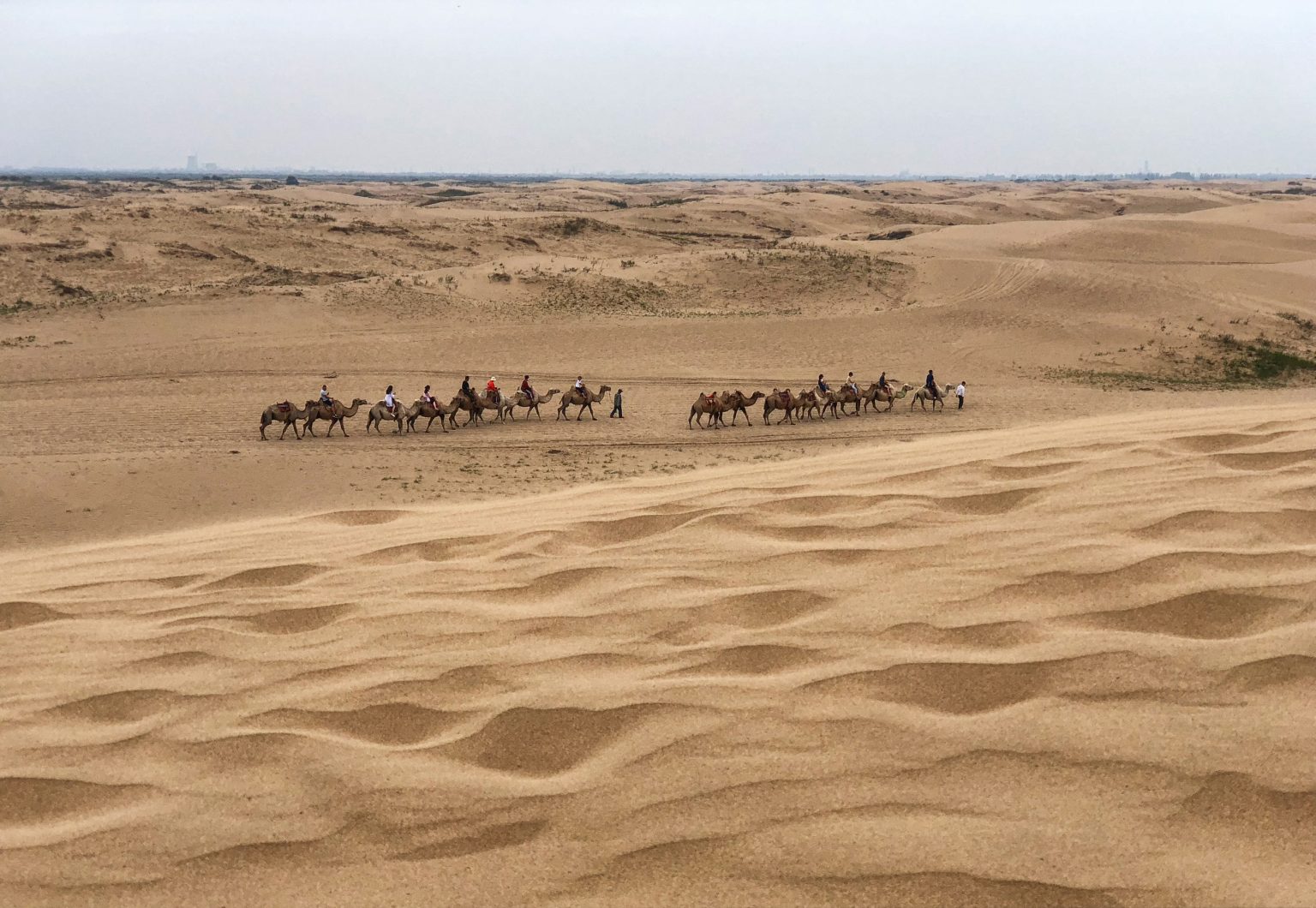
Across China’s northwestern deserts, camels have long been associated with travel, trade, and life in arid landscapes. Today, visitors can experience this connection through short camel rides among the dunes of Gansu and selected guided excursions in other desert regions.
- The Camel: China’s Desert Companion
- Where to Go Camel Trekking in China
- Dunhuang and the Singing Sand Dunes, Gansu Province
- Badain Jaran Desert, Inner Mongolia
- Ejina Banner and the Poplar Forests, Inner Mongolia
- Taklamakan Desert, Xinjiang
- What to Expect on a Camel Trek
- What to Bring for Camel Trekking
- Best Time for Camel Trekking in China
- Camel Trekking and the Silk Road Legacy
- Traveling Responsibly in China’s Deserts
- A Two-Day Camel Trekking Itinerary in Dunhuang
- Experience China’s Deserts Beyond the Camel Ride
Camel trekking in China offers a distinctive way to explore landscapes connected with the historic Silk Road. From the famous dunes of Dunhuang to the remote lakes and towering sand formations of Badain Jaran, China’s desert landscapes combine natural beauty with centuries of regional history. This guide explains where to experience camel rides in China, what to expect, when to visit, and how to plan a responsible desert trip.
The Camel: China’s Desert Companion
The Bactrian camel, recognizable by its two humps, is well adapted to the cold winters and dry conditions found across parts of Central and East Asia. For centuries, domestic camels carried people and goods across desert routes, including sections of the historic Silk Road.
Their importance extended beyond transport. Camels provided milk, wool, and other resources to communities that raised them, while their ability to travel through dry environments made them valuable in regions where water and vegetation were limited.
Important facts about Bactrian camels include:
- Two humps: Domestic Bactrian camels store fat in their humps, which can be used as an energy reserve.
- Cold-weather adaptation: Their thick seasonal coats help them cope with substantial temperature changes.
- Desert travel: They can travel across arid terrain, although their endurance depends on water, food, workload, and conditions.
- Cultural significance: Camels remain associated with regional traditions and tourism in parts of Gansu, Inner Mongolia, and Xinjiang.
China is also home to the critically endangered wild Bactrian camel, which survives in remote areas of Xinjiang and neighboring Mongolia. These wild animals are distinct from the domestic camels used for tourist rides. They live in protected and remote habitats and should never be treated as animals visitors can routinely encounter during a camel trek. <Cite refs={[“turn324337search11″,”turn324337search15”]}/>
Where to Go Camel Trekking in China
Dunhuang and the Singing Sand Dunes, Gansu Province
Dunhuang is one of China’s best-known destinations for camel rides. Located in Gansu Province along the historic Silk Road, the city is surrounded by desert scenery and important archaeological sites.
The main attraction is Mingsha Mountain and Crescent Moon Spring, a scenic area where sweeping sand dunes rise around a small oasis. Organized camel rides operate within the designated tourist area, making Dunhuang one of the most accessible places to experience a camel ride without undertaking a remote expedition.
Highlights include:
- Mingsha Mountain: Ride across designated routes and enjoy views of the dunes.
- Crescent Moon Spring: Visit the oasis at the foot of the sand hills and photograph the contrast between water and sand.
- Mogao Caves: Explore the renowned Buddhist cave complex near Dunhuang, subject to advance booking and site regulations.
- Silk Road heritage: Learn about the region’s historical role in trade, religion, and cultural exchange.
Sunrise and late afternoon can provide attractive light for photography, although camel-ride schedules depend on the scenic area’s operating arrangements, weather, and visitor demand.
Dunhuang is particularly suitable for first-time riders, families, and travelers who want to combine camel riding with Silk Road history. However, the standard experience is generally a managed tourist ride, not a multi-day expedition across open desert.
Badain Jaran Desert, Inner Mongolia
The Badain Jaran Desert lies on the Alashan Plateau in northwestern China. It is famous for its enormous dunes, unusual landforms, and lakes located between sand hills.
Some of its stabilized mega-dunes have a relative height of approximately 460 meters, placing them among the tallest dunes of their kind. The area also contains numerous inter-dune lakes, many of which are saline. The desert was inscribed on the UNESCO World Heritage List in 2024 for its exceptional geological and natural features. <Cite refs={[“turn324337search0″,”turn324337search10”]}/>
A visit can include:
- Dune viewpoints: Observe the scale and shapes of the large sand formations.
- Inter-dune lakes: See the distinctive water bodies set among the dunes.
- Remote desert landscapes: Explore selected areas with an experienced local operator.
- Cultural and historical stops: Depending on the route, an excursion may include sites associated with local pastoral communities.
Camel trekking has a connection to the area’s pastoral history, but access is more complicated than at Dunhuang. Much of the landscape is remote, there are no paved roads through large portions of the protected area, and tourism is managed to limit environmental impacts.
Do not assume that every lake or dune is accessible by camel. Confirm the route, transport, accommodation, and permitted activities before booking. Badain Jaran is best suited to travelers prepared for a more organized and potentially demanding desert excursion.
Ejina Banner and the Poplar Forests, Inner Mongolia
Ejina Banner, in western Inner Mongolia, is known for its Populus euphratica forests, which become especially attractive when their leaves turn golden in autumn. The area offers a striking contrast between desert landscapes, river environments, and stands of hardy poplar trees.
Visitors commonly travel to Ejina for autumn photography and regional sightseeing. Camel rides or other desert activities may be available through local operators, but availability depends on the location and season. Confirm that camel trekking is offered as part of your chosen itinerary rather than assuming it is available throughout the area.
Things to consider when planning a visit include:
- Autumn foliage: The golden poplar forests are a major seasonal attraction, but the timing and intensity of the colors vary each year.
- Desert scenery: Explore designated viewpoints and nearby landscapes with a local guide.
- Photography: Combine images of golden trees with the surrounding dry terrain.
- Regional heritage: Learn about local communities and the history of the wider borderland region.
Ejina is particularly appealing to photographers and autumn travelers. If camel riding is your main goal, confirm the operator’s exact departure point and route before making it the centerpiece of your trip.
Taklamakan Desert, Xinjiang
The Taklamakan Desert is one of China’s largest deserts, occupying much of the Tarim Basin in Xinjiang. It is known for extensive shifting dunes, harsh climatic conditions, and the oasis settlements that developed around its margins.
Historic Silk Road routes passed along the desert’s edges, connecting oasis towns and linking China with Central Asia. Modern roads now cross parts of the desert, but a desert highway journey is not the same as a camel trek through remote dunes.
Travelers interested in the region can explore:
- Oasis towns: Learn about local history, architecture, food, and cultural traditions.
- Desert highways: Experience the scale of the landscape from established road routes.
- Silk Road heritage: Visit suitable historical sites and museums, subject to access arrangements.
- Guided desert excursions: Ask specialist operators whether camel riding is available at a specific location and under what conditions.
Do not assume that camel treks routinely depart from Korla, Luntai, or Hotan and cross the open Taklamakan. Multi-day journeys into remote terrain require specialist planning, and availability should be confirmed directly with an experienced operator.
The Taklamakan is best suited to travelers who have a clear itinerary and understand the distances, environmental conditions, and logistical requirements involved.
What to Expect on a Camel Trek
In China, a camel experience can range from a short ride at a major tourist attraction to a more specialized excursion in a remote desert region. The duration, level of support, and type of scenery vary significantly.
Short Camel Rides
At destinations such as Dunhuang’s Mingsha Mountain, organized rides usually follow designated routes within the scenic area. These experiences can suit beginners and families, subject to the operator’s age, health, and safety requirements.
Before setting out:
- Follow the handler’s instructions when mounting and dismounting.
- Keep your movements controlled, especially when the camel stands up or kneels.
- Ask how long the ride lasts and whether the route includes stops.
- Check the animal’s condition and avoid operators that appear to overload or mistreat their camels.
Longer Desert Excursions
Longer trips require more planning and should only be booked through operators with clear local knowledge and appropriate arrangements.
Depending on the destination, a guided excursion may include transport, meals, rest stops, accommodation, and equipment. Confirm the details rather than assuming these services are included.
Ask about:
- The route and expected duration.
- The availability of drinking water and food.
- Accommodation and toilet facilities for overnight trips.
- Emergency communications and contingency arrangements.
- The number of riders per guide and the welfare standards followed for the camels.
A remote camel expedition should not be treated as a simple extension of a tourist ride. The environment, distances, and support requirements can be substantially different.
What to Bring for Camel Trekking
Desert conditions can change quickly, with strong sunlight during the day and cold temperatures after sunset in some regions. Your packing list should reflect the season, route, and duration of the trip.
Useful essentials include:
- Lightweight, long-sleeved clothing: Helps protect against sun exposure and blowing sand.
- A warm jacket: Important for early mornings, evenings, and colder seasons.
- Sunglasses and a hat: Reduce glare and protect against the sun.
- High-SPF sunscreen: Apply and reapply according to the product instructions.
- Drinking water: Carry enough for the planned activity and follow your guide’s advice.
- Comfortable closed shoes: Useful when walking on sand or uneven ground.
- A scarf or face covering: Can help protect against wind and blowing sand.
- A small daypack: Keeps essentials accessible without carrying unnecessary weight.
- A charged phone and power bank: Useful for photography, although coverage may be unreliable in remote areas.
For photography, a camera or phone with a secure strap can help you capture the landscape without handling equipment carelessly while riding. A tripod is more useful at camp or a designated viewpoint than while mounted on a camel.
Ask permission before photographing camel handlers or local residents, and follow the operator’s instructions about using cameras during the ride.
Best Time for Camel Trekking in China
China’s desert regions cover a wide area, so the best season depends on the destination. Temperatures, wind, and access conditions differ between Dunhuang, Badain Jaran, Ejina, and Xinjiang.
Spring: April to June
Spring can offer comfortable conditions for outdoor sightseeing in parts of northwestern China, although wind and dust may affect visibility. Temperatures can change considerably between day and night, so pack layers.
At Dunhuang, check the local forecast and scenic-area schedule before planning a ride. For remote destinations, confirm road access and the availability of guides.
Summer: July and August
Summer can bring high daytime temperatures, particularly in exposed desert areas. Plan outdoor activities for cooler hours where possible, carry sufficient water, and follow local advice about heat exposure.
In popular scenic areas, visitor numbers may also affect the timing of rides and other activities.
Autumn: September and October
Autumn is an attractive period for many desert trips because daytime temperatures can become more comfortable. It is also a popular time to visit Ejina for its golden poplar forests, although peak foliage varies from year to year.
Book accommodation and transport in advance if your itinerary depends on the autumn colors.
Winter: November to March
Winter can bring severe cold, especially at night and in remote desert locations. Some tourism services may operate on reduced schedules, and conditions can make longer excursions less suitable.
Check current operating arrangements and weather forecasts before travelling.
May, September, and October can be useful months to consider, but no single season is ideal for every destination. Choose dates according to the location, expected weather, and activities you intend to do.
Camel Trekking and the Silk Road Legacy
The historic Silk Road was a network of land and maritime routes connecting China with Central Asia and other regions. Camels played an important role in some overland routes, particularly across arid landscapes where pack animals adapted to dry conditions were valuable.
Dunhuang became a significant center of trade and Buddhist culture. Its location near routes leading toward Central Asia helped bring merchants, religious travelers, artistic traditions, and ideas into contact over many centuries.
Other oasis settlements in the wider region, including Hami and Turpan, were also connected to historical trade networks. However, routes changed over time, and not every modern camel ride follows an actual historical caravan trail.
Visitors can explore this legacy through:
- The Mogao Caves near Dunhuang: Renowned for Buddhist art and historical manuscripts, with access managed to protect the site.
- Regional museums: Learn about trade, travel, religion, and the people who lived along historic routes.
- Oasis settlements: Discover the cultural traditions and local environments that supported travel across arid regions.
- Guided heritage tours: Understand how geography influenced movement, settlement, and exchange.
A camel ride can provide a memorable introduction to the desert environment, but the deeper historical experience comes from learning about the communities and routes that shaped the region.
Traveling Responsibly in China’s Deserts
Desert ecosystems can be fragile, especially around lakes, vegetation, and protected wildlife habitats. Responsible travel means following local rules, respecting animals, and minimizing unnecessary disturbance.
Use these guidelines:
- Choose responsible operators: Ask about animal welfare, rest periods, workloads, and access to water for camels.
- Respect protected areas: Follow signs and guide instructions, particularly in Badain Jaran and wildlife habitats.
- Avoid disturbing wildlife: Never approach or feed wild animals.
- Reduce waste: Carry reusable containers where practical and take all rubbish away.
- Stay on permitted routes: Avoid damaging vegetation or entering restricted areas.
- Respect local communities: Ask permission before photographing people and follow local guidance at cultural sites.
- Prepare for remote travel: Confirm the route, weather, communications, and emergency arrangements before leaving established roads.
The wild Bactrian camel is endangered, so visitors should not seek out its remote habitat without an authorized conservation or research purpose. Responsible tourism should support habitat protection rather than create pressure on vulnerable wildlife. <Cite refs={[“turn324337search11″,”turn324337search0”]}/>
A Two-Day Camel Trekking Itinerary in Dunhuang
Dunhuang is a practical choice for a short camel experience because the main scenic area is accessible from the city and can be combined with cultural visits.
Day 1: Mingsha Mountain and Crescent Moon Spring
- Arrive in Dunhuang: Check in to your accommodation and confirm the current opening hours and ticket arrangements for the scenic area.
- Visit Mingsha Mountain: Explore the dunes and take an organized camel ride along the designated route.
- See Crescent Moon Spring: Visit the oasis and photograph its setting beneath the surrounding sand hills.
- Enjoy late-afternoon light: If conditions and operating hours allow, spend time photographing the dunes as the light changes.
- Return to the city: Have dinner and prepare for the following day’s heritage visit.
Day 2: Mogao Caves and Silk Road History
- Visit the Mogao Caves: Book in advance and follow the site’s photography and conservation rules.
- Explore local heritage: Visit a suitable museum or cultural attraction to learn about Dunhuang’s role in the Silk Road network.
- Enjoy regional food: Try local dishes and learn about the region’s culinary traditions.
- Depart or extend your stay: Allow enough time for transport connections and any additional activities.
This itinerary combines a camel ride with the cultural heritage that makes Dunhuang distinctive. It does not require a multi-day desert crossing, making it a more practical choice for first-time visitors.
Experience China’s Deserts Beyond the Camel Ride
Camel trekking in China connects visitors with some of the country’s most recognizable desert landscapes and a history shaped by trade, travel, and oasis communities. Dunhuang offers an accessible introduction, while Badain Jaran provides a more remote landscape of enormous dunes and inter-dune lakes. Ejina is known for its autumn poplar forests, and the Taklamakan calls for careful planning and a clear understanding of its scale.
Choose a destination that matches your experience, confirm the exact route and services before booking, and prioritize the welfare of the camels and the protection of the environment. By combining the ride with an understanding of local history and culture, camel trekking in China can become a rewarding part of a wider journey through the country’s desert regions.