
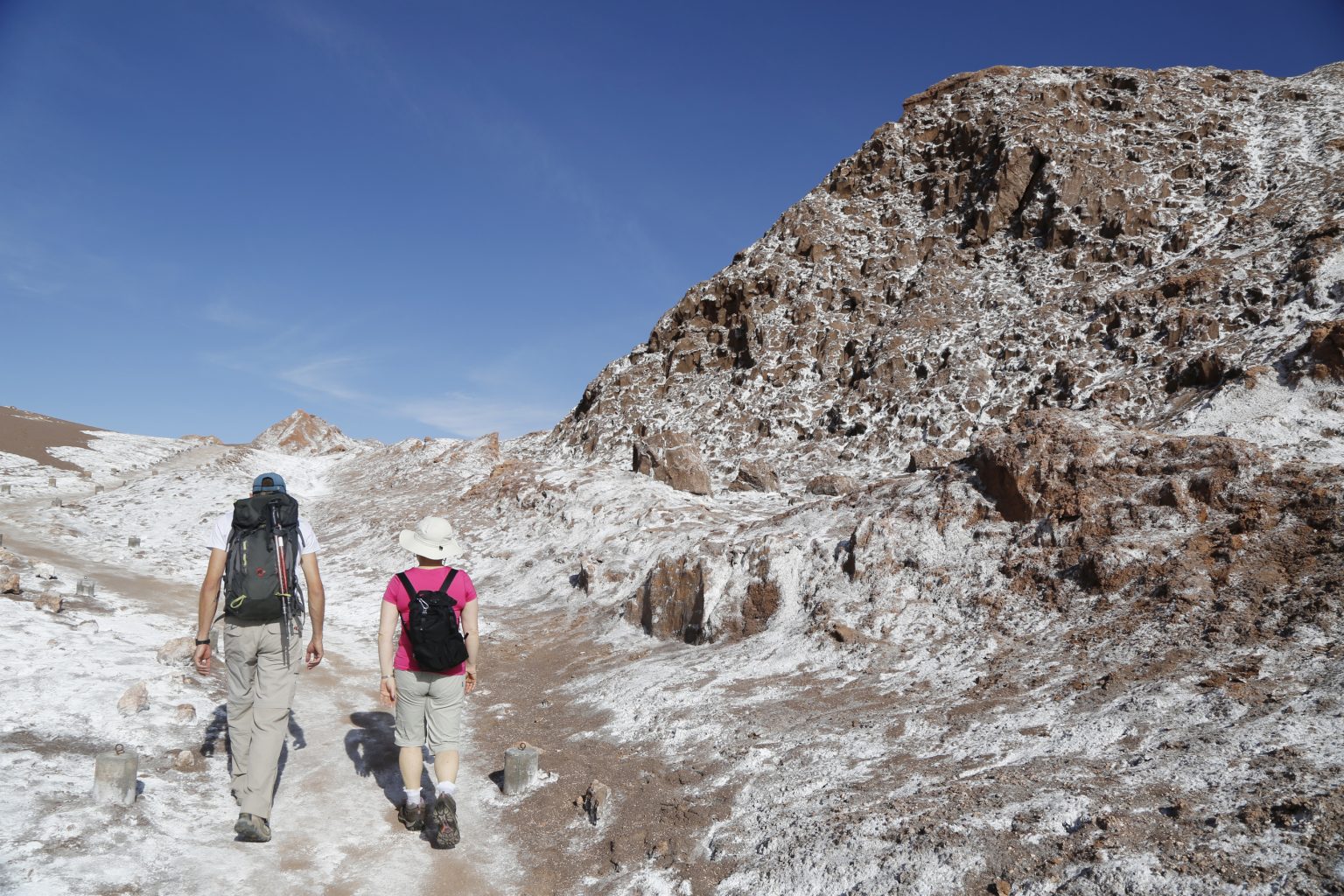
The Atacama Desert in Chile is known for its extraordinary contrasts: vast salt flats, volcanic peaks, mineral-rich lagoons and some of the clearest night skies on Earth. Its landscapes change dramatically from one area to another, creating opportunities for hiking, wildlife observation, photography and astronomy.
- What Makes the Atacama Desert Unique
- Explore Valle de la Luna (Moon Valley)
- Visit the Cejar and Piedra Lagoons
- Witness El Tatio Geysers at Sunrise
- Visit the Altiplanic Lagoons: Miscanti and Miñiques
- Discover Valle de la Muerte (Death Valley)
- Explore the Salar de Atacama
- Best Time to Visit the Atacama Desert
- What to Pack for the Atacama Desert
- Where to Stay in the Atacama Desert
- A Three-Day Atacama Desert Itinerary
- Day 1: San Pedro and Valle de la Luna
- Day 2: Cejar and Piedra Lagoons
- Day 3: El Tatio or the Altiplanic Lagoons
- Traveling Responsibly in the Atacama
- The Atacama Desert: A Landscape Worth Exploring Slowly
Located in northern Chile, the Atacama is among the driest non-polar regions on Earth. Despite its extreme aridity, it supports specialized desert plants and wildlife, while nearby highland wetlands provide habitats for flamingos and other birds. Visitors can explore sculpted rock formations, watch geysers release steam in the early morning and experience the striking colors of the Andes.
The town of San Pedro de Atacama is the main base for exploring many of these attractions. This guide covers the region’s best-known places, practical travel advice and ways to experience the Atacama Desert’s natural landscapes responsibly.
What Makes the Atacama Desert Unique
The Atacama stretches across northern Chile between the Pacific coast and the Andes Mountains. Its extreme dryness results from several factors, including the cold Humboldt Current, atmospheric conditions that limit rainfall and the rain-shadow effect of the Andes. Some locations receive exceptionally little precipitation, although conditions vary across the wider region.
The desert includes several distinct environments, from coastal areas and salt flats to high-altitude plateaus and volcanic landscapes. Much of the classic visitor circuit is accessed from San Pedro de Atacama, a small town known for its adobe architecture, local restaurants and tour operators.
Elevation is an important part of the experience. San Pedro sits at approximately 2,400 meters above sea level, while many excursions climb above 4,000 meters. This difference affects temperatures, physical exertion and the risk of altitude sickness.
The region is especially known for:
- Salt flats and lagoons, including the Salar de Atacama and the highland lagoons of Miscanti and Miñiques.
- Volcanic landscapes, with prominent peaks rising above the desert plateau.
- Geysers and geothermal features, particularly at El Tatio.
- Astronomy and stargazing, supported by dry conditions and dark skies away from settlements.
- Atacameño-Lickanantay heritage, reflected in local communities, traditional knowledge and the region’s long history of settlement.
Explore Valle de la Luna (Moon Valley)
Valle de la Luna, or Moon Valley, is one of the most recognizable landscapes near San Pedro de Atacama. Located within the Cordillera de la Sal, it features eroded ridges, pale mineral surfaces, rocky formations and wind-shaped dunes.
The area is particularly popular in the late afternoon, when changing sunlight brings out shades of gold, rust, pink and violet across the terrain. Designated viewpoints offer broad views of the surrounding desert and distant mountains.
Highlights include:
- The Great Dune, a popular viewpoint for panoramic desert scenery.
- Sculpted rock formations shaped by erosion.
- Walking routes that reveal the textures and colors of the Cordillera de la Sal.
- Sunset photography, when the low-angle light emphasizes the landscape’s contours.
Valle de la Luna is best explored on foot or with an authorized tour. Access is regulated, and opening times, routes and visitor rules can change. Check current entry requirements before visiting, stay on marked paths and allow enough time to leave before closing.
Visit the Cejar and Piedra Lagoons
The Cejar and Piedra lagoons lie among the salt flats near San Pedro de Atacama. Their mineral-rich waters and open surroundings create a striking contrast with the dry landscape.
It is important to distinguish the two lagoons. Laguna Cejar is primarily a place for observing the salt environment, birds and surrounding scenery. Swimming is not permitted there. At Laguna Piedra, designated bathing sessions allow visitors to float in saline water because of its high mineral concentration.
During a visit, you can:
- Observe the salt crusts and surrounding volcanic landscape.
- Look for birds in the wetland environment.
- Experience floating in the designated area of Laguna Piedra, subject to current rules.
- Photograph the lagoons and distant mountains in changing light.
The complex is managed by the local Solor Atacameño Indigenous Community. Visitors should follow its access rules and environmental guidance. Advance reservations may be required, and visitors who plan to enter the water should check the current restrictions on sunscreen, oils and other products that could harm the ecosystem.
Witness El Tatio Geysers at Sunrise
Located at approximately 4,300 meters above sea level, El Tatio is one of the world’s highest geothermal geyser fields and a major natural attraction in northern Chile.
Most excursions depart from San Pedro de Atacama well before sunrise. At dawn, cold air makes the steam rising from the geothermal vents especially visible. The contrast between the warm vapor, pale ground and surrounding volcanic terrain creates memorable conditions for photography.
Visitors can explore designated paths and observe the geysers from safe distances. The ground around geothermal features can be unstable, and hot water or steam may cause serious burns, so entering restricted areas or approaching vents is dangerous.
A few practical points to remember:
- Wear warm layers, gloves and a hat. Temperatures before sunrise can be extremely low.
- Walk only on designated routes and follow the guide’s instructions.
- Bring water and allow time to acclimatize before visiting this high-altitude site.
- Do not assume that hot springs are available for bathing at the geyser field. If you want to visit a thermal pool, confirm the location and access arrangements separately.
El Tatio is best suited to travelers who enjoy geology, dramatic landscapes and early-morning excursions.
Visit the Altiplanic Lagoons: Miscanti and Miñiques
The Lagunas Miscanti and Miñiques sit more than 4,100 meters above sea level in the Andean highlands. Their deep blue water contrasts with golden grasslands, volcanic slopes and the dry plateau around them.
These lagoons are important habitats for high-altitude wildlife and are especially attractive to birdwatchers and landscape photographers. Depending on conditions, visitors may see flamingos, horned coots, vicuñas and other species adapted to the puna environment.
The area also has deep cultural significance for Atacameño-Lickanantay communities. Respect local guidance and avoid treating the landscape as an unrestricted recreational area.
Before visiting, keep in mind:
- Allow time to acclimatize in San Pedro before travelling to high elevations.
- Wear layers, as temperatures and wind conditions can change quickly.
- Bring drinking water, sun protection and suitable footwear.
- Check entry arrangements in advance. Visitors may need to register in Socaire and purchase tickets before arrival.
- Confirm road and site conditions, especially during periods of snow or severe weather.
A visit to these lagoons is best enjoyed at a relaxed pace. The altitude makes strenuous activity more demanding, even for otherwise fit travelers.
Discover Valle de la Muerte (Death Valley)
Valle de la Muerte, also known as Death Valley, lies near San Pedro de Atacama and is known for its rugged terrain, steep slopes and dramatic desert views. The surrounding Cordillera de la Sal adds to the landscape’s unusual appearance.
The valley is popular for guided excursions, photography and sandboarding in designated areas. Sandboarding conditions depend on the specific slope, operator arrangements and current access rules, so check what is included before booking.
Popular activities include:
- Walking along authorized routes to observe the rock formations.
- Photographing the red and ochre tones of the surrounding hills.
- Trying sandboarding with an operator familiar with the terrain.
- Watching the changing light over the desert in the late afternoon.
Avoid entering unstable slopes or driving off designated tracks. If you plan to explore beyond the main visitor areas, arrange appropriate transport and guidance rather than assuming every section is accessible.
Explore the Salar de Atacama
The Salar de Atacama is Chile’s largest salt flat. Its broad expanse of salt crust, shallow wetlands and distant volcanic peaks forms one of the region’s most distinctive landscapes.
One of the best-known places to observe this environment is Laguna Chaxa, where shallow waters and salt-flat habitats attract flamingos and other birds. The area is part of the Soncor sector of Los Flamencos National Reserve.
The experience is particularly rewarding for visitors interested in wildlife and photography. Depending on the season and conditions, different flamingo species may be present, although sightings are never guaranteed.
When visiting the salt flat:
- Use designated paths and viewing areas.
- Keep a respectful distance from birds and other wildlife.
- Bring binoculars if you enjoy birdwatching.
- Check current opening hours and ticket arrangements for Laguna Chaxa.
- Avoid entering sensitive wetland or salt-crust areas outside authorized routes.
The Salar de Atacama is more than a scenic stop. Its wetlands and surrounding ecosystems support wildlife in an otherwise extremely dry region.
Best Time to Visit the Atacama Desert
The Atacama can be visited throughout the year, but the best time depends on the activities you have planned. Conditions vary with elevation, and temperatures in San Pedro can be very different from those at El Tatio or the Altiplanic Lagoons.
April to October
These months often bring relatively dry conditions in the central Atacama, making them popular for sightseeing, hiking and stargazing. Clear skies can be excellent for astronomy, although cloud cover, wind and cold nights remain possible.
Winter, particularly at high elevations, can bring freezing temperatures and occasional snow that affects road access.
November to March
Summer is generally warmer in the lower desert, but the high Andes can experience the Altiplanic winter, when moisture may bring afternoon storms, cloud cover and localized flooding. Conditions are not the same across the entire region.
In some years, unusual rainfall contributes to desert flowering in parts of northern Chile, but blooms are not guaranteed every summer and depend on specific weather patterns.
Choosing your travel dates
For a balanced trip, consider the following:
- Stargazing: Choose dates with a favorable lunar phase and check astronomical tour schedules.
- High-altitude excursions: Check weather and road conditions shortly before departure.
- Hiking and photography: Plan around comfortable daytime temperatures and avoid the strongest sun.
- Wildlife observation: Ask local guides about seasonal bird activity and current access conditions.
No month guarantees clear skies or easy access to every attraction. Confirm forecasts and site restrictions before setting out.
What to Pack for the Atacama Desert
Packing for the Atacama requires preparation for intense sunlight, dry air, cold nights and substantial changes in elevation.
Essential items include:
- Sun protection: High-SPF sunscreen, sunglasses, a wide-brimmed hat and protective clothing.
- Layered clothing: Lightweight daytime clothes, a warm fleece or jacket, and an insulated outer layer for early-morning excursions.
- Comfortable footwear: Walking shoes or hiking boots suitable for rocky, uneven ground.
- Water: Carry enough drinking water for the length of each excursion, following your guide’s recommendations.
- Reusable water bottle: Useful for reducing disposable plastic waste.
- Personal medication and basic supplies: Bring any medication you normally need and a small first-aid kit.
- Camera or binoculars: Helpful for photographing the landscape and observing wildlife.
- Power bank: Useful during long excursions, when charging facilities may not be available.
If you are planning high-altitude excursions, give yourself time to acclimatize. Coca products are traditionally used in parts of the Andes, but they are not a proven substitute for acclimatization or medical care. Check local regulations and seek medical advice if you have concerns about altitude.
A telescope is optional for independent stargazing. Many visitors find that a guided astronomy tour provides a more informative experience without requiring specialist equipment.
Where to Stay in the Atacama Desert
San Pedro de Atacama is the most practical base for many visitors. It offers accommodation, restaurants, tour operators and transport connections for major attractions across the region.
Accommodation ranges from simple hostels and guesthouses to boutique hotels and higher-end desert lodges. Options mentioned by travelers include Hotel Cumbres San Pedro and Hostal Sonchek, although availability, facilities and prices can change. Check recent reviews and confirm the exact location before booking.
When choosing where to stay, consider:
- Location: Staying close to the town center can make restaurants, shops and tour departures easier to reach.
- Heating and insulation: Nights can be cold, especially during winter.
- Water and energy use: The region is environmentally sensitive, so consider properties that explain their water and energy practices.
- Tour arrangements: Some accommodations help organize licensed guides and transport.
- Stargazing: A property outside the brightest part of town may offer darker skies, depending on its surroundings and lighting.
Plan to spend at least three nights in San Pedro de Atacama if possible. A longer stay gives you more flexibility to acclimatize, explore different landscapes and adjust plans if weather or access conditions change.
A Three-Day Atacama Desert Itinerary
Three days provide a useful introduction to the region, although the schedule should account for altitude, travel times and the opening hours of individual sites.
Day 1: San Pedro and Valle de la Luna
Arrive in San Pedro de Atacama and use the first part of the day to settle in, drink water and begin acclimatizing.
In the afternoon, visit Valle de la Luna for its sculpted rock formations and sunset viewpoints. Follow the designated route and allow enough time to return before closing.
If you feel well and conditions are suitable, consider an evening stargazing tour. Otherwise, keep the first night relaxed.
Day 2: Cejar and Piedra Lagoons
Spend part of the day exploring the Cejar and Piedra lagoon complex. Observe the wetlands and salt formations at Laguna Cejar, then experience floating at Laguna Piedra if swimming sessions are operating and you meet the entry requirements.
Return to San Pedro with time to rest. An El Tatio excursion usually begins very early, so avoid scheduling a late evening activity if you plan to depart before dawn the next day.
Day 3: El Tatio or the Altiplanic Lagoons
Choose your final day according to your interests and how well you have acclimatized.
- Option A: El Tatio Geysers. Join an early-morning excursion to see the geothermal field in the cold dawn air.
- Option B: Miscanti and Miñiques Lagoons. Explore the highland scenery, volcanic views and wildlife, subject to current access conditions.
These are separate excursions and are difficult to combine comfortably in one day. If you have additional time, visit Laguna Chaxa on another day for birdwatching in the Salar de Atacama.
This itinerary is a starting point rather than a fixed schedule. Check current opening hours, road conditions and altitude guidance before booking.
Traveling Responsibly in the Atacama
The Atacama’s ecosystems recover slowly from disturbance. Salt crusts, wetlands, wildlife habitats and archaeological sites can be damaged by careless access, litter and off-road driving.
Responsible travel helps protect these landscapes and supports the communities that live in the region.
- Stay on marked trails and use authorized viewpoints.
- Never drive across fragile salt crusts or wetlands.
- Do not approach, feed or disturb flamingos and other wildlife.
- Carry out all rubbish, including food packaging.
- Respect Atacameño-Lickanantay communities, cultural sites and local guidance.
- Use authorized guides and operators, especially for remote or high-altitude excursions.
- Follow water-use guidance at accommodation, as water is a limited resource in this arid region.
- Check entry rules and current restrictions before visiting protected areas.
Choose local businesses when possible and ask how tours support community initiatives and conservation. Responsible visits help preserve the region’s natural and cultural heritage for future travelers.
The Atacama Desert: A Landscape Worth Exploring Slowly
The Atacama Desert is defined by contrasts: salt flats beside wetlands, volcanic peaks above dry valleys, and bright daylight followed by remarkably dark skies. Each excursion reveals a different part of this complex region.
A rewarding visit depends on more than seeing the best-known landmarks. Allow time to acclimatize, learn about the local environment, follow access rules and adapt your plans to the weather. Whether you spend an evening watching the stars, observe flamingos at Laguna Chaxa or explore the highland lagoons, the Atacama offers a distinctive view of the natural world.
Travel slowly, prepare carefully and leave the landscape as you found it.