
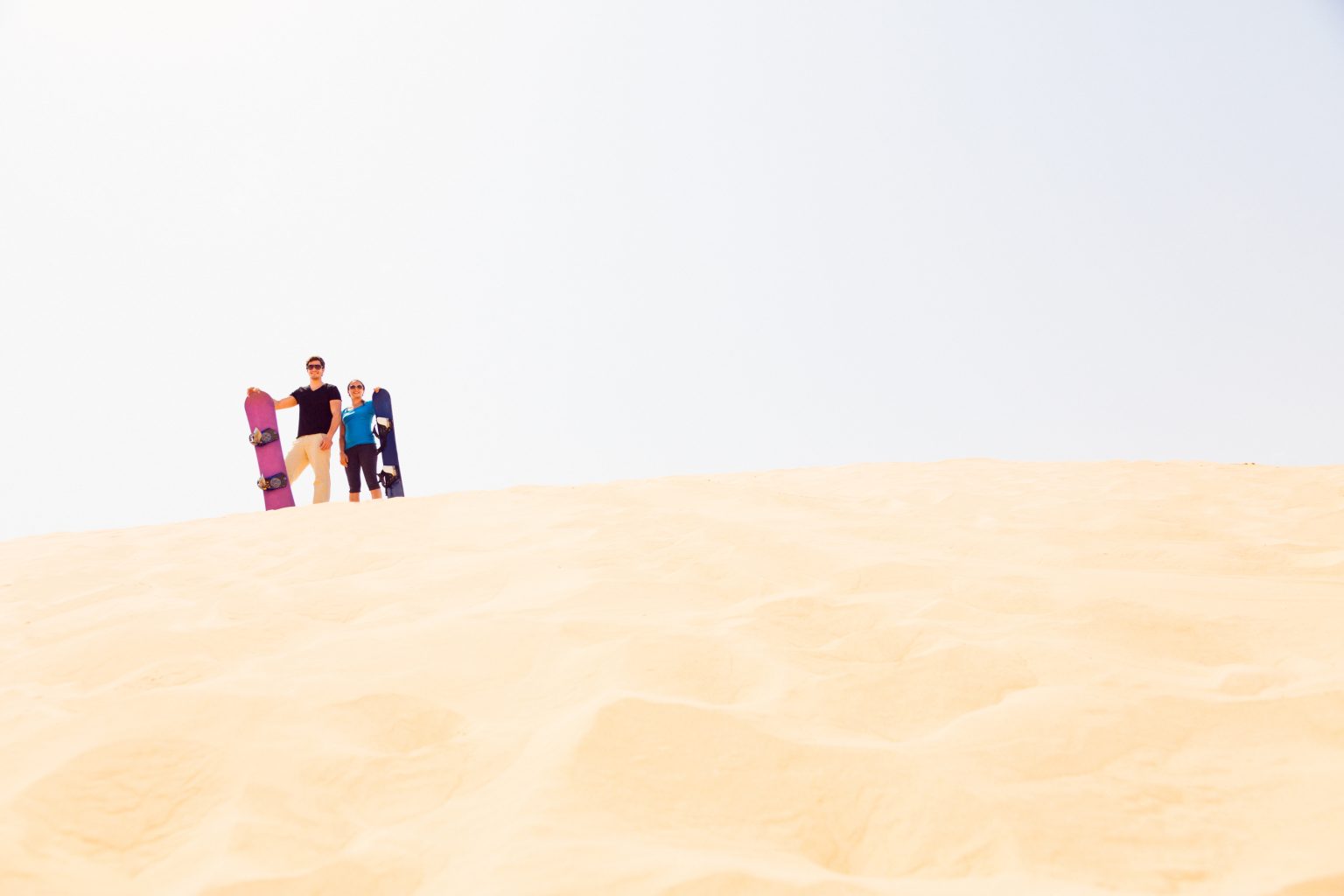
The sun sinks towards the horizon as you stand on a dune with a sandboard beneath your feet. One push sets you moving, and the board glides down the slope as sand shifts beneath it. The experience combines the simplicity of an outdoor activity with the thrill of descending a natural dune.
- Why Sandboarding Is Popular in the UAE
- Best Places for Sandboarding in the UAE
- Lahbab Desert Near Dubai
- Al Badayer Desert and Big Red in Sharjah
- Liwa Desert in Abu Dhabi
- Sweihan Desert Near Abu Dhabi and Al Ain
- Other Desert Areas Worth Considering
- What You Need for Sandboarding in the UAE
- Who Can Try Sandboarding?
- Best Time of Year for Sandboarding in the UAE
- Combining Sandboarding With Other Desert Experiences
- Sandboarding Safety and Desert Etiquette
- Planning a One-Day Sandboarding Trip From Dubai
- Make the Most of Sandboarding in the UAE
Sandboarding in the United Arab Emirates offers travelers an active way to explore the country’s desert landscapes. From the red dunes near Dubai to the towering sand formations of Liwa, different locations provide opportunities for beginners and more experienced riders. This guide covers the best places to try UAE desert sandboarding, what to bring, when to visit, and how to plan a safe and enjoyable sandboarding adventure in the UAE.
Why Sandboarding Is Popular in the UAE
The UAE has extensive sandy landscapes, established desert tourism services, and several destinations where visitors can combine sandboarding with other outdoor activities. Many desert safari operators offer sandboarding alongside guided 4×4 drives, camel rides, and cultural experiences.
The variety of dunes is another attraction. Some slopes are suitable for first attempts, while steeper dunes demand more balance and control. Conditions change with the shape of the dune, the firmness of the sand, the weather, and the number of people using the area.
Sandboarding also fits easily into a morning or evening desert excursion. Travelers can spend time on the dunes, take photographs, and enjoy the surrounding landscape without committing to a full day of riding.
Best Places for Sandboarding in the UAE
Lahbab Desert Near Dubai
The Lahbab Red Dunes are among Dubai’s best-known desert adventure destinations. Their reddish sand creates a distinctive landscape, particularly around sunrise and sunset. The area is popular for guided desert safaris, and sandboarding is offered by some tour operators.
The range of dune shapes can make Lahbab a good option for first-time riders as well as visitors looking for a more challenging descent. However, not every slope is suitable for every skill level, so ask your guide to select a safe area for your experience.
Many tours combine sandboarding with a 4×4 desert drive. Some also include camel rides, refreshments, or an evening at a desert camp. These additions vary by package, so check the itinerary before booking.
Lahbab is a practical choice for travelers staying in Dubai who want to experience the desert without traveling as far as Liwa.
Al Badayer Desert and Big Red in Sharjah
Located southeast of Sharjah, the Al Badayer Desert is known for its large dunes and off-road recreation. Its prominent dune, commonly called Big Red, attracts visitors interested in desert sports and outdoor photography. Sand skiing is also associated with the area, although the availability of boards and guided sessions should be confirmed in advance.
The landscape provides opportunities to explore the dunes, watch sunset, and combine sandboarding with other activities where permitted. The area can become busy, especially on weekends, when motorized desert sports attract local enthusiasts.
If you are visiting with children or trying sandboarding for the first time, ask about designated areas away from vehicle routes. Choose a dune that matches your ability rather than heading directly for the tallest slope.
The nearby Mleiha region also offers archaeological and cultural attractions, making it possible to build a broader itinerary around Sharjah’s central desert.
Liwa Desert in Abu Dhabi
The Liwa Desert, in Abu Dhabi’s Al Dhafra region, lies on the northern edge of the Rub al Khali, also known as the Empty Quarter. It is famous for extensive sand dunes, remote desert scenery, and some of the UAE’s most impressive sandy landscapes.
Sandboarding is offered in the wider Liwa area, with gentler slopes available for newcomers and larger dunes presenting a greater challenge. Visitors should choose their riding location with a local operator, particularly when exploring remote terrain.
One of the region’s best-known landmarks is Tel Moreeb, which rises more than 300 metres and has a steep incline. It is particularly associated with dune climbing and motorsport events. Its size and gradient should not be taken as an indication that it is an appropriate sandboarding slope for everyone.
Liwa is best suited to travelers who have more time to explore Abu Dhabi’s desert region. Depending on the itinerary, a visit can include sandboarding, scenic drives, photography, and an overnight stay at a desert accommodation.
Sweihan Desert Near Abu Dhabi and Al Ain
The Sweihan Desert is known for its broad dunes and off-road recreation. It can be an option for visitors seeking a desert excursion outside the main tourist areas, but sandboarding availability depends on the location and operator.
If you are considering Sweihan, arrange the activity with an experienced local provider rather than assuming that every dune is open or suitable for riding. Ask whether the package includes a sandboard, a guide, transport, and a designated riding area.
Sweihan may also be combined with a wider desert outing, although additional activities such as camel rides or private meals need to be arranged separately unless they are listed in the package.
Other Desert Areas Worth Considering
The UAE has several other sandy landscapes, but a place with impressive dunes does not automatically have established sandboarding services.
When comparing destinations, prioritize locations where operators can confirm that sandboarding is available and can identify an appropriate slope. This is particularly important if you are traveling independently or planning to visit a less-developed desert area.
Before setting out, check access arrangements, road conditions, and whether you need a guided 4×4 transfer. Avoid entering remote dunes without suitable equipment, navigation, and knowledge of the terrain.
What You Need for Sandboarding in the UAE
Sandboarding requires relatively little equipment, but the right preparation improves comfort and control.
Useful items include:
- A sandboard: Confirm whether your tour includes one or whether you need to rent or bring your own.
- Suitable clothing: Wear lightweight clothes that allow you to move freely and protect your skin from the sun.
- Closed footwear: Shoes help protect your feet from hot sand and provide better protection when walking up dunes.
- Sun protection: Bring sunscreen, sunglasses, and a hat or scarf.
- Drinking water: Carry enough water for the activity and the time spent outdoors.
- A small bag: Keep essential belongings secure and protected from sand.
- A phone or action camera: Use a secure mount or protective case if you plan to record your descent.
Some boards may benefit from sand-specific wax or other maintenance, but requirements depend on the equipment. Ask the rental provider how to prepare the board rather than applying an unfamiliar product.
A helmet and other protective equipment may be appropriate, particularly for beginners or organized sessions. Follow the operator’s recommendations and avoid carrying loose objects while riding.
Who Can Try Sandboarding?
Sandboarding can be accessible to beginners, but suitability depends on the slope, the rider’s physical ability, and the conditions. There is no single age limit that applies to every tour. Operators may set their own minimum ages, weight limits, or other participation requirements.
For a first attempt, choose a modest slope with a clear runout at the bottom. Learn how to position your feet, maintain balance, and stop before attempting longer or steeper descents.
Families should check whether the operator offers suitable equipment and a separate area for younger participants. Children should be supervised, and they should not ride on slopes shared with moving vehicles.
Experienced riders may prefer larger dunes, but steepness alone does not make a slope suitable. Sand conditions, obstacles, visibility, and the presence of other people all affect the level of risk.
Best Time of Year for Sandboarding in the UAE
The cooler months, generally from October to April, are often the most comfortable for outdoor desert activities. November through March is a particularly popular period for exploring the dunes, although conditions vary by location and date.
October to April: Cooler weather generally makes it easier to spend time outdoors. Morning and late-afternoon sessions can provide comfortable temperatures and attractive light for photography.
May and September: Conditions can already be hot, so early starts and shorter sessions may be preferable. Check the forecast and confirm that the operator is adjusting its schedule to suit the weather.
June to August: Summer temperatures can become extreme, making prolonged outdoor activity hazardous. If an operator offers summer sandboarding, ask about the timing and safety measures. Do not continue riding when heat, dehydration, or other conditions make the activity unsafe.
Winter evenings can be cool, especially during overnight desert trips, so bring an extra layer if you plan to stay after sunset.
Combining Sandboarding With Other Desert Experiences
Sandboarding can be part of a wider UAE desert itinerary. Depending on the destination and tour package, visitors may be able to combine it with several activities.
- Guided 4×4 desert drives: Explore the dunes with an experienced driver who understands local terrain and access rules.
- Camel rides: Experience a traditional form of desert transport through an organized activity.
- Desert photography: Capture changing colors, dune patterns, and wide views during the softer light of morning or evening.
- Desert camping: Spend more time in the landscape with an overnight stay at an established camp or accommodation.
- Cultural activities: Some organized safaris include refreshments, traditional food, or performances. These vary by provider and should be confirmed before booking.
In Liwa, the landscape itself can be a major part of the trip, while Lahbab is convenient for travelers who want to combine sandboarding with a shorter excursion from Dubai.
Avoid assuming that every safari includes all these activities. Compare the itinerary and check how much time is reserved for sandboarding before choosing a package.
Sandboarding Safety and Desert Etiquette
The desert is an exposed environment, and sandboarding involves falls and collisions if slopes are poorly chosen. A few precautions can help reduce avoidable risks.
- Follow your guide’s instructions and use designated riding areas.
- Inspect the slope for rocks, vegetation, people, and other obstacles before descending.
- Never ride towards a road or an area used by 4×4 vehicles.
- Leave enough space between riders and wait until the previous person has cleared the slope.
- Avoid steep dunes until you have learned basic balance and stopping techniques.
- Stop when visibility is poor, wind is strong, or conditions become unsafe.
- Drink water regularly and avoid prolonged activity during extreme heat.
- Keep your distance from wildlife and avoid damaging vegetation.
- Take all rubbish with you and respect any restrictions on access.
If you are traveling independently, do not drive onto unfamiliar dunes without suitable training and equipment. Soft sand can trap vehicles, and mobile coverage may be limited in remote areas. A guided excursion is a sensible option when you do not know the terrain.
Planning a One-Day Sandboarding Trip From Dubai
A short trip to the Lahbab Red Dunes can fit into a half-day or evening itinerary, depending on the operator and the activities you choose.
Start by arranging transport from Dubai or confirming the meeting point if you are traveling independently. Once you reach the designated area, your guide should explain the riding procedure, check the equipment, and help you select an appropriate slope.
Allow time for several descents, breaks, and photographs rather than rushing from one dune to another. If your package includes a 4×4 drive or camel ride, check how these activities fit into the schedule and whether sandboarding receives enough time.
For an evening excursion, you may be able to continue to a desert camp for dinner or cultural activities, provided these are included in the booking. A morning session can be a better choice during warmer periods.
Before confirming your trip, check:
- Pickup and return transport.
- The exact sandboarding location.
- Whether equipment and instruction are included.
- The expected duration of the riding session.
- Age and participation requirements.
- Weather-related cancellation arrangements.
- Any additional charges for optional activities.
A little planning helps ensure that your time on the dunes is spent riding rather than sorting out last-minute arrangements.
Make the Most of Sandboarding in the UAE
From the red dunes of Lahbab to the expansive sands of Liwa, the UAE offers several settings for exploring the desert on a sandboard. The best choice depends on how far you want to travel, your riding experience, and whether you prefer a short excursion or a longer desert journey.
Choose a confirmed sandboarding location, select a slope that matches your ability, and plan around the weather. With suitable equipment and a responsible operator, sandboarding in the UAE can be a rewarding way to experience the country’s desert landscapes while enjoying an active outdoor adventure.