
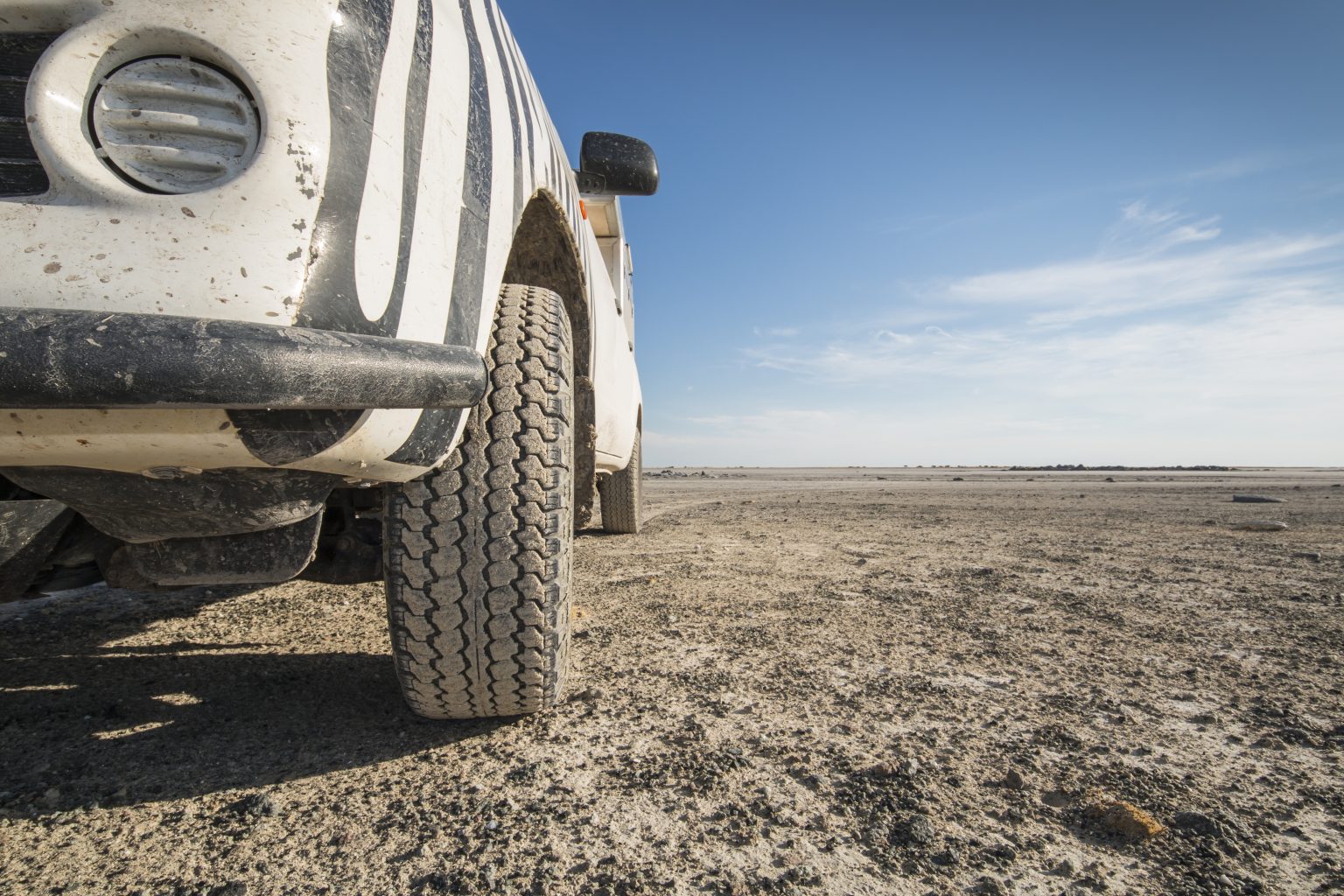
The Kalahari stretches across southern Africa in a patchwork of red sand, open grasslands, fossil river valleys and scattered acacia trees. In Botswana, traveling through this landscape by 4×4 in the Kalahari Desert can lead to remote campsites, wildlife-rich plains and long stretches of sandy track far from major towns.
- Why Choose Botswana for a Kalahari 4×4 Adventure?
- The Best 4×4 Destinations in Botswana’s Kalahari
- 1. Khutse Game Reserve
- 2. Central Kalahari Game Reserve and Deception Valley
- 3. Mabuasehube and the Botswana Side of Kgalagadi Transfrontier Park
- 4. Nossob River Valley, Polentswa and Rooiputs
- 5. Kaa and the Northern Kgalagadi Wilderness
- 6. Ghanzi and the Wider Kalahari Countryside
- Preparing Your 4×4 for the Kalahari
- Driving Safely on Kalahari Sand
- Best Time for a Kalahari 4×4 Trip
- May to August: Cooler and Generally Dry
- September to November: Hotter Conditions
- December to April: Rain and Seasonal Changes
- Camping in Botswana’s Kalahari
- Responsible Travel in the Kalahari
- A Practical Four-Day Central Kalahari Itinerary
- Day 1: Travel to the Reserve Entrance
- Day 2: Explore the Deception Valley Area
- Day 3: Visit Nearby Pans and Scenic Areas
- Day 4: Return to the Gate and Continue Your Journey
- Discovering the Kalahari at a Responsible Pace
The experience requires more than a capable vehicle. Travelers need to plan fuel, water, navigation, campsite bookings and emergency support before entering isolated areas. This Botswana Kalahari travel guide covers key destinations, established wilderness routes, vehicle preparation and responsible camping for a safer off-road journey.
Why Choose Botswana for a Kalahari 4×4 Adventure?
The Kalahari is not a uniform sea of dunes. Across Botswana, the landscape includes sandy woodland, grassland, salt pans and ancient river valleys. Wildlife moves through these habitats, and conditions change with the seasons.
What makes Kalahari 4×4 driving distinctive includes:
- Remote wilderness: Some routes cross large areas with few services and long distances between settlements.
- Sandy tracks: Deep sand and loose surfaces can make driving demanding, even for experienced drivers.
- Wildlife viewing: Depending on the location and season, travelers may see gemsbok, springbok, giraffes, hyenas and Kalahari lions.
- Unfenced campsites: Many camps offer a close connection with the surrounding environment, but require strict wildlife precautions.
- Wide-open landscapes: Salt pans, fossil river valleys and red dunes create varied scenery for photography and exploration.
Botswana’s remote reserves are not places for improvisation. Some routes require advance reservations, and certain wilderness trails must be driven in a specified direction by a convoy of suitable vehicles.
The Best 4×4 Destinations in Botswana’s Kalahari
1. Khutse Game Reserve
Southwest of Gaborone, Khutse Game Reserve offers a remote introduction to Botswana’s Kalahari landscapes. Sandy tracks cross open plains, scrubland and pans, with wildlife visiting areas where grazing and water conditions are favorable.
Highlights include:
- Exploring the reserve’s sandy roads and open landscapes.
- Watching for antelope, giraffes, predators and desert-adapted wildlife.
- Staying at designated campsites where bookings and access are confirmed.
- Photographing the changing light across the pans and surrounding woodland.
Khutse is a remote reserve with limited facilities. Do not assume that fuel, drinking water or mechanical assistance will be available inside the reserve. Plan supplies before entering and check current road conditions with the relevant authorities.
Best for: Experienced self-drive travelers who want a remote Kalahari experience without immediately committing to the longest wilderness routes.
2. Central Kalahari Game Reserve and Deception Valley
The Central Kalahari Game Reserve (CKGR) is one of Botswana’s largest protected areas. Its landscape combines sandy woodland, grasslands, shallow fossil river valleys and open pans. Deception Valley, in the northern part of the reserve, is one of its best-known areas for wildlife viewing.
Highlights include:
- Deception Valley: Open terrain where grazing animals may gather after seasonal rainfall.
- Sunday Pan: A destination that can be included in a longer reserve itinerary, depending on road conditions and available time.
- Leopard Pan and Passarge Valley: Other areas to consider when planning a multi-day visit.
- Remote camping: Designated campsites allow visitors to stay within the reserve, subject to booking and local rules.
Wildlife sightings depend on rainfall, season, vegetation and luck. Lions and other predators may be present, but frequent sightings should never be guaranteed.
A visit to Deception Valley is not necessarily a fixed 120-kilometer loop. Distances depend on the campsite, gate, route and additional stops you choose. Check the current map and calculate driving times before departure.
Best for: Wildlife photographers, experienced self-drive travelers and visitors prepared for long distances with limited services.
3. Mabuasehube and the Botswana Side of Kgalagadi Transfrontier Park
The Mabuasehube area forms part of the Kgalagadi Transfrontier Park, which spans Botswana and South Africa. Its landscape includes red sand dunes, open grassland, scrub and large pans that attract wildlife.
The Botswana side requires a suitable 4×4, and remote routes demand careful preparation. Official park guidance specifies that vehicles traveling on Botswana’s wilderness routes must travel in a group of at least two vehicles. Some routes also require advance bookings and must be completed in one direction. <Cite refs={[“turn800695search1″,”turn800695search3”]}/>
Important areas and features include:
- Mabuasehube Pan: A prominent pan surrounded by Kalahari vegetation.
- Bosobogolo Pan: One of the area’s established wildlife-viewing and camping locations.
- Mpayathutlwa Pan: Another destination linked to the area’s sandy road network.
- Wilderness trails: Designated routes for visitors seeking a more remote experience.
The Mabuasehube Wilderness Trail is approximately 155 kilometers and takes two days and one night according to official park information. It is not interchangeable with the separate Polentswa Wilderness Trail, which covers a longer distance. <Cite refs={[“turn800695search1″,”turn800695search3”]}/>
Best for: Experienced 4×4 travelers who are comfortable with deep sand, basic camping facilities and strict self-sufficiency.
4. Nossob River Valley, Polentswa and Rooiputs
The Nossob River valley follows a dry riverbed along part of the Botswana-South Africa border. Although the riverbed is usually dry, it supports vegetation and provides important wildlife habitat.
The Botswana side of the Kgalagadi offers camping and accommodation options around Polentswa, Rooiputs and Two Rivers, subject to availability and the relevant park rules.
Visitors can expect:
- Long drives through sandy terrain and open woodland.
- Opportunities to watch wildlife near the riverbed and water points.
- Campsites with a strong wilderness atmosphere.
- Excellent conditions for landscape and wildlife photography when the weather is favorable.
This area is part of a transfrontier park, not a separate route that can be freely driven along the border. Confirm the correct entrance gate, permits, reservations and intended exit before departure.
Best for: Wildlife enthusiasts and travelers seeking remote camping with a defined park itinerary.
5. Kaa and the Northern Kgalagadi Wilderness
The Kaa area provides access to remote parts of the Botswana Kalahari and the northern reaches of the Kgalagadi region. Its sandy tracks, open pans and sparse vegetation suit travelers seeking a quieter wilderness experience.
A designated Kaa game-viewing trail is described by official park information as a circular route of approximately 191 kilometers, with camping locations along the way. Current access, booking requirements and route conditions should be confirmed before travel. <Cite refs={[“turn800695search3”]}/>
Before setting out:
- Confirm that the route is open and your booking is valid.
- Carry sufficient fuel, drinking water and food for the planned duration.
- Travel with the required number of vehicles.
- Check your navigation data against current park information.
- Avoid extending the route into unfamiliar tracks without local guidance.
Best for: Experienced travelers who want a carefully planned wilderness drive away from the busier park corridors.
6. Ghanzi and the Wider Kalahari Countryside
Ghanzi is a useful base for exploring parts of western Botswana and learning about the region’s diverse communities and rural life. The surrounding area includes sandy terrain, scrubland, farms and settlements.
A trip here can combine scenic drives with locally arranged cultural experiences. However, the availability of guided activities, access to private land and suitable off-road tracks varies.
For a responsible visit:
- Arrange cultural visits through a reputable local operator.
- Ask permission before entering private or community-managed land.
- Confirm whether a proposed track is a public road or an authorized route.
- Avoid presenting any community as a guaranteed attraction or assuming all San communities share the same traditions.
Best for: Travelers interested in the wider Kalahari region, local history and community-based experiences alongside scenic driving.
Preparing Your 4×4 for the Kalahari
Remote travel in Botswana requires careful planning because water, fuel, food and vehicle assistance may not be available where you need them. Botswana’s tourism guidance recommends carrying substantial water and fuel reserves for desert travel, together with spare parts and recovery equipment. <Cite refs={[“turn800695search8”]}/>
Essential Vehicle Equipment
Before departure, make sure your vehicle is suitable for the route and in good mechanical condition. Useful equipment includes:
- A capable 4×4: Low-range gearing and suitable ground clearance are important for demanding sandy tracks.
- Spare tires: Carry at least one full-size spare, and consider a second spare for long, remote journeys.
- Tire repair equipment: Pack a pressure gauge, compressor and puncture-repair kit.
- Recovery equipment: Carry suitable recovery straps, rated recovery points, traction boards and a shovel.
- Basic tools and spares: Include items appropriate to your vehicle, along with essential fluids.
- Fuel reserves: Calculate consumption for sand driving, detours and a safety margin. Use approved containers and secure them properly.
A vehicle model alone does not guarantee suitability. Tire condition, vehicle load, driver experience and recovery equipment all matter.
Water, Food and Emergency Supplies
Plan supplies for the complete trip, including the possibility of delays or a breakdown.
- Drinking water: Botswana’s tourism guidance recommends at least 20 liters per person for self-drive camping, preferably more, and around 50 to 100 liters for desert destinations. The appropriate amount depends on the duration, temperatures, group size and access to safe replenishment.
- Food: Bring enough food for the planned stay, plus an emergency reserve.
- First-aid kit: Include basic supplies and personal medication.
- Communication: Carry a satellite communicator or satellite phone where mobile coverage is unreliable.
- Navigation: Use offline maps, a GPS device and a paper map as backup.
- Lighting and power: Bring a headlamp, spare batteries and a suitable charging system.
- Shelter: Pack a suitable tent, sleeping equipment and protection from sun, wind and cold nights.
A satellite device is most useful when you know how to operate it and have checked its subscription and emergency-contact settings before leaving.
Driving Safely on Kalahari Sand
Driving on soft sand requires the right technique and an understanding of how your vehicle behaves under load. Speed alone will not solve every problem, and sudden acceleration can dig the tires deeper into loose ground.
Tire Pressure and Momentum
There is no single tire pressure that suits every Kalahari route. The appropriate pressure depends on the tires, vehicle weight, terrain and manufacturer guidance.
- Reduce pressure only when appropriate for the surface and your vehicle.
- Use a reliable gauge rather than estimating pressure by eye.
- Maintain controlled, steady momentum where conditions permit.
- Avoid sudden braking or sharp steering on loose sand.
- Reinflate before returning to faster, firmer roads.
If you are unfamiliar with sand driving, learn the technique in a safe area or with an experienced guide before attempting remote tracks.
Crossing Dunes, Pans and Dry Riverbeds
Not all open ground is safe to cross. A flat surface may conceal soft sand, mud or a fragile crust.
- Dunes: Approach only routes you can assess, and avoid cresting a dune when you cannot see what lies beyond it.
- Salt pans: Check local guidance and ground conditions before driving onto them. Avoid wet or uncertain surfaces.
- Dry riverbeds: Do not enter when rain is possible upstream. Flash floods can occur even when the sky above you appears clear.
- Wildlife tracks: Drive cautiously, particularly near dawn and dusk when animals may be moving.
Stay on authorized tracks and never assume that an unmarked route is safe simply because another vehicle has used it.
Best Time for a Kalahari 4×4 Trip
Seasonal conditions affect temperatures, vegetation, wildlife movement and the state of sandy roads. The best period depends on the area and the type of trip you plan.
May to August: Cooler and Generally Dry
The cooler months are often comfortable for driving and camping, although winter nights can become very cold.
Advantages include:
- More comfortable daytime temperatures in many areas.
- Generally dry conditions across much of the region.
- Clear skies that can be favorable for landscape photography and stargazing.
Prepare for cold evenings and early mornings, and check for local road restrictions before entering remote reserves.
September to November: Hotter Conditions
Temperatures rise toward the start of the rainy season. Heat management becomes increasingly important, especially on long drives and during vehicle recovery.
- Begin driving early when appropriate.
- Carry additional water and sun protection.
- Avoid unnecessary exertion during the hottest hours.
- Monitor forecasts and adjust the itinerary when conditions become unsafe.
December to April: Rain and Seasonal Changes
The rainy season can bring greener landscapes and changes in wildlife distribution, but it can also make some roads difficult or impassable.
- Check road conditions before leaving a main route.
- Avoid flooded crossings and waterlogged pans.
- Allow extra time for delays.
- Follow park authorities’ advice on closures and access restrictions.
The cooler dry season, broadly from May to August, is a common choice for remote self-drive trips. However, it does not guarantee that every track will be open or safe.
Camping in Botswana’s Kalahari
Camping is a major part of the Kalahari experience, but facilities vary considerably. Some sites have basic amenities, while remote wilderness camps may provide little more than a designated place to stay.
Campsites and Areas to Consider
- Khutse Game Reserve: Designated campsites provide a base for exploring the reserve, subject to current booking arrangements.
- Deception Valley area: A useful focus for a Central Kalahari itinerary, with designated campsites that must be booked in advance where required.
- Mabuasehube Pan: Part of the Kgalagadi Transfrontier Park’s Botswana section, with campsites around the pans.
- Polentswa: A remote camping area in the Botswana section of Kgalagadi.
- Rooiputs: A camping and accommodation area near the Nossob valley on the Botswana side.
Do not assume all campsites have drinking water, fuel, showers or other facilities. Confirm the precise amenities of your booked site before departure. Official Kgalagadi guidance, for example, notes that some remote camps require visitors to bring their own drinking water and firewood. <Cite refs={[“turn800695search4″,”turn800695search5”]}/>
Wildlife Safety at Camp
Many campsites in the region are unfenced. Wildlife may pass through or close to camp, so follow instructions from park staff and local guides.
- Secure food and waste as directed.
- Never feed or approach wild animals.
- Avoid walking around camp at night unless park rules and local guidance explicitly permit it.
- Keep children close and supervised.
- Do not leave food scraps or wash dishes in ways that attract wildlife.
- Follow all fire restrictions and extinguish fires completely where fires are permitted.
If an animal approaches, remain calm and follow the guidance given by park staff. In the event of a vehicle breakdown in a wildlife area, follow local emergency instructions and avoid unnecessary movement around the vehicle.
Responsible Travel in the Kalahari
The Kalahari supports wildlife, fragile vegetation and communities with distinct histories and traditions. Off-road driving can damage these environments when vehicles leave established routes or disturb sensitive areas.
Responsible travelers should:
- Stay on authorized tracks: Avoid creating new routes across vegetation, pans or dunes.
- Respect wildlife: Observe animals from a safe distance and never pursue them for photographs.
- Protect water sources: Keep waste, fuel and detergents away from pans and other water points.
- Respect local communities: Ask permission before photographing people or visiting community-managed land.
- Carry out all waste: Leave campsites and viewpoints clean.
- Follow reserve rules: Obtain permits, honor campsite bookings and respect route restrictions.
- Travel with appropriate support: Use a second vehicle or an approved convoy where required.
Leave the landscape as you found it, and remember that remoteness does not mean a place is without owners, rules or ecological limits.
A Practical Four-Day Central Kalahari Itinerary
A four-day visit can introduce travelers to the Central Kalahari Game Reserve, but the itinerary should be built around confirmed accommodation, gate access and realistic driving times. It should not be treated as a guaranteed route linking Khutse and the Central Kalahari in a single circuit.
Day 1: Travel to the Reserve Entrance
Travel toward the appropriate entrance, commonly Matswere for northern itineraries, after checking current access and road conditions. Complete the necessary entry procedures and continue only to your booked campsite if time and conditions allow.
Carry sufficient fuel, water and food before leaving the last suitable resupply point.
Day 2: Explore the Deception Valley Area
Spend the day on authorized roads around Deception Valley and nearby viewing areas that are open to visitors. Keep driving times flexible, watch for wildlife and avoid rushing between distant stops.
Return to your booked campsite before the required closing time.
Day 3: Visit Nearby Pans and Scenic Areas
Choose additional destinations according to the road conditions, available daylight and the location of your campsite. Sunday Pan or other nearby areas may be suitable, but confirm the route and travel time with current park information.
Do not attempt a long crossing to another reserve simply to fit more destinations into the itinerary.
Day 4: Return to the Gate and Continue Your Journey
Leave enough time to reach the designated exit before closing. Check fuel reserves, vehicle condition and onward road conditions before continuing toward your next destination.
Important: A journey combining Khutse and the Central Kalahari requires separate route planning. Confirm whether a direct connection is currently permitted and practical before booking campsites or committing to a multi-reserve itinerary.
Discovering the Kalahari at a Responsible Pace
A 4×4 journey through Botswana’s Kalahari can reveal a landscape of red sand, open grassland, ancient river valleys and wildlife moving across wide horizons. Destinations such as Khutse, Deception Valley and Mabuasehube offer distinct experiences, each with its own access requirements and level of remoteness.
The strongest itinerary is not the one that covers the most ground. It is the one that allows enough time for safe driving, proper preparation and respect for the landscape. With a suitable vehicle, confirmed bookings, reliable communication and realistic daily distances, Botswana Kalahari 4×4 travel can become a rewarding way to explore one of southern Africa’s remarkable wilderness regions.