
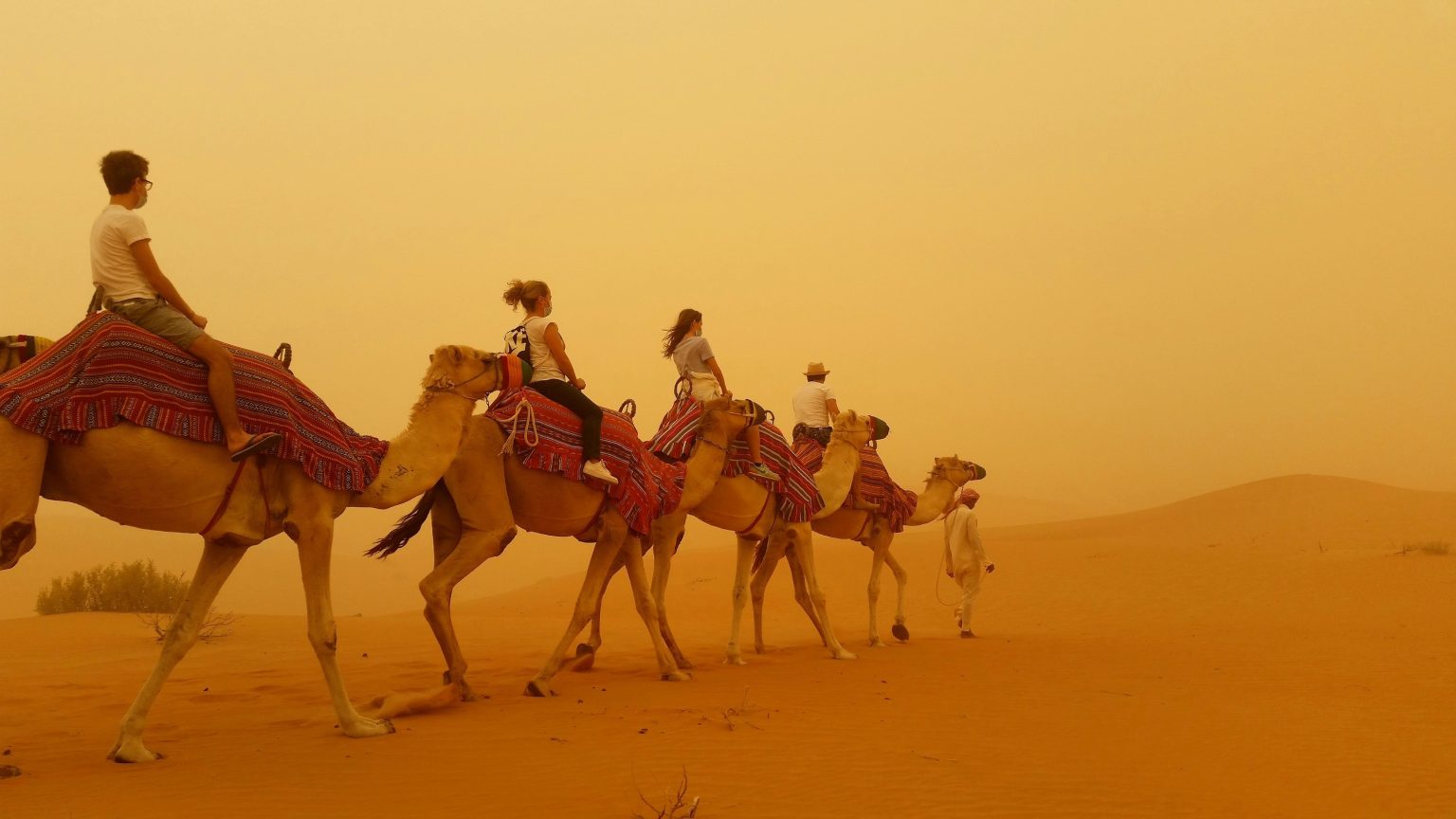
As the sun rises, the desert begins to warm, and the dunes take on shades of gold and amber. A camel moves steadily across the sand while the surrounding landscape opens toward the horizon. For visitors, this offers a chance to experience the United Arab Emirates beyond its modern cities and coastal resorts.
- Why Experience Camel Trekking in the UAE?
- Best Places for Camel Trekking in the UAE
- Dubai Desert Conservation Reserve (DDCR)
- Al Marmoom Desert, Dubai
- Liwa Desert, Abu Dhabi
- Al Ain and the Eastern Desert
- Mleiha Desert, Sharjah
- What to Expect on a Camel Trek
- What to Wear and Bring
- Best Time for Camel Trekking in the UAE
- November to March: The Cooler Season
- April and October: Seasonal Transitions
- May to September: Hot Weather
- Camel Etiquette, Safety and Animal Welfare
- Camel Trekking Operators and Booking Advice
- The Cultural Role of Camels in the UAE
- A Two-Day Camel Experience from Dubai
- Discover the UAE Desert Through Camel Trekking
Camel trekking in the UAE combines outdoor exploration with opportunities to learn about the country’s desert heritage. From guided experiences near Dubai to the vast dunes of Liwa Desert and the archaeological landscapes around Mleiha, camel rides in the United Arab Emirates vary in length, setting, and cultural focus. Choosing the right destination helps you find an experience that suits your interests, available time, and comfort level.
Why Experience Camel Trekking in the UAE?
Camels have played an important role in the history of the Arabian Peninsula. Before modern roads and motorized transport, they helped people cross arid terrain, carry supplies, and travel between settlements and sources of water. They also contributed to traditional livelihoods through their milk, wool, and other products.
Today, camel riding gives visitors an introduction to this heritage while offering a different way to experience the desert. Most tourist rides are shorter than historical journeys and take place along routes selected by local operators.
Reasons to consider a UAE desert camel trek include:
- Desert scenery: Explore sandy landscapes at a slower pace than a motorized safari.
- Cultural learning: Hear about regional history and traditional camel use from knowledgeable guides.
- Outdoor photography: Capture dunes, changing light, and the surrounding desert environment.
- Different riding options: Choose from introductory rides and longer guided excursions, depending on availability.
- Family experiences: Some operators provide introductory sessions suitable for children who meet their age and safety requirements.
Camel riding is not automatically suitable for everyone. Mounting, dismounting, and the movement of the animal can be uncomfortable for some visitors, so check the ride duration and discuss any mobility concerns with the operator before booking.
Best Places for Camel Trekking in the UAE
Dubai Desert Conservation Reserve (DDCR)
The Dubai Desert Conservation Reserve protects an area of desert habitat where wildlife and native vegetation are managed under conservation rules. It is also associated with guided desert experiences that introduce visitors to the natural environment and aspects of Emirati heritage.
Camel rides in the reserve are not a general walk-in activity available everywhere. Access beyond visitor facilities is controlled, and experiences must be arranged through authorized operators.
Depending on the booked experience, visitors may be able to enjoy:
- Guided camel rides: Travel through approved areas with an experienced handler or guide.
- Desert wildlife: Learn about species such as the Arabian oryx and desert gazelles.
- Nature interpretation: Discover the reserve’s habitats and conservation work.
- Cultural activities: Some packages combine camel riding with falconry demonstrations, local food, or heritage presentations.
The reserve is a suitable option for travelers who want an organized desert experience with a conservation focus. Check exactly which activities are included, since not every reserve visit includes a camel ride.
Al Marmoom Desert, Dubai
The Al Marmoom Desert Conservation Reserve, near Al Qudra, offers a different setting for visitors interested in desert landscapes and wildlife. It is known for its open desert habitat, lakes, birdlife, and cultural experiences arranged by local tourism operators.
One option is the Al Marmoom Bedouin Experience, which can include a camel caravan, a falconry presentation, and traditional-style food, depending on the package booked.
Things to consider include:
- Guided camel experiences: Confirm the route, duration, and departure time with the operator.
- Wildlife observation: The reserve supports native species, including Arabian oryx and gazelles.
- Local heritage: Some organized experiences introduce visitors to aspects of traditional desert life.
- Al Qudra Lakes: These provide a separate nature-focused stop that can be combined with a wider visit to the area.
Al Qudra Lakes should not be treated as a guaranteed stop on every camel ride. Check the itinerary and allow time for transfers between locations.
Although parts of Al Marmoom are open for public recreation, this does not mean visitors can camp or arrange camel rides anywhere they choose. Follow current reserve rules and use authorized providers for organized activities.
Liwa Desert, Abu Dhabi
The Liwa Desert lies on the northern edge of the Rub’ al Khali, or Empty Quarter, one of the world’s largest continuous sand deserts. Its extensive dunes create a dramatic setting for desert exploration in Abu Dhabi’s western region.
Liwa is farther from central Abu Dhabi than the desert destinations around Dubai, so visitors should plan transport and overnight arrangements carefully.
Possible experiences include:
- Dune scenery: View the tall dunes and broad sandy landscapes from suitable access points.
- Camel rides: Ask local operators whether guided rides are available for your chosen dates and location.
- Desert photography: Capture the changing colors of the sand at sunrise and sunset.
- Overnight stays: Choose an established camp or accommodation with confirmed access and facilities.
- Local heritage: Learn about the region’s history and the importance of camels in desert livelihoods.
Do not assume that a standard hotel desert safari includes a camel trek in Liwa. Confirm the exact location, riding time, transport, and whether the experience is a short ride or a longer journey.
For travelers seeking a remote desert atmosphere, Liwa can be an appealing choice. However, trips deeper into sandy terrain require careful route planning and appropriate vehicle support.
Al Ain and the Eastern Desert
Al Ain, in the eastern part of Abu Dhabi Emirate, offers opportunities to explore Emirati heritage, oasis landscapes, and the surrounding desert environment. The wider region also has a long association with camel breeding and racing.
Camel riding is not available at every attraction in Al Ain, so visitors should identify a specific operator or venue before planning a ride.
Possible additions to an itinerary include:
- Camel experiences: Check for introductory rides or organized activities offered by local providers.
- Al Ain Oasis: Explore the historic oasis and its traditional irrigation system.
- Jebel Hafeet: Visit the mountain for panoramic views and a different perspective on the region’s landscape.
- Camel racing: When races are scheduled, visit an authorized track to observe this established Emirati sport.
The oasis, mountain, and racing facilities are separate attractions rather than one continuous camel-trekking route. Plan the transport and timing for each stop independently.
Al Ain is a useful choice for travelers who want to combine cultural attractions with an introduction to the region’s desert heritage.
Mleiha Desert, Sharjah
The Mleiha Desert is known for its archaeological heritage, geological features, and sandy landscapes. Located in Sharjah, the area offers visitors a chance to explore the region’s past alongside its natural environment.
The Mleiha Archaeological Centre organizes experiences related to the area’s history and outdoor attractions. However, camel trekking availability depends on the specific activity and current schedule, so confirm the details before booking.
Depending on what is offered, a visit may include:
- Archaeological sites: Learn about settlements and human activity in the region across different periods.
- Desert landscapes: Explore selected areas with a qualified guide.
- Geological features: Discover fossil-bearing terrain and rock formations.
- Night-sky experiences: Some organized activities focus on astronomy and the desert after dark.
Mleiha is particularly appealing to history enthusiasts who want to understand the relationship between people and the desert environment. If camel riding is your main priority, confirm that a ride is included rather than assuming it is a standard part of every tour.
What to Expect on a Camel Trek
A typical camel trekking experience in the UAE begins with a briefing from the guide or handler. You will receive instructions on approaching the animal, mounting, holding your position, and dismounting safely.
The length and pace depend on the operator and route. A short introductory ride may last only a limited time, while a longer excursion can include breaks and additional activities.
A guided ride may involve:
- A safety briefing: Learn how to approach the camel and follow the handler’s instructions.
- Mounting assistance: The camel kneels to make mounting easier, then rises in stages, which can cause the rider to tilt forward and backward.
- A guided route: Follow a route selected according to the terrain and the group’s ability.
- Rest and photography stops: Some rides include breaks at suitable viewpoints.
- Optional refreshments: Certain packages include tea, coffee, dates, or a meal.
Do not assume that every ride includes a camp visit or traditional dinner. Read the itinerary carefully and confirm what is included in the price.
Longer excursions can be tiring because of the camel’s movement, the heat, and the time spent sitting in the saddle. Follow the guide’s advice and tell the operator if you feel uncomfortable.
What to Wear and Bring
Suitable clothing helps protect against sunlight, wind, and sand. Conditions vary by season, time of day, and location, so dress for the actual forecast rather than relying on a fixed temperature range.
Clothing
- Lightweight, breathable clothing: Choose comfortable garments that allow you to move freely.
- Long sleeves and trousers: These provide protection from sunlight and contact with sand.
- A secure hat or head covering: Useful for shade, provided it stays in place while riding.
- Sunglasses: Protect your eyes from bright sunlight and blowing sand.
- Closed or secure footwear: Choose shoes that remain comfortable while mounting, dismounting, and walking.
- A light jacket: Useful during cooler mornings, evenings, and winter outings.
Modest, practical clothing is a considerate choice when visiting cultural sites or joining experiences hosted by local communities. Avoid presenting one clothing style as mandatory for every desert setting.
Essential Items
- Drinking water: Bring enough for the excursion and additional water if the outing is long or conditions are hot.
- Sunscreen: Apply before departure and reapply according to the product instructions.
- A small daypack: Keep belongings secure and avoid unnecessary weight.
- A phone or camera: Protect electronic equipment from sand and dust.
- A power bank: Helpful on longer outings.
- Personal medication: Carry anything you may need during the trip.
Ask the operator whether water, protective equipment, transport, and refreshments are included. Requirements for a short ride differ from those for a multi-hour or overnight excursion.
Best Time for Camel Trekking in the UAE
The cooler months are generally the most comfortable time for outdoor activities in the UAE. However, conditions vary between the coastal areas, the dunes around Dubai, and the more remote desert landscapes of Abu Dhabi.
November to March: The Cooler Season
The period from late autumn through winter is generally favorable for desert excursions. Morning and evening temperatures are often more comfortable than during the hottest months.
This season is suitable for:
- Sunrise and sunset camel rides.
- Guided desert walks and photography.
- Overnight stays at established camps.
- Combining camel experiences with wildlife or cultural activities.
Book popular experiences in advance during busy travel periods, and confirm the operator’s schedule before departure.
April and October: Seasonal Transitions
Temperatures can rise during these months, particularly in exposed areas. Shorter rides and departures during cooler hours may be more comfortable.
Check the local forecast and ask the operator whether the planned duration is suitable for the conditions.
May to September: Hot Weather
Summer heat can make outdoor activities uncomfortable and, at times, unsafe. A dawn departure does not automatically make a long ride suitable, especially during periods of extreme heat or humidity.
If traveling during the hotter months:
- Choose only operators that confirm conditions are suitable.
- Avoid strenuous outdoor activity during peak heat.
- Carry sufficient drinking water.
- Follow instructions about rest breaks and sun exposure.
- Postpone the ride if the operator advises that conditions are unsafe.
For many visitors, winter provides the most comfortable balance for camel riding in the UAE, but the final decision should depend on the destination’s weather and the operator’s guidance.
Camel Etiquette, Safety and Animal Welfare
A responsible camel ride should prioritize the safety of visitors and the welfare of the animals. Camels are powerful animals, and even a calm camel can move unexpectedly.
Follow these guidelines:
- Approach calmly: Follow the handler’s instructions and avoid sudden movements.
- Wait for assistance: Allow the handler to guide you when mounting and dismounting.
- Keep a secure position: Follow instructions about holding the saddle or reins.
- Do not feed the camel without permission: Some foods can be unsuitable for the animal.
- Avoid loud noises: Do not shout, tease, or deliberately startle the camel.
- Check the animal’s condition: Avoid rides involving animals that appear injured, severely underweight, exhausted, or poorly cared for.
- Respect other visitors: Keep a safe distance between animals and follow the guide’s instructions at stops.
Look for operators that provide appropriate equipment, reasonable riding times, access to water and rest, and calm handling. If you are uncomfortable with the animal’s condition or the way it is treated, decline the ride.
Camel Trekking Operators and Booking Advice
The UAE offers a range of desert tourism providers, but not every operator offers the same kind of camel experience. Some specialize in short introductory rides, while others include camel caravans within a wider cultural or wildlife excursion.
Providers and venues to investigate include:
- Platinum Heritage, Dubai: Known for heritage-focused desert experiences. Confirm which current packages include camel riding.
- Arabian Adventures, Dubai: Offers desert tourism experiences; check the itinerary for the specific camel activity.
- Al Marmoom Bedouin Experience: A cultural experience listed by Dubai tourism that includes a camel caravan as part of the package.
- Arabian Desert Camel Riding Center, Dubai: Offers introductory camel-riding instruction and guided desert rides.
- Mleiha Archaeological Centre, Sharjah: A starting point for exploring archaeological and outdoor experiences in Mleiha. Confirm whether camel riding is available on your chosen date.
Before booking, ask:
- How long will you actually spend riding?
- Where does the route take place?
- Is hotel transport included?
- Are food, water, and equipment provided?
- Are there age, weight, or mobility restrictions?
- What measures are in place for camel welfare?
- What happens if weather conditions make the ride unsuitable?
Prices vary according to location, duration, transport, group size, and included activities. Rather than relying on a single price range for the entire UAE, request a current quote and confirm any extra charges before paying.
The Cultural Role of Camels in the UAE
Camels remain an important part of Emirati heritage. Historically, they supported transport and trade across arid landscapes and provided useful resources for desert communities. Today, camel breeding, racing, and cultural events continue to maintain their place in public life.
Visitors can explore this heritage in several ways:
- Camel racing: Watch scheduled races at venues such as Al Marmoom in Dubai or Al Wathba near Abu Dhabi.
- Heritage experiences: Join guided activities that explain traditional desert life and the historical role of camels.
- Camel-related products: Learn about the use of camel milk and other products in contemporary Emirati life.
- Local storytelling: Listen to guides who can explain the history and customs associated with the region.
Camel racing is a distinct activity from camel trekking. Race schedules vary by venue and season, so check current listings before visiting.
It is also important to recognize that Emirati culture includes many traditions beyond desert life. A guided camel experience can introduce one part of this heritage, but it should not be treated as a complete representation of every Emirati community.
A Two-Day Camel Experience from Dubai
This sample itinerary combines a guided camel excursion with cultural and nature-focused activities around Dubai. It is a suggested plan, not a guaranteed package, and requires advance confirmation of the ride and transport.
Day 1: Guided Camel Trek in Al Marmoom
Arrange a morning or late-afternoon camel experience with an established operator. Confirm the meeting point, route, riding time, and whether the package includes cultural activities or refreshments.
After the ride, enjoy a meal if included, or return to Dubai for lunch. If time permits, visit Al Marmoom Heritage Village or another cultural attraction, checking opening times before departure.
Spend the evening in Dubai or at accommodation confirmed by your operator. Do not assume that overnight camping is permitted at the camel-riding location.
Day 2: Nature and Emirati Heritage
Begin the day with a visit to a suitable nature or heritage attraction. Depending on your interests, this might include Al Qudra’s designated visitor areas or a scheduled visit to a camel-racing venue during the racing season.
If visiting Al Qudra Lakes, follow local rules and treat the lakes as a separate stop rather than assuming they form part of the camel trek.
Return to Dubai with enough time for the journey and any planned activities. If you prefer a more remote desert experience, consider planning a separate trip to Liwa rather than trying to include it in this short itinerary.
Discover the UAE Desert Through Camel Trekking
From the guided desert experiences around Dubai to the expansive dunes of Liwa and the archaeological landscape of Mleiha, camel trekking in the UAE offers several ways to explore the country’s desert environments and heritage.
The best experience depends on the setting you prefer, the length of ride you want, and the activities available through a reputable operator. Confirm access arrangements, prepare for the weather, and prioritize the welfare of the camels.
With thoughtful planning, a camel ride can provide a meaningful introduction to the UAE’s desert landscapes and one of the animals that helped shape the region’s history.