
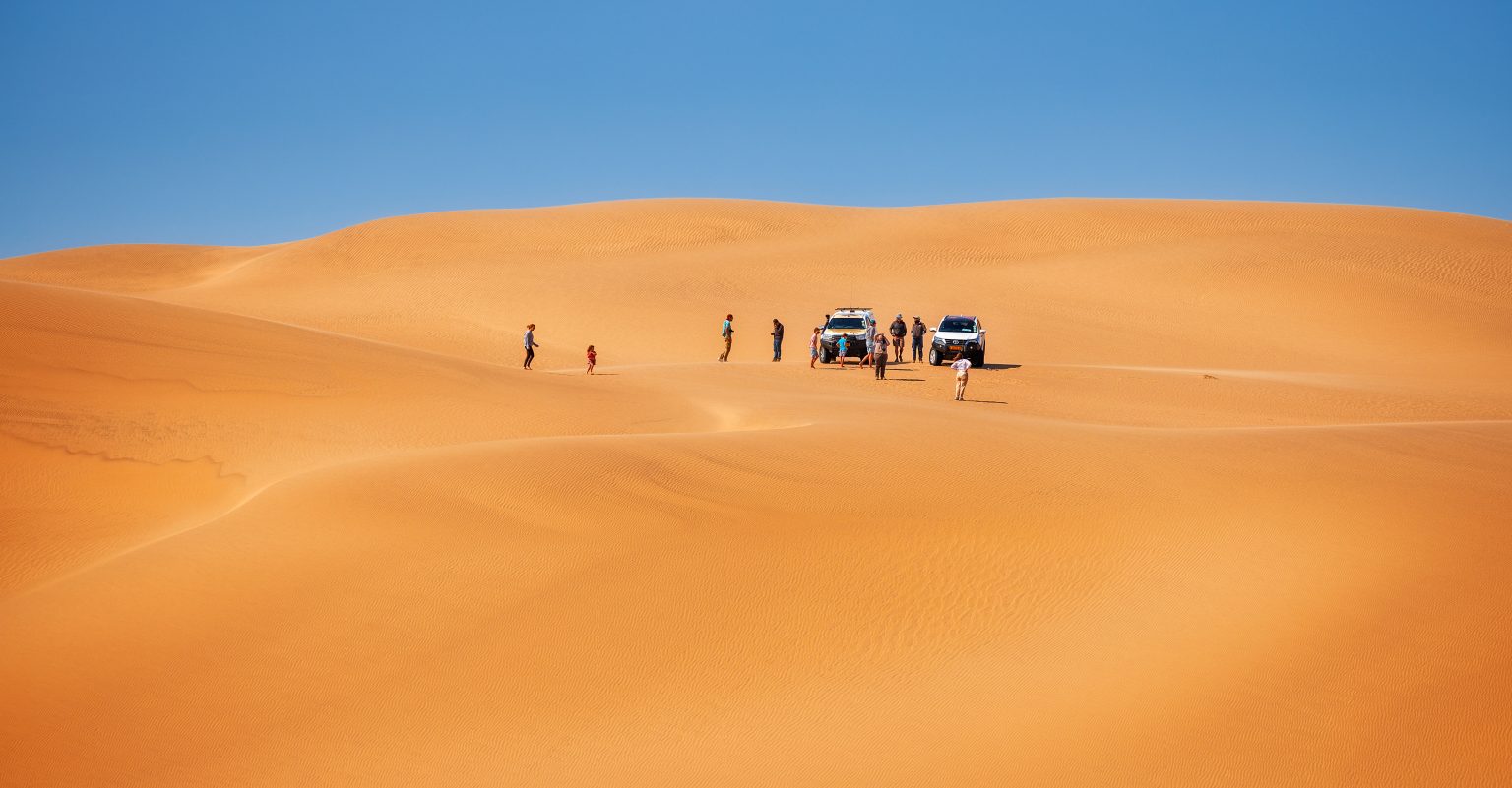
Namibia offers some of southern Africa’s most varied landscapes for self-drive travel, from gravel plains and rocky mountains to vast dunes and remote Atlantic coastlines. Its long distances and changing road conditions make preparation an essential part of the journey.
- Why Namibia Is a Popular Destination for 4×4 Travel
- The Best Desert 4×4 Routes in Namibia
- Namib-Naukluft National Park and Sossusvlei
- Skeleton Coast
- Spitzkoppe and Damaraland
- Kaokoland, Northwestern Namibia
- Solitaire to Walvis Bay via the Namib Desert Region
- Preparing Your 4×4 for Namibia’s Desert
- Driving Techniques for Namibia’s Desert Roads
- Best Time of Year for 4×4 Travel in Namibia
- Camping Along Namibia’s 4×4 Routes
- Safety Tips for Desert Travel
- Eco-Driving and Responsible Travel
- Costs, Park Fees and Permits
- Sample Five-Day 4×4 Itinerary: Swakopmund to Sossusvlei
- Day 1: Swakopmund and Walvis Bay
- Day 2: Drive Inland Toward Solitaire
- Day 3: Explore Sossusvlei and Deadvlei
- Day 4: Discover the Namib-Naukluft Region
- Day 5: Return Toward the Coast
- Plan a Safer Namibia 4×4 Adventure
A Namibia 4×4 adventure can take travelers through the Namib Desert, the dunes around Sossusvlei, the granite formations of Spitzkoppe, and the remote landscapes of Damaraland and Kaokoland. This guide covers notable Namibia off-road routes, practical vehicle preparation, and essential advice for safe desert driving.
Why Namibia Is a Popular Destination for 4×4 Travel
Namibia is well suited to road trips, with a network of paved highways and gravel roads connecting many major destinations. However, road conditions vary considerably, and remote tracks can require specialist driving skills and appropriate vehicles.
Reasons travelers choose Namibia for a 4×4 journey include:
- Varied desert landscapes: Explore sand dunes, gravel plains, rocky plateaus, dry riverbeds, and coastal scenery.
- Independent travel: Many established routes can be explored on a self-drive itinerary with suitable planning.
- Wildlife and geology: Discover desert-adapted wildlife, unusual rock formations, and landscapes shaped by wind and erosion.
- Camping opportunities: Stay at established campsites and lodges near several major desert attractions.
- Remote destinations: Travel beyond the main tourist centers where road conditions and services require more careful preparation.
Not every desert road requires a 4×4. A suitable vehicle depends on the route, season, road conditions, and rental-company restrictions. Deep sand, remote tracks, and some rough approaches are more demanding than the main gravel roads.
The Best Desert 4×4 Routes in Namibia
Namib-Naukluft National Park and Sossusvlei
Difficulty: Moderate on established routes; more demanding on deep sand sections
Best for: Dune photography, desert scenery, and hiking
The Namib-Naukluft region is known for its enormous sand dunes, broad gravel plains, and dramatic desert scenery. Sossusvlei and Deadvlei are among its best-known attractions, while Sesriem serves as a practical base for exploring the area.
Highlights include:
- Dune 45: A famous dune often visited around sunrise.
- Deadvlei: A clay pan containing ancient dead camel thorn trees surrounded by dunes.
- Big Daddy: A prominent dune near Deadvlei that attracts hikers prepared for a demanding climb.
- Sesriem Canyon: A narrow geological formation that can be explored when conditions allow.
- Night skies: Stargazing opportunities at campsites and lodges away from major sources of artificial light.
Driving advice:
- Access to Sossusvlei begins through the Sesriem area. The final sandy stretch beyond the main parking area requires appropriate 4×4 capability, or visitors can use an authorized shuttle where available.
- Do not assume every road inside the wider park requires a 4×4. Check the specific route and vehicle requirements before setting out.
- Reduce tire pressure only when appropriate for the vehicle, tires, load, and sand conditions. Use a reliable gauge and reinflate before returning to faster gravel or paved roads.
- Check gate opening times and plan the return journey before entering the park.
The best time for photography is often early morning or late afternoon, when the light emphasizes the dunes’ shapes and colors. Temperatures can rise quickly, so carry water even for short walks.
Skeleton Coast
Difficulty: Varies by access route; remote sections require careful planning
Best for: Coastal scenery, shipwreck history, and experienced travelers
The Skeleton Coast is known for Atlantic fog, cold coastal winds, shipwreck remains, and stretches of isolated shoreline. The cold Benguela Current contributes to the region’s distinctive coastal conditions. The national park extends from the Ugab River area north toward the Kunene River. Access is regulated in parts of the park, and some areas are available only through specific arrangements. <Cite refs={[“turn989301search4″,”turn989301search12”]}/>
Highlights include:
- Coastal landscapes shaped by wind, fog, and the Atlantic Ocean.
- Historic shipwreck remains, including those associated with the remote coastline.
- Desert-adapted wildlife in suitable areas.
- Lichen fields, rocky shores, and broad gravel plains.
Access and preparation:
- Check which permit or access arrangement applies to your intended section before traveling. Do not assume a permit for one area allows entry into the entire park.
- Terrace Bay has accommodation, while camping at Torra Bay is seasonal and subject to booking and current rules. Confirm availability directly before planning an overnight stay. <Cite refs={[“turn989301search4″,”turn989301search5”]}/>
- Stay on authorized roads and tracks. Off-road driving can cause long-lasting damage to fragile desert surfaces.
- Carry enough fuel, water, food, and emergency equipment for the planned route.
- Fog can reduce visibility, and remote coastal areas may have limited services.
Some parts of the Skeleton Coast are suitable for visitors on established routes, while other areas require guided access or special arrangements. Confirm the exact route with park authorities or an authorized operator.
Spitzkoppe and Damaraland
Difficulty: Moderate on established gravel roads; route-dependent off-road sections
Best for: Rock formations, cultural heritage, and desert-adapted wildlife
Spitzkoppe is a striking group of granite peaks rising above the surrounding plains. Further north, Damaraland contains rugged mountains, dry riverbeds, geological formations, and important cultural heritage sites.
Notable stops include:
- Spitzkoppe: A well-known landmark for photography, hiking, and camping.
- Twyfelfontein: A UNESCO World Heritage Site recognized for its extensive rock engravings.
- Brandberg: A prominent mountain massif with significant natural and cultural interest.
- Dry river valleys: Areas where desert-adapted wildlife, including elephants, may be encountered.
Driving advice:
- Expect gravel roads, corrugations, loose stones, and occasional sandy sections.
- Check road conditions before leaving established routes.
- Use local guides where access rules, cultural sites, or remote terrain make independent exploration unsuitable.
- Do not approach wildlife or leave designated roads without confirming that access is permitted.
Spitzkoppe and Damaraland can be included in a longer itinerary linking the coast with destinations farther north, but driving times should allow for road conditions and stops.
Kaokoland, Northwestern Namibia
Difficulty: Challenging on remote routes
Best for: Experienced off-road travelers and guided expeditions
Kaokoland is a remote region of northwestern Namibia known for rugged terrain, isolated settlements, dry river valleys, and the Kunene River landscape. It requires more preparation than a conventional self-drive route between major towns.
Highlights include:
- Epupa Falls: Waterfalls along the Kunene River, near the Angolan border.
- Mountain and desert scenery: Rugged landscapes with changing conditions between valleys and elevated areas.
- Desert-adapted wildlife: Sightings are possible in suitable habitats but are never guaranteed.
- Cultural experiences: Opportunities to learn about local communities, including Himba communities, through respectful and appropriately arranged visits.
Travel essentials:
- Consider traveling with a second vehicle on remote routes where recovery assistance may be difficult to obtain.
- Carry extra fuel, drinking water, food, recovery equipment, and reliable navigation.
- Consider a satellite communicator or satellite phone where mobile coverage is unreliable.
- Check river crossings, road conditions, and local access requirements before departure.
- Use an experienced local guide if you lack the skills or equipment required for the intended route.
The dry season, often from May to September, is a popular period for exploring many parts of the region. However, conditions vary, and the most suitable travel window depends on the route and recent weather.
Solitaire to Walvis Bay via the Namib Desert Region
Difficulty: Generally manageable on established roads, with route-dependent challenges
Best for: Desert landscapes, coastal scenery, and scenic road trips
A route linking Solitaire, the Namib-Naukluft region, and Walvis Bay offers a change of scenery from the interior desert to the Atlantic coast.
Possible stops include:
- Solitaire: A small settlement known as a convenient stop for travelers crossing the region.
- Kuiseb Canyon: A rugged landscape along the route through the central Namib.
- Walvis Bay: A coastal town known for its lagoon and birdlife.
- Dune 7: A well-known dune near Walvis Bay, visited for its sandy landscape and views.
Important notes:
- Much of the journey follows established roads, so a 4×4 is not automatically necessary for the entire route.
- Additional sandy tracks require a suitable vehicle and permission to use them.
- Avoid night driving outside towns where wildlife and livestock may be present.
- Plan fuel stops carefully and check road conditions before leaving the main route.
- Choose established campsites or accommodation rather than assuming unrestricted wild camping is permitted.
The route can be combined with Sossusvlei, but allow sufficient time for driving and exploring rather than trying to visit every stop in a single day.
Preparing Your 4×4 for Namibia’s Desert
Vehicle preparation should match the terrain, trip duration, and level of remoteness. A fully equipped vehicle is particularly important when traveling far from towns or reliable recovery services.
Essential Vehicle Equipment
- A suitable 4×4 with adequate ground clearance for the planned route.
- Two compatible spare tires for long or remote gravel-road journeys where possible.
- A tire-pressure gauge and air compressor.
- A tire repair kit and the tools required to change a wheel.
- A shovel and suitable recovery boards for sandy sections.
- Rated recovery equipment appropriate for the vehicle and recovery points.
- Sufficient fuel capacity for the distance between reliable fuel stations.
- Drinking water and food reserves for delays.
- A first-aid kit, flashlight, and fire extinguisher.
Confirm the vehicle’s condition before departure, including tires, brakes, cooling system, spare-wheel equipment, and fluid levels. Check the rental agreement carefully because some companies restrict travel on certain roads or exclude damage caused by unsuitable driving.
Navigation and Communication
Useful equipment includes:
- Offline maps or a navigation system with downloaded maps.
- A paper map as a backup.
- A charged phone with relevant offline information.
- A satellite communicator or satellite phone for remote areas without dependable mobile coverage.
- Emergency contacts and accommodation details saved offline.
Share your itinerary and expected return time with someone who is not traveling with you. Update them when your route or plans change.
Emergency Supplies
Pack:
- Drinking water for everyone, with extra reserves for heat and unexpected delays.
- Enough food for the planned trip plus additional days if traveling remotely.
- Sun protection and clothing suitable for both hot days and cold nights.
- A first-aid kit and any personal medication.
- Emergency blankets, a torch, and spare batteries.
- Essential vehicle documents, permits, and insurance information.
Water requirements vary with temperature, activity, and individual needs. There is no single quantity that is sufficient for every desert journey, so plan conservatively.
Driving Techniques for Namibia’s Desert Roads
Driving on Sand
Sand driving requires controlled inputs and an understanding of the vehicle’s capabilities.
- Reduce tire pressure only within a suitable range for the tires, vehicle, load, and terrain.
- Maintain smooth, controlled momentum where the surface allows.
- Avoid sudden acceleration, hard braking, and sharp turns.
- Use established tracks and avoid climbing dunes unless the route is specifically authorized and suitable.
- If the vehicle begins to sink, stop before digging deeper and assess the safest recovery method.
Reinflate tires before returning to faster roads, and follow the vehicle or tire manufacturer’s guidance for suitable pressures and speeds.
Driving on Gravel Roads
Gravel roads can be unpredictable because of corrugations, loose stones, dust, and changing surface conditions.
- Drive at a speed appropriate to visibility, surface quality, and stopping distance.
- Treat 80 km/h as an upper limit on many gravel roads, not a target speed. Slower speeds may be necessary on rough sections. <Cite refs={[“turn989301search10″,”turn989301search14”]}/>
- Increase following distance to reduce dust exposure and allow more time to react.
- Avoid sudden steering or braking on loose surfaces.
- Reduce speed before bends, dips, and blind crests.
- Stop in a safe place if dust or visibility makes continued driving hazardous.
Dune Driving and Rough Tracks
Not every dune or rough track is suitable for recreational driving. Follow designated routes and local restrictions.
- Assess the terrain before committing to an obstacle.
- Avoid climbing blind dunes where the far side cannot be seen.
- Do not approach steep slopes without suitable training and recovery support.
- Avoid risky maneuvers that could lead to a rollover or leave the vehicle stranded.
- Use a guide for technical terrain if you do not have appropriate off-road experience.
Dry Riverbeds and Salt Flats
Dry riverbeds and salt flats can look firm while hiding soft sand, unstable surfaces, or flood risks.
- Check weather forecasts and recent rainfall before entering a riverbed.
- Avoid crossing areas where water is flowing or where flooding may occur upstream.
- Do not drive onto salt flats without confirming that the route is safe and permitted.
- Follow existing tracks where driving is authorized.
- Turn back if the surface is uncertain or conditions deteriorate.
Early morning and late afternoon can be more comfortable for outdoor activities, but they do not remove the need to monitor heat, visibility, and road conditions.
Best Time of Year for 4×4 Travel in Namibia
Namibia has a generally dry climate, but rainfall, temperatures, and road conditions differ between regions and elevations.
May to September: Dry Season
This period is popular for many self-drive itineraries because rainfall is generally limited and daytime conditions are often more comfortable than in the hottest months.
However:
- Nights can be cold, especially in open desert areas.
- Gravel roads may still be corrugated or affected by loose stones.
- Popular campsites can fill quickly during peak travel periods.
October to December: Increasing Heat
Temperatures rise in many areas, particularly in lower-elevation deserts. Travelers should plan activities around heat conditions and carry sufficient water.
Thunderstorms may occur toward the end of this period, depending on the region.
January to April: Rainier Months
Rainfall can transform parts of the landscape, but it can also damage gravel roads, cause flooding, and make remote tracks more difficult to navigate. Some routes may become impassable.
Check current forecasts and local road reports before departing, especially after heavy rain.
Best overall approach: Choose travel dates according to the specific route, not just the season. Namibia’s coastal fog, inland heat, mountain conditions, and rainfall patterns can differ substantially on the same journey.
Camping Along Namibia’s 4×4 Routes
Namibia offers established campsites and lodges near many popular desert destinations. Availability, facilities, and access rules vary, so confirm arrangements before departure.
Options to investigate include:
- Sesriem-area campsites: Convenient bases for exploring Sossusvlei and Deadvlei.
- Naukluft Camp: An established campsite in the Naukluft section of Namib-Naukluft National Park, with basic facilities and accommodation options. <Cite refs={[“turn989301search1″,”turn989301search2”]}/>
- Terrace Bay: Accommodation within the Skeleton Coast Park, subject to booking and access conditions.
- Torra Bay: A seasonal camping destination that requires advance planning and confirmation of operating dates. <Cite refs={[“turn989301search4″,”turn989301search5”]}/>
- Spitzkoppe campsites: A useful option for visitors exploring the granite formations and surrounding landscape.
- Lodges and camps around Solitaire: Accommodation options for travelers crossing the central Namib region.
When selecting a campsite, consider its distance from the next fuel stop, the availability of drinking water, toilet and shower facilities, and whether the access road is suitable for your vehicle.
Do not assume that camping is permitted anywhere outside towns or national parks. Use authorized sites and confirm local rules before setting up camp.
Safety Tips for Desert Travel
Remote travel requires more planning than driving between well-serviced towns.
Before setting out:
- Share your route and expected return time with a trusted contact.
- Check weather forecasts, road conditions, park alerts, and access restrictions.
- Confirm fuel availability and estimate the distance to the next reliable station.
- Carry sufficient water, food, and emergency equipment.
- Check tires and vehicle condition each day.
- Avoid driving at night outside towns because wildlife and livestock can create serious hazards. <Cite refs={[“turn989301search10”]}/>
- Do not attempt difficult recoveries without suitable equipment and training.
- Respect wildlife, private land, community land, and protected-area rules.
Emergency Contacts
The UK government’s Namibia travel guidance lists 10111, 999, and 112 for emergency services. Coverage and access to assistance can vary in remote areas, so save local contacts before leaving and confirm the numbers applicable to your location. <Cite refs={[“turn989301search3”]}/>
For park-related incidents, contact the relevant park authority or accommodation provider when possible. Do not rely on mobile-phone coverage being available throughout remote desert routes.
Travel insurance should cover the activities planned, including off-road driving where applicable, vehicle recovery, medical treatment, and emergency evacuation if available under the policy.
Eco-Driving and Responsible Travel
Namibia’s desert environments are fragile, and vehicle tracks can remain visible for a long time. Responsible driving helps protect vegetation, wildlife habitats, and the landscape.
Do
- Stay on authorized roads and existing tracks.
- Use designated campsites and permitted parking areas.
- Carry reusable water bottles and take all rubbish away.
- Respect wildlife by keeping a safe distance.
- Support local businesses and community-based tourism where appropriate.
- Follow guidance from park staff and local guides.
Avoid
- Driving across fragile vegetation or restricted dunes.
- Leaving tracks to bypass obstacles without confirming that it is permitted.
- Disturbing wildlife or approaching animals for photographs.
- Leaving rubbish, food waste, or vehicle fluids behind.
- Making excessive noise or using bright lights in ways that disturb wildlife or other visitors.
A responsible 4×4 trip leaves the landscape as undisturbed as possible for the next traveler.
Costs, Park Fees and Permits
The cost of a Namibia 4×4 trip depends on vehicle type, rental insurance, travel season, accommodation, fuel consumption, park fees, and the distance covered.
Budget for:
- 4×4 rental: Daily rates vary according to vehicle type, equipment, insurance, and rental duration.
- Fuel: Long distances and remote routes can make fuel a substantial part of the budget.
- Accommodation: Campsites are generally less expensive than lodges, but prices and facilities vary.
- Park entrance fees: Fees depend on the destination and applicable visitor and vehicle categories.
- Permits and guided activities: Some protected areas and remote routes have specific access requirements.
- Emergency reserves: Allow for unexpected overnight stays, vehicle repairs, or route changes.
For current prices, consult Namibia Wildlife Resorts and the relevant park authorities before booking. For example, Namibia Wildlife Resorts publishes seasonal rates for its camps and accommodation, which can change between periods. <Cite refs={[“turn989301search1″,”turn989301search6”]}/>
Booking tips:
- Reserve popular campsites and lodges early during busy travel periods.
- Confirm whether park fees are included in accommodation or activity prices.
- Check the exact permit requirements for the area you intend to visit.
- Read rental terms covering gravel roads, sand driving, border crossings, tire damage, and vehicle recovery.
- Keep digital and paper copies of reservations and permits.
Do not rely on a single national price estimate for all parks or routes. Confirm the current costs for your itinerary before setting a final budget.
Sample Five-Day 4×4 Itinerary: Swakopmund to Sossusvlei
This itinerary combines coastal scenery with the dunes of the Namib Desert. It follows established travel corridors rather than assuming every section requires technical off-road driving. Check current road conditions and allow extra time for stops.
Day 1: Swakopmund and Walvis Bay
Explore Swakopmund before driving to Walvis Bay. Depending on your interests and the time available, visit the lagoon or nearby coastal attractions. Dune 7 is another possible stop, subject to access conditions.
Overnight in Swakopmund or Walvis Bay.
Day 2: Drive Inland Toward Solitaire
Travel inland through the central Namib region, checking the road conditions and fuel options before departure. Allow time for scenic stops where parking is permitted.
Solitaire is a practical place to break the journey and prepare for the drive toward Sesriem.
Overnight in Solitaire or the surrounding area.
Day 3: Explore Sossusvlei and Deadvlei
Set out early for Sossusvlei and Deadvlei, following park opening times and access rules. Visit Dune 45 or another suitable viewpoint if time and conditions allow.
The final sandy section to Sossusvlei requires a suitable 4×4 or an authorized shuttle. Carry water, sun protection, and appropriate footwear for walking on sand.
Overnight near Sesriem.
Day 4: Discover the Namib-Naukluft Region
Choose a permitted scenic drive, a short hike, or a visit to Sesriem Canyon, depending on current conditions and your interests. Avoid adding technical off-road routes unless they are authorized and appropriate for your experience.
Overnight near Sesriem or along your planned return route.
Day 5: Return Toward the Coast
Drive back toward Walvis Bay or Swakopmund, allowing enough time for the journey and any necessary stops. If the drive feels too long for your schedule, add a day rather than rushing.
This route provides a manageable introduction to Namibia’s desert and coastal scenery. Travelers who want to include Damaraland, Kaokoland, or the Skeleton Coast should plan a longer trip rather than trying to fit these remote areas into the same five days.
Plan a Safer Namibia 4×4 Adventure
Namibia’s deserts offer remarkable variety, from the dunes around Sossusvlei to the rocky landscapes of Damaraland and the isolated coastline of the Skeleton Coast. The experience is shaped as much by preparation as by the scenery.
Choose routes suited to your vehicle and experience, verify access requirements, and allow generous time for long distances. Carry sufficient water, maintain your tires and vehicle, and avoid treating remote tracks as ordinary roads.
With careful planning and respect for local rules, 4×4 travel in Namibia can offer a rewarding way to explore the country’s desert landscapes while helping protect the places that make the journey memorable.