
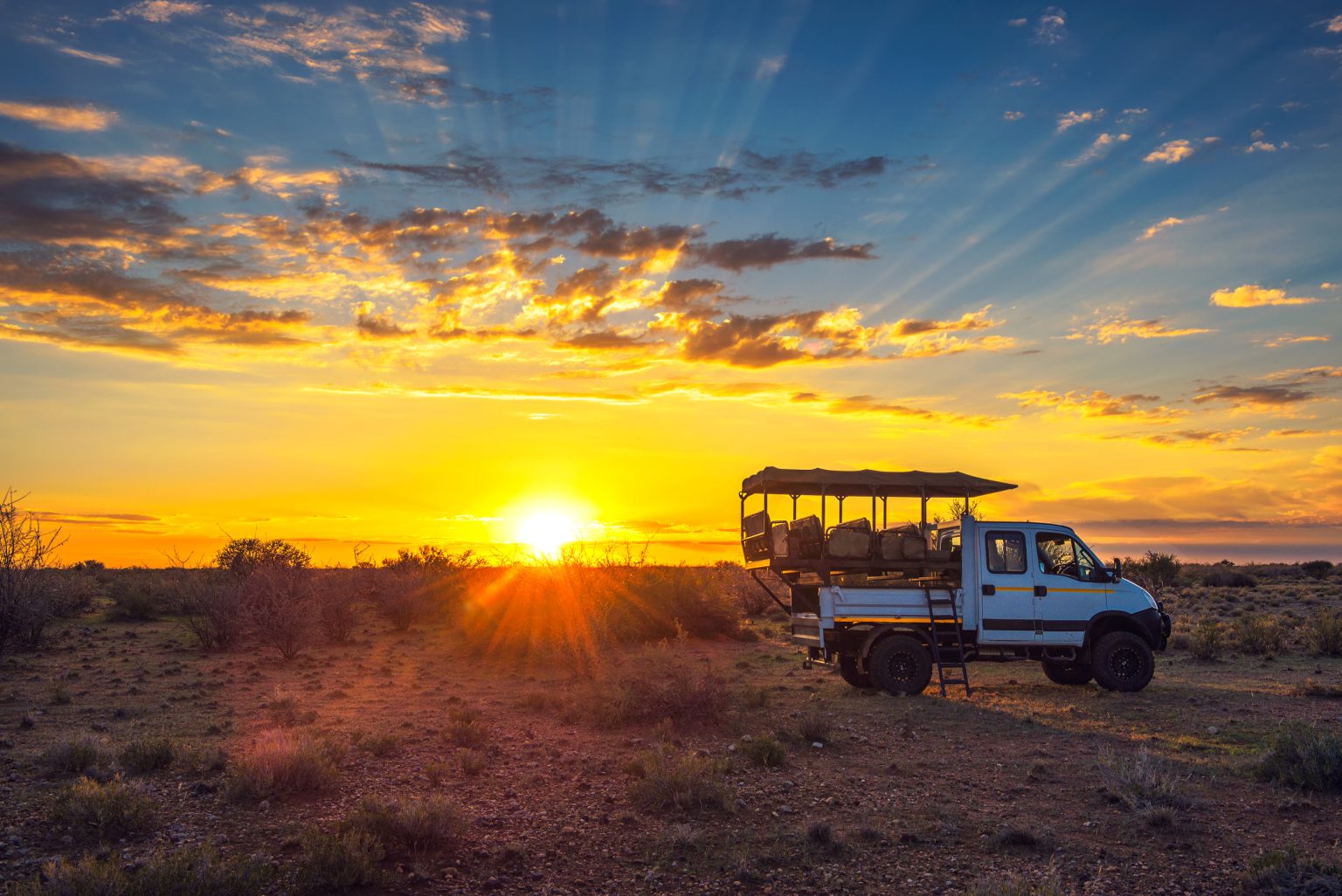
The Kalahari in Botswana is a vast landscape of sandy plains, grasslands, scattered trees, fossil river valleys, and seasonal salt pans. Although it is often described as a desert, much of the region supports vegetation and wildlife adapted to limited rainfall. Its character changes with the seasons, from dry open landscapes to grasslands that attract animals after good rains.
- Why Explore the Kalahari Desert in Botswana?
- Location and Scale of the Kalahari
- Best Places to Visit in Botswana’s Kalahari
- Central Kalahari Game Reserve (CKGR)
- Kgalagadi Transfrontier Park
- Khutse Game Reserve
- Makgadikgadi and Nxai Pans
- Wildlife of the Kalahari Desert
- 4×4 Adventures in the Kalahari
- The San Communities and Kalahari Heritage
- Weather and the Best Time to Visit
- Camping in the Kalahari Desert
- Stargazing in the Kalahari
- Safety and Environmental Responsibility
- Costs and Planning Essentials
- Explore Botswana’s Kalahari With Care
The Kalahari Desert in Botswana offers opportunities to explore remote wildlife reserves, observe desert-adapted animals, and travel through some of southern Africa’s most distinctive landscapes. From the Central Kalahari Game Reserve to Khutse Game Reserve and the Botswana side of Kgalagadi Transfrontier Park, each destination has different access requirements and wildlife-viewing opportunities. This guide explains where to go, when to visit, how to prepare for a 4×4 journey, and how to travel responsibly.
Why Explore the Kalahari Desert in Botswana?
The Kalahari is not a continuous sea of bare sand. It is a broad semi-arid region with hardy grasses, shrubs, trees, fossil dunes, dry river valleys, and pans. Its landscapes support a range of wildlife, particularly where seasonal rainfall encourages fresh vegetation.
Botswana’s Kalahari is appealing to travelers for several reasons:
- Wildlife viewing: Depending on the reserve and season, visitors may see lions, cheetahs, brown hyenas, springbok, gemsbok, and other animals.
- Remote landscapes: Some reserves offer long stretches of open terrain with relatively few visitors.
- Self-drive exploration: Suitable 4×4 vehicles allow travelers to explore designated routes where self-driving is permitted.
- Camping under dark skies: Remote camps can offer excellent stargazing when skies are clear.
- Cultural experiences: Community-based activities, including guided walks with San guides in some areas, can introduce visitors to local knowledge and traditions.
The experience depends heavily on the destination. A trip to the Central Kalahari Game Reserve is different from a visit to Khutse, while Kgalagadi and the Makgadikgadi region have their own landscapes, access rules, and wildlife patterns.
Location and Scale of the Kalahari
The Kalahari extends across much of Botswana and into neighboring Namibia and South Africa. It is a large interior region rather than a single protected area, and its boundaries can vary according to how the landscape is defined.
Botswana’s terrain includes extensive Kalahari sands, but the region also contains grasslands, woodland, pans, and dry river systems. Rainfall is limited and seasonal, yet these environments support wildlife and human communities.
The name Kgalagadi is also used in Setswana for the wider Kalahari region. Rather than assuming the landscape is uniformly barren, visitors should expect different habitats and changing conditions across the country.
Three important protected areas associated with the Botswana Kalahari are:
- Central Kalahari Game Reserve: A vast reserve known for its remote setting, open grasslands, fossil valleys, and seasonal wildlife.
- Khutse Game Reserve: A smaller reserve adjoining the Central Kalahari, with pans, grasslands, and sandy terrain.
- Kgalagadi Transfrontier Park: A cross-border conservation area shared by Botswana and South Africa, known for red dunes, dry riverbeds, and predators.
The Makgadikgadi and Nxai pans are also important destinations within the wider Kalahari Basin, although their salt-pan landscapes differ from the sandy terrain of the main reserves.
Best Places to Visit in Botswana’s Kalahari
Central Kalahari Game Reserve (CKGR)
The Central Kalahari Game Reserve covers approximately 52,800 square kilometres and is recognized by Botswana’s tourism authority as the second-largest wildlife reserve in the world. Its landscape includes grasslands, scattered trees, pans, occasional dunes, and shallow fossil river valleys. <Cite refs={[“turn494576search0″,”turn520760search7”]}/>
The reserve is remote, and wildlife viewing changes with rainfall. After good summer rains, the northern grasslands can attract concentrations of herbivores, which in turn draw predators.
Animals that visitors may encounter include:
- Springbok and gemsbok.
- Wildebeest and hartebeest.
- Eland and giraffe.
- Lions and cheetahs.
- Brown hyenas and other smaller predators.
Sightings are never guaranteed. Wildlife moves across large areas, and the amount visible during a visit depends on season, recent rainfall, and the route taken.
Deception Valley is one of the reserve’s best-known areas. It is particularly associated with seasonal grazing and wildlife activity after rain. Other areas of interest include Sunday Pan, Leopard Pan, Passarge Valley, and Piper’s Pan.
The CKGR is best suited to travelers who are prepared for remote conditions and have arranged suitable transport, accommodation, and supplies. Self-drivers should confirm gate access, campsite reservations, route conditions, and vehicle requirements before departure.
Kgalagadi Transfrontier Park
The Kgalagadi Transfrontier Park is a cross-border conservation area shared by Botswana and South Africa. Its landscape features red dunes, dry riverbeds, open scrubland, and wildlife adapted to arid conditions. The park covers approximately 37,000 square kilometres and is managed as a connected conservation landscape across the national boundary. <Cite refs={[“turn494576search7″,”turn494576search10”]}/>
The park is known for predators and open-country wildlife. Depending on the location and conditions, visitors may see:
- Lions.
- Cheetahs.
- Leopards.
- Gemsbok and springbok.
- Brown hyenas.
- Eagles and other birds of prey.
The Botswana side offers remote camping and wilderness routes. However, access requirements are stricter than the general description of a simple self-drive safari might suggest.
Important planning points include:
- A suitable 4×4 is necessary for the Botswana side.
- Some wilderness routes must be booked in advance.
- Certain routes require travel in a group of at least two vehicles.
- Campsites and route permissions must be confirmed before arrival.
- Fuel, food, water, and emergency supplies should be planned carefully.
Camping options on the Botswana side include Polentswa, Rooiputs, Two Rivers, and Mabuasehube, subject to current booking arrangements. <Cite refs={[“turn520760search3″,”turn520760search4”]}/>
Kgalagadi is a strong choice for travelers who want to combine remote camping with wildlife viewing, but it requires more preparation than a short excursion near a major town.
Khutse Game Reserve
Khutse Game Reserve lies south of the Central Kalahari Game Reserve and covers approximately 2,500 square kilometres. It is about 240 kilometres by road from Gaborone, with the journey passing through several Kalahari villages. <Cite refs={[“turn520760search2″,”turn494576search3”]}/>
The reserve includes grasslands, fossil dunes, dry riverbeds, and a series of pans. Wildlife can gather around these areas, especially after good rainfall or where water is available.
Animals commonly associated with Khutse include:
- Springbok and gemsbok.
- Giraffe and wildebeest.
- Kudu and other antelope.
- Black-backed jackals.
- Lions, leopards, and cheetahs.
- Brown hyenas.
Khutse can suit travelers seeking a shorter Kalahari trip from Gaborone, but it should not be treated as an easy off-road destination without preparation. Sandy tracks and remote conditions can make driving demanding, particularly after weather changes.
Before visiting:
- Confirm accommodation or campsite availability.
- Check the condition of access roads and internal tracks.
- Carry sufficient water, fuel, food, and recovery equipment.
- Ask about current entry procedures and route recommendations.
- Consider a guided excursion if you are unfamiliar with deep sand driving.
Local San guides may offer nature walks through arrangements with providers in the surrounding area. These experiences should be booked with the relevant community or operator rather than assumed to be available at every campsite.
Makgadikgadi and Nxai Pans
The Makgadikgadi Pans are part of the wider Kalahari Basin and represent a different environment from the sandy dunes and grasslands of the Central Kalahari. The area contains extensive salt pans that remain dry for much of the year but may flood after seasonal rains.
The wider region is known for its immense open horizons, scattered baobabs, and seasonal wildlife. In favorable rainy seasons, zebra and wildebeest move through grasslands in the Makgadikgadi and Nxai Pan areas. Flamingos may also gather at suitable water bodies, depending on conditions. <Cite refs={[“turn494576search9″,”turn494576search12”]}/>
Highlights include:
- Makgadikgadi Pans: Broad salt flats and surrounding grasslands.
- Nxai Pan National Park: Seasonal wildlife viewing and open landscapes.
- Baobab trees: Distinctive trees in parts of the surrounding landscape.
- Seasonal wildlife movements: Zebra and wildebeest may be present in significant numbers when rainfall and grazing conditions are favorable.
- Photography: Wide horizons and changing light make the area attractive for landscape photography.
The pans can be difficult or unsafe to cross when wet, and access depends on road and weather conditions. Visitors should follow local advice and avoid driving onto salt surfaces without confirmation that the route is safe.
Makgadikgadi is worth adding to a wider Botswana itinerary, but it should not be presented as a standard extension of a short Central Kalahari self-drive without accounting for the distance between destinations.
Wildlife of the Kalahari Desert
The Kalahari supports a varied wildlife community despite its limited and seasonal rainfall. Animals use different habitats, and sightings depend on the season, available food and water, and the location visited.
Mammals that may be seen in the wider region include:
- Lions and cheetahs.
- Brown hyenas and black-backed jackals.
- Springbok and gemsbok.
- Eland, kudu, and wildebeest.
- Giraffes and other herbivores in suitable areas.
- Meerkats in locations where they occur.
Birdlife can include ostriches, secretary birds, kori bustards, eagles, and other resident or migratory species.
Rainfall can significantly affect wildlife distribution. After good rains, fresh grasses may attract herbivores to particular areas, while dry periods can concentrate animals around remaining water sources. Neither pattern guarantees sightings, so it is best to plan with realistic expectations and allow time for observation.
Visitors should remain in their vehicles where required, keep a safe distance from animals, and never attempt to feed or approach wildlife.
4×4 Adventures in the Kalahari
A 4×4 vehicle is important for many remote Kalahari routes, especially in the Central Kalahari Game Reserve, Khutse, and the Botswana side of Kgalagadi. However, a 4×4 alone does not make every route safe or accessible.
Some tracks cross deep sand, while others may become difficult after rain. Fuel, water, communications, and recovery equipment are essential when traveling far from services.
Routes and Areas to Consider
Rather than treating the Kalahari as one continuous off-road route, choose a destination-specific itinerary.
- Deception Valley and nearby pans: Explore designated routes within the Central Kalahari Game Reserve, subject to current access and campsite arrangements.
- Khutse’s pan routes: Follow approved tracks around areas such as Sekhushwe, Mohurusile, and Moreswa Pan.
- Kgalagadi wilderness routes: Some routes between designated camps require advance booking and travel in a group of vehicles.
- Mabuasehube: This area of the Botswana side of Kgalagadi offers remote camping and wildlife viewing, with specific access requirements.
- Approaches to Makgadikgadi and Nxai Pans: Use suitable routes and check conditions before traveling across sandy or salt-pan terrain.
Off-road driving is not permitted everywhere. Botswana’s tourism guidance states that visitors should remain on established tracks in national parks and reserves, both for safety and to avoid damaging the environment. <Cite refs={[“turn520760search1″,”turn520760search6”]}/>
Essential 4×4 Preparation
Before setting out, make sure you have:
- A suitable 4×4 vehicle with adequate ground clearance.
- At least one serviceable spare wheel, with additional spares where appropriate.
- A jack and recovery equipment suitable for sand.
- Sufficient fuel for the planned route, including a reserve.
- Plenty of drinking water and enough food for delays.
- Offline navigation and reliable route information.
- A first-aid kit and emergency communication equipment.
- Basic tools and spare parts appropriate to the vehicle.
- A clear plan for informing someone of your route and expected return.
Tire pressure should be adjusted according to the vehicle, tires, load, and terrain, following suitable guidance. Avoid relying on a single pressure setting for every vehicle and surface.
For remote routes, traveling with another appropriately equipped vehicle can provide an important safety margin. Check the rules for the specific route because some wilderness trails require multiple vehicles.
The San Communities and Kalahari Heritage
The Kalahari is home to San communities with distinct languages, histories, and cultural traditions. The San are not a single homogeneous group, and their communities have different relationships with the land, livelihoods, and contemporary life.
In Botswana, travelers may be able to arrange community-led experiences through local providers, including guided nature walks, craft activities, and introductions to traditional environmental knowledge.
Depending on the community and activity, an experience may cover:
- Tracking and animal signs: How guides interpret tracks and other evidence of wildlife.
- Local plant knowledge: Uses of selected plants, where community members choose to share this knowledge.
- Traditional tools and skills: Demonstrations may explain the uses of particular tools or techniques.
- Oral traditions: Stories and cultural knowledge shared by local hosts.
- Arts and crafts: Locally produced work that supports artisans and community businesses.
Ghanzi is known as a gateway to the Kalahari and is home to a diverse population that includes San and Bakgalagadi communities, among others. Community-based experiences are available through some local operators, but the details and availability vary. <Cite refs={[“turn520760search0″,”turn494576search14”]}/>
Choose experiences that are organized with local participation and compensation. Ask permission before photographing people, respect cultural boundaries, and avoid treating any one guide or performance as representative of all San communities.
Weather and the Best Time to Visit
The Kalahari has a seasonal climate, and conditions vary between regions and from year to year. The dry and rainy seasons offer different advantages for wildlife viewing and travel.
Dry Season: May to October
The cooler, drier months are often favored for self-drive trips because rainfall is generally lower and some roads are easier to navigate than during the rainy season. Temperatures can still vary substantially between day and night.
Potential advantages include:
- More predictable dry-weather travel on many routes.
- Comfortable conditions for daytime exploration during cooler periods.
- Wildlife viewing around areas where water remains available.
- Clear nights for stargazing when skies are unobstructed.
Cold nights are possible, especially in winter, so campers should bring suitable sleeping equipment and warm clothing.
Rainy Season: November to April
Summer rains can transform the landscape, encouraging grasses and attracting wildlife to areas with fresh growth. The timing and amount of rainfall vary, and some tracks can become difficult or impassable.
Potential advantages include:
- Greener landscapes after rain.
- Seasonal wildlife activity in favorable areas.
- Opportunities to observe birds and young animals.
- Dramatic skies and changing light for photography.
Travelers should be prepared for heat, storms, and route changes. Do not assume that all wildlife will be concentrated in one place during the rainy season.
Choosing Your Travel Dates
The most suitable time depends on your priorities:
- Wildlife viewing: Research seasonal patterns for the specific reserve and species you hope to see.
- Self-driving: Check current road conditions and seasonal access restrictions.
- Camping: Prepare for cold nights during the dry winter months and rain during summer.
- Photography: Consider the changing colors of the landscape and the likelihood of clear skies.
- Cultural experiences: Arrange visits with local providers in advance rather than relying on spontaneous availability.
Camping in the Kalahari Desert
Camping offers an opportunity to spend more time in the Kalahari’s remote landscapes, but it requires careful planning. Campsites in reserves are often unfenced, so wildlife may move through the surrounding area.
Possible camping destinations include:
- Deception Valley: A well-known area within the Central Kalahari Game Reserve.
- Sunday Pan: An area of the CKGR that can be included in suitable reserve itineraries.
- Khutse Main Camp: A base for exploring Khutse, subject to current facilities and booking arrangements.
- Polentswa and Rooiputs: Camps in the Botswana side of Kgalagadi.
- Mabuasehube: A remote area with camping options and specific access requirements.
Confirm the campsite location, facilities, booking procedures, and vehicle requirements before departure. Do not assume that every site has water, fuel, shops, or mobile reception.
Camping Essentials
Pack carefully for the length and remoteness of your trip:
- A suitable tent or roof tent.
- Sleeping bags and bedding for expected nighttime temperatures.
- Enough drinking water for the full trip and possible delays.
- Food and cooking equipment.
- Fuel and vehicle recovery equipment.
- Navigation tools and emergency communication.
- A first-aid kit and essential medication.
- Lighting and backup power.
- Rubbish bags and supplies for carrying waste out.
Botswana Tourism advises self-drive campers to carry substantial water and fuel when visiting remote areas. The quantity needed depends on the itinerary, vehicle, group size, and access to services. Plan for the most remote portion of your journey rather than relying on the availability of supplies along the way. <Cite refs={[“turn520760search1”]}/>
Wildlife Safety at Camp
Unfenced campsites require extra care. Follow the instructions given by park staff and camp managers.
- Sleep inside a properly secured tent, roof tent, or vehicle.
- Do not leave food exposed around the campsite.
- Keep children under close supervision.
- Do not approach or feed wildlife.
- Avoid walking away from camp at night unless a qualified guide has advised that it is safe.
- Extinguish campfires completely where fires are permitted.
- Take all rubbish with you if no suitable disposal facilities are available.
Never assume that wildlife will avoid a campsite simply because people are present.
Stargazing in the Kalahari
Remote parts of the Kalahari can provide excellent stargazing opportunities because artificial light is limited. Visibility depends on cloud cover, moonlight, dust, and local conditions, so exceptionally clear skies are not guaranteed every night.
For a better stargazing experience:
- Choose a campsite or lodge away from unnecessary artificial lighting.
- Check the moon phase and weather forecast.
- Allow your eyes time to adjust to darkness.
- Bring a warm layer for long periods outdoors.
- Use a tripod and a wide-angle lens for night photography.
- Learn basic camera exposure settings before leaving areas with reliable lighting.
- Avoid shining bright lights toward wildlife or other campers.
A wide-angle lens, a high ISO setting, and a carefully tested exposure can help capture the Milky Way when conditions are suitable. Exact settings depend on the camera, lens, available light, and movement in the scene.
Safety and Environmental Responsibility
Remote travel in the Kalahari can involve long distances, difficult terrain, limited communications, and sudden changes in weather. Preparation and respect for local rules are essential.
Before You Travel
- Check current reserve entry requirements and campsite bookings.
- Confirm road and weather conditions with the relevant authorities or local operators.
- Tell someone your route and expected return time.
- Carry enough fuel, water, food, and emergency supplies.
- Make sure your vehicle and recovery equipment are suitable for the route.
- Consider a guided trip if you lack experience in remote sandy terrain.
While Exploring
- Remain on designated tracks in parks and reserves.
- Avoid night driving where wildlife and road hazards are difficult to see.
- Keep a safe distance from animals.
- Never feed wildlife or leave food waste behind.
- Respect local communities, private land, and cultural sites.
- Take rubbish out with you.
- Follow instructions from rangers, guides, and campsite staff.
These practices help protect both visitors and the Kalahari’s wildlife and landscapes.
Costs and Planning Essentials
The cost of a Kalahari trip depends on the reserve, travel season, accommodation, transport, and whether you are self-driving or booking a guided safari. Fixed euro ranges can be misleading because fees and exchange rates change, and different packages include different services.
Budget for the following categories:
- Park and reserve fees: Check current rates with the relevant authority.
- Campsites or lodges: Prices depend on location, facilities, and accommodation type.
- 4×4 rental: Compare vehicle suitability, insurance, mileage terms, and recovery equipment.
- Fuel: Remote routes may require extra fuel reserves.
- Food and water: Plan for the full trip and possible delays.
- Guides and activities: Community experiences, guided drives, and transfers may cost extra.
- Emergency provisions: Include communication equipment and contingency funds where needed.
Booking Tips
- Reserve popular campsites well in advance, particularly during busy travel periods.
- Confirm whether permits and campsite fees are separate.
- Check cancellation policies and weather-related changes.
- Carry payment methods accepted by your providers and keep some backup funds.
- Verify the exact route and vehicle requirements before paying for a tour or rental.
For remote self-drive journeys, the cheapest option is not necessarily the most practical if it lacks suitable equipment, recovery support, or clear route information.
Explore Botswana’s Kalahari With Care
The Kalahari in Botswana is a diverse region of wildlife reserves, sandy terrain, grasslands, salt pans, and communities with long-standing connections to the land. From the vast Central Kalahari Game Reserve to Khutse and Kgalagadi, each destination offers a different way to experience this environment.
A successful journey depends on matching your plans to the place you intend to visit. Check seasonal conditions, arrange campsites and permits, prepare your vehicle and supplies, and follow local guidance on wildlife and protected areas.
Whether you travel for wildlife viewing, remote camping, cultural experiences, or dark skies, the Kalahari Desert in Botswana rewards careful preparation and respectful exploration.