
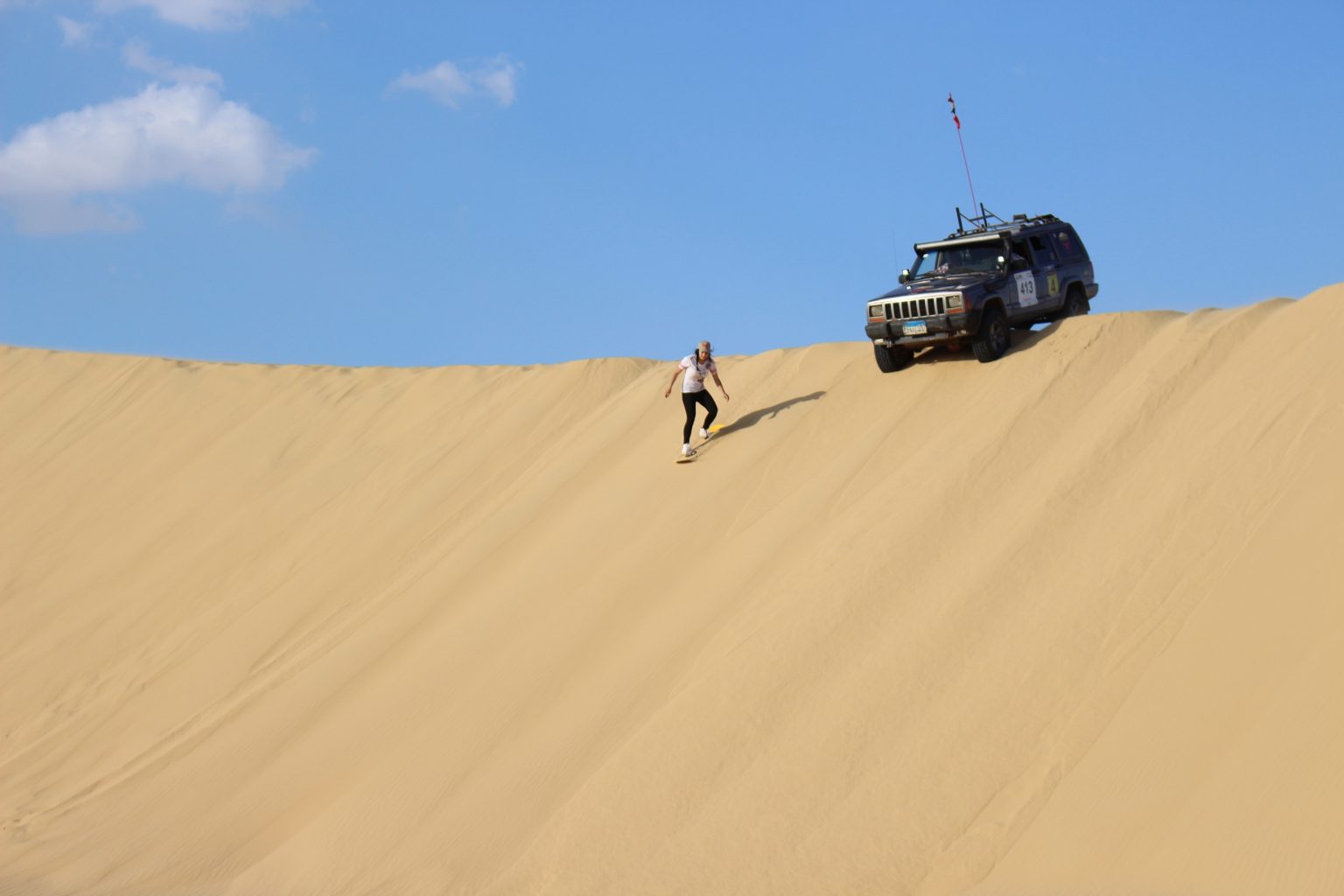
Egypt’s desert landscapes offer a different kind of adventure beyond its famous pyramids and ancient temples. Across the Western Desert, rolling dunes, open plateaus, and striking rock formations create opportunities for outdoor exploration. With a suitable board and a safe slope, a sandy descent can become a memorable part of a desert trip.
- Why Sandboarding in Egypt Is Unique
- The Best Sandboarding Spots in Egypt
- The Great Sand Sea and Siwa Oasis
- The White Desert and Bahariya Oasis
- Fayoum Desert, Magic Lake and Wadi El Rayan
- The Qattara Depression
- What to Wear and Bring for Sandboarding
- How to Sandboard in the Egyptian Desert
- Best Time to Go Sandboarding in Egypt
- Autumn: October and November
- Winter: December to February
- Spring: March and April
- Summer: May to September
- More Desert Experiences to Combine With Sandboarding
- Photography Tips for Sandboarding in Egypt
- Sandboarding With Respect for the Environment
- Tours, Prices and Booking Tips
- Sample Sandboarding Itinerary: Siwa Oasis
- Day 1: Travel to Siwa and Explore the Oasis
- Day 2: Sandboarding in the Great Sand Sea
- Day 3: Local Heritage and Departure
- Experience Egypt’s Dunes Beyond the Descent
Sandboarding in Egypt is especially popular around Siwa Oasis and selected dune areas in Fayoum. From the extensive sands of the Great Sand Sea to the landscapes around Wadi El Rayan, travelers can combine dune activities with 4×4 excursions, photography, and overnight desert stays. This guide explains where to go, what to bring, when to visit, and how to arrange a responsible sandboarding experience.
Why Sandboarding in Egypt Is Unique
Egypt’s Western Desert contains several distinct landscapes, including shifting sand dunes, limestone formations, rocky plateaus, and oasis environments. This variety allows travelers to combine sandboarding with other desert activities, although not every desert attraction has suitable dunes or permits recreational boarding.
What makes Egypt desert adventures appealing is the opportunity to explore natural landscapes alongside the country’s rich regional history and culture.
Reasons to consider a sandboarding trip include:
- Diverse desert scenery: Explore golden dunes, rocky plateaus, and pale limestone formations across different regions.
- Accessible day trips: Selected dune areas in Fayoum can be visited from Cairo with an organized excursion.
- Oasis experiences: Siwa combines desert activities with local food, architecture, salt lakes, and distinctive Siwan Amazigh heritage.
- Outdoor adventure: Sandboarding can be combined with guided 4×4 tours and desert photography.
- Overnight stays: Some organized trips include camping in designated areas, allowing visitors to experience the desert after sunset.
The experience depends on the destination and tour operator. Before booking, confirm that sandboarding is specifically included rather than assuming that every desert safari provides boards and suitable slopes.
The Best Sandboarding Spots in Egypt
The Great Sand Sea and Siwa Oasis
The Great Sand Sea near Siwa Oasis is one of Egypt’s best-known areas for dune-based desert adventures. Its extensive sand formations provide opportunities for 4×4 exploration, dune climbing, and sandboarding on suitable slopes.
Siwa itself is an oasis in Egypt’s Western Desert, known for its palm groves, olive cultivation, archaeological sites, salt lakes, and distinctive local culture. The surrounding desert offers a striking contrast between the cultivated oasis and the open dunes.
Popular experiences include:
- Sandboarding: Descend selected dunes with a suitable board and guidance from an experienced local operator.
- 4×4 desert excursions: Travel across authorized routes to reach suitable dune areas and viewpoints.
- Bir Wahed: Visit a desert area known for its hot springs, subject to current access arrangements.
- Siwan cultural experiences: Explore local food, crafts, architecture, and the oasis’s Amazigh heritage.
- Sunset photography: Photograph the changing colors of the dunes during the late afternoon.
Sandboarding conditions vary according to the dune, wind, and season. Not every slope is safe or suitable, and remote excursions should be arranged through experienced local operators.
Siwa is particularly suitable for travelers who want to combine sandboarding in the Great Sand Sea with an overnight stay and a broader exploration of oasis life.
The White Desert and Bahariya Oasis
The White Desert National Park, near Farafra in Egypt’s Western Desert, is famous for its pale chalk and limestone formations shaped by erosion. These unusual structures rise from the surrounding desert and create one of Egypt’s most distinctive landscapes.
Bahariya Oasis is a common starting point for organized trips to the White Desert and nearby attractions, including the Black Desert. However, the White Desert’s signature formations are rocky rather than extensive smooth sandboarding slopes, so sandboarding should not be assumed to be part of every tour.
A desert excursion in this region may include:
- White Desert landscapes: Photograph the chalk formations and surrounding terrain.
- Black Desert: Explore dark volcanic hills and the contrasting desert scenery on an authorized route.
- Guided 4×4 travel: Reach selected locations with an operator familiar with local access requirements.
- Desert camping: Stay overnight in permitted areas when included in the tour.
- Stargazing: Enjoy the night sky when weather and visibility conditions are suitable.
If sandboarding is your main priority, ask the operator which specific dunes will be visited and whether boards are provided. The White Desert is best known for its geological scenery and camping experiences, not for guaranteed sandboarding opportunities.
Fayoum Desert, Magic Lake and Wadi El Rayan
The Fayoum region is one of the more practical choices for travelers based in Cairo who want to explore desert landscapes without a multi-day journey. Wadi El Rayan Protected Area, southwest of Fayoum, includes lakes, waterfalls, moving sand dunes, desert vegetation, and important wildlife habitats.
Sandboarding is offered on selected dunes around the wider Fayoum desert landscape, including areas associated with organized excursions near Magic Lake. Exact locations and permitted activities depend on the operator and current protected-area rules.
Possible activities include:
- Sandboarding: Ride suitable dunes where the activity is permitted.
- Magic Lake viewpoints: Enjoy the contrast between desert terrain and water.
- 4×4 desert safaris: Travel along authorized routes with an experienced driver.
- Photography: Capture dunes, lake views, and the surrounding rocky landscape.
- Nature observation: Look for birds and other wildlife without disturbing their habitats.
Wadi El Rayan is a protected area, so visitors should follow official guidance, remain on permitted tracks, and camp only in designated locations. Not every part of the reserve is open for every recreational activity. <Cite refs={[“turn444818search1″,”turn444818search0″,”turn444818search3”]}/>
Fayoum can work well for a day trip or a longer stay, depending on your schedule. Confirm the precise sandboarding location and travel time before booking, as the reserve and its surrounding attractions cover a large area.
The Qattara Depression
The Qattara Depression is a vast low-lying area in Egypt’s northwestern Western Desert. Its landscape includes salt flats, dry depressions, and areas of sand, but it is not a standard tourist sandboarding destination.
Access can be difficult because of the remoteness, challenging terrain, and potential restrictions affecting particular routes or areas. Visitors should not attempt to explore it independently without reliable local information and appropriate logistical support.
If you are considering a trip to this region:
- Confirm whether your intended route is open and accessible.
- Use a specialist operator with experience in the area.
- Check whether the planned activity is permitted at the exact location.
- Carry appropriate emergency supplies and communications equipment.
- Avoid treating a remote expedition as a casual extension of a regular desert safari.
For most visitors whose main goal is sandboarding, Siwa and selected areas around Fayoum are more practical options. The Qattara Depression is better considered a specialist destination for carefully planned desert exploration.
What to Wear and Bring for Sandboarding
The desert can be hot and exposed, while early mornings and evenings may be considerably cooler. Good preparation helps you enjoy the activity without carrying unnecessary equipment.
Essential Items
- Lightweight, long-sleeved clothing: Protects your skin from direct sunlight and blowing sand.
- Sunscreen: Use high-SPF sunscreen and reapply according to the instructions.
- A hat and sunglasses: Help protect against sunlight and glare.
- Drinking water: Carry enough for the duration of your activity and follow your guide’s advice.
- A scarf or buff: Useful when wind carries sand across the dunes.
- Closed shoes: Protect your feet from hot sand and uneven ground.
- A small daypack: Keeps your essentials secure while you walk between slopes.
- A warm layer: Useful for winter evenings and overnight desert trips.
Some experienced riders prefer boarding barefoot on cool sand, but hot sand can burn the skin. Follow your operator’s recommendations and avoid barefoot riding when temperatures make it unsafe.
Optional Equipment
- Sandboard: Check whether your tour includes a board and whether it is suitable for your experience level.
- Knee and elbow protection: May be useful for beginners.
- Action camera: Can record a descent, provided it is secured safely.
- Camera or tripod: Useful for landscape photography and night skies.
- Snacks: Helpful for longer excursions, especially where food services are limited.
Some operators use wax or other products to improve the board’s glide. Follow their instructions and avoid applying products that are not approved for the equipment or location.
How to Sandboard in the Egyptian Desert
Sandboarding is relatively easy to try, but controlling your speed and choosing an appropriate slope are important. Beginners should start with a gentle dune and follow the guidance of an experienced instructor or operator.
Use these basic guidelines:
- Choose a suitable slope. Look for a clear, open descent with a safe runout and no rocks, vegetation, vehicles, or other people in the path.
- Check the conditions. Wind, loose sand, and the steepness of the slope can affect control.
- Listen to the guide. Ask how to position your feet and body and how to stop safely.
- Start slowly. Build confidence on a smaller slope before trying steeper terrain.
- Keep the landing area clear. Wait until the previous rider has finished before starting your descent.
- Take breaks. Climbing dunes repeatedly can be tiring, particularly in hot weather.
Avoid attempting jumps or high-speed descents unless you have suitable experience and the location is designed for that activity. Do not wax a board unless your operator recommends it, and never sacrifice control for speed.
The climb back up the dune can be more strenuous than the descent. Rest regularly, drink water, and stop if you feel dizzy, unusually weak, or overheated.
Best Time to Go Sandboarding in Egypt
The best season depends on your destination and planned activities. Temperatures in the Western Desert can vary considerably between the daytime and night, and conditions in Siwa may differ from those in Fayoum.
Autumn: October and November
Autumn is often a comfortable time for desert exploration as temperatures begin to ease after summer. It can be a good period for dune activities, photography, and overnight stays.
Check local weather forecasts and confirm that your chosen tour is operating on your intended dates.
Winter: December to February
Winter is a popular period for desert safaris in Egypt because daytime conditions are often more manageable than in summer. Nights can be cold, especially in open desert areas, so bring warm clothing if you plan to camp.
Book accommodation and popular tours in advance when travelling during busy holiday periods.
Spring: March and April
Spring can offer favorable conditions for sandboarding and outdoor exploration. However, wind and dust may affect visibility and comfort, and temperatures can rise as the season progresses.
Follow local advice and consider scheduling strenuous activities for the cooler parts of the day.
Summer: May to September
Summer can bring intense heat, particularly in exposed areas without shade. Sand surfaces may become extremely hot, making midday boarding uncomfortable or unsafe.
If travelling during summer, choose an operator that schedules activities appropriately, carries sufficient water, and adjusts plans when conditions become dangerous.
October to April is generally a useful period to consider for desert travel, but the best dates depend on the local forecast, your destination, and whether you plan to camp overnight.
More Desert Experiences to Combine With Sandboarding
Sandboarding can be part of a wider journey through Egypt’s Western Desert, with activities varying by region.
- 4×4 desert excursions: Explore authorized dune routes and remote viewpoints with a qualified driver.
- Camel rides: Experience a traditional form of desert transport through a suitable local operator.
- Overnight camping: Stay in designated areas when permitted and included in your itinerary.
- Stargazing: Enjoy the night sky away from artificial lights when conditions are clear.
- Oasis visits: Discover the palm groves, architecture, food, and local traditions of Siwa or Bahariya.
- Photography: Capture dune patterns, unusual rock formations, and the contrast between desert and water.
- Cultural experiences: Learn about regional food, crafts, and heritage from knowledgeable local guides.
In Siwa, ask about the oasis’s distinctive Siwan Amazigh culture rather than assuming that all local traditions are Bedouin. In Fayoum and Bahariya, choose activities that respect protected landscapes and local communities.
Combining sandboarding with these experiences creates a more complete trip without requiring every activity to take place at the same location.
Photography Tips for Sandboarding in Egypt
The shape and color of dunes change throughout the day. Early morning and late afternoon often provide softer light and longer shadows, while midday sunlight can create harsh contrasts.
For better sandboarding photography, try these techniques:
- Use low-angle sunlight: Sunrise and late afternoon can highlight the curves and textures of dunes.
- Capture movement safely: A fast shutter speed can help freeze a rider during a descent.
- Show the scale: Include distant dunes or a person in the frame to communicate the size of the landscape.
- Look for patterns: Wind-shaped ridges and footprints can add detail to landscape photographs.
- Protect your equipment: Use a suitable camera bag and avoid changing lenses in blowing sand.
- Check local drone rules: Do not assume drones are allowed in protected areas or at archaeological and tourist sites.
A shutter speed around 1/1000 second can be a useful starting point for freezing a fast descent in bright daylight, but the appropriate setting depends on the light, camera, and speed of the rider.
You do not need a drone to capture the scale of the desert. A camera or phone used from a safe, permitted viewpoint can produce excellent results.
Sandboarding With Respect for the Environment
Egypt’s deserts contain fragile habitats, geological features, and protected areas. Responsible visitors can help limit damage by following local guidance and avoiding unnecessary disturbance.
- Stay on authorized routes: Do not drive or ride into areas where access is prohibited.
- Protect vegetation: Avoid trampling desert plants or damaging vegetation that helps stabilize sand.
- Take your rubbish with you: Do not leave packaging, food scraps, or broken equipment behind.
- Respect wildlife: Observe animals from a distance and never feed them.
- Follow protected-area rules: Some locations restrict camping, vehicle access, and recreational activities to designated zones.
- Support responsible local operators: Choose guides who explain safety procedures and environmental rules.
- Respect local culture: Ask before photographing residents and follow guidance at cultural or archaeological sites.
At Wadi El Rayan and Siwa, protected-area rules are particularly important because the landscapes include sensitive habitats and wildlife. Check current access arrangements before setting out, especially if your itinerary involves remote dunes or overnight camping. <Cite refs={[“turn444818search0″,”turn444818search5″,”turn444818search6”]}/>
Tours, Prices and Booking Tips
The cost of sandboarding tours in Egypt depends on the destination, group size, transport, duration, equipment, and accommodation. A short activity near a major tourist area is a different service from a private multi-day trip to Siwa.
Instead of relying on a single price range, request an itemized quote and confirm exactly what is included.
Before booking, ask whether the package covers:
- Sandboard rental and any necessary safety equipment.
- Transport from your hotel or the agreed meeting point.
- A licensed or experienced desert guide and driver.
- Protected-area entry fees and any required permits.
- Meals, drinking water, and refreshments.
- Camping equipment and overnight accommodation, if applicable.
- Return transport and the expected duration of the excursion.
For trips to Siwa, remember that travel from Cairo involves a substantial road journey. A multi-day package may include several services that are not included in a short Fayoum excursion.
Book well in advance for popular dates and confirm cancellation arrangements in case weather or access restrictions affect the trip. Avoid choosing a remote excursion solely because it has the lowest price; vehicle suitability, guide experience, and emergency planning matter more.
Sample Sandboarding Itinerary: Siwa Oasis
Siwa is a good option for travelers who want to combine dune activities with oasis culture. This three-day itinerary is a general framework; travel times and excursion arrangements should be confirmed before booking.
Day 1: Travel to Siwa and Explore the Oasis
- Travel to Siwa: Arrange transport in advance and allow sufficient time for the journey from Cairo.
- Check in: Settle into your accommodation and ask about the next day’s desert excursion.
- Explore the oasis: Depending on arrival time, visit parts of the town, learn about local crafts, or enjoy the surrounding palm groves.
- Plan the excursion: Confirm the pickup time, equipment, water, and route with your operator.
Day 2: Sandboarding in the Great Sand Sea
- Morning or afternoon departure: Join a guided 4×4 excursion into an authorized area of the Great Sand Sea.
- Sandboarding session: Try suitable dunes with guidance from your operator.
- Desert stop: Enjoy the scenery and take photographs from safe viewpoints.
- Visit a permitted spring or lake: Include this only if it is part of the agreed route and current access arrangements allow it.
- Return to Siwa: Finish the excursion according to the operator’s schedule.
Day 3: Local Heritage and Departure
- Morning sightseeing: Visit a suitable cultural or historical attraction in Siwa.
- Local food and crafts: Learn about regional traditions and support local businesses.
- Departure: Begin the return journey or continue to another destination.
This itinerary gives sandboarding its own dedicated day rather than squeezing a remote desert excursion into a long transfer. If you have limited time, a Fayoum trip may be more practical from Cairo.
Experience Egypt’s Dunes Beyond the Descent
Egypt offers several ways to explore its desert landscapes, but the best sandboarding trip depends on choosing a location suited to the activity. Siwa’s Great Sand Sea is a well-known option for dune adventures, while selected areas around Fayoum provide opportunities for shorter excursions. The White Desert is especially notable for its chalk formations and camping scenery, and the remote Qattara Depression requires specialist planning.
Confirm the exact sandboarding location, check access rules, and choose an operator with suitable equipment and a clear safety plan. With thoughtful preparation and respect for the environment, sandboarding in Egypt can be a rewarding addition to a wider journey through the country’s remarkable deserts.