
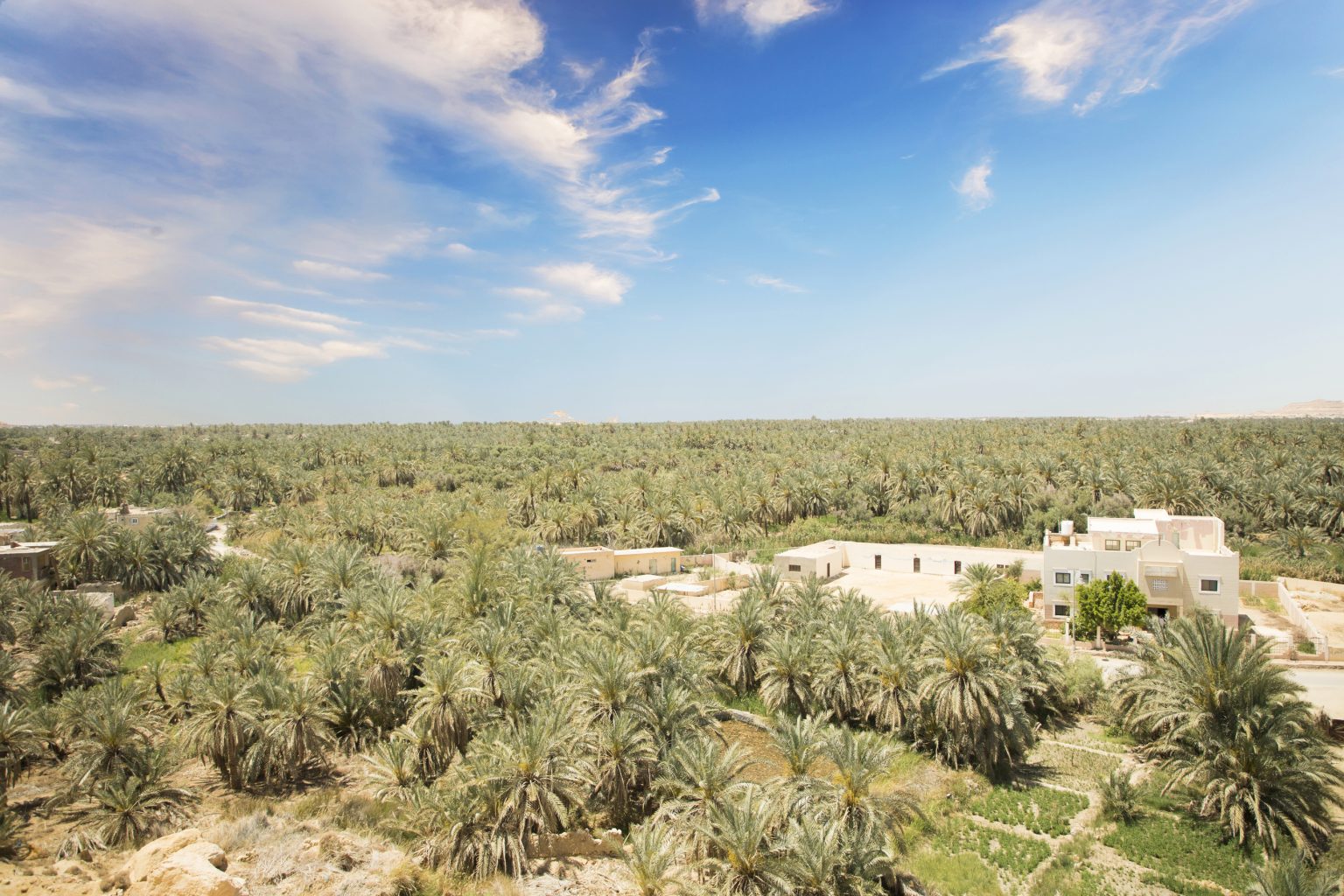
Hidden deep within Egypt’s Western Desert, closer to Libya than Cairo, Siwa Oasis is one of Egypt’s most distinctive desert destinations. Golden dunes and salt lakes surround palm groves, ancient temples, freshwater springs, and historic mud-brick settlements shaped by centuries of life in an isolated oasis.
- Where Is Siwa Oasis Located?
- How to Reach Siwa Oasis from Cairo
- Best Time to Visit Siwa Oasis
- Top Things to Do in Siwa Oasis
- Explore the Old Town of Shali
- Visit the Temple of the Oracle of Amun
- Swim in Cleopatra’s Bath
- Venture into the Great Sand Sea
- Float in Siwa’s Salt Lakes
- Visit Gebel al-Mawta, the Mountain of the Dead
- Relax in Hot and Cold Springs
- Sandboarding in the Dunes
- Discover Siwa’s Crafts and Traditions
- A 3-Day Siwa Oasis Itinerary
- Where to Stay in Siwa Oasis
- Siwa Culture and Community
- Practical Travel Tips
- Hidden Gems in Siwa Oasis
- Exploring Siwa’s Desert and Oasis Landscape
Often called the Jewel of the Desert, Siwa has attracted travelers for thousands of years. Alexander the Great crossed the desert to consult the Oracle of Amun, while today’s visitors come for the oasis landscape, archaeological sites, Amazigh heritage, and access to the Great Sand Sea.
Siwa stands out for the way its natural environment and local culture remain closely connected. The oasis combines desert scenery, ancient history, traditional crafts, and a distinct Siwi identity that sets it apart from other destinations in Egypt’s Western Desert.
Where Is Siwa Oasis Located?
Siwa Oasis lies deep within Egypt’s Western Desert, in a remote depression of Matrouh Governorate.
- Around 750 km west of Cairo
- About 300 km south of the Mediterranean coast
- Just 50 km east of the Libyan border
Sitting approximately 18 meters below sea level, Siwa is bordered by the Great Sand Sea to the south and extensive salt flats and lakes to the north.
The oasis stretches across a broad depression and contains more than 200 natural springs, along with extensive palm and olive groves. Its local Siwi community speaks Siwi, an Amazigh language, giving Siwa a strong cultural identity within Egypt and a long-standing connection to the wider Amazigh and Saharan regions.
How to Reach Siwa Oasis from Cairo
The most common route to Siwa passes through Marsa Matrouh.
- Cairo to Marsa Matrouh: around 6 hours
- Marsa Matrouh to Siwa: around 4 to 5 hours across arid desert landscapes
- Alexandria to Siwa: roughly 9 hours via the coastal highway and Marsa Matrouh
Many travelers choose private transfers or guided tours, particularly when planning a longer Western Desert itinerary. A 4×4 vehicle is useful for desert excursions and provides greater flexibility outside the main settlement.
Best Time to Visit Siwa Oasis
Siwa has a hot desert climate, with mild to warm winters and very high summer temperatures. The cooler months are generally the most comfortable for walking, sightseeing, cycling, and desert excursions.
Seasonal Overview
- October to April: generally around 20–30°C during the day, making this the most comfortable period for exploration
- May to June: temperatures can reach 35–40°C, with fewer visitors
- July to August: temperatures can exceed 45°C, making daytime activities more demanding
- September: temperatures begin to ease, while the date and olive harvest season gets underway
From October through March, conditions are particularly suitable for exploring the archaeological sites, oasis, salt lakes, and surrounding desert.
Top Things to Do in Siwa Oasis
Explore the Old Town of Shali
Built in the 13th century, Shali Fortress once housed hundreds of families within walls made from karshef, a traditional building material using mud, clay, and salt.
Parts of the old settlement have been eroded by rain over the centuries, but its remaining towers and walls still offer views across the palm groves, salt lakes, and surrounding desert. Sunset is one of the best times to explore the site.
Visit the Temple of the Oracle of Amun
Dating to the 6th century BC, the Temple of the Oracle of Amun near Aghurmi village is one of Siwa’s best-known historical landmarks. In 331 BC, Alexander the Great visited the oracle, an event that became one of the most famous episodes in Siwa’s history.
The site provides an important connection between the oasis and the wider political and religious history of the ancient Mediterranean world.
Swim in Cleopatra’s Bath
Ain al-Hammam, commonly known as Cleopatra’s Bath, is a circular stone pool fed by a natural spring. The pool is surrounded by palm trees and is one of the most popular places in Siwa for a refreshing swim.
Venture into the Great Sand Sea
South of Siwa begins the Great Sand Sea, an extensive dune region extending toward the Libyan border. Desert excursions by 4×4 are the most practical way to explore the area.
Depending on the route, excursions may include:
- Sand dunes and panoramic viewpoints
- Fossil-bearing areas
- Desert springs
- Sandboarding
- Sunset stops
- Overnight desert camping
A night in the Great Sand Sea can be arranged through local guides and desert operators.
Float in Siwa’s Salt Lakes
The salt lakes around Siwa are known for their high salinity, which makes floating easy. Lake Siwa and Lake Zeitoun are among the better-known areas for visitors.
The lakes also create strong contrasts between white salt deposits, blue water, palm groves, and surrounding desert. They are particularly popular for photography around sunrise and sunset.
Visit Gebel al-Mawta, the Mountain of the Dead
Gebel al-Mawta is a limestone hill containing Pharaonic and Greco-Roman tombs carved into the rock. Several tombs contain surviving decorative elements and paintings.
The summit also provides broad views across Siwa’s palm groves and surrounding desert.
Relax in Hot and Cold Springs
Beyond Cleopatra’s Bath, several springs can be included in local excursions:
- Bir Wahed: a hot spring located near the Great Sand Sea
- Abu Shrouf Spring: known for its cool water and rural surroundings
- Tamusi Hot Spring: a quieter option away from the busiest visitor areas
Spring conditions and access can vary, so it is best to visit with local guidance.
Sandboarding in the Dunes
The dunes around Bir Wahed provide suitable terrain for sandboarding. Local desert excursions can combine dune driving, sandboarding, swimming, and sunset viewing in the same trip.
Discover Siwa’s Crafts and Traditions
Siwa has a long tradition of handmade crafts, particularly those using locally available materials.
Visitors can find:
- Palm-leaf baskets and woven products
- Silver jewelry, including pieces decorated with colored stones
- Hand-embroidered clothing
- Traditional household objects and decorative items
The Siwa House Museum provides additional insight into local architecture, household tools, clothing, and wedding traditions.
A 3-Day Siwa Oasis Itinerary
Day 1
Arrival and exploration of Shali Fortress, followed by a sunset walk through the old town and dinner at an eco-lodge.
Day 2
Visit the Oracle Temple and Mountain of the Dead, then spend time at Cleopatra’s Bath and one of the salt lakes. Finish the day with a visit to Bir Wahed.
Day 3
Take a desert excursion into the Great Sand Sea, with stops for sandboarding, desert scenery, and tea before returning for departure.
Where to Stay in Siwa Oasis
Eco-Lodges
- Adrère Amellal Desert Ecolodge
- Taghaghien Island Resort
- Shali Lodge
Lodges and Guesthouses
- Albabenshal Lodge
- Palm Trees Hotel
- Siwa Safari Gardens
Accommodation in Siwa ranges from traditional-style lodges to more conventional guesthouses. Many properties emphasize local materials, low-impact design, and a setting connected to the oasis landscape.
Siwa Culture and Community
Siwa’s distinctive identity is closely connected to its Amazigh heritage, alongside Egyptian and Saharan influences. The local language, traditional clothing, music, crafts, and celebrations remain important parts of community life.
Hospitality is also central to the visitor experience. Tea, dates, and conversation are commonly shared with guests, particularly in family-run businesses and local communities.
The Siyaha Festival, traditionally held around the October full moon, is an important local celebration associated with community gatherings and religious and social traditions.
Practical Travel Tips
- Carry cash, as ATM access can be limited compared with larger Egyptian cities.
- Carry identification for travel through desert checkpoints.
- Dress respectfully, particularly when visiting villages, religious sites, and local communities.
- Consider renting a bicycle or tuk-tuk for getting around the oasis.
- Use licensed or experienced local guides for Great Sand Sea excursions.
- Follow local guidance around salt lakes and springs.
- Avoid leaving plastic, food waste, or other rubbish in the desert or around water sources.
- Bring sun protection and enough drinking water for longer excursions.
Hidden Gems in Siwa Oasis
For travelers who want to explore beyond the main archaeological sites, several locations are worth considering:
- Fatnas Island, known for its sunset views over the lake and surrounding palms
- Dakror Mountain, associated with the Siyaha Festival and local traditions
- Aghurmi Village, home to the Oracle Temple
- Bir Wahed Hot Spring, surrounded by dunes in the southern desert
- Qattara Depression, an extensive desert landscape requiring appropriate local guidance and access planning
Exploring Siwa’s Desert and Oasis Landscape
Siwa brings together several elements that rarely appear in the same destination: ancient archaeological sites, salt lakes, freshwater springs, palm groves, Amazigh traditions, and the dunes of the Great Sand Sea.
Exploring Shali and Aghurmi connects visitors with the oasis’s long history, while the salt lakes and springs show how water has shaped settlement in one of Egypt’s driest regions. Further south, the Great Sand Sea provides a completely different setting of large dunes and remote desert routes.
For travelers interested in desert landscapes, ancient history, and living local culture, Siwa offers an experience that goes well beyond a typical oasis visit.