
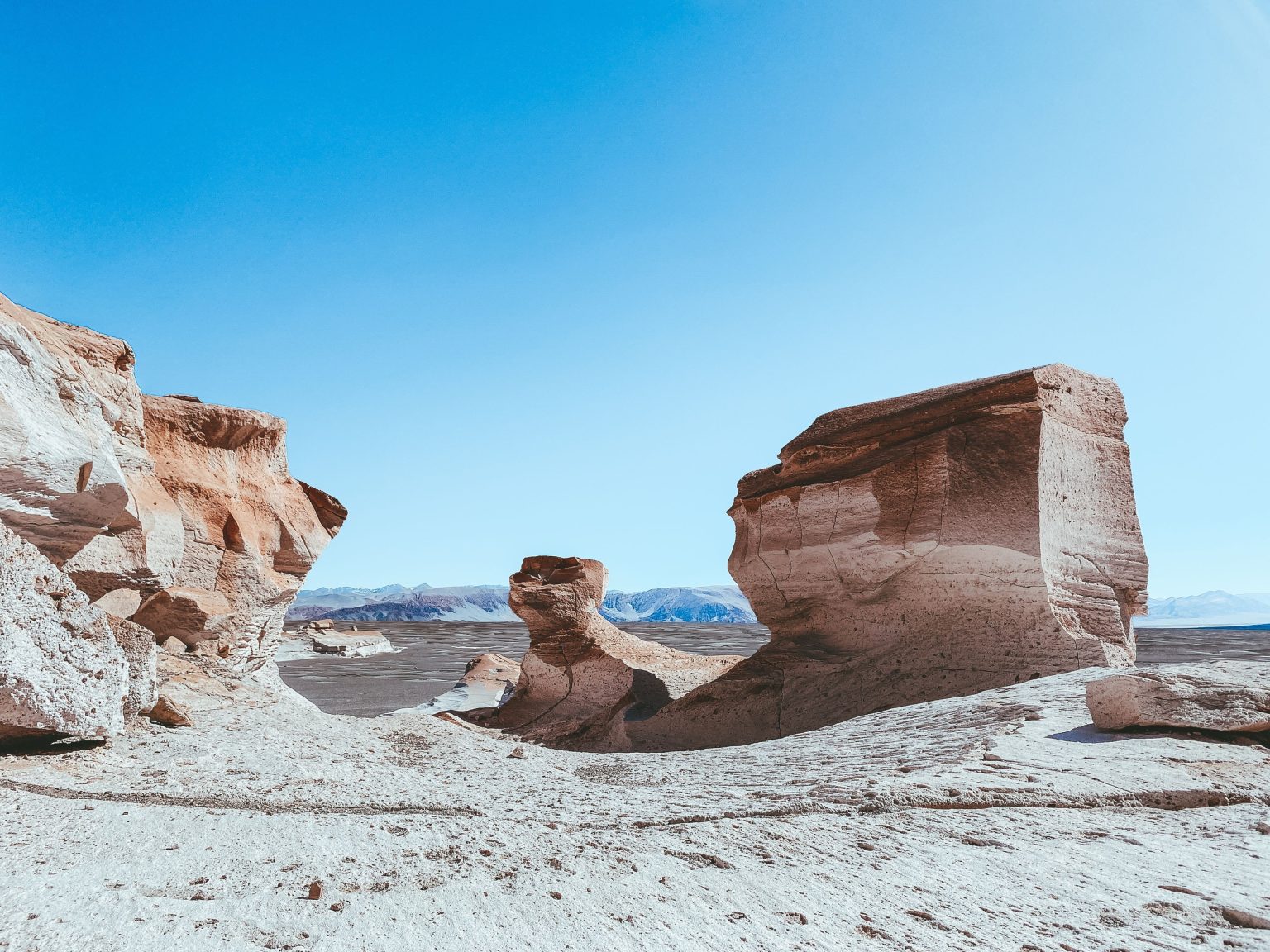
The Campo de Piedra Pómez, also known as the Pumice Stone Field, is one of Argentina’s most distinctive high-altitude desert landscapes. Located in the remote highlands of northwest Argentina, this vast volcanic area lies far from major roads and urban centers, surrounded by volcanoes, salt flats, and the open landscapes of the Puna de Atacama.
- Where Is Campo de Piedra Pómez Located?
- The Birth of a Stone Desert
- Campo de Piedra Pómez Landscape: Fire Sculpted into Rock
- Best Time to Visit Campo de Piedra Pómez
- How to Reach Campo de Piedra Pómez
- Top Things to Do in Campo de Piedra Pómez
- Walk the White Stone Dunes
- Explore the Pink Canyon
- Volcano Viewpoints
- Visit the Black Dunes of Carachi Pampa
- Stargazing in the High Andes
- Suggested 2-Day Campo de Piedra Pómez Itinerary
- Wildlife and Life in the Stone Desert
- Where to Stay Near Campo de Piedra Pómez
- Cultural and Spiritual Significance
- Practical Travel Tips
- Hidden Gems Near Campo de Piedra Pómez
- Exploring Argentina’s Volcanic Stone Desert
Instead of sand dunes, the landscape is dominated by white and pink volcanic rock shaped into ridges, towers, walls, and channels. These formations were created by volcanic activity and gradually modified by wind erosion over thousands of years.
The result is a rare combination of volcanic geology, high-altitude desert terrain, and unusual rock formations that makes the Campo de Piedra Pómez one of the most remarkable places to visit in Catamarca.
Where Is Campo de Piedra Pómez Located?
Campo de Piedra Pómez lies in Catamarca Province, within the Puna de Atacama region of Argentina, one of South America’s highest and most remote desert plateaus.
- Coordinates: approximately 26°S, 67°W
- Altitude: 3,000–3,400 meters (9,800–11,000 ft)
- Nearest town: El Peñón, about 25 km (15 miles) away
The area is protected as part of the Reserva Natural Provincial Campo de Piedra Pómez, covering more than 75,000 hectares and preserving an extensive volcanic desert landscape.
The Birth of a Stone Desert
Around 100,000 years ago, volcanic activity associated with Cerro Blanco produced large quantities of ash, pumice, and other volcanic material across the region.
Over thousands of years, wind erosion gradually shaped the relatively soft volcanic rock into ridges, channels, cliffs, and isolated formations. The process created the distinctive patterns visible across the field today.
Some formations resemble walls, dunes, towers, or frozen waves, while the surrounding volcanic landscape includes darker rock and distant mountain peaks.
Campo de Piedra Pómez Landscape: Fire Sculpted into Rock
The Campo de Piedra Pómez is particularly striking because of the color and texture of its volcanic formations. White, ivory, pink, and reddish tones appear across the rock, with the appearance changing according to sunlight and weather conditions.
- Morning light brings out soft gold and pale tones
- Midday highlights the white and pink surfaces
- Sunset produces stronger red and copper shades
- Night reveals the formations beneath a clear high-altitude sky
The combination of unusual rock shapes, volcanic terrain, and changing light makes the area especially attractive to photographers.
Best Time to Visit Campo de Piedra Pómez
- April to October (dry season): generally clearer skies and cold nights, suitable for hiking and photography
- November to March (wet season): occasional storms, changing weather, and dramatic cloud formations
The most rewarding moments for photography are usually early morning and late afternoon, when lower sunlight creates stronger shadows across the formations.
How to Reach Campo de Piedra Pómez
From El Peñón
- Distance: 25 km (15 miles)
- Time: about 4 hours round trip
- Terrain: rough volcanic tracks
A 4×4 vehicle and local guide are strongly recommended.
From Antofagasta de la Sierra
- Distance: 70 km (43 miles)
- Time: 2–3 hours across remote plateaus
The route crosses salt flats, loose ground, and remote volcanic terrain. There are no paved roads, and independent navigation can be difficult in this isolated area.
Top Things to Do in Campo de Piedra Pómez
Walk the White Stone Dunes
The white pumice formations form ridges and walls across the landscape. Walking among them provides close views of the volcanic textures and broad panoramas toward the surrounding mountains and Cerro Blanco Volcano.
Explore the Pink Canyon
Located among the larger formations, the Pink Canyon contains narrow passages and rock surfaces with noticeable pink and reddish tones. The colors become more pronounced when the sun is lower.
Volcano Viewpoints
From elevated points, visitors can see numerous volcanoes and volcanic formations across the Puna, including Antofalla, Galán, and Carachi Pampa.
The wider landscape contains many signs of volcanic activity, including cones, lava formations, and areas influenced by geothermal processes.
Visit the Black Dunes of Carachi Pampa
Nearby, dark volcanic sands create black dunes that contrast sharply with the pale pumice formations.
The area provides an opportunity to see several different volcanic landscapes within the same journey.
Stargazing in the High Andes
At more than 3,000 meters, far from major sources of artificial light, the region offers excellent conditions for observing the night sky.
The clear, dry atmosphere can provide impressive views of the Milky Way, making the area particularly appealing for astrophotography.
Suggested 2-Day Campo de Piedra Pómez Itinerary
Day 1 – Exploring the Pumice Field
Morning departure from El Peñón with a local guide.
Afternoon exploration of the White Dunes and Pink Canyon.
Sunset photography among the volcanic formations.
Overnight stay in El Peñón.
Day 2 – Carachi Pampa and the Surrounding Volcanoes
Morning 4×4 excursion toward Carachi Pampa and the Black Dunes.
Picnic in a suitable designated area.
Evening stargazing before returning to accommodation.
Wildlife and Life in the Stone Desert
Despite the harsh conditions, the surrounding high-altitude desert supports a range of wildlife and vegetation:
- Guanacos and vicuñas roam the plateaus
- Condors and falcons can be seen above the surrounding mountains
- Viscachas and foxes inhabit rocky areas
- Hardy lichens and cushion plants survive in sheltered locations
These species are adapted to high altitude, low rainfall, strong sunlight, and large temperature changes between day and night.
Where to Stay Near Campo de Piedra Pómez
- El Peñón: small accommodations such as Hostería de Altura El Peñón
- Antofagasta de la Sierra: rustic accommodations for longer stays
Camping options are limited, and temperatures can fall sharply after sunset. Food, fuel, and other supplies are also limited in the region, so visitors should prepare before leaving the main towns.
Cultural and Spiritual Significance
For Atacameño and Kolla communities, the wider Puna landscape has cultural and spiritual importance, with traditions connected to Pachamama, or Mother Earth.
Local traditions and oral histories reflect a long relationship between communities and the volcanic landscapes, mountains, water sources, and high-altitude environment of the region.
Visitors should respect local customs and protected areas when exploring the Campo de Piedra Pómez and surrounding communities.
Practical Travel Tips
- Acclimatize before arrival because the area is above 3,000 m
- Travel with a 4×4 and experienced guide
- Carry sufficient water, fuel, and food
- Bring warm layers, gloves, sunscreen, sunglasses, and a hat
- Avoid climbing or walking on fragile formations
- Leave no trace and avoid damaging the pumice structures
Hidden Gems Near Campo de Piedra Pómez
- Cerro Blanco Volcano, associated with the volcanic activity that produced the pumice deposits
- Laguna Carachi Pampa, surrounded by dark volcanic landscapes
- Antofagasta de la Sierra, an important base for exploring the northern Puna
- Las Quinuas Dunes, where volcanic terrain meets sandy areas
- Salar de Antofalla, one of the remote salt flats of the Argentine Puna
Exploring Argentina’s Volcanic Stone Desert
The Campo de Piedra Pómez offers a very different desert experience from Argentina’s sandy landscapes. Its high altitude, volcanic origin, unusual pumice formations, surrounding volcanoes, and dry Puna environment give the region its distinctive character.
A visit can combine the White Stone formations, Pink Canyon, Carachi Pampa, nearby volcanoes, wildlife, and high-altitude night skies in a single journey through Catamarca.
For travelers exploring the Puna de Atacama, the Campo de Piedra Pómez is a particularly interesting destination because the landscape reveals how volcanic activity and long-term erosion can create a desert environment dominated not by sand, but by stone.