
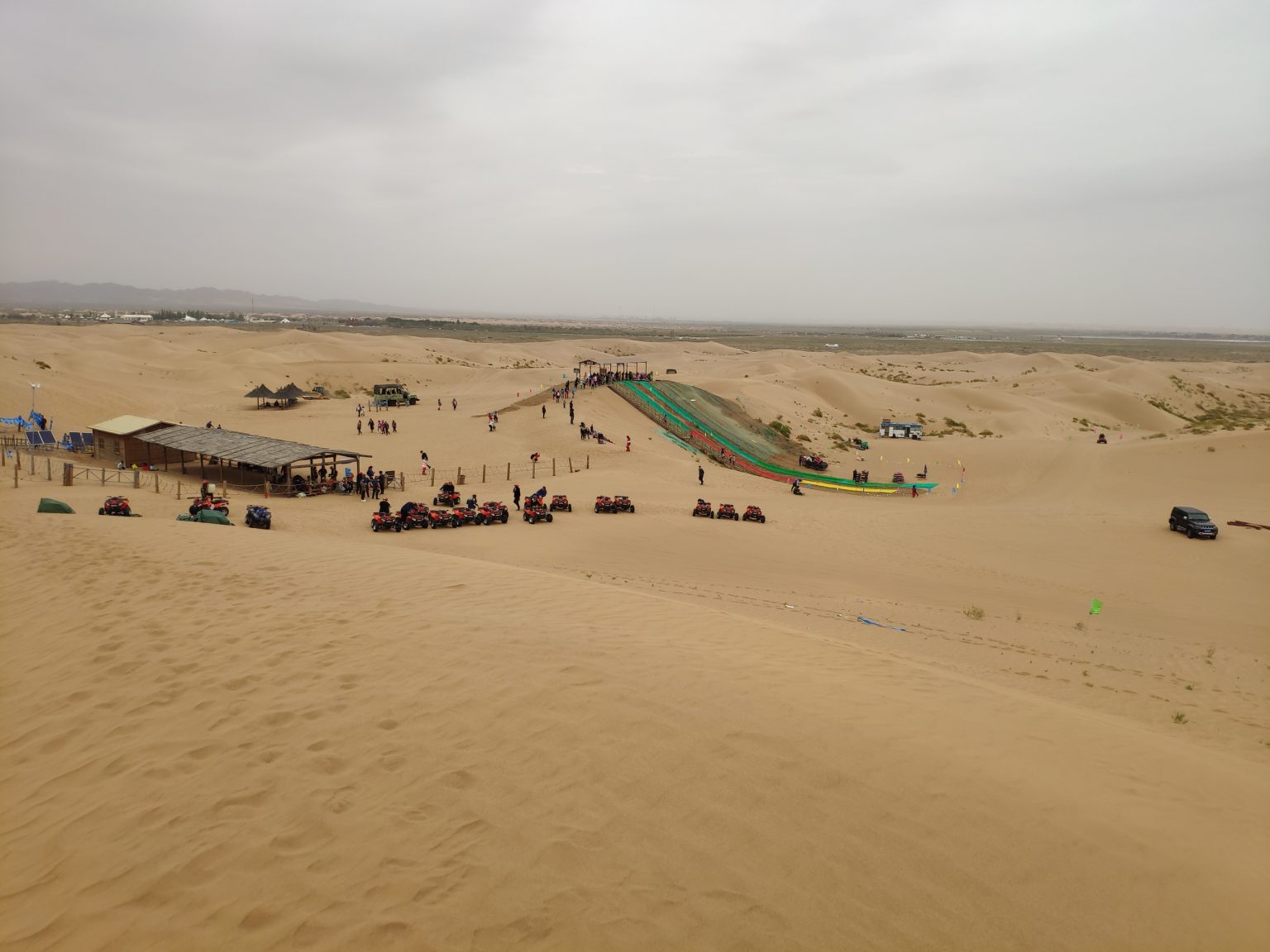
In north-central China, the Tengger Desert occupies a landscape where sand dunes, lakes, mountains, farmland, and major settlements exist close to one another. Its location helped make the region an important route for movement and trade, including connections associated with the ancient Silk Road.
- Where Is the Tengger Desert Located?
- Main Access Points to the Tengger Desert
- Landscape of the Tengger Desert: Dunes, Lakes, and Mountains
- Climate and Best Time to Visit the Tengger Desert
- Vegetation Along the Desert Edge
- Wildlife Between River and Sand
- The Tengger Desert and the Silk Road Legacy
- People and Cultural Heritage of the Tengger
- Things to Do in the Tengger Desert
- Best Places to Visit in the Tengger Desert
- Two-Day Tengger Desert Itinerary
- Where to Stay Near the Tengger Desert
- Practical Travel Tips
- Exploring a Desert Shaped by Connection
Covering approximately 36,000 square kilometers, the Tengger Desert extends across Inner Mongolia and the Ningxia Hui Autonomous Region. Its proximity to cities, railways, and major roads also makes it one of China’s more accessible desert regions.
The Tengger differs from more isolated deserts such as the Taklamakan and Badain Jaran. Its southern and eastern margins contain lakes, agricultural areas, and settled communities, while the wider desert remains dominated by dunes and dry plains.
Where Is the Tengger Desert Located?
The Tengger Desert lies in north-central China, between the Yellow River Valley and the Alxa Plateau.
Its main geographic boundaries include:
- The Helan Mountains along the eastern and northeastern side
- The Yellow River and Ningxia Plain to the south
- Alxa Left Banner to the west
- The areas around Wuwei and Zhongwei to the east
The desert is located roughly around 38°N, 105°E, within a region influenced by the interaction of desert winds, river systems, mountain ranges, and human settlement.
Main Access Points to the Tengger Desert
Zhongwei is the main gateway for visitors, particularly those planning to explore the southern part of the desert.
Other useful access points include:
- Wuwei
- Alxa Left Banner
The region is relatively easy to reach compared with China’s more remote deserts, with rail connections, highways, and established tourist infrastructure providing access to several desert attractions.
Landscape of the Tengger Desert: Dunes, Lakes, and Mountains
The Tengger Desert contains several distinct landscape types, from rolling sand dunes to lake basins and mountain foothills.
Sand Dunes of the Tengger
Sand dunes cover large areas of the desert, with some reaching heights of around 90 meters. Wind continually reshapes their slopes and ridges.
The dunes around established tourist areas are suitable for activities such as camel riding, hiking, sandboarding, and sunset photography.
Desert Lakes and Wetlands
One of the Tengger’s most notable features is its collection of desert lakes, including freshwater and saline lakes. Many occur around the southern part of the desert and near the wider Yellow River region.
These water bodies support vegetation and wildlife and create localized habitats within the surrounding arid landscape. Their presence also gives the Tengger a greater variety of scenery than many other Chinese deserts.
The Helan Mountains Backdrop
The Helan Mountains rise along the eastern edge of the desert and form a clear transition between the arid landscape and the more fertile plains farther east.
The combination of mountains, dunes, lakes, farmland, and river valleys is one of the defining geographical features of the Tengger region.
Climate and Best Time to Visit the Tengger Desert
The Tengger Desert has a continental semi-arid climate, with hot summers and cold winters.
Typical conditions include:
- Annual rainfall of approximately 60–180 mm
- Summer temperatures reaching around 38–40°C
- Winter temperatures that can fall to approximately -15°C
- Occasional light snow during winter
The best period for most visitors is generally April to October, although spring and autumn offer more comfortable conditions for extended outdoor activities.
Vegetation Along the Desert Edge
Plant life is concentrated around water sources, river margins, lake basins, and areas where desert vegetation has been established.
Common species and vegetation types include:
- Populus euphratica, also known as desert poplar
- Tamarisk and reeds around water sources
- Saxaul shrubs, which help stabilize sandy areas
- Seasonal grasslands near river and oasis environments
The region has also been involved in long-running sand-control and ecological restoration projects, particularly around settled areas and transport corridors.
Wildlife Between River and Sand
The combination of dunes, lakes, grasslands, and mountain environments provides habitats for a variety of species.
Wildlife in the wider region includes:
- Bactrian camels
- Desert foxes and hares
- Gazelles in suitable open areas
- Migratory birds, including geese and cranes
- Birds of prey associated with the Helan Mountains
Desert lakes are particularly important for birds moving along regional migratory routes.
The Tengger Desert and the Silk Road Legacy
The Tengger region has long been connected to trade and transportation across northwestern China. Routes passing around the desert linked settlements and commercial centers, contributing to the wider network associated with the Silk Road.
Zhongwei and Wuwei developed as important regional centers, helping travelers and traders move between different parts of northern China and the territories farther west.
The legacy of these routes can still be seen in historic settlements, religious sites, architecture, and archaeological remains throughout the region.
People and Cultural Heritage of the Tengger
Nomadic and Farming Traditions
Communities have lived around the Tengger’s margins for centuries, combining livestock herding with agriculture where water and suitable soil permit.
Mongolian and Hui communities have contributed to the cultural history of the wider region, while farming areas along the Yellow River support intensive agriculture compared with the surrounding desert.
Religious and Historical Sites
Several cultural landmarks provide insight into the region’s long history:
- Gao Miao Temple in Zhongwei, a historic religious complex associated with Buddhist, Taoist, and Confucian traditions
- Ancient watchtowers and defensive structures connected with historic frontier routes
- Archaeological remains associated with former caravan and transportation routes
These sites show how settlements developed around the desert rather than being completely separated from it.
Things to Do in the Tengger Desert
The Tengger is one of China’s better-developed desert tourism regions, particularly around Zhongwei.
Visit Shapotou Scenic Area
Located near Zhongwei, Shapotou is one of the region’s best-known desert attractions. The area combines sand dunes with the Yellow River and includes tourism facilities as well as long-running sand-control projects.
Visitors can use cable cars and other facilities to reach elevated viewpoints and enjoy views across the dunes and river.
Explore Desert Lakes
Desert lakes provide some of the region’s most distinctive scenery. Photography is particularly rewarding around sunrise and sunset, when the low light emphasizes the contrast between water, sand, and vegetation.
Desert Adventures
Popular activities include:
- Camel riding
- Desert hiking
- Sandboarding
- ATV and 4×4 excursions
- Overnight camping
- Stargazing
Cultural Excursions
Travelers can combine desert activities with visits to Hui communities, historic settlements, temples, and Silk Road sites around Zhongwei and other nearby towns.
Best Places to Visit in the Tengger Desert
Several locations can be included in a Tengger itinerary:
- Shapotou Scenic Area
- Desert lakes around the Zhongwei region
- Helan Mountains foothills
- Yellow River viewpoints
- Historic Silk Road towns and settlements
Two-Day Tengger Desert Itinerary
Day 1
- Morning: Explore the dunes around Shapotou
- Afternoon: Experience the Yellow River and surrounding desert landscapes
- Evening: Stay at a desert camp or accommodation near Zhongwei
Day 2
- Morning: Visit a desert lake and explore the surrounding landscape
- Afternoon: Visit nearby cultural or Hui heritage sites
- Evening: Return to Zhongwei
Where to Stay Near the Tengger Desert
Accommodation is available in several forms depending on the itinerary:
- Desert camps around Shapotou and Alxa
- Eco-lodges near desert attractions
- Hotels in Zhongwei for travelers who prefer easy access to city services
Staying in Zhongwei is particularly convenient for visitors who want to combine desert excursions with cultural and historical sightseeing.
Practical Travel Tips
Keep the following points in mind:
- Zhongwei Railway Station provides convenient access to the region.
- Spring and autumn are generally the most comfortable seasons.
- Wear layered clothing because temperatures can change significantly between day and night.
- Use sun protection, including sunscreen, sunglasses, and a hat.
- Stay on designated paths in sensitive desert areas.
- Follow local regulations around lakes, wildlife areas, and protected landscapes.
- Respect local communities and cultural sites.
Exploring a Desert Shaped by Connection
The Tengger Desert is distinctive because its desert environment exists alongside rivers, lakes, mountains, farmland, and established communities. Its location also contributed to the development of historic transportation and trade routes across northern China.
For today’s travelers, this combination creates a varied desert experience. Visitors can explore dunes at Shapotou, see lakes surrounded by sand, follow the landscape toward the Helan Mountains, and discover cultural sites connected to the region’s Silk Road history. The Tengger is therefore not simply a destination for desert scenery, but a place where geography, settlement, and history can be experienced within the same journey.