
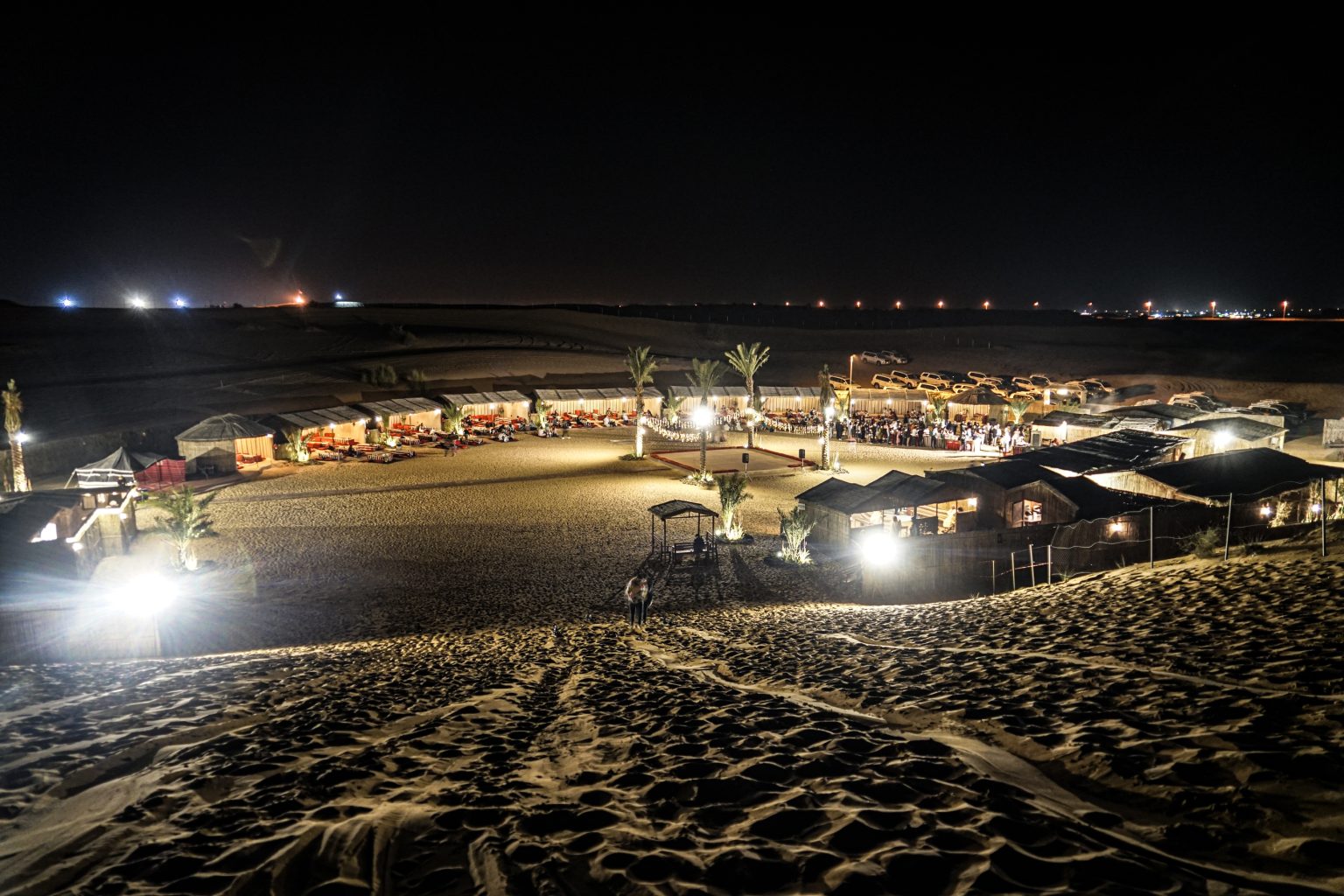
As the sun sets behind the Arabian dunes, the desert begins to cool and the colors of the sand shift from gold to deep red. Stars gradually appear above the open landscape, while the sounds of the city give way to the quiet of the night. Overnight desert camping in the UAE offers a chance to experience this change of pace, whether you choose a traditional-style camp, a comfortable glamping retreat, or an independent outdoor stay in a permitted area.
- What Makes Overnight Desert Camping in the UAE Special?
- Best Desert Camping Locations in the UAE
- Al Marmoom Desert Conservation Reserve, Dubai
- Liwa Desert, Abu Dhabi
- Dubai Desert Conservation Reserve
- Mleiha, Sharjah
- Liwa and the Wider Al Dhafra Region
- Types of Overnight Desert Camping Experiences
- What to Bring for Overnight Desert Camping
- Best Time for Overnight Desert Camping in the UAE
- November to March: The Main Camping Season
- April and October: Seasonal Transitions
- May to September: Extreme Heat
- Desert Camping Etiquette and Environmental Care
- A One-Night Desert Camping Itinerary from Dubai
- Afternoon: Travel to the Desert
- Sunset: Explore the Landscape
- Evening: Dinner and Stargazing
- Morning: Sunrise and Breakfast
- Make Your UAE Desert Night Count
From the vast dunes of Liwa to the conservation landscapes around Dubai and the archaeological surroundings of Mleiha, the United Arab Emirates offers several ways to spend a night in the desert. Each destination has its own character, and the right choice depends on your preferred level of comfort, access requirements, and interest in local heritage.
This guide covers the main camping destinations, accommodation styles, essential equipment, seasonal conditions, and practical advice for planning a responsible desert stay.
What Makes Overnight Desert Camping in the UAE Special?
The UAE’s desert landscapes combine open dunes, native wildlife, cultural heritage, and a wide range of outdoor hospitality experiences. Visitors can choose a simple campsite or a professionally operated retreat with prepared accommodation, meals, and guided activities.
One of the main attractions is the opportunity to spend an evening away from urban lighting. On clear nights, stars may be visible across the open sky, although visibility depends on weather, moonlight, and nearby artificial light.
The experience can also introduce travelers to aspects of Emirati heritage through locally guided activities, food, and storytelling. Bedouin communities across the Arabian Peninsula have diverse histories and traditions, so cultural experiences are best enjoyed through knowledgeable local hosts rather than treated as a single, uniform way of life.
Highlights of a desert overnight stay include:
- Stargazing: Enjoy the night sky from a campsite away from bright city lights.
- Local hospitality: Experience Arabic coffee, dates, and regional dishes at participating camps.
- Desert activities: Depending on the provider, try camel rides, sandboarding, guided nature drives, or falconry demonstrations.
- A choice of comfort levels: Stay in a simple tent, a furnished glamping accommodation, or a luxury desert retreat.
- Sunrise and sunset photography: Capture changing light across dunes and open desert terrain.
A successful trip depends on choosing the right setting and respecting the local environment. Not every scenic desert location allows overnight camping, and protected areas may require visitors to use designated facilities or book through authorized operators.
Best Desert Camping Locations in the UAE
Al Marmoom Desert Conservation Reserve, Dubai
Al Marmoom, near Al Qudra, is known for its desert landscapes, wetlands, and opportunities to observe wildlife. It offers a different atmosphere from the larger dunes of the Empty Quarter, with open terrain and areas of ecological importance close to Dubai.
The reserve is particularly interesting for nature lovers and photographers. Birdlife can be observed around suitable wetland habitats, while guided experiences may provide insight into the area’s desert ecology.
Before planning an overnight stay, check which activities and accommodation arrangements are currently permitted. Access to a protected area does not automatically mean that visitors can pitch a tent wherever they choose.
Possible experiences include:
- Wildlife observation and birdwatching in designated areas.
- Photography during the cooler hours of the day.
- Guided nature experiences, where available.
- A separately booked desert camp or accommodation outside restricted areas.
Al Marmoom suits travelers who want to combine a desert visit with nature observation without traveling deep into the country’s remote sandy regions.
Liwa Desert, Abu Dhabi
The Liwa region lies along the northern edge of the Rub’ al Khali, also known as the Empty Quarter. Its towering dunes and broad sandy landscapes provide some of the UAE’s most striking desert scenery.
Liwa appeals to photographers, experienced outdoor travelers, and visitors seeking a more remote atmosphere. The region offers organized desert accommodation as well as opportunities for independent camping where local rules and access conditions permit.
Travelers can consider:
- Organized desert stays: Choose a camp or resort with confirmed accommodation and facilities.
- Independent camping: Research the exact location, permitted access, vehicle requirements, and waste arrangements before departure.
- Sunset photography: Watch the dunes change color as the sun approaches the horizon.
- Early-morning exploration: Enjoy cooler conditions and softer light before temperatures rise.
Qasr Al Sarab Desert Resort by Anantara is an option for travelers who prefer resort comfort surrounded by desert scenery. It should be understood as a luxury resort rather than a basic public campsite.
Liwa is farther from major cities than the desert areas around Dubai, so plan transport, fuel, water, and overnight arrangements carefully. Remote routes can require suitable vehicles and local driving experience.
Dubai Desert Conservation Reserve
The Dubai Desert Conservation Reserve (DDCR) protects a large area of desert habitat and supports native wildlife, including Arabian oryx and gazelles. It also offers selected guided tourism experiences that introduce visitors to the reserve’s ecology and regional heritage.
Access and activities are controlled to protect the environment. Visitors should book with an operator authorized to run experiences in the reserve rather than assume that independent camping or unrestricted driving is permitted.
Depending on the package, an organized experience may include:
- Guided nature drives.
- Wildlife observation with a conservation guide.
- Cultural demonstrations and regional food.
- Evening dining and stargazing.
- An overnight stay through a participating provider.
Platinum Heritage offers selected overnight desert experiences, while Sonara Camp is another established name associated with desert dining and outdoor hospitality in Dubai. Confirm the current location, overnight options, inclusions, and access arrangements directly with the provider before booking.
The DDCR is particularly suitable for travelers who want a managed experience with an emphasis on wildlife, conservation, and comfort.
Mleiha, Sharjah
Mleiha combines desert scenery with archaeological and geological heritage. Located in central Sharjah, the area is known for ancient sites, fossil-bearing landscapes, rock formations, and guided activities that explore the region’s natural and human history.
It is an appealing choice for travelers who want more than a night among the dunes. Depending on the experience booked, visitors may combine a desert stay with guided walks, archaeological interpretation, or stargazing.
Things to consider include:
- Checking available camping or overnight packages before arrival.
- Joining guided activities when access to archaeological locations is controlled.
- Bringing suitable footwear for uneven and rocky terrain.
- Allowing time to explore the surrounding landscape during daylight.
- Respecting archaeological remains and avoiding the removal of fossils or other material.
Mleiha is a strong option for curious travelers, families, and photography enthusiasts interested in the connection between desert landscapes and the UAE’s ancient history.
Liwa and the Wider Al Dhafra Region
Beyond individual resorts and camps, the wider Al Dhafra region provides access to some of Abu Dhabi’s most extensive desert landscapes. The scenery ranges from cultivated areas and settlements to large dunes and remote sandy terrain.
The region is best approached with a clear plan rather than as a single, unrestricted camping destination. Overnight options and access conditions vary by location.
For a safer and more practical visit:
- Confirm the exact campsite or accommodation before traveling.
- Check whether the route requires a suitable 4×4 vehicle.
- Carry adequate drinking water, food, fuel, and navigation tools.
- Avoid driving into unfamiliar dunes without appropriate experience.
- Check local restrictions and weather conditions before departure.
Travelers seeking a remote experience should choose a location suited to their skills and equipment. A professionally organized stay may be a better choice than independent camping for anyone unfamiliar with desert navigation.
Types of Overnight Desert Camping Experiences
Traditional-Style Desert Camps
Some organized camps draw on regional hospitality traditions through Arabic coffee, dates, local dishes, and cultural demonstrations. Depending on the provider, activities may include storytelling, music, henna, or falconry presentations.
Facilities vary considerably. Some camps offer basic tented accommodation, while others provide furnished spaces, prepared meals, and bathroom facilities.
Ask the operator what is included and how cultural activities are presented. Traditions differ between communities, and no single camp experience represents every aspect of Emirati or Bedouin heritage.
Luxury Desert Glamping
Glamping combines an outdoor setting with more comfortable accommodation. Depending on the property, guests may have furnished tents, proper beds, private bathrooms, prepared meals, or climate-control facilities.
Luxury desert retreats and organized glamping camps can be convenient for couples, families, and travelers who want to experience the landscape without bringing their own camping equipment.
Before booking, check:
- Whether the accommodation is a tent, cabin, or resort villa.
- Whether bathrooms are private or shared.
- Which meals, transfers, and activities are included.
- Whether heating or cooling is available.
- The exact location and transport arrangements.
Do not assume that every glamping property uses solar power or operates with the same environmental standards. Check the provider’s specific facilities and sustainability practices.
Independent Desert Camping
Independent camping offers flexibility and a closer connection to the landscape, but it requires more planning. Not all areas are open to overnight stays, and protected reserves may prohibit unauthorized camping, off-road driving, or fires.
Before setting out:
- Confirm that overnight camping is allowed at your intended location.
- Check whether permits, registrations, or other permissions are required.
- Use a suitable vehicle for the route and your level of experience.
- Bring enough water, food, fuel, and emergency supplies.
- Download offline maps and share your itinerary with someone.
- Plan how you will manage rubbish and human waste.
Remote camping in Liwa or other sandy areas is not suitable for every traveler. If you lack desert-driving experience, choose a designated campsite or book a guided trip.
What to Bring for Overnight Desert Camping
The right equipment depends on the season, the campsite, and whether you are staying in a fully equipped camp or bringing your own tent. Winter nights can become surprisingly cold, while exposed locations may experience strong winds and blowing sand.
Essential Equipment
- Shelter: Bring a sturdy tent with suitable ventilation and secure anchoring if the campsite does not provide accommodation.
- Sleeping equipment: Choose a sleeping bag or bedding appropriate for the forecast overnight temperature, along with an insulated mat if sleeping on the ground.
- Layered clothing: Pack light clothing for warm daytime conditions and a warmer layer for the evening.
- Drinking water: Carry enough for everyone throughout the stay, with extra supplies for delays and physical activity.
- Food and cooking equipment: Bring meals and a suitable stove if cooking is permitted. Follow all fire and fuel restrictions.
- Lighting: A headlamp or flashlight with spare batteries is useful after dark.
- Navigation and communication: Carry a charged phone, offline maps, and additional communication equipment for remote trips where coverage may be unreliable.
- Sun protection: Bring sunscreen, sunglasses, and a hat for daytime activities.
- First-aid supplies: Carry a basic kit and any personal essentials.
Optional items such as binoculars, a camera tripod, a travel pillow, or a small blanket can make the experience more comfortable.
If you are staying at an organized camp, check what equipment is already supplied. This helps avoid unnecessary packing and ensures that you bring anything the provider does not include.
Best Time for Overnight Desert Camping in the UAE
The cooler months are generally the most comfortable for spending extended periods outdoors in the UAE desert. However, conditions vary by location, and remote areas may experience stronger winds or greater temperature changes than nearby cities.
November to March: The Main Camping Season
The period from November through March is popular for desert trips because daytime conditions are generally more comfortable than in summer. It is a good time for evening activities, outdoor dining, stargazing, and sunrise photography.
December, January, and February can bring cool nights, so bring a warm layer even if the afternoon feels mild.
April and October: Seasonal Transitions
These months can offer suitable conditions for desert camping, particularly when temperatures are moderate. The exact comfort level depends on the weather, the campsite’s exposure, and the planned activities.
Check the forecast before departure and choose a schedule that avoids unnecessary exposure during the hottest part of the day.
May to September: Extreme Heat
Summer brings intense heat to much of the UAE, making independent tent camping more demanding. High temperatures can increase the risk of dehydration and heat-related illness, especially during outdoor activities or vehicle problems.
If traveling in summer:
- Choose accommodation with appropriate cooling where needed.
- Limit strenuous activities during the hottest hours.
- Carry sufficient drinking water and avoid relying on uncertain supplies.
- Confirm that the operator runs the planned experience in the prevailing conditions.
- Do not camp in remote locations without adequate preparation and a realistic emergency plan.
For most first-time visitors, the cooler season is the easiest time to plan an overnight desert stay.
Desert Camping Etiquette and Environmental Care
The UAE’s desert environments support native plants and wildlife, and some locations also contain important archaeological remains. Responsible visitors help protect these landscapes by following local rules and avoiding unnecessary disturbance.
Keep these practices in mind:
- Leave no waste behind: Pack out rubbish and use designated disposal facilities.
- Respect fire restrictions: Never light an open fire unless it is expressly permitted at your campsite.
- Protect wildlife: Observe animals from a distance and do not feed or chase them.
- Stay on permitted routes: Avoid driving over vegetation, archaeological sites, or fragile terrain.
- Keep noise low: Reduce unnecessary noise, especially at night.
- Respect cultural sites: Follow photography rules and local guidance when visiting heritage locations.
- Choose responsible operators: Look for clear safety procedures and respect for the natural environment.
If you are visiting a traditional-style camp, follow your hosts’ guidance on local customs and activities. A respectful approach makes the experience more meaningful for visitors and hosts alike.
A One-Night Desert Camping Itinerary from Dubai
This sample itinerary assumes that you have booked an authorized overnight experience in the Dubai desert. It does not assume that independent camping is permitted inside Al Marmoom or the Dubai Desert Conservation Reserve.
Afternoon: Travel to the Desert
Leave Dubai at the time specified by your operator and travel to the confirmed meeting point or camp. If your package includes a guided nature drive, allow time for the briefing and any scheduled stops.
Sunset: Explore the Landscape
Enjoy the changing light across the dunes and take photographs from permitted viewpoints. Some experiences include a short camel ride or another guided activity, depending on the package.
Evening: Dinner and Stargazing
Settle into your accommodation and enjoy dinner at the camp. Selected experiences may include Arabic coffee, dates, cultural demonstrations, or a guided astronomy session.
After dinner, spend time outdoors if weather conditions allow. Keep lighting low and follow the camp’s guidance to avoid disturbing wildlife or other guests.
Morning: Sunrise and Breakfast
Wake early if you want to photograph the dunes in the first light. Enjoy breakfast at the camp or according to the package arrangements, then return to Dubai using the confirmed transport service.
If you prefer a more remote setting, consider an organized overnight stay in the Liwa region instead. It requires a different travel plan and should not be treated as a short excursion from Dubai.
Make Your UAE Desert Night Count
Overnight desert camping in the UAE offers several ways to experience the country’s sandy landscapes, from comfortable glamping retreats to more independent stays in permitted areas. Liwa provides dramatic dune scenery, the Dubai desert offers organized nature and cultural experiences, and Mleiha combines outdoor exploration with archaeological heritage.
The best choice is the one that matches your comfort level, experience, and travel plans. Confirm where overnight stays are allowed, prepare for changing temperatures, and choose activities that respect the desert’s wildlife and cultural significance.
A night away from the city can be memorable without needing elaborate arrangements. With the right campsite and thoughtful preparation, the desert offers time to slow down, enjoy the open sky, and appreciate a different side of the United Arab Emirates.