
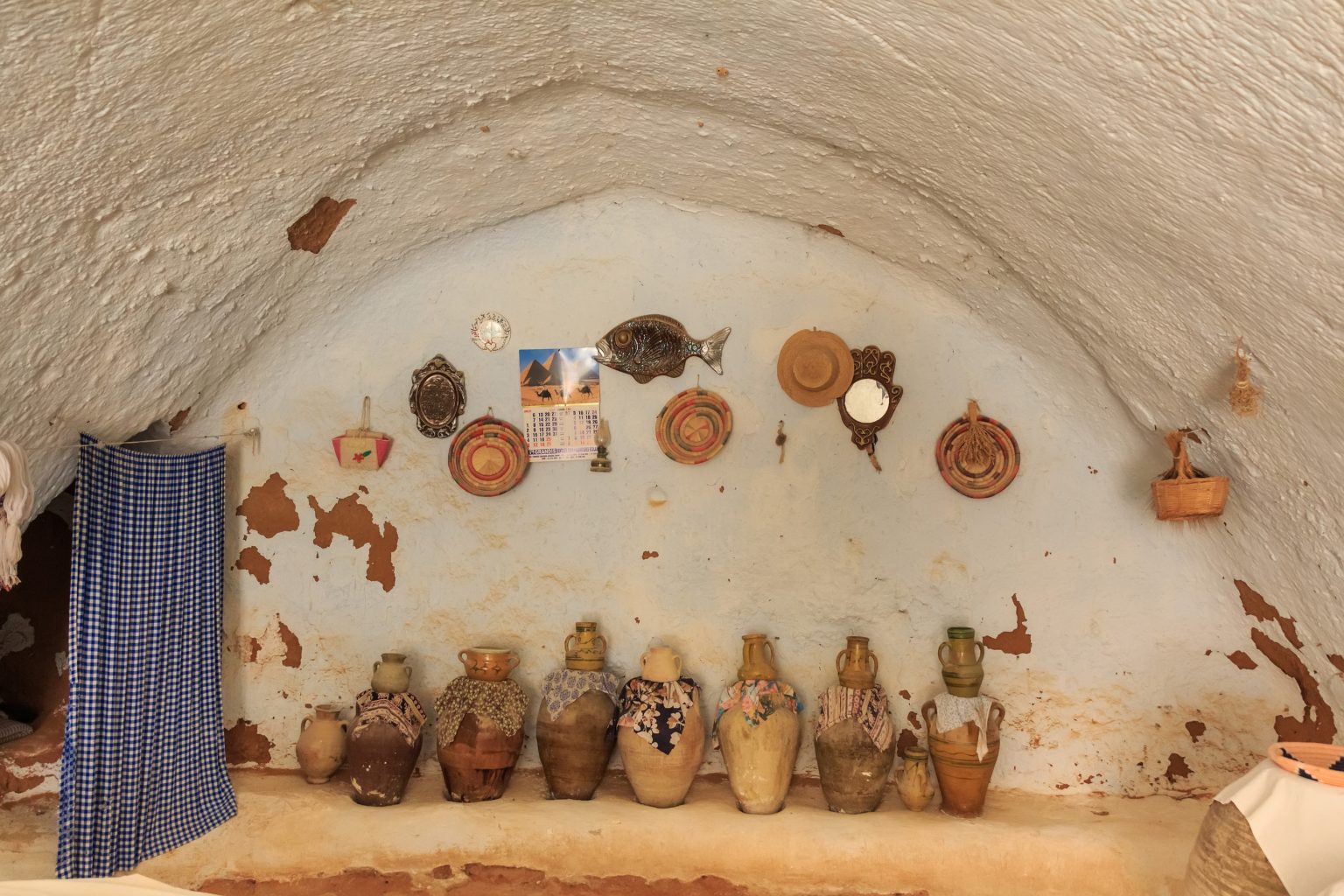
Southern Tunisia preserves a rich Berber culture and Amazigh cultural heritage, shaped by mountain settlements, desert conditions, traditional architecture and generations of local craftsmanship. From the underground homes of Matmata to the historic hilltop villages of Chenini and Douiret, the region offers a closer look at the communities that have helped shape Tunisia’s cultural identity. This guide explores Amazigh traditions in Tunisia, including village architecture, crafts, food and seasonal celebrations, with practical advice for experiencing the region respectfully.
- Who Are the Berber (Amazigh) People of Tunisia?
- Berber Architecture and Traditional Desert Villages
- Berber Festivals and Cultural Celebrations in Tunisia’s Sahara
- The International Sahara Festival in Douz
- The Ksour of Tataouine and Local Cultural Events
- Date Harvests and Oasis Celebrations
- Yennayer: The Amazigh New Year
- Berber Art, Amazigh Craftsmanship and Traditional Design
- Berber Hospitality: Food, Music and Dance
- The Best Time to Experience Berber Culture in Tunisia
- How to Travel Respectfully in Amazigh Communities
- A Four-Day Berber Culture Itinerary in Southern Tunisia
- Day 1: Discover Douz and Its Regional Heritage
- Day 2: Explore Matmata’s Underground Homes
- Day 3: Visit Chenini, Douiret and Ksar Ouled Soltane
- Day 4: Choose an Oasis or Desert-Edge Excursion
- Why Berber and Amazigh Culture in Tunisia Deserves to Be Discovered
Who Are the Berber (Amazigh) People of Tunisia?
The Berbers, also widely known as the Amazigh or Imazighen, are the Indigenous peoples of North Africa. Their history in the region extends back thousands of years, long before the arrival of Phoenician, Roman and Arab powers. The name Imazighen is commonly associated with the meaning “free people.”
In Tunisia, Berber heritage remains particularly visible in parts of the south, including the Matmata hills and the Dahar region around Tataouine. Chenini, Douiret and Matmata are known for their distinctive architecture and historical connections to Amazigh communities. However, language use and cultural practices vary from one village to another, and many residents today speak Tunisian Arabic alongside, or instead of, local varieties of Tamazight.
What Makes Berber Culture Worth Discovering?
Language: Amazigh varieties have historically been spoken in parts of southern Tunisia. Their use has declined in some communities, while local initiatives and cultural associations work to preserve linguistic heritage.
Architecture: Traditional underground dwellings and fortified communal granaries reflect the need to manage heat, store agricultural supplies and protect valuable resources.
Craftsmanship: Wool weaving, textiles, jewellery and other handmade objects preserve regional techniques and design traditions.
Food and hospitality: Couscous, locally baked bread, olive oil, dates and other regional ingredients form part of southern Tunisia’s diverse food culture. Specific dishes and customs differ between families and communities.
Community life: Family ties, shared work and local knowledge have played important roles in village life, although traditions have changed over time.
Berber and Amazigh culture in Tunisia is not simply a remnant of the past. It is part of the country’s living heritage, expressed through language, architecture, craft and the everyday choices of local communities.
Berber Architecture and Traditional Desert Villages
Matmata: Underground Homes Adapted to the Climate
Matmata is one of southern Tunisia’s best-known destinations for traditional underground architecture. Many historic homes were created by excavating deep courtyards into the earth and cutting rooms into the surrounding walls. This design provides shade and helps moderate indoor temperatures during the hot season.
The homes are organised around open courtyards, with rooms opening onto the central space. Some historic dwellings remain inhabited, while others have been adapted for tourism.
What to see in Matmata:
- Traditional troglodyte houses: Visit an accessible home with the owner’s permission or through an organised local visit.
- Courtyard architecture: Observe how rooms and entrances are arranged around the central open space.
- Local hospitality: Some guesthouses and family-run establishments offer meals or accommodation in traditional settings.
- Hotel Sidi Driss: This well-known underground hotel gained international recognition after appearing as a filming location in Star Wars: A New Hope.
The underground architecture is especially interesting for travellers who want to understand how people adapted their homes to the region’s climate and terrain. When visiting a private dwelling, ask before taking photographs and follow the host’s instructions.
Chenini and Douiret: Hilltop Villages of the Dahar
The historic villages of Chenini and Douiret, near Tataouine, occupy elevated sites in the rugged landscapes of southern Tunisia. Their old buildings, narrow paths and surrounding hills reveal how communities adapted settlement patterns to local geography.
The area is also known for its ksour, fortified communal granaries traditionally used to store agricultural products. Individual storage chambers, known as ghorfas, were arranged within larger structures that served the needs of local communities.
Highlights of the region include:
- Chenini: Explore the old village setting and its historic buildings, including the whitewashed mosque that stands out against the surrounding slopes.
- Douiret: Visit the remains of the historic hilltop settlement and learn about the area’s architectural and linguistic heritage.
- Ksar Ouled Soltane: See a particularly well-known fortified granary near Tataouine, famous for its stacked rows of vaulted storage chambers.
- Local guided walks: A knowledgeable guide can explain the uses of the buildings and the relationship between the villages, agriculture and surrounding landscape.
Some historic settlements are partly abandoned, while other areas remain inhabited or have modern development nearby. Do not assume that every old building is open to visitors. Stay on suitable paths, avoid entering unstable structures and respect private property.
For photographers, early morning and late afternoon often provide softer light on the stone walls and surrounding hills.
Berber Festivals and Cultural Celebrations in Tunisia’s Sahara
Festivals offer opportunities to experience music, food, crafts and regional traditions. However, not every event in southern Tunisia is specifically Amazigh, and dates, programmes and locations can change from year to year. Check official announcements before planning a trip around a festival.
The International Sahara Festival in Douz
The International Sahara Festival in Douz is one of Tunisia’s best-known cultural events associated with Saharan and Bedouin heritage. It commonly takes place toward the end of December, although the dates should be confirmed for each edition.
The festival brings together performers, local residents and visitors for activities that celebrate the cultural traditions of Tunisia’s desert regions.
Depending on the year’s programme, visitors may find:
- Traditional music, poetry and dance.
- Equestrian displays and camel-related events.
- Presentations of regional clothing and crafts.
- Food stalls and opportunities to sample local specialities.
- Gatherings that celebrate pastoral traditions and Saharan life.
The festival is valuable for understanding the cultural diversity of Tunisia’s desert regions, but it should not be described as exclusively Amazigh. Douz and the wider region have their own distinct histories and traditions.
Best for: Travellers interested in regional culture, live performances and the atmosphere of a major southern Tunisian festival.
The Ksour of Tataouine and Local Cultural Events
The historic granaries around Tataouine are cultural attractions throughout the year rather than a single festival destination. Some local cultural events may include traditional music, food, guided visits or demonstrations, but the programme varies.
Places to explore include:
- Ksar Ouled Soltane: A historic granary known for its impressive architecture.
- Chenini and Douiret: Villages associated with southern Tunisia’s Amazigh heritage.
- Ksar Hadada: Another historic granary complex in the Tataouine region.
Local guides can explain how these structures were used to store grain and other provisions, and how access and storage were organised within communities. If you are interested in a specific festival in Tataouine, confirm its name, location and dates with local tourism offices before booking accommodation.
Date Harvests and Oasis Celebrations
Dates are an important agricultural product in southern Tunisia, particularly in oasis regions such as the area around Kebili and Tozeur. Harvest periods and related events provide an opportunity to learn about date cultivation, food traditions and the role of oases in local livelihoods.
Some destinations host seasonal celebrations, agricultural exhibitions or cultural festivals, but these events are not interchangeable and do not all take place in November.
Experiences to look for include:
- Tasting locally grown varieties such as Deglet Nour.
- Learning about date cultivation and harvesting.
- Discovering traditional food preparation.
- Exploring palm-leaf weaving and other local crafts.
- Visiting oasis markets and small producers.
Check the programme of the particular event you intend to attend. A date festival may be an excellent addition to a trip, but its dates and activities should not be assumed in advance.
Yennayer: The Amazigh New Year
Yennayer marks the beginning of the Amazigh calendar year and is observed by Amazigh communities in different parts of North Africa. Celebrations are commonly associated with 12 or 13 January, depending on the local calendar and tradition.
In parts of southern Tunisia, some families may mark the occasion with a special meal or a family gathering. Customs are not uniform, and the way the occasion is observed can differ between households and communities.
Possible elements of a celebration include:
- Sharing a family meal.
- Preparing regional dishes using seasonal ingredients.
- Passing on family stories and traditions.
- Gathering with relatives to welcome the new year.
Do not assume that every Tunisian Amazigh household celebrates Yennayer in the same way, or that a public festival takes place in every village. Travellers interested in attending a community celebration should seek an invitation or ask a local cultural association about public events.
Berber Art, Amazigh Craftsmanship and Traditional Design
Handmade objects are an important part of southern Tunisia’s cultural heritage. Weaving, jewellery and decorative arts reflect local materials, family knowledge and regional design traditions. Their meaning can vary, so it is best to ask craftspeople about the particular item rather than assigning a universal interpretation to every pattern.
Traditional Crafts to Discover
Wool weaving: Wool is used in a variety of traditional textiles, including rugs and other household items. Techniques and patterns differ by locality and maker.
Jewellery: Silver and other metals feature in regional jewellery traditions. Designs, materials and methods vary across southern Tunisia, and not every item is made locally.
Pottery: Traditional pottery can be found in different parts of Tunisia, although production methods and styles are not identical throughout the south.
Palm-leaf weaving: In oasis areas, palm leaves can be used to make baskets, mats and practical household objects.
Henna and natural dyes: Henna has several cultural uses in Tunisia, including body decoration during celebrations. Natural dyes and pigments may also be used in textile and craft production, depending on the local tradition.
How to Appreciate Traditional Berber Crafts
- Buy directly from artisans or reputable local cooperatives when possible.
- Ask about the materials, production process and origin of an item.
- Look for handmade work rather than assuming that every souvenir sold in a tourist area is locally produced.
- Ask permission before photographing a craftsperson at work.
- Avoid bargaining in a way that dismisses the time and skill involved in handmade production.
Purchasing a locally made object can support a craft tradition and provide a more meaningful connection to the place where it was created.
Berber Hospitality: Food, Music and Dance
Food is an important part of cultural travel in southern Tunisia, but there is no single menu that represents every Amazigh community. Meals reflect local ingredients, family recipes and the wider culinary traditions of the region.
Regional Foods to Try
Couscous: A staple across Tunisia, couscous is prepared in many forms. It may be served with vegetables, meat, fish or other ingredients, depending on the region and occasion.
Brik: This thin pastry, often filled with egg and other ingredients, is a familiar feature of Tunisian cuisine. It is not exclusive to Amazigh communities.
Traditional bread: Different communities prepare bread using local grains and cooking methods. In parts of the south, traditional ovens remain an important feature of food preparation.
Dates: Dates are closely associated with oasis agriculture and are eaten fresh or dried, served to guests and used in a variety of dishes.
Regional stews and grain dishes: Local meals may include legumes, vegetables, meat and grains, with recipes varying by household and season.
If a host invites you to share a meal, ask about ingredients if you have dietary requirements. A family meal or a visit to a small local restaurant can offer insight into the region’s food culture without presenting one recipe as universal.
Music and Dance
Music in southern Tunisia reflects several overlapping cultural traditions. Performances may feature percussion, singing, poetry and regional instruments, depending on the community and event.
Cultural experiences to look for include:
- Live music at an established local festival.
- Regional singing and poetry performances.
- Wedding-related music and dance when a public or invited event is available.
- Conversations with local musicians or cultural organisations about the history of particular styles.
Mezoued is a recognised Tunisian musical tradition, but it should not be presented as a uniquely Amazigh instrument or style. Likewise, dance forms and performance customs differ between communities.
Visitors should enjoy performances respectfully, follow event rules and ask before filming individuals or private celebrations.
The Best Time to Experience Berber Culture in Tunisia
Southern Tunisia can be visited in different seasons, but temperature, festival dates and the type of experience you want should guide your decision.
November to March
This period is often suitable for exploring historic villages and desert-edge landscapes because daytime temperatures can be more manageable than in summer. The International Sahara Festival in Douz is generally held toward the end of December, while Yennayer falls in January.
Winter nights can still be cold, especially in exposed areas, so bring warm layers.
April to May
Spring can be a pleasant time for walking through historic villages, visiting granaries and exploring the Dahar region. Conditions vary from year to year, and outdoor excursions should be planned around the weather.
If you are interested in a local cultural event, verify the date rather than assuming that a particular festival takes place every March or April.
June to September
Summer heat can make walking and outdoor sightseeing uncomfortable, particularly around midday. If travelling during these months, plan excursions for early morning or late afternoon, carry sufficient water and check conditions before visiting remote areas.
Choosing the Right Dates
For many travellers, November to March is a practical period for cultural exploration. However, there is no single month that guarantees every festival or activity.
Before booking, check:
- The confirmed dates of the event you want to attend.
- Opening arrangements for historic sites and museums.
- Transport options between villages.
- Accommodation availability in smaller settlements.
- Local weather conditions and any access restrictions.
How to Travel Respectfully in Amazigh Communities
Responsible travel helps preserve Berber and Amazigh cultural heritage in southern Tunisia while ensuring that local people benefit from tourism.
- Choose local accommodation: Consider locally run guesthouses and small businesses in places such as Matmata, Chenini and the wider Tataouine region.
- Buy from artisans: Ask about the origin of products and support makers directly where possible.
- Ask before taking photographs: This is particularly important when photographing residents, private homes, religious spaces or ceremonies.
- Dress appropriately: Choose clothing that is comfortable for the climate and respectful of local customs, particularly at religious sites.
- Respect historic structures: Do not climb unstable walls, enter closed buildings or remove stones and other objects.
- Reduce waste: Carry rubbish with you when bins are unavailable and avoid leaving plastic or food waste in rural areas.
- Follow local guidance: A local guide can explain which places are open to visitors and how to behave respectfully.
A cultural visit should be a two-way exchange. Take time to listen, ask questions politely and recognise that communities are living places, not simply displays of the past.
A Four-Day Berber Culture Itinerary in Southern Tunisia
This itinerary focuses on Matmata and the Tataouine region, combining traditional architecture, historic granaries and desert-edge scenery. Driving times depend on the chosen roads, stops and accommodation, so confirm transfers before finalising the schedule.
Day 1: Discover Douz and Its Regional Heritage
Arrive in Douz and settle into your accommodation. If time permits, visit a local museum or cultural attraction to learn about the region’s Saharan history.
Explore the town and sample regional food. If your visit coincides with the International Sahara Festival, attend selected events according to the published programme. Otherwise, ask local tourism providers about available cultural activities.
Day 2: Explore Matmata’s Underground Homes
Travel to Matmata and visit accessible traditional underground dwellings. Learn how the courtyard layout and excavated rooms respond to the local climate.
Consider staying at a locally run guesthouse or enjoying a meal arranged with a local host. Confirm arrangements in advance, particularly if you want to visit a private home.
Day 3: Visit Chenini, Douiret and Ksar Ouled Soltane
Spend the day exploring the Tataouine region. Visit Chenini and Douiret to learn about the historic hilltop settlements, then include Ksar Ouled Soltane if road conditions and timing allow.
A local guide can explain the purpose of the ksour and their storage chambers, along with the area’s architectural history. Allow time for walking and photography rather than trying to rush through every site.
Day 4: Choose an Oasis or Desert-Edge Excursion
For the final day, choose an excursion based on your interests and onward travel arrangements. Ksar Ghilane offers an oasis setting and desert activities, while additional time around Tataouine can provide a closer look at historic villages and local crafts.
Ksar Ghilane is not simply another Amazigh village, so treat it as a separate landscape and cultural stop. Confirm transport, activities and meal arrangements with a local operator, especially if travelling beyond the main access road.
This route provides a broad introduction to southern Tunisia’s architectural and cultural heritage without assuming that all destinations share the same traditions.
Why Berber and Amazigh Culture in Tunisia Deserves to Be Discovered
Berber and Amazigh heritage in southern Tunisia is visible in underground homes, fortified granaries, regional crafts, language and family traditions. Places such as Matmata, Chenini and Douiret reveal how communities developed distinctive ways of living in a demanding landscape while remaining connected to wider Tunisian society.
For travellers, the most rewarding experiences often come from slowing down, listening to local stories and learning the history behind a building, a meal or a handmade object. By choosing responsible local experiences and respecting community customs, visitors can discover Berber culture and Amazigh heritage in Tunisia as a living tradition that continues to evolve.