
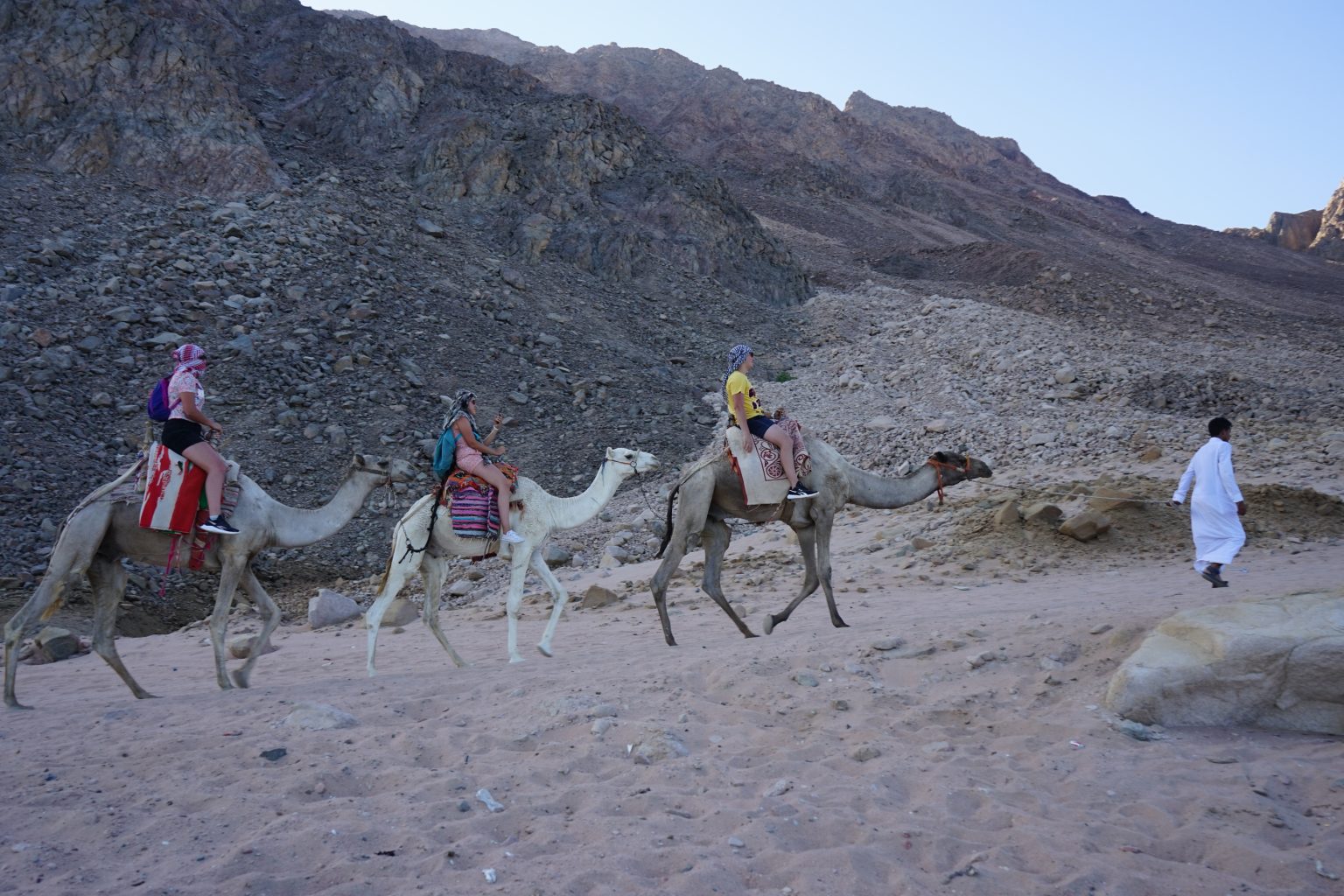
For centuries, camels have helped travelers cross Egypt’s arid landscapes, carrying people and supplies between settlements and remote oases. Today, camel rides in Egypt offer a slower way to experience the country’s deserts, from the palm groves and dunes of Siwa Oasis to the open landscapes of the Western Desert. These Egyptian desert experiences combine outdoor exploration with opportunities to learn about local history, hospitality, and life in communities shaped by the desert.
- Why Experience Camel Rides in Egypt?
- Best Places for Camel Rides in Egypt
- Siwa Oasis and the Great Sand Sea
- The White Desert and Bahariya Oasis
- Giza Desert and the Pyramids
- Wadi El Rayan and the Fayoum Desert
- What to Expect on a Camel Ride
- Exploring Egypt’s Desert Heritage with Local Guides
- Best Time of Year for Camel Rides in Egypt
- October to April: The Cooler Season
- May and September: Seasonal Transitions
- June to August: Extreme Heat
- What to Wear and Bring on a Camel Ride
- Photography Tips for Camel Rides
- Ethical and Responsible Camel Rides
- Camel Ride Tours and Costs in Egypt
- A Sample Two-Day Desert Trip from Bahariya Oasis
- Discover Egypt Through Its Desert Landscapes
Not every desert destination offers the same type of camel excursion. Some places specialize in short rides, while others provide longer journeys arranged with local guides. The White Desert, for example, is more commonly explored through organized 4×4 safaris and camping trips. Choosing the right destination depends on how far you want to travel, how much time you have, and whether your priority is scenery, cultural encounters, or an overnight adventure.
Why Experience Camel Rides in Egypt?
Camels have played an important role in desert transport and trade across North Africa for generations. Their ability to travel through dry environments made them valuable to communities moving between settlements, wells, and caravan routes.
Today, a camel ride in Egypt offers a different perspective from traveling by car. The pace is slower, and short stops can provide time to appreciate the terrain, take photographs, and learn from local guides.
Reasons to consider a camel excursion include:
- A slower way to explore: Travel through selected desert areas at a pace suited to walking, observing, and photography.
- Desert landscapes: Experience dunes, rocky ground, and oasis scenery from a different viewpoint.
- Local knowledge: Learn about the area’s history and environment from guides familiar with the region.
- Sunset and sunrise views: Softer light can make early and late excursions especially rewarding.
- Cultural experiences: Some trips include regional food, tea, or visits arranged with local hosts.
The experience varies by destination. A short ride near a major attraction is different from a multi-hour trek into a remote desert area, so confirm the route and duration before booking.
Best Places for Camel Rides in Egypt
Siwa Oasis and the Great Sand Sea
Siwa Oasis, in Egypt’s Western Desert near the Libyan border, is one of the country’s most distinctive destinations for desert exploration. Palm groves, salt lakes, freshwater springs, historic settlements, and nearby dunes create a landscape that combines natural scenery with a distinctive local culture.
The surrounding Great Sand Sea offers extensive dune fields, but excursions into remote areas should be arranged with experienced local operators. Camel rides and longer trekking options depend on local availability, route conditions, and the provider.
Experiences to consider include:
- Dune excursions: Arrange a camel ride in a suitable area near the oasis or ask local operators about longer routes.
- Sunset viewpoints: Visit selected dunes for views across the sandy landscape as the light changes.
- Oasis exploration: Combine a desert excursion with visits to palm groves, springs, or local heritage sites.
- Local food and hospitality: Choose experiences that introduce visitors to Siwan cuisine and traditions through local hosts.
- Overnight stays: Some operators arrange desert outings with camping or accommodation, but facilities and itineraries vary.
Siwa is also home to a distinctive Amazigh, or Berber, cultural heritage. The Siwan community has its own language and traditions, which should not be treated as interchangeable with Bedouin customs elsewhere in Egypt.
For travelers seeking a combination of dunes, cultural encounters, and time away from large cities, Siwa desert tours are a strong option. Confirm whether a proposed itinerary involves camels, 4×4 transport, or a combination of both.
The White Desert and Bahariya Oasis
The White Desert, near Farafra in Egypt’s Western Desert, is famous for its pale chalk formations shaped by erosion. Mushroom-like rocks, sculpted limestone, and open sandy terrain make it one of the country’s most recognizable desert landscapes.
Most established trips to the White Desert are organized as 4×4 desert safaris, often departing from Bahariya Oasis. These excursions may combine visits to the Black Desert, Crystal Mountain, and the White Desert itself, depending on the operator and available time.
Highlights include:
- White chalk formations: Explore the distinctive rock shapes from designated stopping areas.
- Black Desert: Visit hills and slopes covered with dark volcanic material.
- Crystal Mountain: Stop at a well-known geological feature when included in the itinerary.
- Desert camping: Spend the night in an authorized location arranged by an experienced local operator.
- Photography and stargazing: Enjoy the landscape during softer daylight and, when skies are clear, after dark.
Camel riding is not the standard way to explore the White Desert. If riding a camel is essential to your trip, ask whether the operator can arrange a suitable ride separately rather than assuming that it is included in the safari.
The White Desert is best suited to travelers who want unusual geological scenery, photography, and an organized desert camping experience.
Giza Desert and the Pyramids
The desert around the Giza Plateau offers a short camel-riding experience with views of the Great Pyramids and surrounding landscape. It is convenient for travelers staying in Cairo who want to experience a camel ride without traveling to a remote oasis.
This is generally a short tourist ride rather than a multi-day trek across the Sahara.
Before booking, consider:
- The route: Confirm where the ride begins and which views are included.
- Timing: Early morning and late afternoon may offer softer light, subject to operating hours and local conditions.
- Duration: Check how long you will actually ride, rather than relying on the overall tour duration.
- Animal welfare: Choose an operator whose camels appear healthy and are handled responsibly.
- Photography arrangements: Agree on the price and any photography fees before the ride begins.
Giza is a practical introduction to camel riding near the pyramids, particularly for first-time visitors and families. Travelers seeking solitude or extended desert travel should consider an oasis destination instead.
Wadi El Rayan and the Fayoum Desert
Wadi El Rayan, in the Fayoum region southwest of Cairo, combines desert scenery, sand dunes, lakes, and waterfalls. The protected area supports varied wildlife and plant life, while its surrounding landscapes provide opportunities for outdoor activities.
Camel riding is among the recreational activities associated with the wider Wadi El Rayan area, although availability depends on the location and local provider.
Possible experiences include:
- Camel rides: Ask local operators about permitted riding areas and available durations.
- Desert scenery: Explore selected dunes and viewpoints without leaving designated routes.
- Lake and waterfall visits: Combine a desert excursion with sightseeing around the reserve’s water features.
- Birdwatching: Observe resident and migratory birds from suitable viewing areas.
- Geological exploration: Visit authorized locations that reveal the region’s landscape and natural history.
Wadi El Rayan is a nature reserve, so visitors should follow local regulations and use designated camping areas where overnight stays are permitted. Do not assume that camel riding, camping, or driving is allowed everywhere within the protected area.
Its relative proximity to Cairo makes Fayoum a useful option for travelers planning a shorter excursion, particularly when combined with other nearby attractions.
What to Expect on a Camel Ride
The experience depends on whether you book a brief ride or a longer excursion. Before departure, the guide should explain how to approach the camel, mount safely, and follow instructions while riding.
A typical excursion may include:
- A short safety briefing: Learn how to mount and dismount, hold the reins as instructed, and follow the guide’s directions.
- A guided ride: Travel along a route selected for the terrain, duration, and ability of the participants.
- Rest stops: Longer excursions may include breaks for water, photographs, or refreshments.
- Local interpretation: Some guides share information about the landscape, local history, or traditional desert travel.
- A return to the starting point or camp: Confirm the route and arrangements before setting off.
Mounting and dismounting can feel unsteady because the camel rises and kneels in stages. Follow the handler’s instructions and remain balanced rather than making sudden movements.
The ride may feel gentle once the camel is walking steadily, but it can still be uncomfortable for some people. Travelers with back or joint problems, balance difficulties, or other mobility concerns should discuss the activity with a qualified healthcare professional if necessary and ask the operator about safer alternatives.
Exploring Egypt’s Desert Heritage with Local Guides
Local guides can help visitors understand the differences between Egypt’s desert regions, settlements, and cultural traditions. However, the communities associated with each destination have distinct histories and customs.
In Siwa, visitors can learn about Siwan Amazigh culture, including the community’s language, food, crafts, and local heritage. Around other desert destinations, Bedouin guides may share knowledge of routes, landscape, hospitality, and life in the desert.
Depending on the destination and the experience offered, a cultural visit may include:
- Local storytelling: Hear about the area’s history and the guide’s connection to the landscape.
- Tea and refreshments: Some excursions include a stop with a local host.
- Regional cuisine: Sample dishes associated with the particular community or oasis.
- Traditional desert knowledge: Learn how people have used local resources and navigated the surrounding environment.
- Community-led experiences: Choose activities that are organized and hosted by local residents.
Khobz el ramal, bread cooked in heated sand, is associated with some desert cooking traditions, but it should not be presented as a standard feature of every camel ride. Ask the operator what the experience actually includes.
Traveling with a knowledgeable local guide can add depth to a trip, provided the experience respects the community’s own traditions rather than presenting them as a single, unchanging desert culture.
Best Time of Year for Camel Rides in Egypt
Seasonal conditions differ between the northern coast, the Western Desert, and southern Egypt. Daytime heat, cold nights, wind, and local weather can all affect the comfort of a camel excursion.
October to April: The Cooler Season
The cooler months are generally a practical time for desert travel. Conditions can be more comfortable for riding, walking, and photography than during the hottest part of the year.
Winter nights may be cold, especially in open desert locations, so bring warm clothing if your excursion extends into the evening or includes camping.
May and September: Seasonal Transitions
These months can offer suitable conditions for some trips, but temperatures may already be high during the day. Consider shorter excursions and ask the operator about the planned departure time and expected exposure to the sun.
June to August: Extreme Heat
Summer can bring intense heat to Egypt’s desert regions. Long rides and strenuous activities may become uncomfortable or unsafe, particularly in exposed areas with limited shade.
If you travel during summer:
- Prefer shorter rides during cooler hours if a reputable operator confirms that conditions are suitable.
- Avoid strenuous activity during peak heat.
- Carry adequate drinking water and follow the guide’s instructions.
- Postpone the activity if conditions are unsafe.
- Do not assume that a dawn or evening ride is automatically suitable in every location.
For many travelers, the cooler season offers the most comfortable balance for desert exploration. Check the forecast for your exact destination rather than relying on a single national temperature range.
What to Wear and Bring on a Camel Ride
Comfortable clothing and adequate water are essential, especially in exposed desert areas. The amount of equipment you need depends on the duration of the ride and whether the trip includes an overnight stay.
Clothing
- Loose, breathable clothing: Choose garments that allow movement and help protect against the sun.
- Long sleeves and trousers: These can reduce direct sun exposure and contact with sand.
- A hat or head covering: Useful for shade, provided it stays secure during the ride.
- Sunglasses: Protect your eyes from strong sunlight and blowing sand.
- Closed shoes or secure footwear: Choose footwear that will remain comfortable and stable while mounting, dismounting, and walking.
- A warm layer: Bring a jacket or fleece for cool evenings and winter trips.
Essential Items
- Drinking water: Carry enough for the planned duration, with extra supplies for delays and heat.
- Sunscreen: Apply suitable sun protection before departure and reapply according to the product instructions.
- A small daypack: Keep essentials secure without carrying unnecessary weight.
- Lip balm and personal supplies: Dry air and wind can cause discomfort.
- A charged phone: Useful for communication and photographs, although remote areas may have limited coverage.
- A power bank: Helpful on longer outings or overnight trips.
- Basic first-aid supplies: Carry a small kit suitable for your itinerary.
For multi-day excursions, confirm whether meals, sleeping equipment, transport, and other supplies are provided. Do not assume that every tour includes the same facilities.
Photography Tips for Camel Rides
Desert landscapes can look very different depending on the angle of the sun, the color of the ground, and the position of the subject. A little planning helps produce stronger photographs without disturbing the animals or other visitors.
- Shoot during softer light: Sunrise and late afternoon can bring out the texture of dunes and rock formations.
- Use silhouettes thoughtfully: A camel and rider against a bright sky can emphasize the scale of the landscape.
- Look for patterns: Footprints, dune ridges, and shadows can add structure to a composition.
- Protect your equipment: Sand can damage camera mechanisms and phone ports, so use a suitable bag or protective cover.
- Ask before photographing people: Respect guides, local residents, and other visitors who may not wish to appear in photographs.
- Avoid distracting the camel: Do not use a flash close to an animal’s face or ask a handler to position the camel unsafely for a picture.
Camera settings depend on the available light, equipment, and desired result. Instead of relying on one fixed ISO setting, adjust exposure to the actual conditions and use a tripod only where it can be set up safely.
Ethical and Responsible Camel Rides
Responsible camel rides in Egypt should protect both the animals and the people who care for them. A beautiful landscape does not justify poor treatment of a working animal.
Before booking, look for an operator who:
- Provides adequate water, food, shade, and rest according to the conditions and workload.
- Uses suitable saddles and equipment that do not cause visible rubbing or injury.
- Limits riding time and loads according to the camel’s condition and the demands of the route.
- Handles animals calmly and does not force them to stand or move when they appear distressed.
- Employs knowledgeable handlers who can recognize signs of fatigue, dehydration, or injury.
- Explains the price clearly and treats guides and handlers fairly.
Avoid riding a camel that appears injured, severely underweight, exhausted, or poorly cared for. If you have concerns, decline the ride and raise them with the operator or relevant local authority where appropriate.
Visitors should also respect the desert environment by following permitted routes, carrying out rubbish, avoiding damage to vegetation, and observing protected-area rules.
Camel Ride Tours and Costs in Egypt
The price of a camel excursion varies according to destination, duration, group size, season, transport, and the services included. A short ride near Giza is not comparable with a multi-day desert expedition from an oasis.
When comparing camel ride tours in Egypt, ask for a clear breakdown of what the price covers.
Check whether the package includes:
- The camel ride: Confirm the actual riding time and route.
- A local guide or handler: Ask who will accompany the group.
- Transport: Find out whether transfers from your hotel or town are included.
- Meals and drinking water: Check what is provided and what you need to bring.
- Camping equipment: For overnight trips, confirm tents, bedding, cooking arrangements, and toilet facilities.
- Permits and entry fees: Ask whether applicable charges are included.
- Safety and support: For remote journeys, confirm the emergency arrangements and whether additional vehicle support is provided.
Do not rely on a single advertised price as a standard rate for all of Egypt. Request a current quote from the operator and confirm the cancellation terms, itinerary, and animal-welfare practices before paying.
For remote desert trips, use licensed or otherwise appropriately authorized guides with experience in the specific area. Arrange Western Desert excursions with experienced operators and suitable 4×4 support where the itinerary requires it.
A Sample Two-Day Desert Trip from Bahariya Oasis
This example is designed around a common White Desert safari rather than assuming that the entire journey is completed by camel. If you specifically want camel riding, ask the operator whether a suitable ride can be added in an appropriate location.
Day 1: Explore the Western Desert
Begin from Bahariya Oasis with an appropriately authorized local guide and suitable 4×4 transport. Depending on the itinerary, visit parts of the Black Desert and other geological stops before continuing toward the White Desert.
Allow time for photographs, short walks, and refreshments. In the evening, stay at a permitted camping location arranged by the operator, with suitable equipment and provisions.
Day 2: Discover the White Desert
Explore selected chalk formations in the morning, when the light can bring out the landscape’s shapes and textures. Follow the guide’s instructions, avoid damaging the formations, and remain within permitted areas.
After breakfast, return toward Bahariya Oasis by the planned route. If camel riding is a priority, consider arranging it as a separate activity in Siwa or another location where a suitable, responsible operator offers it.
For travelers who want a longer camel journey rather than a vehicle-based safari, a separate itinerary around Siwa may be more appropriate.
Discover Egypt Through Its Desert Landscapes
Camel rides can provide a memorable way to experience Egypt’s deserts, but the best trip depends on choosing the right destination and understanding what the activity actually involves. Siwa offers a combination of dunes, oasis scenery, and distinctive Amazigh heritage; Fayoum combines desert terrain with lakes and wildlife; and Giza provides a short ride close to one of the world’s most famous archaeological landscapes.
The White Desert stands out for its unusual chalk formations, but it is generally explored through organized 4×4 safaris rather than standard camel rides. By checking the route, preparing for the weather, and choosing an operator that treats animals responsibly, you can plan an experience that is both rewarding and respectful.
Whether you choose a short ride or a longer desert excursion, take time to appreciate the landscape, listen to local knowledge, and leave the environment as you found it.