
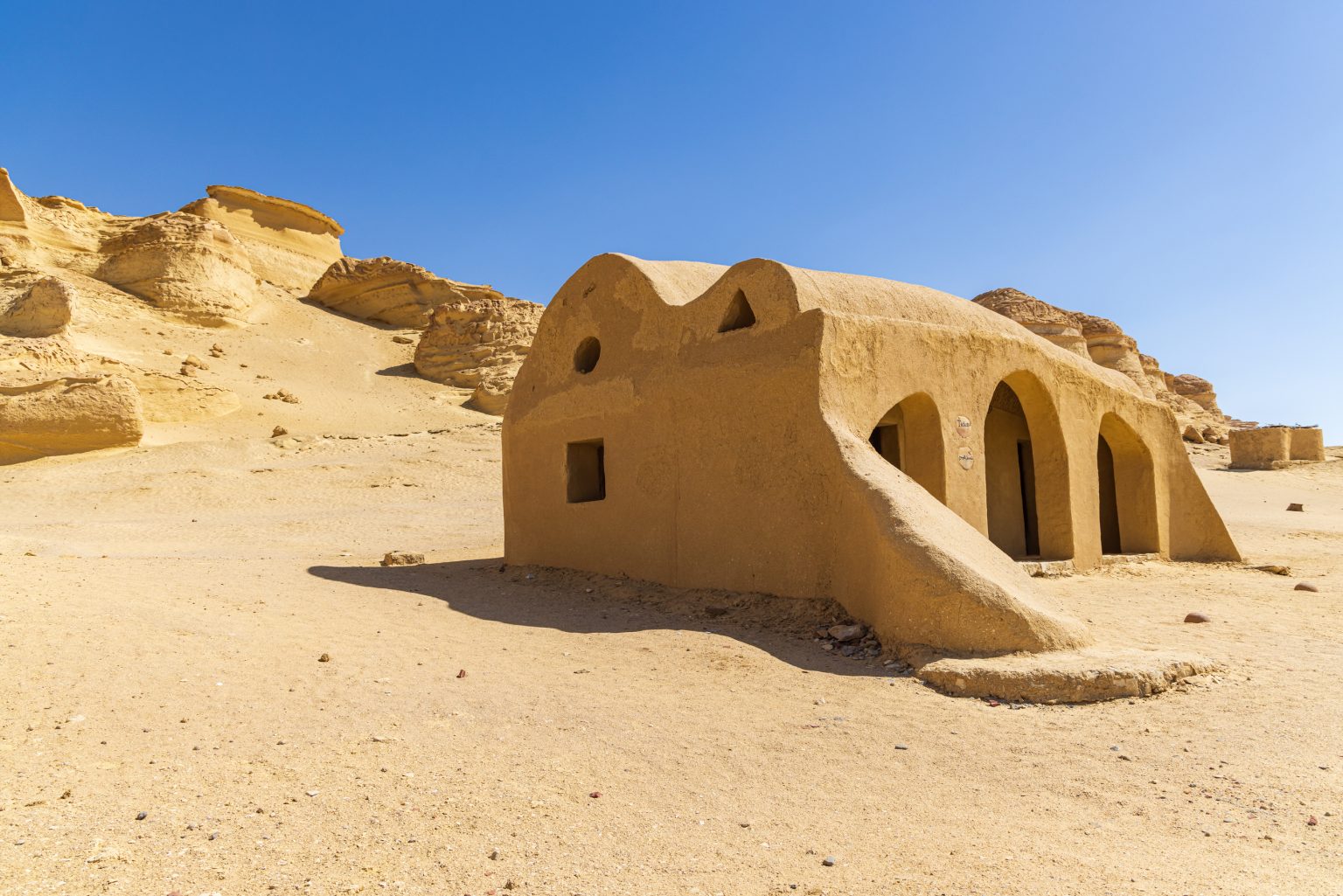
In the heart of Egypt’s Western Desert, rolling sand dunes surround a valley that was once covered by a vast sea. Wadi El Hitan, the Valley of the Whales, is a UNESCO World Heritage Site and one of the world’s most important fossil landscapes.
- Where Is Wadi El Hitan Located?
- How to Reach Wadi El Hitan from Cairo
- Best Time to Visit Wadi El Hitan
- Top Things to Do in Wadi El Hitan
- 1. Walk Among Fossilized Whales
- 2. Visit the Climate Change and Fossils Museum
- 3. Explore Wind-Shaped Sandstone Formations
- 4. Camp Beneath the Desert Sky
- 5. Combine with Wadi El Rayan
- Suggested 2-Day Wadi El Hitan Itinerary
- Where to Stay Near Wadi El Hitan
- Bedouin Culture and Local Life
- Scientific Importance of Wadi El Hitan
- Practical Travel Tips
- Hidden Gems Nearby
- When the Desert Was an Ocean
Here, fossilized whales, sharks, and other ancient marine creatures lie beneath the desert surface, preserved from a time when the Tethys Sea covered this region more than 40 million years ago. The landscape is dry today, but its fossils provide a remarkable record of marine life and evolutionary change.
Walking through Wadi El Hitan offers a rare opportunity to see evidence of a time when this part of Egypt was very different from the desert seen today.
Where Is Wadi El Hitan Located?
Wadi El Hitan lies in Fayoum Governorate, approximately 150 kilometers southwest of Cairo.
- About 80 km from Fayoum City
- Roughly 35 km from Wadi El Rayan Lakes
The valley sits within Egypt’s Western Desert and is accessed through the Wadi El Rayan Protected Area. The final stretch of the journey follows unpaved desert tracks, making 4×4 vehicles essential.
Though remote, Wadi El Hitan is clearly marked and managed as a protected reserve, allowing visitors to explore one of the planet’s most important fossil landscapes responsibly.
How to Reach Wadi El Hitan from Cairo
The most common route passes through Fayoum:
- Cairo to Fayoum City: 1.5–2 hours by car
- Fayoum to Wadi El Rayan: paved roads with clear signage
- Wadi El Rayan to Wadi El Hitan: 34 km desert track (4×4 only)
The total travel time from Cairo is usually 4 to 5 hours. Entry permits are required and are typically arranged by licensed tour operators or local guides.
Day tours and overnight eco-camping trips also depart regularly from Cairo and Fayoum, often combining visits to Tunis Village and the Wadi El Rayan Waterfalls.
Best Time to Visit Wadi El Hitan
The desert climate shapes the experience strongly.
- October to April (20–30°C): Ideal for hiking, fossil walks, and photography
- May to September (35–45°C): Extremely hot; visits are best limited to early morning
- Winter nights (5–10°C): Cool, quiet, and suitable for camping and stargazing
Soft winter light enhances the textures of sandstone and fossils, while summer heat demands careful planning and shorter visits.
Top Things to Do in Wadi El Hitan
1. Walk Among Fossilized Whales
The main trail, known as the Fossil Walk, guides visitors past hundreds of whale skeletons dating back 40–45 million years.
Here you can see:
- Complete skeletons of Basilosaurus and Dorudon
- Vertebrae, ribs, and skulls preserved in their original positions
- Fossilized mangrove roots, fish bones, and shark teeth
These remains document one of evolution’s important transitions: whales evolving from land-dwelling mammals into fully aquatic creatures.
2. Visit the Climate Change and Fossils Museum
Opened in 2016, this eco-designed museum blends into the surrounding desert landscape. Built from local limestone and clay, it features:
- A nearly 20-meter-long Basilosaurus skeleton suspended as if swimming
- Interactive displays on climate change and geological history
- Detailed explanations of Egypt’s prehistoric environments
The museum provides useful context before or after exploring the open-air fossil trails.
3. Explore Wind-Shaped Sandstone Formations
Beyond the fossils, wind-carved sandstone ridges rise across the valley. Their colors shift from pale gold at dawn to deeper red at sunset, creating some of the area’s most distinctive scenery.
Photographers are drawn here by the contrast between ancient fossils, sandstone formations, and the open desert.
4. Camp Beneath the Desert Sky
Overnight camping in Wadi El Hitan is a defining experience. Tents are set among sandstone ridges, far from artificial light.
At night:
- The Milky Way stretches clearly across the sky
- Silence deepens, broken only by wind
- Bedouin tea is shared beside a small fire
The remote setting makes camping here a memorable part of the journey.
5. Combine with Wadi El Rayan
Only 35 km away, Wadi El Rayan offers Egypt’s only natural waterfalls and freshwater lakes. Visiting both valleys in one journey creates a striking contrast between flowing water and fossilized seabeds.
Suggested 2-Day Wadi El Hitan Itinerary
Day 1 – Tracing Ancient Life
- Morning: Depart Cairo for Fayoum
- Stop at Tunis Village for pottery and lunch
- Visit Wadi El Rayan Waterfalls
- Afternoon: Enter Wadi El Hitan by 4×4
- Explore the museum and Fossil Walk at sunset
- Evening: Camp overnight in the valley
Day 2 – Dawn and Return
- Early morning: Sunrise among sandstone formations
- Breakfast and desert tea
- Visit Magic Lake in Wadi El Rayan
- Return to Cairo in the afternoon
Where to Stay Near Wadi El Hitan
Eco-Lodges in Fayoum
- Tunis Community Ecolodge: Adobe architecture and local charm
- Kom El Dikka Agri Lodge: Palm gardens and eco-conscious comfort
- Zad El Mosafer Lodge: Simple, quiet, and close to desert landscapes
Desert Camping
Approved eco-camps inside the reserve provide:
- Tents and bedding
- Shared facilities
- Traditional Bedouin meals
- Waste collection to help protect the fragile environment
Bedouin Culture and Local Life
Bedouin families have lived on the edges of Fayoum’s desert for generations. Today, they guide visitors, manage eco-camps, and share their knowledge of the region.
Hospitality is expressed through tea served slowly, shared meals cooked over fire, and stories passed down around the camp. Their knowledge of wind, sand, and the surrounding landscape remains an important part of the local travel experience.
Scientific Importance of Wadi El Hitan
Wadi El Hitan is one of the world’s most important sites for studying whale evolution. It preserves rare transitional fossils that clearly document the shift from land mammals to marine giants.
In 2005, UNESCO recognized the site for its outstanding universal value. Ongoing research continues to reveal insights into climate change, extinction, and Earth’s ancient oceans.
Practical Travel Tips
- Entry permits required (usually included in tours)
- 4×4 vehicle essential
- Bring water, food, and fuel
- Dress in layers for cold nights and warm days
- Wear sturdy walking shoes
- No mobile signal, so plan accordingly
- Never touch or move fossils
Hidden Gems Nearby
- Tunis Village: Renowned pottery workshops
- Qasr Qarun Temple: A Ptolemaic-era desert temple
- Jebel Qatrani: An even older fossil plateau nearby
When the Desert Was an Ocean
Standing among whale fossils in Wadi El Hitan provides a direct connection to a very different chapter in Egypt’s geological history. The surrounding landscape is dry today, but the fossils show that this region once supported a rich marine environment.
Wadi El Hitan is more than a fossil site. It is one of the clearest places in Egypt to see how dramatically landscapes and ecosystems can change over geological time.
For visitors interested in paleontology, geology, and desert landscapes, the valley offers a rare chance to see this history preserved in the rocks.