
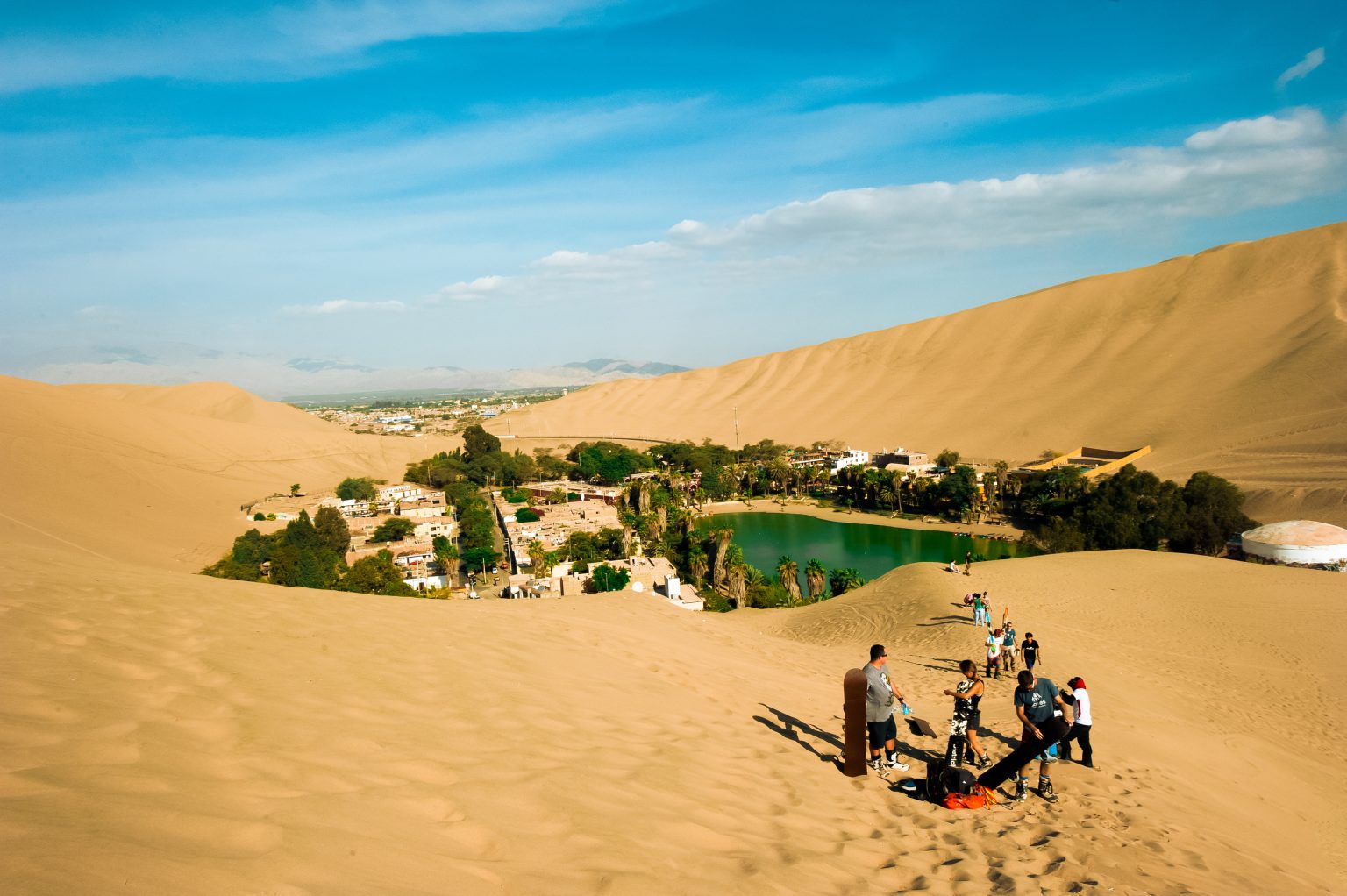
Sandboarding in Peru offers an exciting way to explore the country’s coastal desert, where vast dunes provide a striking setting for outdoor adventure. Around Huacachina Oasis near Ica, visitors can combine sandboarding with dune buggy rides, sunset views, and time beside a lagoon surrounded by palms. For travelers seeking more challenging terrain, Cerro Blanco near Nazca offers a demanding alternative, while the landscapes around Paracas add a different perspective on Peru’s desert coast. This guide covers the main destinations, practical preparation, and safety advice for planning a sandboarding trip.
- Why Peru Is a Popular Destination for Sandboarding
- Huacachina Oasis: The Main Sandboarding Destination in Peru
- Best Places for Sandboarding in Peru
- How Sandboarding Works in Peru
- What to Bring for Sandboarding in Peru
- Best Time for Sandboarding in Peru
- More Desert Experiences Beyond Sandboarding
- Safety and Responsible Sandboarding
- A One-Day Sandboarding Itinerary in Huacachina
- Discover the Desert Beyond Huacachina
Why Peru Is a Popular Destination for Sandboarding
Peru’s Pacific coast includes extensive arid landscapes between the Andes and the ocean. In the Ica region, wind-shaped dunes create opportunities for sandboarding, from introductory descents near Huacachina to more demanding excursions that require experienced guides.
Several features make the region attractive to adventure travelers:
- Large sand dunes: The Ica region contains impressive dunes with slopes suited to different levels of experience, depending on the location.
- Dry desert landscapes: Rainfall is limited in much of the coastal desert, although wind and weather conditions can still affect activities.
- Accessible guided tours: Huacachina has established tourism operators offering dune buggy excursions and sandboarding.
- Scenic surroundings: The dunes, oasis, and changing light provide excellent opportunities for landscape photography.
- Activities beyond sandboarding: Visitors can combine desert adventures with winery visits, regional cuisine, and trips to nearby destinations.
Not every dune is suitable for recreational riding. The slope, sand conditions, access restrictions, and operator arrangements determine where sandboarding can take place safely.
Huacachina Oasis: The Main Sandboarding Destination in Peru
Huacachina Oasis is a small settlement surrounding a lagoon in the desert near Ica. Palm trees, restaurants, accommodation, and tall dunes give the area a distinctive atmosphere, while its location makes it a convenient base for desert excursions.
Useful facts for planning a visit include:
- Location: Approximately 5 km from the city of Ica.
- Distance from Lima: Roughly 300 km by road, with the journey commonly taking around four to five hours, depending on traffic and transport.
- Main activities: Sandboarding, dune buggy tours, walking around the oasis, and sunset photography.
- Climate: Generally warm and dry, although temperatures vary throughout the year and between day and night.
Huacachina is a practical choice for beginners because organized tours are widely available and visitors can arrange equipment and transport locally.
The oasis also has a well-known legend about a beautiful woman whose tears formed the lagoon. This story is part of the destination’s local folklore and adds a cultural dimension to the landscape.
Because Huacachina and the surrounding desert form a protected conservation area, visitors should follow local guidance and avoid damaging vegetation or leaving waste behind.
Best Places for Sandboarding in Peru
Huacachina Dunes near Ica
The dunes surrounding Huacachina are the best starting point for travelers who want to try sandboarding without organizing a remote expedition. Local operators commonly combine board descents with rides in dune buggies.
Highlights include:
- Guided sandboarding sessions for beginners and more confident riders.
- Dune buggy excursions across designated sandy routes.
- Sunset viewpoints overlooking the oasis and surrounding desert.
- Opportunities to photograph the dunes in changing light.
- Easy access to restaurants and accommodation in Huacachina and nearby Ica.
Some tours include several stops for sandboarding, allowing visitors to try different slopes during the same excursion. The steepness and difficulty depend on the route chosen by the operator.
Before booking, ask whether the session includes a sandboard, instruction, transport, and time for multiple descents. Check whether the experience is suitable for children or inexperienced riders, and confirm any age or fitness restrictions.
Cerro Blanco near Nazca
Cerro Blanco, near Nazca, is famous for its enormous sand-covered slopes and is often described as one of the world’s tallest sand dunes. It is a more demanding destination than the dunes around Huacachina and is particularly appealing to experienced adventure travelers.
What makes Cerro Blanco distinctive:
- A dramatic dune rising above the surrounding desert landscape.
- Extensive sandy slopes that attract experienced sandboarders.
- Wide views across the arid terrain near Nazca.
- A challenging outing that combines physical effort with a long descent.
Reaching the upper slopes typically involves a demanding approach on foot, and the conditions can be physically exhausting. The exact route, elevation gain, and descent depend on the starting point and itinerary, so avoid relying on a single advertised height as a measure of the ride itself.
Cerro Blanco is not simply an extension of a standard Huacachina tour. It requires separate planning, adequate fitness, suitable equipment, and an experienced local guide. Confirm the current route and conditions before committing to the excursion.
This destination is best suited to travelers who are comfortable with strenuous hiking and understand that a large dune can present real risks, including falls, exhaustion, and difficult descents.
Paracas and the Desert Coast
The Paracas region offers a different desert experience, where arid terrain meets the Pacific Ocean. Its coastal scenery includes cliffs, beaches, open desert landscapes, and viewpoints across the sea.
Reasons to include Paracas in a wider trip include:
- Coastal landscapes with striking contrasts between sand, rock, and ocean.
- Scenic drives and designated viewpoints within Paracas National Reserve.
- Opportunities for photography and wildlife observation.
- Boat trips to the Ballestas Islands, operated under local regulations.
- A chance to explore another part of the Ica region after visiting Huacachina.
Paracas is not as established a sandboarding destination as Huacachina. Sandboarding should not be assumed to be available within the national reserve, where activities and vehicle access are regulated. If you want to ride dunes in the wider region, check with a licensed local operator about the exact location and whether the activity is permitted there.
A visit to Paracas works particularly well as a separate coastal excursion rather than as a guaranteed sandboarding stop.
How Sandboarding Works in Peru
Sandboarding involves descending a sandy slope on a board designed for use on sand. In the Ica region, beginners often experience the activity through guided tours that combine dune buggy transport with supervised descents.
A typical session involves the following steps:
- Choose an appropriate slope: The guide selects a dune suited to the rider’s experience and the current conditions.
- Receive a safety briefing: Learn how to position yourself, start the descent, stop, and return safely.
- Check the equipment: Make sure the board is suitable for sand and that any bindings or straps are secure.
- Start with an easy run: Beginners should follow the guide’s advice on riding position and slope selection.
- Progress gradually: Try steeper slopes only when the guide confirms that the conditions and your ability make it appropriate.
- Allow space between riders: Make sure the landing area is clear before starting another descent.
Some sandboards are designed for standing, while others are better suited to seated or prone riding. Follow the equipment provider’s instructions rather than assuming that a snowboard technique will work on sand.
Do not apply wax or other products unless the operator recommends a specific product for the board being used. The correct preparation depends on the equipment and local sand conditions.
What to Bring for Sandboarding in Peru
Many organized tours provide the board and transport, but personal items can make the experience more comfortable.
Useful essentials include:
- Sun protection: Bring sunscreen, sunglasses, and a hat for use before and after riding.
- Lightweight clothing: Choose comfortable garments that protect your skin from the sun and blowing sand.
- Suitable footwear: Wear shoes that protect your feet when climbing dunes and walking over hot sand.
- Drinking water: Carry enough for the activity and the journey.
- A small bag: Keep personal belongings secure and protect electronic equipment from sand.
- A camera or action camera: Useful for capturing the landscape, provided it can be secured safely.
Optional items include:
- A face covering to reduce irritation from blowing sand.
- Light gloves if recommended by the equipment provider.
- Knee or elbow protection when appropriate for the riding style.
- A light jacket for cooler evenings.
Ask your operator what is included before bringing additional equipment. Avoid carrying unnecessary items on steep dunes, where loose belongings can be difficult to retrieve.
Best Time for Sandboarding in Peru
Sandboarding around Huacachina is possible throughout much of the year because the surrounding coastal desert is generally dry. However, temperature, wind, and visibility can influence how comfortable a session will be.
- April to June: Conditions often become more comfortable after the warmer months, making this a useful period for outdoor activities.
- July to September: The coastal region can be cooler and more overcast, particularly in the mornings. Conditions around the dunes may differ from those along the coast.
- October to November: Temperatures generally begin to rise, and late-afternoon excursions can offer comfortable conditions.
- December to March: The coastal desert is often warmer, so early or late sessions may be preferable on hot days.
For many travelers, May to October can be a good period to explore the dunes, but there is no single best month for every visitor. Check the local forecast and confirm tour departure times before booking.
Late afternoon is popular because temperatures may be more comfortable and the light can create striking shadows across the dunes. However, sunset departures depend on the operator’s schedule and current conditions.
More Desert Experiences Beyond Sandboarding
Huacachina and the wider Ica region offer several activities that can turn a short adventure into a fuller travel experience.
- Dune buggy rides: Travel across designated desert routes with an experienced driver.
- Sunset photography: Capture the changing colors and shadows across the dunes.
- Desert camping: Look for organized overnight experiences where camping is permitted and facilities are available.
- Pisco vineyard visits: Explore wineries in the Ica region and learn about Peru’s traditional grape spirit.
- Paracas excursions: Discover coastal landscapes, viewpoints, and marine wildlife through authorized activities.
- Nazca Lines flights: Consider a separate trip to see the famous geoglyphs from the air, subject to weather and flight availability.
These activities are spread across the region and should not all be treated as stops within a single short excursion. Plan transport and travel time carefully, especially if you intend to visit both Huacachina and Nazca.
Safety and Responsible Sandboarding
Sandboarding is an adventure activity, and the soft appearance of a dune does not eliminate the possibility of injury. Good preparation and a reliable operator are essential.
Follow these precautions:
- Choose a reputable operator: Check that the company provides appropriate equipment, clear instructions, and experienced guides.
- Use suitable slopes: Avoid steep or unstable terrain unless the guide confirms that it is appropriate for your experience.
- Protect yourself from the sun: Wear suitable clothing, apply sunscreen, and drink water regularly.
- Avoid excessive heat: Schedule strenuous activity for cooler hours when conditions permit.
- Follow instructions during buggy rides: Stay seated as directed and use the supplied safety equipment.
- Protect your belongings: Secure cameras, phones, and other loose items before riding.
- Respect protected areas: Stay within authorized activity zones and avoid damaging plants or disturbing wildlife.
- Leave no waste: Carry rubbish back with you and avoid leaving food or packaging on the dunes.
If you have a medical condition that could affect balance, mobility, or strenuous activity, discuss the demands of the excursion with a qualified professional and the operator before booking.
A One-Day Sandboarding Itinerary in Huacachina
A day around Huacachina can combine a relaxed start, a guided desert adventure, and time to enjoy the oasis.
Morning: Arrive in Ica
Travel to Ica and continue to Huacachina, approximately 5 km away. After checking in or leaving your luggage at your accommodation, walk around the lagoon and arrange your afternoon activity.
If you prefer to sandboard in the morning, ask operators about early departures and weather conditions.
Afternoon: Dune Buggy Ride and Sandboarding
Join a guided excursion into the dunes. After the safety briefing, try several descents at a pace suited to your experience. Allow time for breaks, water, and photographs.
If you are a beginner, choose a package that emphasizes instruction and suitable slopes rather than maximum speed or steep descents.
Evening: Sunset and Dinner
Enjoy the changing light across the dunes before returning to Huacachina. Finish the day with dinner at a local restaurant or a quiet walk around the lagoon.
If you want to add Paracas, a vineyard visit, or the Nazca Lines, consider extending your stay rather than trying to fit every destination into the same day.
Discover the Desert Beyond Huacachina
Peru’s coastal desert offers a range of experiences, from introductory sandboarding around Huacachina to demanding excursions at Cerro Blanco and scenic exploration near Paracas. Each destination has its own conditions, access arrangements, and level of difficulty.
For a first sandboarding trip, Huacachina is the most practical starting point because of its established tour services and convenient access from Ica. Confirm your equipment and itinerary, choose a slope suited to your experience, and plan around the weather. With thoughtful preparation, the dunes can offer an exciting way to discover the landscapes of Peru’s desert coast.