
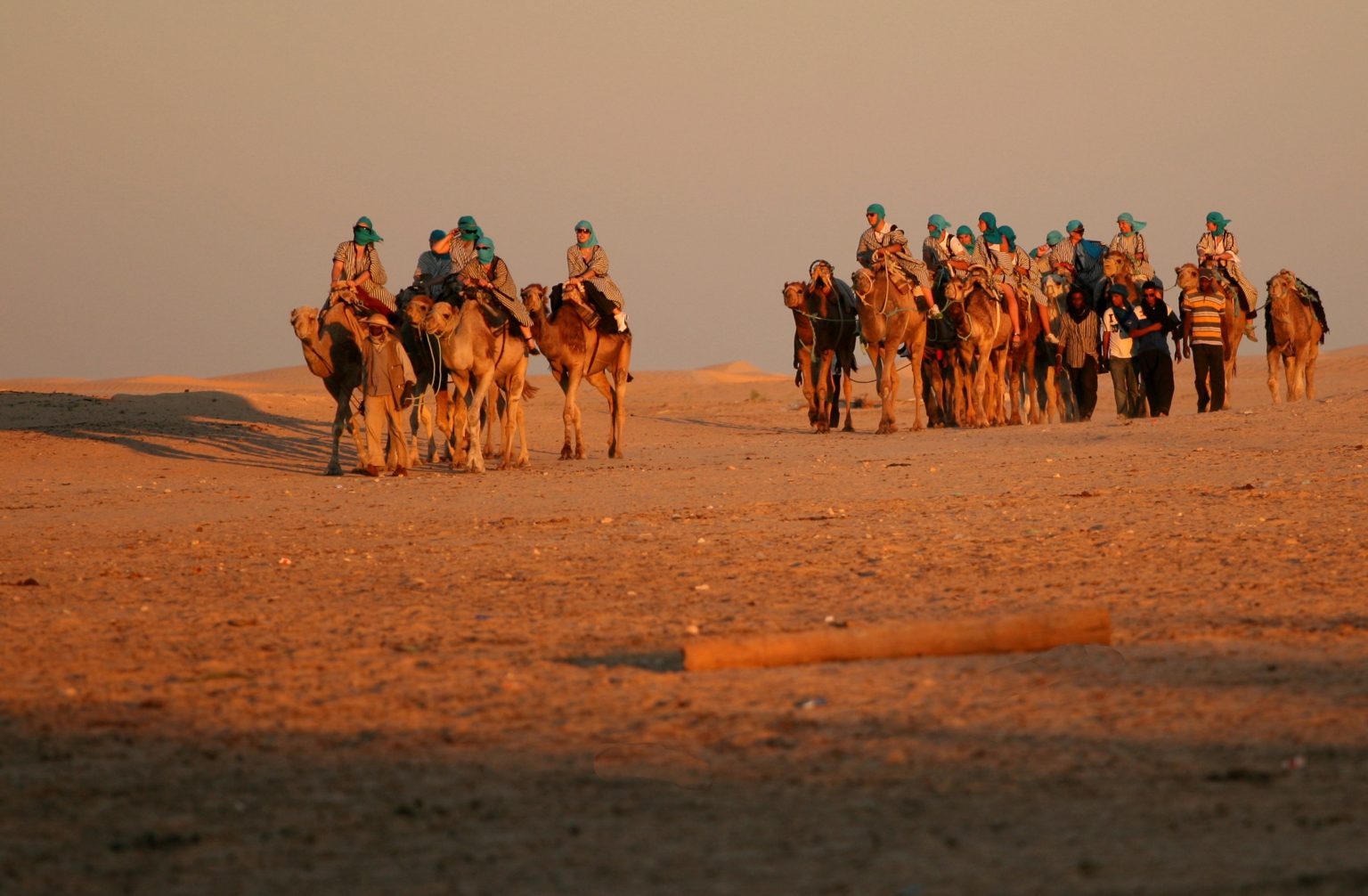
When a camel rises to its feet, the journey begins at a different pace. The bustle of the town fades, the sandy tracks open ahead, and the landscape around Douz gradually gives way to the dunes of southern Tunisia. Camel trekking in Tunisia offers a traditional way to experience the Sahara, combining outdoor exploration with the history and hospitality of the region.
- Why Camel Trekking in Tunisia Is Worth Experiencing
- Douz: The Gateway to the Tunisian Sahara
- Understanding the Camel in Tunisian Desert Travel
- Best Camel Trekking Routes in Tunisia
- Douz to Ksar Ghilane: A Multi-Day Desert Journey
- Tembaïne Dunes: Remote Desert Scenery
- Douz and the Surrounding Dunes: Short Camel Rides
- Chott el Jerid: Salt Landscapes and Desert Views
- What to Expect During a Camel Trek
- What to Pack for Camel Trekking in Tunisia
- Desert Camps and Overnight Accommodation
- Best Season for Camel Trekking in Tunisia
- Safety and Responsible Camel Trekking
- Cultural Experiences Along the Route
- A Sample Three-Day Desert Experience from Douz
- Day 1: Douz and the First Desert Camp
- Day 2: Explore the Dunes
- Day 3: Return and Continue Your Journey
- Make Your Tunisian Camel Trek Memorable
Known as the Gateway to the Sahara, Douz is a natural starting point for excursions into the Grand Erg Oriental. Travelers can choose a short camel ride near town, an overnight desert camp, or a longer guided journey toward destinations such as Ksar Ghilane and the dunes near M’Hamid-style desert settlements farther south.
This guide explains where to go camel trekking in the Tunisian Sahara, what to expect along the way, when to travel, and how to prepare for a safe and respectful desert experience.
Why Camel Trekking in Tunisia Is Worth Experiencing
Southern Tunisia offers a varied desert landscape that includes sandy dunes, rocky plains, palm oases, and salt flats. Camel trekking allows visitors to explore selected areas at a slower pace, with routes adapted to the terrain and the time available.
What makes the experience distinctive?
- Accessible desert excursions: Douz and other southern towns provide a starting point for organized camel rides and longer guided trips.
- Varied scenery: Explore dunes, dry plains, and oasis landscapes, depending on the route.
- Local knowledge: Experienced guides can explain the terrain, travel conditions, and regional traditions.
- Overnight experiences: Some itineraries include a desert camp, traditional meals, and time to observe the night sky.
- Cultural connections: Visits to local markets and settlements can introduce travelers to the region’s crafts, food, and heritage.
Camel trekking is not simply a question of covering distance. The route, the welfare of the animals, the weather, and the experience of the guide all influence the quality of the trip.
Douz: The Gateway to the Tunisian Sahara
Located in southern Tunisia, Douz is one of the country’s best-known towns for desert tourism. Its location near the northern edge of the Grand Erg Oriental makes it a convenient base for camel rides, 4×4 excursions, and trips to desert camps.
Visitors can explore:
- The town’s markets and shops selling regional products.
- Date palms and agricultural areas around the settlement.
- Local handicrafts and traditional foods.
- Organized camel rides and desert excursions.
- Cultural events, depending on the season.
Douz is also associated with the International Festival of the Sahara, a cultural event featuring aspects of desert heritage, performance, and traditional activities. The festival is generally held toward the end of the year, but exact dates and programs vary, so check the current schedule before planning a visit around it.
Best Time to Visit Douz
The cooler months are generally more comfortable for camel trekking and other outdoor activities.
- October to November: Temperatures often become more suitable for daytime excursions after the summer heat.
- December to February: A popular period for desert travel, although nights can be cold.
- March to April: Conditions can remain pleasant, but daytime temperatures gradually rise.
- May to September: Heat can make long rides uncomfortable or hazardous, particularly around midday.
For many travelers, autumn through early spring is the most practical period. Always check the forecast and arrange departure times with the local operator.
Understanding the Camel in Tunisian Desert Travel
Camels have long been important to travel and pastoral life in arid regions of North Africa. In southern Tunisia, camel-related activities are now also part of the visitor experience, particularly around Douz and established desert camps.
A few useful facts:
- The dromedary, which has one hump, is the camel most commonly associated with North African desert travel.
- Camels can conserve water efficiently, but their needs depend on weather, workload, health, and access to food and water.
- The animals have historically been used for transport and carrying goods across dry landscapes.
- Camel trekking today ranges from short rides near tourist areas to longer excursions arranged by specialist operators.
A camel should not be treated as a vehicle that can be ridden indefinitely without rest. Before booking, choose an operator that handles animals responsibly, limits workloads appropriately, and provides access to water, food, shade, and veterinary care when needed.
Best Camel Trekking Routes in Tunisia
The right route depends on your available time, fitness, preferred level of comfort, and the season. Longer journeys should be arranged with an operator familiar with local terrain and current access conditions.
Douz to Ksar Ghilane: A Multi-Day Desert Journey
Ksar Ghilane is a desert oasis known for its palm grove, warm spring, surrounding dunes, and nearby Roman fort remains. It is a popular destination for visitors seeking an overnight desert experience in southern Tunisia.
A camel expedition between Douz and Ksar Ghilane may be possible through a specialist operator, but it should not be treated as a standard three-to-five-day ride available on every departure date. The exact route, duration, and overnight stops need to be confirmed in advance.
Depending on the itinerary, a longer journey may include:
- Camel travel across suitable sandy terrain.
- Overnight camping at designated locations.
- Stops for meals, rest, and photography.
- A visit to Ksar Ghilane and its oasis.
- Time to explore the surrounding area or visit the nearby Roman fort.
Planning note: Ksar Ghilane can also be reached by road, including a paved route to the oasis. A camel trek across remote desert terrain is a different undertaking from a road transfer followed by a short camel ride. Confirm exactly what your package includes.
Tembaïne Dunes: Remote Desert Scenery
The dunes around Tembaïne, in the southern Tunisian desert, are known for their isolated setting and expansive sandy landscape. They are often included in specialist desert expeditions that combine 4×4 travel, camping, and other outdoor activities.
Possible highlights include:
- Large dune formations and open desert views.
- Sunrise and sunset photography.
- Overnight stays at a camp arranged as part of the trip.
- Camel trekking where the operator offers a suitable route.
- Opportunities to observe the desert environment away from larger settlements.
Tembaïne is remote, so access and travel time depend on the starting point, track conditions, and the type of transport used. It is not automatically a beginner-friendly camel loop from Douz.
If you want to include Tembaïne, ask the operator whether the itinerary involves camel travel throughout or uses a 4×4 to reach the camp before a shorter ride.
Douz and the Surrounding Dunes: Short Camel Rides
For travelers with limited time, a short ride near Douz may be the simplest way to experience camel travel in the Sahara.
Depending on the provider, excursions may include:
- A guided ride across nearby dunes.
- Stops for photographs.
- A sunset outing.
- A visit to a desert camp for tea or a meal.
- An introduction to the camel and its role in regional travel.
This option can suit families and first-time riders, provided the operator offers appropriate animals, equipment, and supervision. Ask how long the ride lasts and whether the route includes a return walk or transfer.
Chott el Jerid: Salt Landscapes and Desert Views
Chott el Jerid is a vast salt depression in southwestern Tunisia, known for its pale surface, seasonal water, and optical effects that can appear under particular weather conditions.
It can be combined with a wider southern Tunisia itinerary, but it should not automatically be described as a standard two-day camel trek from Douz. The terrain is different from a sandy dune field, and access arrangements depend on the precise location.
Visitors can consider:
- Roadside viewpoints and photography where stopping is permitted.
- Guided sightseeing across suitable routes.
- A visit to nearby towns and oasis areas.
- A combined trip that includes camel riding in a separate sandy area.
Flamingos and other birds may appear in suitable wetland conditions, but sightings are not guaranteed. Do not drive or walk onto an unfamiliar salt crust without local guidance.
What to Expect During a Camel Trek
A typical organized desert excursion follows a schedule adapted to the weather, route, and length of the trip. Short rides and multi-day expeditions have very different routines.
A longer guided journey may include:
- Morning travel: Depart during cooler conditions, with breaks as needed.
- Rest periods: Pause for food, water, and shade at suitable locations.
- Afternoon travel: Continue when conditions and the itinerary permit.
- Camp arrival: Settle into the designated overnight location and follow the guide’s instructions.
- Evening meal: Enjoy food provided by the operator or prepared as part of the expedition.
- Night sky viewing: Observe the stars when the sky is clear and lighting is limited.
The amount of riding varies by route. Ask how many hours you will spend on the camel each day and whether the package includes walking sections or 4×4 transfers.
Camel riding can be uncomfortable for some people, particularly during mounting, dismounting, and longer periods in the saddle. Wear suitable clothing and tell the guide if you need a break.
What to Pack for Camel Trekking in Tunisia
Pack according to the season and the length of your excursion. Even after a warm day, winter nights in the desert can become cold.
Essential Items
- Lightweight, breathable clothing that covers your skin.
- A hat, sunglasses, and a scarf to protect against sun and blowing sand.
- High-SPF sunscreen and lip balm.
- Closed shoes suitable for walking on sand.
- Drinking water appropriate to the route and weather.
- A warm layer for evenings and early mornings.
- A headlamp or flashlight for overnight trips.
- Personal medication and any necessary health supplies.
Useful Extras
- A small daypack.
- A power bank and charging cable.
- A camera or phone protected from dust.
- A sleeping bag if the operator does not provide suitable bedding.
- A reusable water bottle.
- A light towel and basic toiletries for a camp stay.
Ask the operator what equipment is included before packing. On a multi-day trek, the guide should explain how water, food, luggage, and emergency supplies will be carried.
Desert Camps and Overnight Accommodation
Accommodation in southern Tunisia ranges from simple camps to more comfortable tented facilities. The right choice depends on your route, budget, and whether you want a short overnight stay or a remote expedition.
Camps Around Ksar Ghilane
Ksar Ghilane has several accommodation options near the oasis. Visitors can combine an overnight stay with a camel ride, a walk around the dunes, or a visit to the warm spring and nearby archaeological remains.
Check whether the accommodation includes meals, bedding, showers, and transport to the riding area.
Tembaïne and Remote Desert Camps
Some camps around Tembaïne cater to travelers exploring the more remote desert. Camp Mars, for example, is associated with the Tembaïne area rather than the Ksar Ghilane oasis.
Remote camps may have limited facilities and require advance arrangements for transport and activities. Confirm the exact location, access route, and services before booking.
Campement Zmela
Campement Zmela is located south of Ksar Ghilane and offers tent accommodation, bungalows, camping facilities, meals, and activities such as camel trekking and 4×4 excursions on prior request.
The camp can be considered for a stay in the Ksar Ghilane region, but its activities and availability should be confirmed directly. A camp’s location does not necessarily mean that a multi-day camel trek is included in the accommodation price.
Wherever you stay, ask about animal welfare, drinking water, waste management, and the facilities available at the overnight site.
Best Season for Camel Trekking in Tunisia
Seasonal conditions are important because much of the journey takes place outdoors, often with limited shade.
- October to November: Often a comfortable period for camel rides and overnight desert stays.
- December to February: Cooler daytime temperatures can be favorable, but nights may require warm clothing and suitable bedding.
- March to April: A useful period for outdoor excursions, although temperatures can rise as spring progresses.
- May to September: High temperatures can make extended rides unsafe or uncomfortable, particularly in the middle of the day.
The most suitable period for a particular route depends on local forecasts, the duration of the ride, and the operator’s safety arrangements. Avoid long rides during extreme heat and follow local advice if conditions change.
Safety and Responsible Camel Trekking
A well-planned trek should protect both visitors and animals. Remote desert routes also require reliable guidance because access to emergency services can be limited.
Follow these precautions:
- Choose an experienced local operator: Ask about the guide’s route knowledge, group size, and emergency arrangements.
- Check animal welfare: Look for healthy animals, appropriate loads, sufficient rest, and access to water.
- Drink water regularly: Carry enough for the planned activity and conditions.
- Protect yourself from the sun: Use suitable clothing, a hat, sunglasses, and sunscreen.
- Follow the guide’s instructions: Stay with the group and do not wander away from camp.
- Respect wildlife: Observe animals from a distance and avoid disturbing them.
- Leave no waste: Carry rubbish back to a suitable disposal point.
- Ask before taking photographs: Respect the privacy of local residents and other visitors.
Check current travel advice and any access restrictions before planning remote excursions in southern Tunisia. Security conditions and permitted routes can change, especially near restricted or border areas.
Cultural Experiences Along the Route
A camel trek can introduce visitors to the history and culture of southern Tunisia, particularly when the itinerary includes local settlements and regional guides.
Possible experiences include:
- Douz market: Browse local products and crafts when the market is operating.
- International Festival of the Sahara: Attend performances and cultural activities if your visit coincides with the festival dates.
- Ksar Ghilane: Explore the oasis and learn about its history, including the nearby Roman fort remains.
- Matmata: Visit the region’s distinctive troglodyte dwellings as part of a separate excursion.
- Regional food and hospitality: Sample local dishes and refreshments through arrangements made with local hosts.
These experiences are not necessarily included in every camel trek. Confirm the itinerary and allow enough travel time between destinations rather than assuming they can all be visited on a single route.
A Sample Three-Day Desert Experience from Douz
This example combines camel riding with a remote desert camp. It is a planning template, not a guaranteed standard route. The operator must confirm whether the proposed stops are accessible and whether the journey is made entirely by camel or partly by 4×4.
Day 1: Douz and the First Desert Camp
Meet your guide in Douz and review the itinerary, equipment, and safety arrangements. Begin with a camel ride across suitable terrain near the town or along the operator’s planned route.
During the day:
- Learn the basics of mounting and riding safely.
- Take breaks for water, food, and rest.
- Continue to the designated overnight camp.
- Enjoy dinner and the evening desert atmosphere.
The distance covered depends on the group, weather, and route.
Day 2: Explore the Dunes
Start during the cooler part of the morning and continue toward the planned dune area.
Possible activities include:
- Camel riding with regular rest breaks.
- Short walks on suitable terrain.
- Landscape photography.
- Learning about local desert travel from the guide.
- An overnight stay at a prearranged camp.
If the itinerary includes Tembaïne, confirm the transport and activity arrangements beforehand. Do not assume the group can reach the area on a short camel ride from Douz.
Day 3: Return and Continue Your Journey
After breakfast, begin the return journey according to the operator’s plan. Depending on the route, the group may return by camel or use a 4×4 transfer for part of the journey.
Allow time for the return to Douz and any onward transport. If you plan to visit Ksar Ghilane or Chott el Jerid, consider adding extra days rather than trying to fit every destination into one expedition.
Make Your Tunisian Camel Trek Memorable
Camel trekking in Tunisia offers a different way to discover the Sahara, from short rides around Douz to carefully organized expeditions near Ksar Ghilane and the more remote dunes of the south. The experience is shaped by the landscape, the guide’s knowledge, and the care taken with the animals.
Choose a route that matches your available time and experience, confirm the accommodation and transport details, and prepare for changing temperatures. By traveling responsibly and respecting local communities, you can enjoy the desert without treating it as a place untouched by people or modern life.
The best camel trek is not necessarily the longest one. It is the journey that gives you time to appreciate the terrain, learn from your guide, and experience southern Tunisia at a pace that suits the desert.