
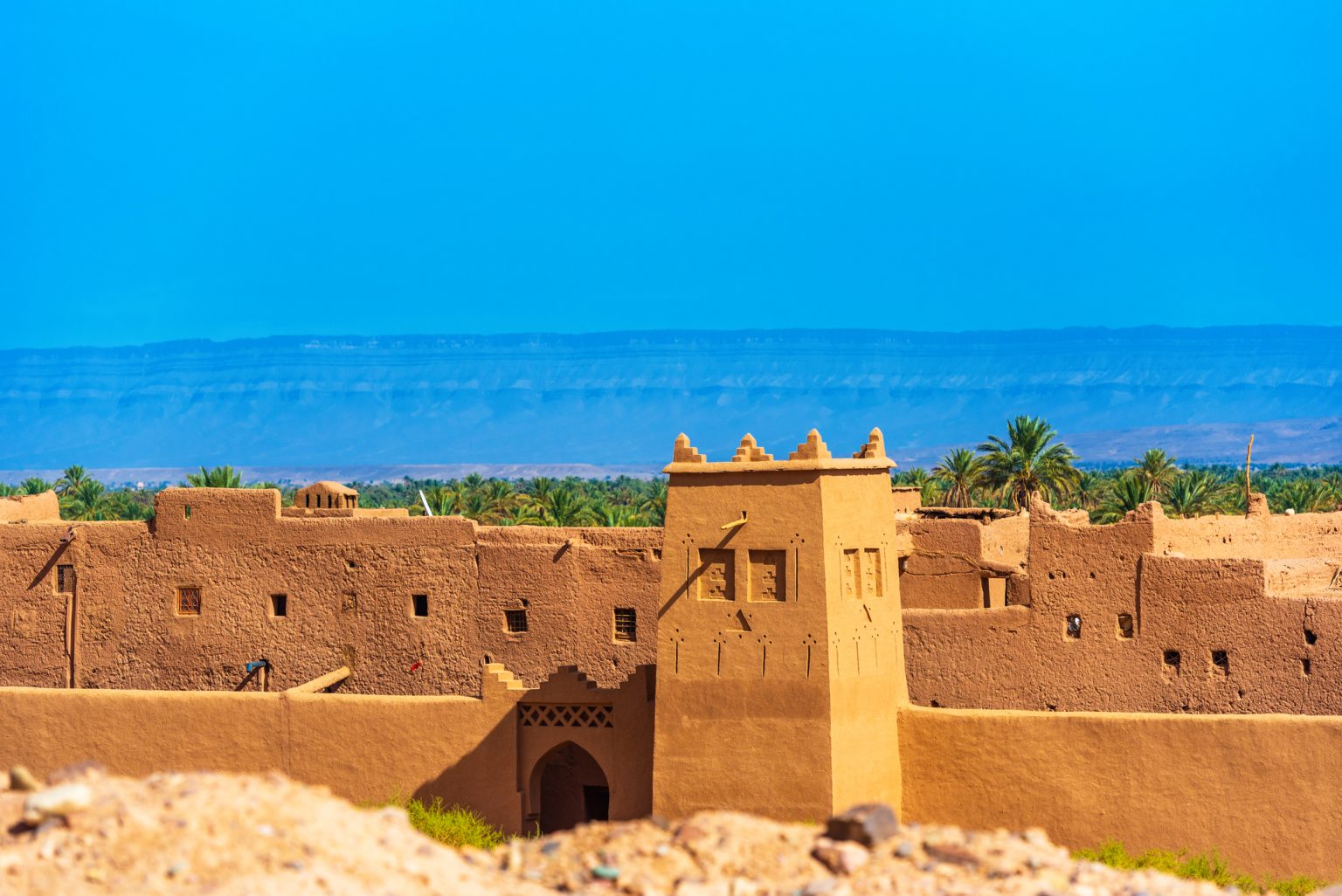
In southern Morocco, where palm groves thin out and sand slowly takes over, lies Zagora, a quiet town that has long marked the true beginning of the Sahara. This is not a place you simply visit. Zagora is a passage, a threshold between cultivated valleys and infinite desert.
- Where Is Zagora Located
- Landscape of Zagora: Palms, Stone, and Sand
- Climate: A Warm and Dry Desert
- Plants and Animals of the Draa Valley
- Culture and Soul of Zagora
- Top Things to Do in Zagora
- Camel Trek in the Tinfou Dunes
- Visit Tamegroute
- Draa Valley Exploration
- Desert Camping and Stargazing
- Kasbah Trails
- 2-Day Zagora Desert Itinerary
- Where to Stay in Zagora
- Practical Travel Tips
- Hidden Gems Around Zagora
- Zagora: Where the Desert Begins to Speak
For centuries, caravans departed from here toward Timbuktu, following stars, memory, and instinct. That history still breathes in the air. At the edge of town, a famous sign remains: “Timbuktu – 52 days by camel.” It is not a slogan. It is a reminder of scale, patience, and desert time.
Surrounded by the Draa Valley, Zagora carries the rhythm of oases, nomadic life, and Saharan silence. It is where Morocco gently loosens its grip and the desert begins to speak.
Where Is Zagora Located
Zagora is located in the Draa-Tafilalet region of southern Morocco, approximately 160 kilometers southeast of Ouarzazate.
Coordinates: 30.33°N, 5.83°W
Elevation: 725 meters (2,380 feet) above sea level
It sits at the southern end of the Draa Valley, where the last continuous palm groves fade and the pre-Saharan desert opens toward the dunes.
Distances from Zagora:
Marrakech: 350 km
Ouarzazate: 160 km
M’Hamid (deep Sahara): 60 km
Zagora marks the point where Morocco becomes desert in spirit, not just geography.
Landscape of Zagora: Palms, Stone, and Sand
The Zagora Desert landscape is defined by contrast and balance.
Along the Draa River, dense date palm oases form a green ribbon through the valley. Beyond them stretch hamadas, vast stone plateaus shaped by wind and time. Nearby, Tinfou dunes roll gently, offering a first taste of Saharan sand without overwhelming scale.
Above the town rises Jbel Zagora, a rocky hill that watches over palms, kasbahs, and caravan roads.
At sunrise, mist lifts softly from the oasis.
At sunset, dunes glow orange and violet.
It is a desert that feels intimate, not intimidating.
Climate: A Warm and Dry Desert
The Zagora desert climate is hotter and drier than northern Morocco, but milder than deeper Saharan zones.
Annual rainfall: 50–100 mm
Summer temperatures: 40–45°C
Winter nights: 8–12°C
The best time to visit Zagora is October to April, when days are warm, nights are cool, and desert travel is comfortable.
Even when the Draa River runs dry, underground water sustains palms, olives, pomegranates, and small farms, keeping the valley alive against the sand.
Plants and Animals of the Draa Valley
The Draa Valley ecosystem supports surprising life.
Plants:
Date palms, the backbone of oasis life
Acacia and tamarisk, resistant to wind and heat
Crops such as henna, alfalfa, barley, and figs
Animals:
Camels, essential to desert life
Fennec foxes and jerboas in the dunes
Migratory birds resting along the river corridor
Life here follows light, water, and season rather than clocks.
Culture and Soul of Zagora
Zagora’s culture blends Amazigh (Berber), Arab, and sub-Saharan African influences.
Hospitality is instinctive. Stories are shared slowly. Time is flexible.
Gnawa music fills evenings with deep rhythms and trance melodies, echoing ancient trade routes. Nearby Tamegroute is famous for its green pottery and the Nasiriyya Quranic Library, one of North Africa’s oldest manuscript collections.
Many families still live semi-nomadic lives, herding goats and camels, sleeping under woven tents, and maintaining a living relationship with the desert.
Here, culture is lived, not displayed.
Top Things to Do in Zagora
Camel Trek in the Tinfou Dunes
Just 5 km from Zagora, the Tinfou dunes offer camel rides at sunset or dawn. These short treks are ideal for travelers seeking a gentle Sahara experience without long expeditions.
Visit Tamegroute
Explore the Nasiriyya Library, pottery workshops with their iconic green glaze, and the historic zaouia that still functions today.
Draa Valley Exploration
Follow the river through palm groves and kasbahs. Stops include Agdz, Tamnougalt, and traditional Berber villages.
Desert Camping and Stargazing
Spend a night in a desert camp. Under clear African skies, enjoy Berber drumming, mint tea, and deep silence broken only by wind.
Kasbah Trails
Discover historic forts like Kasbah Tamnougalt and Kasbah Amezrou, once vibrant trade and cultural centers.
2-Day Zagora Desert Itinerary
Day 1
Morning drive from Ouarzazate through the Draa Valley
Afternoon visit to Tamegroute
Sunset camel ride in the Tinfou dunes
Overnight in a desert camp
Day 2
Sunrise over the dunes
Guided walk through palm groves
Visit Kasbah Tamnougalt
Evening return to Zagora with Gnawa music and stargazing
Where to Stay in Zagora
Desert Camps:
Erg Chigaga Spirit Camp
Caravane du Sud
Riads and Hotels:
Kasbah Azul
Riad Lamane
Dar Pienatcha
Budget Options:
Auberge Chez Ali
Reda Hotel
Each offers a different balance of comfort, authenticity, and calm.
Practical Travel Tips
Best season: October to April
Currency: Moroccan dirham (MAD)
Transport: buses, private drivers, or rental cars
Clothing: light layers, scarf, warm jacket for nights
Respect: always ask before photographing people
Hidden Gems Around Zagora
Ksar Tamnougalt, with panoramic views
Tamegroute manuscripts dating back to the 12th century
Palm grove walking paths
Birdwatching along the Draa riverbed after rain
Zagora: Where the Desert Begins to Speak
The Zagora Desert is not loud, dramatic, or overwhelming. It is measured, human, and deeply rooted in memory.
Here, the Sahara does not shout.
It invites.
When you arrive in Zagora, the desert does not rush you. It slows your steps, widens your breath, and teaches you to listen.
This is where the Sahara begins not just on the map, but inside you.