
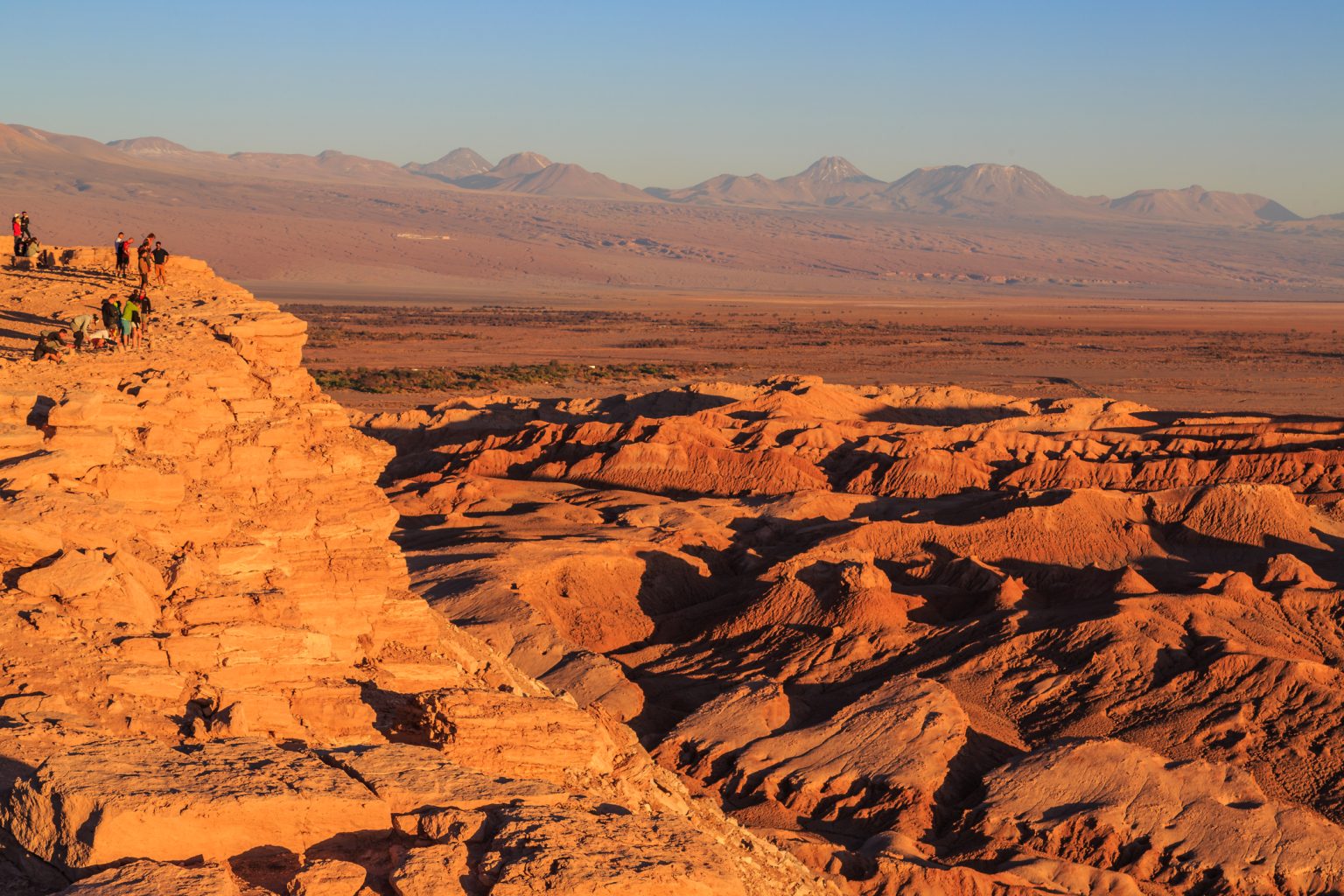
There are places on Earth so quiet and unfamiliar that you begin to doubt your surroundings. Valle de la Luna, or Moon Valley, is one of them. Set deep within the Atacama Desert in northern Chile, this surreal landscape feels suspended between reality and imagination.
- Where Is Valle de la Luna Located
- A Landscape Shaped by Time and Minerals
- Best Time to Visit Valle de la Luna
- How to Get to Valle de la Luna from San Pedro de Atacama
- Top Things to See and Do in Valle de la Luna
- Duna Mayor (Great Dune)
- The Amphitheater
- Las Tres Marías
- Salt Caves and Crystals
- Piedra del Coyote (Mirador de Kari)
- 2-Day Valle de la Luna Itinerary
- Where to Stay in San Pedro de Atacama
- Helpful Travel Tips
- The Moon Valley Experience
Here, wind and time have patiently sculpted red cliffs, razor-sharp salt crystals, and flowing silver dunes. As sunset approaches, silence thickens, colors intensify, and the valley slips into a dreamlike state. For a few minutes, you are neither fully on Earth nor anywhere else. You are simply present.
The Valley of the Moon is not only a destination. It is a living composition of light, shadow, geology, and stillness, endlessly reshaped yet eternal.
Where Is Valle de la Luna Located
Valle de la Luna is located in the Cordillera de la Sal (Salt Mountain Range) in northern Chile, approximately 13 kilometers (8 miles) west of San Pedro de Atacama.
Geographic coordinates: 23°S, 68°W
Elevation: 2,400 meters (7,900 feet) above sea level
The valley forms part of the Los Flamencos National Reserve, a protected area famous for its salt flats, eroded rock ridges, dunes, and extreme desert conditions. Despite its closeness to San Pedro, the environment feels completely alien.
A Landscape Shaped by Time and Minerals
Over millions of years, wind erosion, mineral deposits, and rare water flows carved Valle de la Luna into a complex maze of clay hills, jagged peaks, salt caverns, and dunes.
Sunlight reflects sharply off salt crystals while shadows slide across orange and ochre cliffs like moving brushstrokes. The scenery is never static. It changes with every hour.
Because of its extreme dryness and lunar resemblance, NASA tested equipment here for the Viking Mars Mission, reinforcing its reputation as one of the most otherworldly landscapes on Earth.
Everything here whispers of a planet still in the making.
Best Time to Visit Valle de la Luna
Each moment of the day offers a different emotional tone.
Early morning: calm air, soft golden light, and almost complete silence
Sunset: intense shades of red, pink, and violet washing over stone and sand
Night: the valley closes after sunset, but nearby areas offer some of the clearest stargazing on the planet
The best months to visit are April to October, when temperatures are moderate and skies remain crystal clear.
How to Get to Valle de la Luna from San Pedro de Atacama
Distance: 13 kilometers (20 minutes)
You can reach Valle de la Luna by car, bicycle, or guided tour.
Many travelers rent bicycles in San Pedro de Atacama for a slow, immersive journey through the Cordillera de la Sal. Others prefer guided sunset tours, which include transport, explanations of geology, and timed access to the best viewpoints.
Entry and visiting hours are regulated by CONAF (National Forestry Corporation) to protect the fragile environment.
Top Things to See and Do in Valle de la Luna
Duna Mayor (Great Dune)
The Duna Mayor is the largest dune in the valley and one of its most iconic features. A moderate climb rewards visitors with sweeping views of dunes, salt ridges, and distant volcanoes.
At sunset, the desert below ignites into waves of gold and fire, with Volcán Licancabur standing silently on the horizon.
The Amphitheater
This vast natural bowl carved from stone resembles an open-air theater. Its colors evolve throughout the day, shifting from pale rose to deep crimson.
The silence here feels almost physical, amplifying every movement and breath.
Las Tres Marías
Known as Las Tres Marías, these three stone pillars rise from the desert floor like ancient sentinels. Shaped entirely by wind erosion, they resemble kneeling figures frozen in time.
They are a reminder that Valle de la Luna’s beauty is entirely natural.
Salt Caves and Crystals
Hidden within the valley’s ridges are salt caverns, formed from ancient seabeds. Walking through these corridors, you can trace crystalline walls and hear salt crackle underfoot.
These caves offer some of the valley’s most striking textures and photographic contrasts.
Piedra del Coyote (Mirador de Kari)
The Kari Viewpoint, also called Piedra del Coyote, is the most famous overlook in Valle de la Luna.
From its edge, an endless sea of dunes and sculpted rock unfolds, glowing beneath the setting sun. As daylight fades, the landscape blurs the boundary between dream and reality.
It is the emotional climax of any visit.
2-Day Valle de la Luna Itinerary
Day 1 – Light and Form
Morning: explore salt caves and Las Tres Marías
Afternoon: hike Duna Mayor
Evening: sunset at Piedra del Coyote, with geological and astronomical insights
Day 2 – Quiet and Perspective
Morning: photograph the Amphitheater and surrounding formations
Afternoon: guided tour or cycling through the Cordillera de la Sal, stopping at viewpoints
Evening: stargazing from San Pedro de Atacama or a desert lodge
Where to Stay in San Pedro de Atacama
Luxury
Awasi Atacama – private excursions and refined desert immersion
Explora Atacama – expert-guided experiences with panoramic views
Mid-Range
Hotel Cumbres San Pedro – comfort with Andean and desert scenery
Terrantai Lodge – authentic adobe architecture and history
Budget & Boutique
Casa Solcor – peaceful garden atmosphere
Hostal Rural – local charm and simplicity
Staying in San Pedro de Atacama provides the ideal balance between comfort and access to Valle de la Luna.
Helpful Travel Tips
- Best season: April to October
- Altitude: hydrate well and pace yourself
- Clothing: sun protection by day, layers for evening
- Photography: late afternoon offers the richest colors
- Respect: stay on marked paths and follow reserve rules
The Moon Valley Experience
Valle de la Luna is not about scale or spectacle. It is about sensation.
It teaches patience through silence, wonder through light, and humility through time. Standing among its salt ridges and sculpted stone, you realize some landscapes are not meant to be rushed or conquered.
They are meant to be felt.
Here, at the edge of the Atacama Desert, Earth quietly reveals one of its most poetic faces.