
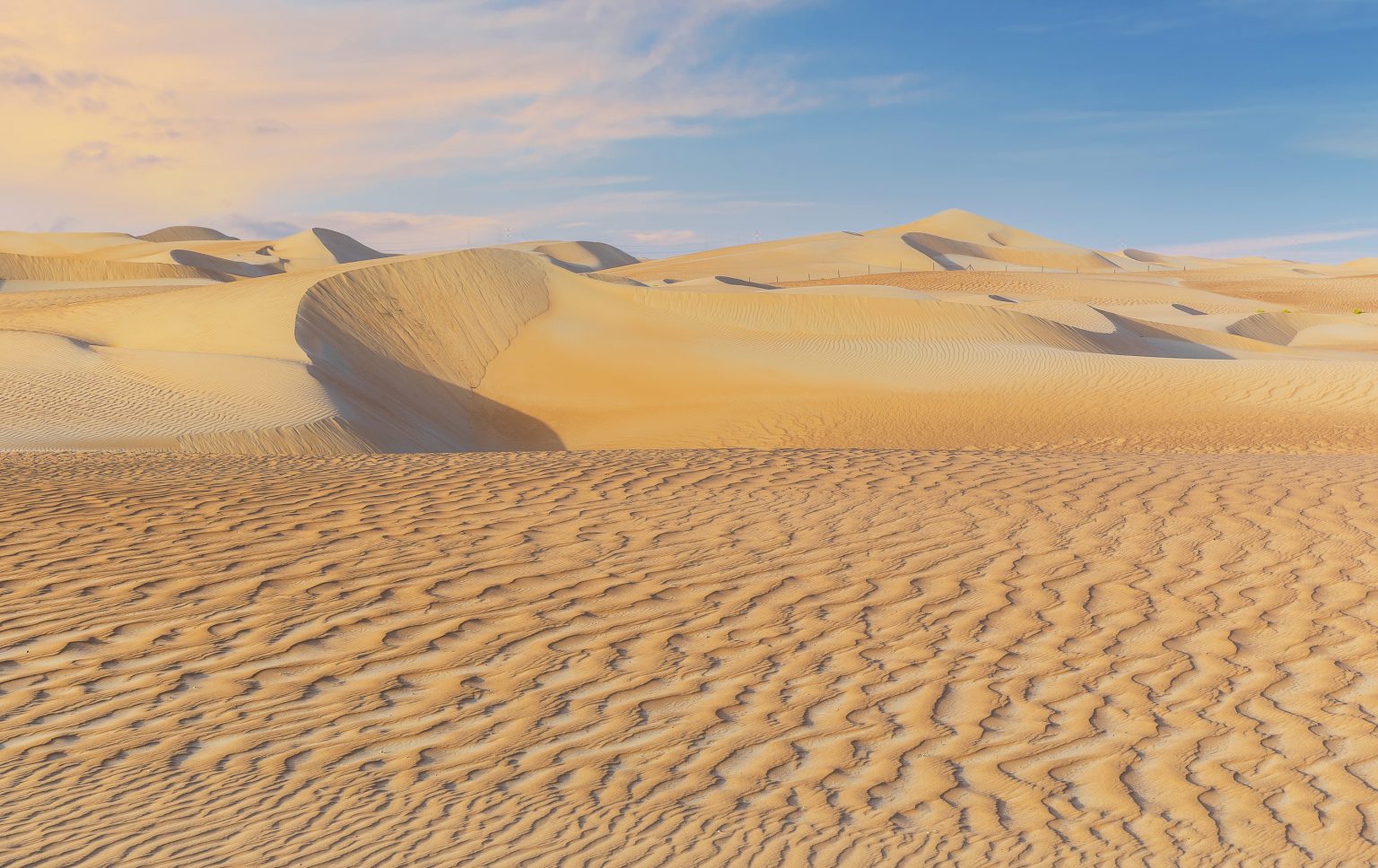
The Rub al Khali, also known as The Empty Quarter, occupies the deep southern heart of the Arabian Peninsula, where sand, sky, and silence stretch beyond imagination. This legendary desert is the largest continuous sand desert on Earth, covering more than 650,000 square kilometers across Saudi Arabia, Oman, the United Arab Emirates, and Yemen.
- What Is the Rub al Khali
- How to Reach the Rub al Khali
- Best Time to Visit the Empty Quarter
- Desert Expeditions and 4×4 Safaris
- The Rub al Khali at Night
- Shaybah: The Desert Outpost
- A Desert with a Green Past
- Liwa Oasis and the Northern Edge
- Wildlife of the Empty Quarter
- 3-Day Rub al Khali Expedition Itinerary
- Where to Stay Near the Rub al Khali
- Bedouin Culture and Traditions
- Essential Travel Tips
- Hidden Gems of the Rub al Khali
- The Silent Sea of Sand
Here, time feels suspended. Towering dunes roll endlessly in every direction, shaped only by wind and patience. For centuries, explorers, Bedouin tribes, and scholars have been drawn to this extreme landscape, not because it is easy to cross, but because it represents the purest form of desert wilderness.
The Rub al Khali is not simply empty. It is Arabia’s elemental core, a majestic boundary where golden sand meets infinite sky, and where silence becomes a presence of its own.
What Is the Rub al Khali
The name Rub al Khali literally means “Empty Quarter” in Arabic, referring to the southern third of the Arabian Peninsula. It spans multiple countries and regions:
Saudi Arabia, covering the largest portion, including Najran, Riyadh Province, and the Eastern Province
Oman, mainly the Dhofar region
United Arab Emirates, especially the Liwa Oasis area
Yemen, along its northern desert border
To the north, the Rub al Khali connects with the Ad-Dahna Desert, while to the south it approaches the Hadramaut Plateau. Deep within its interior lies Shaybah, a famous and remote desert outpost surrounded entirely by dunes.
How to Reach the Rub al Khali
Reaching the Empty Quarter is an expedition in itself and always requires preparation, experience, and guidance.
From Riyadh
The most common northern approach is via Wadi ad-Dawasir, about 700 km south of Riyadh. From there, guided 4×4 convoys enter the dunes along established desert routes.
From Najran or Abha
The southern gateway passes through Najran, following ancient caravan paths toward the interior dunes and the Shaybah region.
From the Eastern Province
Routes from Al-Ahsa or Hofuf lead toward the vast dune systems near Shaybah. Access here is highly controlled and requires official permits and experienced guides.
Because of its remoteness, visiting the Rub al Khali requires 4×4 vehicles, satellite communication, navigation equipment, and local authorization.
Best Time to Visit the Empty Quarter
The Rub al Khali experiences some of the most extreme temperatures on Earth, making timing critical.
October to April: 20–32°C — ideal for desert safaris, camping, and photography
December to February: coolest and most recommended period
May to September: 40–55°C — dangerous and not advised
Winter nights: 5–10°C, perfect for stargazing
The desert is most welcoming in winter, when the light is soft and the silence feels expansive rather than oppressive.
Desert Expeditions and 4×4 Safaris
The safest and most rewarding way to explore the Rub al Khali is through guided desert expeditions.
Popular expedition routes include:
Wadi ad-Dawasir to Shaybah crossing
Liwa Crescent dune trail near the UAE border
Najran desert loop
These journeys cross dunes reaching 200–300 meters in height, following paths once used by frankincense traders. Each route offers a different shade of solitude, where the only landmarks are dunes and stars.
The Rub al Khali at Night
At night, the Empty Quarter reveals its most profound beauty. With zero light pollution, the sky becomes a vast dome of stars. Camps are set at the base of dunes, where travelers gather around fires, sip Arabic coffee, and listen to Bedouin poetry carried by the wind.
The silence here is complete. Even sound feels distant.
Shaybah: The Desert Outpost
Shaybah is one of the most remote inhabited locations on Earth, hidden deep within the Rub al Khali. Built around oil production, it stands in dramatic contrast to the surrounding dunes.
While public access is restricted, guided tours may reach nearby dune fields such as Umm ad Duma and Al-Hashfa, offering extraordinary panoramic views of the sand sea.
A Desert with a Green Past
Although the Rub al Khali is arid today, scientific evidence reveals a surprising history. Satellite imagery and archaeological discoveries show ancient lake beds, fossilized shorelines, and remains of animals such as camels and elephants, indicating that the region was once lush and green around 5,000 years ago.
This makes the Empty Quarter not only a natural wonder but also a key to understanding climate change in Arabia.
Liwa Oasis and the Northern Edge
At the northern fringe of the Rub al Khali lies the Liwa Oasis, a crescent of date palms bordered by immense dunes.
Here stands Moreeb Dune, one of the tallest dunes in the world at nearly 300 meters. It is famous for desert festivals, dune climbing, and panoramic views over the Empty Quarter.
Wildlife of the Empty Quarter
Despite its severity, the Rub al Khali supports resilient desert life, including:
Arabian oryx
Reem (sand gazelles)
Fennec foxes
Desert larks and falcons
These species are rare but perfectly adapted, embodying survival in its purest form.
3-Day Rub al Khali Expedition Itinerary
Day 1
Enter the desert with a guided 4×4 convoy
Photograph the first dunes and vast horizons
Set up camp before sunset
Dinner with Bedouin music under the stars
Day 2
Travel deeper into the sand sea
Climb dunes over 200 meters high
Visit fossil lake beds or ancient caravan traces
Sunset photography from dune ridges
Evening storytelling around the fire
Day 3
Morning walk through golden valleys
Breakfast with dates and cardamom tea
Return slowly to civilization, carrying the silence with you
Where to Stay Near the Rub al Khali
Najran Region
Najran Valley Resort
Al Okhdood Hotel
Eastern Province / Al-Ahsa
InterContinental Al Ahsa
Most visitors rely on mobile desert camps, which include tents, guides, cooks, satellite communication, and safety equipment.
Bedouin Culture and Traditions
The Rub al Khali is the ancestral land of Bedouin tribes, whose survival skills shaped desert life for centuries.
Core traditions include:
Welcoming guests with gahwa (Arabic coffee) and dates
Poetry recited under the stars
Music played on the rebab, a single-string instrument
The Bedouin code of honor (muruwa), emphasizing loyalty, courage, and generosity
Despite modern changes, this heritage remains alive through oral storytelling and desert customs.
Essential Travel Tips
Permits are mandatory
4×4 vehicles only, driven by experts
Always travel with a professional guide
Carry at least 5 liters of water per person per day
Bring GPS, satellite phone, and maps
Wear light clothing by day and warm layers at night
Respect the desert: leave no trace
Hidden Gems of the Rub al Khali
Umm ad Duma dunes, known for elegant curved ridges
Al-Hashfa dunes, glowing red-orange at sunset
Fossil lake beds, revealing ancient climates
Remnants of old caravan routes linking Arabia to Yemen
The Silent Sea of Sand
The Rub al Khali is not defined by emptiness but by scale, purity, and stillness. It strips the world down to its essentials and reminds travelers how vast nature truly is.
Crossing the Empty Quarter is not about conquering dunes. It is about listening, slowing down, and understanding how small we are beneath an endless sky.
In this silent sea of sand, the desert does not speak loudly. yet it is never forgotten.