
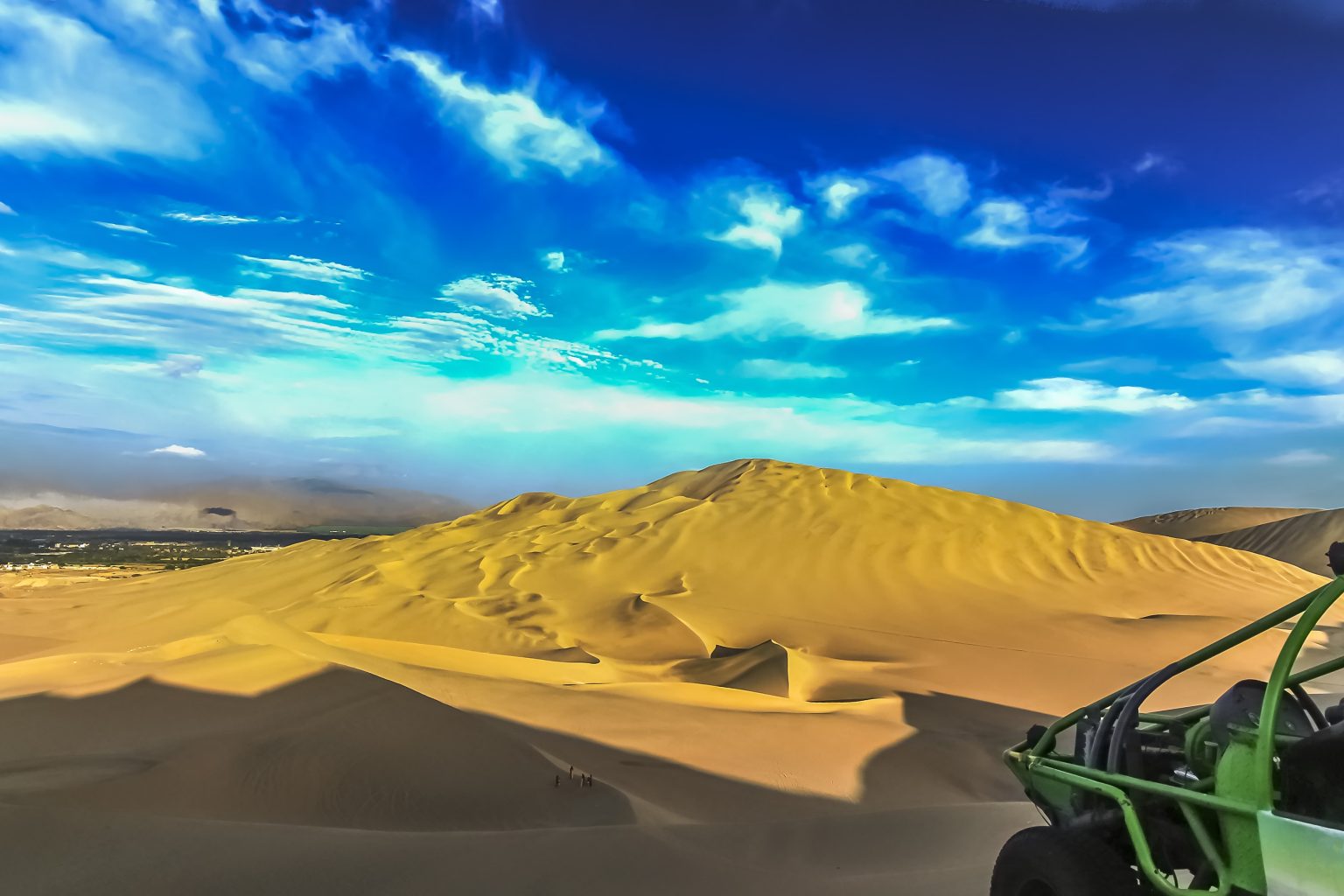
Peru is often associated with ancient civilizations, Andean peaks, and vibrant cultural traditions. Yet beyond the mountains, a vast and striking coastal desert stretches along the Pacific, revealing a different face of the country. Shaped by wind, sand, and time, Peru’s deserts feature towering dunes, dramatic cliffs, hidden oases, and mysterious archaeological sites that feel both raw and timeless.
- Understanding Peru’s Desert Landscape
- Preparing for Your Trip to the Peruvian Desert
- What to Pack for Peru’s Desert Regions
- Safety Considerations in Peru’s Desert
- Exploring the Desert: Activities and Experiences
- Dune Buggy Tours in Huacachina
- Sandboarding Adventures
- Hiking and Desert Walks
- Paracas Boat and 4×4 Tours
- Cultural and Natural Highlights
- Food and Comfort in Peru’s Desert
- Photography in Peru’s Desert
- Best Time to Visit Peru’s Desert
- Final Thoughts on Visiting Peru’s Desert
Among these landscapes, Huacachina Oasis stands out as one of South America’s most unusual desert destinations. Surrounded by golden dunes, it offers a rare contrast of water, palms, and sand. Beyond Huacachina, the Nazca Desert, Paracas National Reserve, and the remote dunes of southern Ica expand the journey into a world of adventure, wildlife, and ancient history. This guide helps you explore Peru’s desert regions safely and comfortably while understanding their cultural and natural significance.
Understanding Peru’s Desert Landscape
Peru’s Coastal Desert
Peru’s coastal desert is among the driest regions on Earth. Stretching more than 2,200 kilometers along the Pacific Ocean, it is defined by massive dunes, rocky cliffs, protected reserves, and traces of ancient civilizations. Despite extreme aridity, human life has adapted here for thousands of years.
Huacachina Oasis
Huacachina is a rare natural lagoon surrounded by steep desert dunes. It is best known for
- Sandboarding on towering dunes
- High-speed dune buggy rides
- Panoramic desert sunsets
- Calm evenings beside the oasis
The contrast between water, palm trees, and endless sand makes Huacachina one of Peru’s most photogenic places.
Paracas National Reserve
The Paracas National Reserve uniquely combines desert and ocean landscapes. Visitors encounter coastal cliffs, red-sand beaches, fossil-rich zones, and arid plains alongside rich marine life. Sea lions, flamingos, penguins, condors, and desert plants are all protected within the reserve.
The Nazca Desert
The Nazca Desert is famous for the Nazca Lines, vast geoglyphs etched into the desert floor centuries ago. These figures, depicting animals and geometric forms, remain one of the world’s great archaeological mysteries and are best viewed from the air or official observation points.
Climate and Weather
Peru’s desert climate is marked by
- Strong sunlight
- Warm daytime temperatures
- Cool evenings
- Extremely low rainfall
Preparation for heat, wind, and dry conditions is essential year-round.
Preparing for Your Trip to the Peruvian Desert
Choosing the Right Desert Destination
Each desert area offers a different experience
- Huacachina for adventure sports and photography
- Paracas for wildlife and coastal desert scenery
- Nazca for archaeology and ancient history
- Ica Desert for quiet, remote dunes
Choose based on whether your priority is adventure, culture, or nature.
Learning About Local Culture
Pre-Columbian civilizations left a lasting imprint on Peru’s deserts. Ancient farming methods, weaving, music, and art still influence local communities. Many desert sites are sacred or fragile, so travelers should respect marked paths and protected areas.
Planning Your Route
A popular coastal desert route includes
- Lima to Paracas
- Paracas to Huacachina
- Huacachina to Nazca
This itinerary offers a broad view of Peru’s desert landscapes and history.
What to Pack for Peru’s Desert Regions
Clothing for Changing Temperatures
During the day
- Lightweight, breathable shirts
- Long sleeves for sun protection
- Loose hiking trousers
In the evening
- A light jacket or sweater
- A scarf or extra layer
Desert nights, especially near Paracas, can feel unexpectedly cool.
Footwear and Essential Gear
Sturdy shoes are important for walking on hot, shifting sand. A small backpack is useful for carrying water, sunscreen, and snacks. Sunglasses and a wide-brimmed hat provide essential sun protection.
Skin Protection and Hydration
Dry conditions increase dehydration risk. Always carry
- One to two liters of water
- High-SPF sunscreen
- Lip balm and moisturizer
Hydration before, during, and after activities is essential.
Safety Considerations in Peru’s Desert
Managing Heat and Sun Exposure
Temperatures rise quickly during the day. Explore early morning or late afternoon, wear protective clothing, and avoid prolonged midday exposure.
Wind and Desert Conditions
Strong winds are common around Ica and Paracas. When winds increase, protect your eyes and pause activities until visibility improves.
Respecting Protected Sites
Never walk or drive through restricted zones such as the Nazca Lines. Follow marked routes and treat cultural and natural landmarks with care.
Exploring the Desert: Activities and Experiences
Dune Buggy Tours in Huacachina
Dune buggy rides are among the most popular activities. Drivers navigate steep dunes at speed. Seatbelts are mandatory, and personal items should be secured.
Sandboarding Adventures
Sandboarding is a highlight in Huacachina. Beginners often ride lying down, while experienced riders stand. Follow safety instructions carefully, as dunes can be steep and fast.
Hiking and Desert Walks
Climbing dunes requires effort and timing. Avoid midday heat, take breaks, and carry enough water.
Paracas Boat and 4×4 Tours
Paracas offers
- Boat trips to the Ballestas Islands
- 4×4 desert excursions
- Coastal viewpoints and beaches
These experiences combine wildlife encounters with desert scenery.
Cultural and Natural Highlights
The Nazca Lines
Created by the Nazca civilization, these massive geoglyphs depict animals, plants, and geometric shapes visible mainly from above.
The Dunes of Huacachina
Some dunes exceed 100 meters in height, offering dramatic views and unforgettable sunsets.
Wildlife in Paracas
Where desert meets ocean, Paracas protects
- Sea lions
- Humboldt penguins
- Flamingos
- Dolphins
- Coastal bird species
This blend of ecosystems is rare in South America.
Food and Comfort in Peru’s Desert
Local Cuisine
Travelers can enjoy
- Ceviche along the coast
- Grilled meats and chicken
- Lomo saltado
- Fresh fruit juices and traditional desserts
Light meals and regular hydration help maintain energy.
Staying Comfortable
Comfort depends on
- Staying hydrated
- Wearing breathable clothing
- Using sun protection
- Resting during peak heat
Moisturizers and wet wipes help manage dry skin and sand.
Photography in Peru’s Desert
Best Photography Locations
Popular spots include
- Sunset over Huacachina Oasis
- Ica desert dunes
- Nazca viewpoints
- Paracas coastal cliffs
- Sunrise over desert sands
Golden hour enhances colors and textures.
Protecting Camera Equipment
Fine sand can damage electronics. Keep cameras in protective bags, avoid changing lenses outdoors, clean equipment regularly, and carry spare batteries.
Best Time to Visit Peru’s Desert
Ideal Travel Season
The best period is from April to November, offering clear skies and mild temperatures. From December to March, conditions are warmer and more humid, though Huacachina remains accessible year-round.
Final Thoughts on Visiting Peru’s Desert
Common mistakes include underestimating dune height, carrying too little water, wearing unsuitable footwear, and exposing electronics to sand.
In Brief
Peru’s deserts are among the country’s most surprising landscapes. From the mystery of the Nazca Lines and the wildlife of Paracas to the golden dunes of Huacachina, these regions combine history, adventure, and natural beauty.
With thoughtful preparation and respect for the environment, travelers can enjoy a safe, memorable journey through one of South America’s most captivating desert regions.