
Saudi Arabia is home to some of the world’s most well-known deserts. Some of these are the big Empty Quarter (Rub al Khali), which boasts bright red dunes, and the long golden belt of Ad-Dahna.
Underneath these endless, calm, and unexplored landscapes is a world full of life. There are historic paths that people used to follow, secret oases, and animals that have learnt to exist in one of the most difficult places on Earth.
- The Desert Landscapes of Saudi Arabia
- Things that live in the harsh Saudi Arabian desert
- Living things that can handle very high temperatures
- When it comes to the desert, birds rule the skies
- Animals and bugs that live in the Arabian Desert
- What grows in the desert, and what lives in pools
- The best places in the Saudi Arabian Desert to see nature and wildlife
- The Empty Quarter (Rub al Khali)
- The Desert of Al-Nafud
- This is Khaybar Harrat.
- The Oasis of Al-Ahsa
- Turaif and the Hills to the North
- Animals You Can Get Close to in the Desert
- Going for a walk on the golden dunes with a camel
- How to Camp in the Desert with the Stars Above
- How to Use Gazetteers to Find Animals in Your Area
- Going off-road and exploring wadis
- What the weather is like and when is the best time to go
- Safety Tips for Going into the Saudi Arabian Desert
- A desert full of animals, culture, and endless horizons
The deserts of Saudi Arabia have a wide range of terrain.
In the sand, you may see little tracks made by creatures such as desert foxes, falcons, sand gazelles, and others.
Travelers can also view unique valleys, stunning rock formations, and landscapes shaped by wind and weather over millions of years.
The Desert Landscapes of Saudi Arabia
The sands in Saudi Arabia are beautiful and varied.
The southern part of the country is covered by the Rub al Khali, the world’s largest continuous sand desert.
Every day, the dunes change shape, looking like mountains.
These sands shimmer with hues of red, orange, and gold.
Farther north, the Al-Nafud Desert dazzles with its crimson sands and sculpted dunes shaped into wave-like forms by relentless winds.
This area is easier to reach and has more animals, rock formations, and Stone Age art.
It is a small strip of sand that connects Nafud in the north to the Rub al Khali in the south. It is in the middle of the country.
The “red sand belt” is one of the most interesting natural trails in the Arabian Peninsula.
The West has gorges, rocky deserts, and beautiful volcanic scenery.
This area offers some of the strangest views in the region, with its black lava fields and white volcanic domes.
There are oases in the desert, like Al-Ahsa and Najran, that have palm trees, streams, and places for birds to live.
These oases support a wide variety of life and color by providing essential water and shelter for numerous desert species.
Things that live in the harsh Saudi Arabian desert
Living things that can handle very high temperatures
Many desert animals come out at night when it gets cooler.
One well-known animal in the area is the Arabian oryx.
This species was saved from extinction.
It stands for the safety of the desert with its long horns and white fur.
The sand gazelle, also known as the reem gazelle, is another important species.
People admire its beauty and know it can go long periods without water.
There aren’t many Arabian wolves, but you can find them in remote places, like near mountains and steep slopes.
Small animals like the Arabian hare, jerboa, and sand fox (also called Rüppell’s fox) often leave their tracks in the wet sand in the morning.
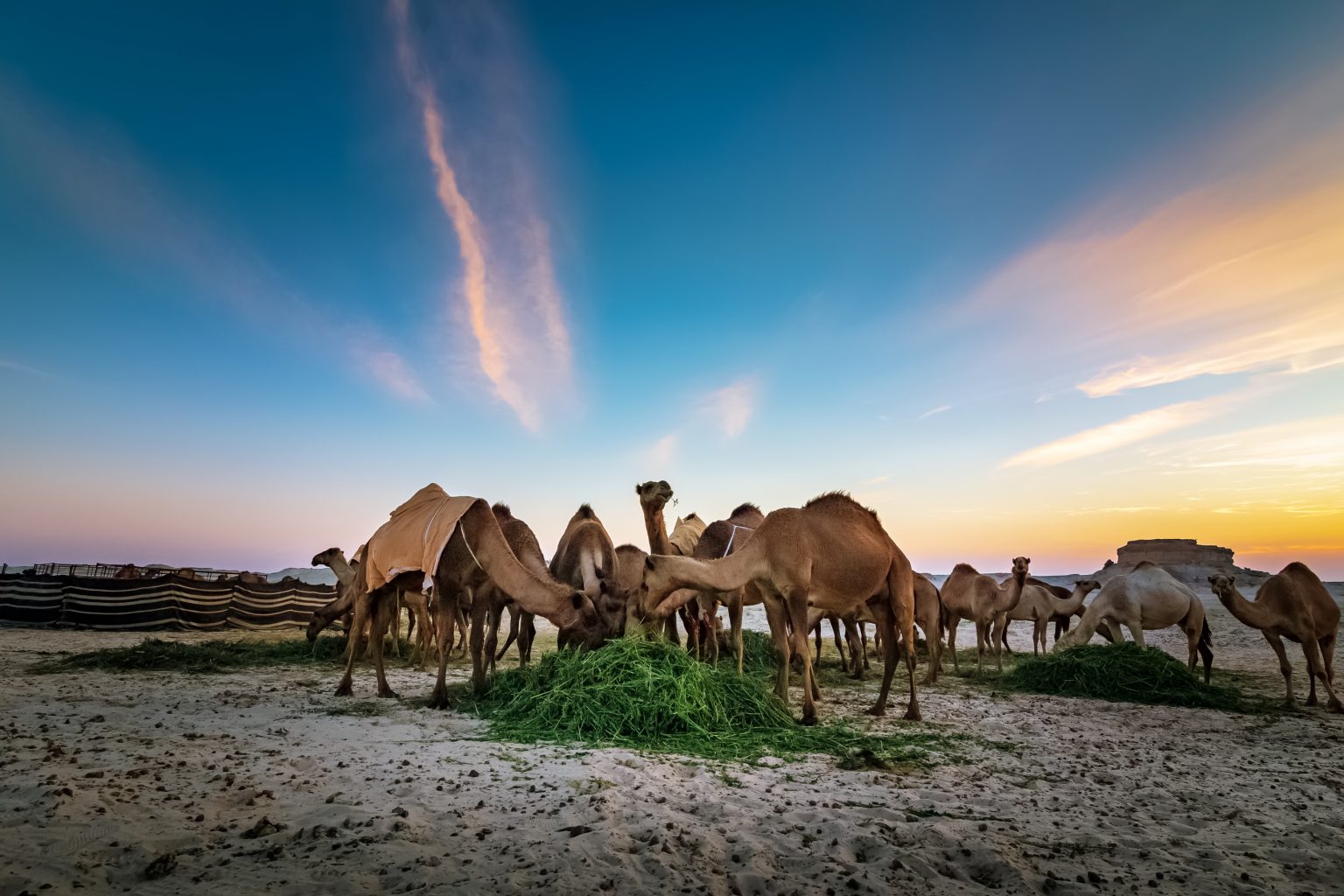
Camels are vital in the desert because they move easily over dunes.
Camels remain a vital part of Arabian culture.
When it comes to the desert, birds rule the skies
In the deserts of Saudi Arabia, there are lots of different kinds of birds.
People often see the falcon, which is the country’s national symbol, flying above.
Falcons have long been part of Arab society.
Shrikes, hoopoes, sandgrouse, and larks are some other interesting birds.
Desert birds use Al-Ahsa and Al-Qatif as stops on their migratory routes in spring and fall.
To find food and control small animal populations, raptors like eagles, buzzards, and kites move along warm air currents.
The desert is also home to the beautiful Arabian bustard and other ground-dwelling birds that blend well with their surroundings.
Animals and bugs that live in the Arabian Desert
The desert in Saudi Arabia is a good place for reptiles because it is warm there.
Skinks, geckos, and monitor lizards may come out of their holes so people can see them.
A few snakes, such as horned vipers and sand boas, live in the desert.
Some insects that are very important to the environment are desert spiders, beetles, and ants.
Birds and small mammals are drawn to the desert when there are lots of bugs around after it rains.
What grows in the desert, and what lives in pools
Many plants in the Saudi desert survive in hot, dry conditions.
In valleys and wadis, you can often find ghaf, acacia, and sidr plants.
Sheep eat the leaves of these trees, which also improve the soil, offer shade, and support the food web.
Shrubs that do well in sandy and rocky places are halfa grass, saltbush, calligonum, and wormwood.
With each rare rainfall, new plants spring to life across the northern desert.
These flowers turn some parts of Al-Nafud into bright fields.
Al-Ahsa is one of the world’s largest places of peace.
There are many plants, freshwater streams, and palm trees there.
For thousands of years, these patches of green, home to bugs, birds, and small mammals, have helped cities survive.
The best places in the Saudi Arabian Desert to see nature and wildlife
The Empty Quarter (Rub al Khali)
Over the distance, there is a big sea of dunes.
You can follow animals, take pictures, and walk on sand hills in faraway places in this area.
The Desert of Al-Nafud
People love this area for its red dunes and wildlife, which are easy to reach.
People who want to see beautiful nature and learn about other cultures should go there.
This is Khaybar Harrat.
There are craters, lava fields, and animals that have learned to live in this strange volcano desert.
The Oasis of Al-Ahsa
In this UNESCO World Heritage Site, you can find birds, palm trees, springs, and landscapes that are all their own.
Turaif and the Hills to the North
Migrating birds, foxes, and gazelles are drawn to seasonal plants.
The sands of Saudi Arabia are beautiful places to experience nature, as they blend nature with many different cultures.
Animals You Can Get Close to in the Desert
Going for a walk on the golden dunes with a camel
For generations, camel herds have traversed these deserts.
People can walk on the dunes at dawn or dusk and go on traditional hikes.
How to Camp in the Desert with the Stars Above
The sky is brighter in the Saudi Arabian desert than almost anywhere else on Earth.
The Milky Way is very bright at night, and many small animals that live in the desert come out at night.
How to Use Gazetteers to Find Animals in Your Area
Reading animal tracks in the sand is a traditional way for guides to find birds, foxes, gazelles, and snakes.
Going off-road and exploring wadis
People who take 4×4 trips through mountains and valleys can see canyons, secret springs, and cool rock formations.
What the weather is like and when is the best time to go
Even though the weather in Saudi Arabia’s desert can be rough, there are good times of the year to visit.
Between October and April is the best time to visit, as the weather is nicer and the animals are more active.
It’s nice to camp in the winter because the days are nice and the nights are cool.
The south especially gets very hot in the summer, so the best times to go exploring are early in the morning or late at night.
It doesn’t happen often, but when it rains in the northern desert, plants can quickly bloom.
Safety Tips for Going into the Saudi Arabian Desert
When people are in the desert, they should always be careful.
It is very important to have a certified guide with you on a journey, especially if you are going to a remote sand area.
You should bring enough water, sunscreen, and the right shoes.
While most animals avoid humans, always stay alert, especially after dark.
When you are moving, you need to be careful with GPS and know the area well.
Sandstorms can happen out of the blue in the spring, so it’s important to keep an eye on the weather reports.
A desert full of animals, culture, and endless horizons
Saudi Arabia’s vast, quiet, and very old desert is full of highs and lows, yet also full of life and energy.
The golden sands of Al-Nafud, the huge dunes of the Rub al Khali, and the volcanic fields of Harrat Khaybar have been there for millions of years, with stories to tell.
Hawks soar over the desert, foxes leave tracks in the early morning light, and gazelles run across huge fields.
Not only do these places have animals, but they also show the spiritual heart of the Arabian Peninsula.
In Saudi Arabia, the desert is more than just a place to see.
It’s a place to feel, learn, and remember.