
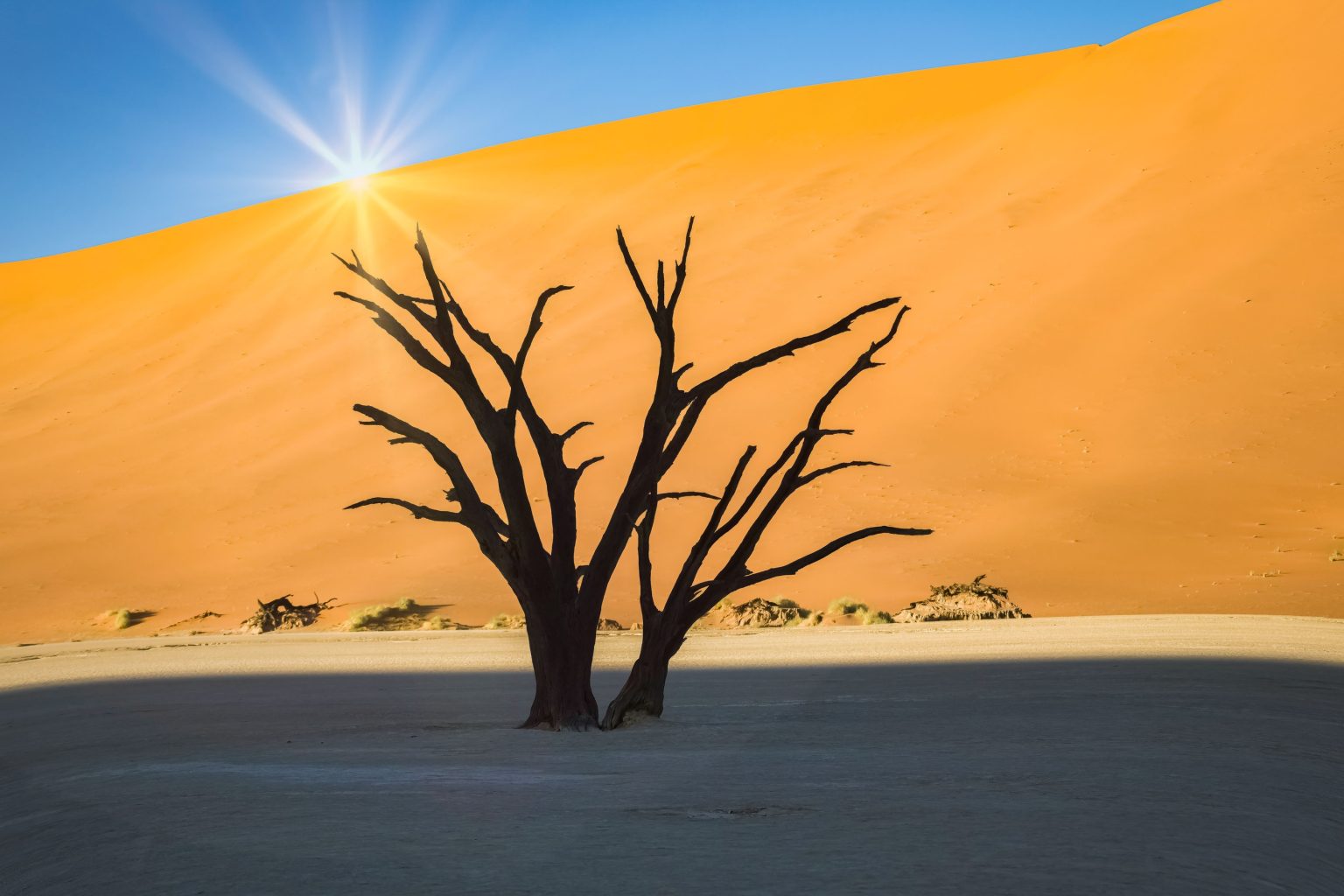
The Namib Desert in Namibia is one of the most extraordinary desert landscapes in Africa and among the oldest deserts on Earth. Stretching across vast open spaces, it combines towering sand dunes, rugged mountains, dry riverbeds, and wildlife perfectly adapted to extreme conditions. By night, Namibia’s desert skies are among the darkest in the world, while daylight reveals dramatic colors, silence, and a sense of timeless scale that attracts travelers seeking adventure, tranquility, and raw natural beauty.
- Understanding Namibia’s Desert Landscapes
- The Namib Desert and Sossusvlei Dunes
- The Kalahari Desert in Eastern Namibia
- The Skeleton Coast Desert Region
- Preparing for a Trip to Namibia’s Desert Regions
- What to Pack for Namibia’s Deserts
- Safety Tips for Traveling in Namibia’s Deserts
- Getting Around and Staying in the Desert
- Cultural Awareness in Namibia’s Desert Regions
- Final Thoughts on Exploring Namibia’s Deserts
Exploring Namibia’s desert regions requires preparation and awareness, but with the right expectations, the experience is deeply rewarding. Whether sleeping under the stars in the Kalahari Desert, climbing the famous dunes of Sossusvlei, tracking desert-adapted elephants in Damaraland, or discovering the remote landscapes of the Skeleton Coast, Namibia offers desert journeys unlike anywhere else in Africa.
Understanding Namibia’s Desert Landscapes
The Namib Desert and Sossusvlei Dunes
The Namib Desert is widely regarded as the oldest desert in the world, stretching for more than 2,000 kilometers along the Atlantic coast. It is best known for its towering red dunes, especially around Sossusvlei and Deadvlei, where some dunes rise over 300 meters.
As the sun moves across the sky, the dunes change color, creating ideal conditions for photography. Beyond sand, the Namib Desert includes gravel plains, rocky mountains, and occasional oases where wildlife such as oryx and springbok gather.
The Kalahari Desert in Eastern Namibia
The Kalahari Desert covers much of eastern Namibia and differs greatly from the Namib. Although still dry, it supports more vegetation, including grasses and acacia trees spread across red sand dunes and open plains.
This semi-desert region is home to wildlife reserves and the San (Bushmen) people, whose traditional knowledge shows how life can survive and adapt in arid environments.
The Skeleton Coast Desert Region
The Skeleton Coast is one of Namibia’s most remote and dramatic desert areas. Here, vast sand dunes meet the Atlantic Ocean, forming a landscape shaped by fog, wind, and isolation.
Shipwrecks, seal colonies, and empty beaches give the region a haunting atmosphere. Due to harsh conditions and limited access, visiting the Skeleton Coast usually requires permits and experienced guides.
Preparing for a Trip to Namibia’s Desert Regions
Choosing the Right Desert Experience
Namibia offers a wide range of desert activities suited to different travel styles:
Self-drive desert safaris
Guided 4×4 desert tours
Camel trekking
Hiking and nature walks
Hot-air balloon flights over the dunes
Remote regions such as Damaraland and the Skeleton Coast are best explored with guides, while well-prepared travelers can self-drive in areas like Sossusvlei.
Setting Realistic Travel Expectations
Namibia’s deserts are vast and quiet, with long distances between towns and limited services. Many roads are unpaved, making travel slower than expected.
Understanding these conditions in advance helps travelers enjoy the desert’s calm rhythm and avoid unnecessary stress.
What to Pack for Namibia’s Deserts
Clothing for Desert Conditions
Lightweight long-sleeved shirts protect against strong sun during the day and provide warmth at night. Long trousers help guard against heat and insects.
During winter months, a warm jacket is essential for cold evenings. Sunglasses, scarves, and wide-brimmed hats protect against sun, wind, and dust. Neutral-colored clothing is practical for both comfort and wildlife viewing.
Footwear and Essential Items
Sturdy walking or hiking shoes are important for climbing dunes and exploring rocky areas such as Deadvlei.
A headlamp is useful at night, and a small daypack should carry water, sunscreen, and camera equipment. Because charging points are limited, a power bank is strongly recommended.
Safety Tips for Traveling in Namibia’s Deserts
Navigation and Distance Awareness
Distances in Namibia are long, and settlements are sparse. Even with GPS, carrying a paper map is advisable.
Always inform camps or lodges of your route and expected arrival time. Driving at night is discouraged due to wildlife crossing desert roads.
Managing Heat and Sun Exposure
The desert sun is intense throughout the year. Avoid physical activity during midday hours, apply sunscreen regularly, and drink water frequently even when not thirsty.
Vehicles and designated shelters provide the best shade in open desert areas.
Wildlife Awareness
Namibia’s deserts are home to elephants, lions, hyenas, and other wildlife. Always keep a safe distance and remain inside your vehicle unless an area is clearly marked safe.
Food should be stored securely to avoid attracting animals to campsites.
Getting Around and Staying in the Desert
Desert Driving and 4×4 Travel
Many desert routes consist of gravel or sandy tracks. A reliable 4×4 vehicle is essential for regions such as Sossusvlei, Damaraland, and the Skeleton Coast.
Lowering tire pressure improves traction on sand. Carry spare tires, basic tools, and refuel whenever possible, as fuel stations are limited.
Camping and Desert Lodges
Camping in Namibia’s deserts is a memorable experience. Options range from basic campsites to luxury desert lodges.
Clear night skies make stargazing a highlight. Camps usually offer shared facilities, while lodges provide private rooms, comfortable beds, and full services. Food should always be stored securely.
Cultural Awareness in Namibia’s Desert Regions
Local Communities and Traditions
The Himba people of northern Namibia and the San communities of the Kalahari maintain strong cultural traditions closely tied to the land.
Responsible cultural visits require respect, asking permission before photography, and choosing community-supported tours.
Responsible Desert Travel
Protecting fragile desert ecosystems is essential. Stay on marked tracks, avoid littering, conserve water, and support locally owned lodges and guides.
Final Thoughts on Exploring Namibia’s Deserts
Namibia’s deserts offer a rare combination of vast landscapes, silence, wildlife, and cultural depth. From the red dunes of the Namib Desert to the open plains of the Kalahari and the dramatic coastline of the Skeleton Coast, each region reveals a different side of the country.
With careful planning and respect for nature and local communities, travelers can explore Namibia’s desert regions safely and confidently. For those willing to slow down and discover what lies beyond the horizon, the desert offers experiences worth exploring further.