
Douz, Tunisia: Gateway to the Sahara and Heart of the Grand Erg Oriental
At the point where paved roads fade and endless dunes rise, Douz begins. Known across North Africa as the “Gateway to the Sahara”, this desert town in southern Tunisia is where palm groves surrender to waves of golden sand and the modern world quietly steps aside.
- Where Is Douz Located in Tunisia
- How to Reach Douz
- Best Time to Visit Douz
- Top Things to Do in Douz
- Camel Trekking into the Sahara
- Visit the Douz Sahara Museum
- Attend the International Sahara Festival
- Explore the Grand Erg Oriental Dunes
- Discover Palm Oases
- Local Markets and Daily Life
- 3-Day Douz Desert Itinerary
- Where to Stay in Douz
- Nomadic Heritage and Local Culture
- Practical Travel Tips
- Hidden Gems Near Douz
- Douz: The Beating Heart of the Sahara
Douz is not simply a stop on the map. It is a threshold. A place where time slows, senses sharpen, and the Sahara reveals its rhythm. For centuries, caravans crossed here on their way to Timbuktu, guided by stars and instinct. Today, travelers arrive seeking the same feeling: space, silence, and meaning.
Here, the desert shapes everything. It flavors the tea, defines the culture, and sets the pace of life. Douz is not surrounded by the Sahara. It belongs to it.
Where Is Douz Located in Tunisia
Douz lies in the Kebili Governorate in southern Tunisia, perfectly positioned at the northern edge of the Grand Erg Oriental, one of the largest dune systems in the Sahara.
Key distances:
475 km south of Tunis
125 km east of Tozeur
80 km south of Chott el Jerid
120 km north of the Libyan border
To the north stretches the vast Chott el Jerid salt lake. To the south, dunes roll uninterrupted toward Algeria. The transition from flat white salt plains to towering golden dunes is sudden and unforgettable. This is where the Sahara truly begins.
How to Reach Douz
From Tunis
Driving from Tunis to Douz takes around 7 to 8 hours via Kairouan, Gafsa, and Kebili. The journey itself introduces Tunisia’s changing landscapes, from fertile plains to arid south.
You can also fly from Tunis to Tozeur, then continue by car or shared taxi (louage) to Douz in about 2 hours.
From Tozeur
The route from Tozeur to Douz crosses the iconic Chott el Jerid Causeway, one of the most scenic drives in North Africa. The salt flats, mirages, and wide horizons make this journey an experience in itself.
From Djerba
From Djerba Island, the drive to Douz takes roughly 6 hours, passing through Medenine and Kebili. It is one of the most striking sea-to-desert transitions in Tunisia.
Best Time to Visit Douz
Douz has a hot desert climate, with long summers and mild winters. Timing matters.
October to April is the best period for visiting. Daytime temperatures range between 20 and 28°C, ideal for camel treks, desert camps, and cultural exploration. This is also when the famous International Festival of the Sahara takes place.
May to September brings extreme heat, often exceeding 40°C. Activities are still possible but should be limited to early mornings and evenings.
December and January offer cool days and cold nights, perfect for camping, stargazing, and festivals.
Light in Douz is extraordinary. At sunrise, dunes glow pale gold. At sunset, they deepen into orange, copper, and violet.
Top Things to Do in Douz
Camel Trekking into the Sahara
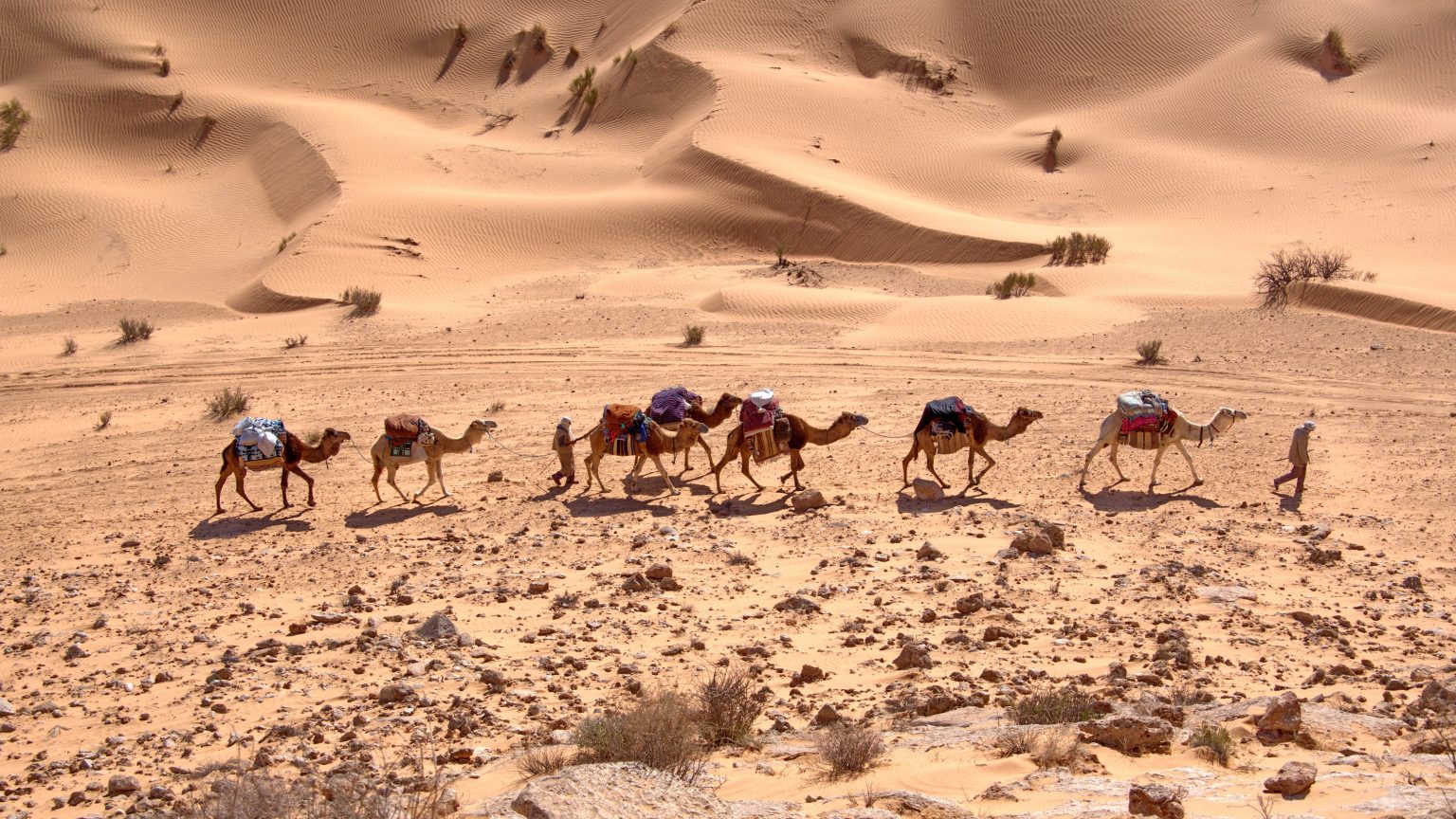
A camel ride is not optional in Douz. It is essential. Guided by local nomads, you follow ancient caravan paths into the dunes. Whether for an hour at sunset or on a multi-day trek, the slow rhythm of the camel connects you directly to the desert’s pace.
Visit the Douz Sahara Museum
The Musée du Sahara de Douz offers a powerful introduction to desert life. Exhibits include Bedouin tents, jewelry, saddles, tools, and photographs, explaining how nomadic communities survived and thrived in the Sahara.
Attend the International Sahara Festival
Held every December, the Festival International du Sahara is Tunisia’s most important desert celebration, dating back to 1910. Highlights include camel and horse races, Bedouin poetry, music, fantasia shows, and nomadic markets. It is vibrant, authentic, and deeply rooted in Saharan identity.
Explore the Grand Erg Oriental Dunes
The dunes rise just beyond town. You can walk into them, ride camels, explore by 4×4, or try quad biking and sandboarding. As you move deeper, sound fades until only wind and heartbeat remain.
Popular excursions include Tembaine Mountain and the Ksar Ghilane Oasis.
Discover Palm Oases
Just outside Douz, ancient irrigation systems feed small palm groves. Walk among the date trees, learn traditional farming methods, and taste fresh Deglet Nour dates, known as “fingers of light.”
Local Markets and Daily Life
The Douz souk, held weekly, is a place to buy silver jewelry, woven mats, leather goods, dates, and spices. More importantly, it is where stories are exchanged and desert life reveals itself naturally.
3-Day Douz Desert Itinerary
Day 1: Oasis and Heritage
Arrive in Douz and settle into your hotel or guesthouse. Visit the palm oasis and the Sahara Museum. In the evening, enjoy a traditional dinner and mint tea under the stars.
Day 2: Into the Dunes
Travel by camel or 4×4 deep into the Grand Erg Oriental. Lunch in the shade of desert trees. Reach your desert camp before sunset. At night, share music, drums, and stories around the fire beneath a sky dense with stars.
Day 3: Salt and Silence
Wake early for sunrise over the dunes. Return to Douz, then cross Chott el Jerid toward Tozeur or Nefta, stopping for photographs and reflections on the salt flats.
Where to Stay in Douz
Hotels
Sahara Douz Hotel offers gardens, a pool, and traditional décor.
El Mouradi Douz provides resort-style comfort and organized desert excursions.
Hotel Sun Palm Douz is known for panoramic dune views.
Desert Camps
Camp Mars Douz delivers classic nomadic tents and camel treks.
Douz Nomad Camp offers family-run hospitality and authentic experiences.
Camp Zmela is an eco-focused option deeper in the desert.
Guesthouses
Maison Proche du Desert and Dar Jerid are ideal for travelers seeking intimacy and local cuisine.
Nomadic Heritage and Local Culture
Douz is home mainly to the Mrazig Bedouins, a community with deep Saharan roots. Though many now live in town, music, poetry, dress, and hospitality remain central.
Guests are traditionally offered three cups of tea, symbolizing life, love, and peace. Women wear silver jewelry with protective symbols. Men dress in flowing robes that reflect sunlight. Music, especially drums and flutes, echoes through festivals and desert nights.
The desert is not a memory here. It is a living presence.
Practical Travel Tips
Best season: October to April
Road access is easy; 4×4 only needed for dune excursions
Carry cash for markets
Dress lightly by day, warmly at night
Drink water frequently and use sun protection
Ask permission before photographing people
Internet is limited in desert camps
Hidden Gems Near Douz
Tembaine Mountain, rising alone among dunes
Ksar Ghilane Oasis with its hot spring
Zemlet el Borma, a rarely visited desert zone
Chott el Jerid, famous for mirages and reflections
Berber villages Douiret and Chenini near Tataouine
Douz: The Beating Heart of the Sahara
Douz is not just a town. It is a border between worlds. Behind you lie modern roads and schedules. Ahead stretch the endless sands of the Sahara.
Here, wind writes poetry on dunes. Stars speak ancient languages. And the people carry the desert’s wisdom with pride and kindness.
Whether you come for adventure, photography, or silence, Douz leaves its mark. Once you stand on the edge of its dunes, you understand what the desert truly means: freedom, peace, and endless light.