
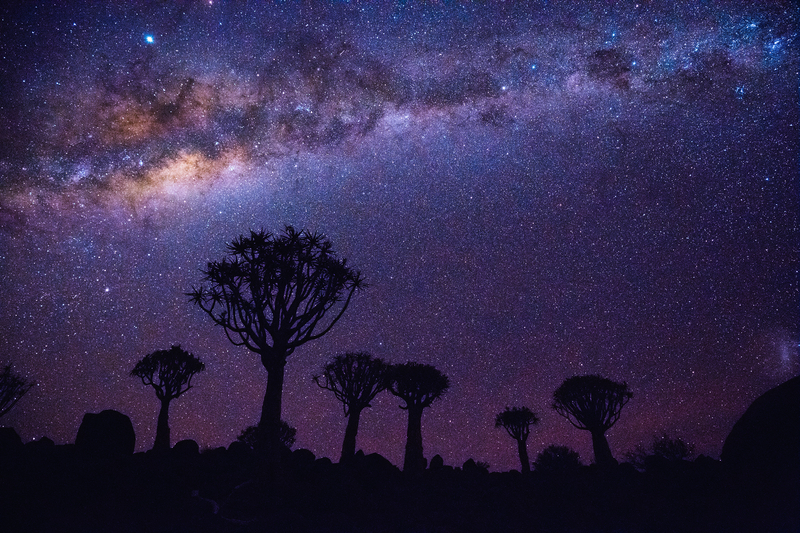
As the desert settles into dusk, Namibia’s desert transforms naturally.
Shadows stretch across the sand, silence deepens, and the first stars appear one by one above an endless horizon.
- Why Namibia Is One of the Best Desert Camping Destinations
- The Best Places to Camp and Stargaze in Namibia
- Sossusvlei and Namib-Naukluft National Park
- Spitzkoppe, the “Matterhorn of Namibia”
- Damaraland
- NamibRand Nature Reserve, a Dark Sky Sanctuary
- Camping Along the Skeleton Coast
- What to Bring for Desert Camping and Stargazing
- Best Time of Year to Camp in Namibia’s Desert
- Stargazing Highlights in Namibia’s Sky
- Responsible Desert Camping
- Staying Safe While Camping in the Desert
- Why Camping Nights in Namibia Stay With You
Camping in Namibia’s desert is one of the most immersive travel experiences on Earth. It brings together raw landscapes, deep stillness, and skies untouched by artificial light. Sleeping beneath the open heavens is not merely rest, but a return to space, silence, and the natural rhythm of the land.
In this vast country, desert camping and stargazing often feel spiritual. Namibia is home to some of the darkest and clearest skies in the world. From the sculpted dunes of Sossusvlei to the remote quiet of Damaraland, every night feels alive with depth and light.
Why Namibia Is One of the Best Desert Camping Destinations
Namibia feels shaped for desert exploration. Its scale, safety, and climate make it ideal for travelers seeking authentic nights under the stars.
What makes the experience unique
• Exceptionally dark skies in the Southern Hemisphere, ideal for stargazing
• Vast open horizons that create a powerful sense of freedom
• Encounters with desert wildlife such as oryx, jackals, and foxes
• A wide range of options from luxury desert lodges to wild camping
• Stable climate with cool evenings, low humidity, and little rainfall
Namibia’s desert is never empty. It stretches quietly in every direction, alive with silence and movement.
The Best Places to Camp and Stargaze in Namibia
Sossusvlei and Namib-Naukluft National Park
Deep within the Namib Desert, Sossusvlei is one of the world’s most iconic desert camping locations.
Key highlights
• Camps near Deadvlei and Dune 45 with unforgettable sunsets
• The Milky Way visible from horizon to horizon
• Camping options from Sesriem Campsite to Desert Quiver Camp
Helpful notes
• Advance booking is essential due to popularity
• Staying more than one night allows both sunrise and night-sky viewing
Ideal for photographers and first-time desert campers.
Spitzkoppe, the “Matterhorn of Namibia”
Rising dramatically from the plains, Spitzkoppe combines striking geology with pristine night skies.
Key highlights
• Granite peaks and natural rock arches
• Almost no light pollution
• Simple campsites surrounded by silence and stone
Helpful notes
• Bring your own water and firewood
• Excellent for night photography and early morning hikes
Best for adventurous travelers and astrophotographers.
Damaraland
Damaraland offers remote desert camping among red rock formations and wide open space.
Key highlights
• Desert-adapted elephants and wildlife
• Lodges such as Mowani Mountain Camp and Brandberg White Lady Lodge
• Some of the darkest skies in southern Africa
Helpful notes
• Nights can be cold, so warm clothing is essential
• Combine camping with visits to Twyfelfontein rock engravings
Perfect for astronomy lovers and off-grid explorers.
NamibRand Nature Reserve, a Dark Sky Sanctuary
NamibRand Nature Reserve is Africa’s first officially recognized Dark Sky Reserve.
Key highlights
• No artificial light for vast distances
• Eco-luxury lodges such as NaDEET Camp and Wolwedans
• Guided stargazing and telescope sessions
Helpful notes
• Binoculars or telescopes enhance the experience
• Ideal for couples seeking privacy and comfort
Best for luxury stargazing and eco-conscious travelers.
Camping Along the Skeleton Coast
For a surreal experience, the Skeleton Coast combines desert, ocean, and sky.
Key highlights
• Stargazing above with ocean waves below
• Remote lodges like Shipwreck Lodge
• Morning fog drifting across the dunes
Helpful notes
• Some areas require permits
• Nights can be cold and windy
Ideal for travelers seeking solitude and dramatic scenery.
What to Bring for Desert Camping and Stargazing
Essentials
• Tent or rooftop tent with insect protection
• Sleeping bag suitable for cold desert nights
• Warm layers for evenings
• Red flashlight to protect night vision
• Sufficient water supplies
• Portable stove and cooking tools
• Trash bags to leave no trace
For stargazing enthusiasts
• Binoculars or telescope
• Camera and tripod
• Apps such as Stellarium or Star Walk
• Notebook for reflections
Optional comforts
• Solar charger or power bank
• Lightweight reclining chair
• Blanket or poncho for long nights
Best Time of Year to Camp in Namibia’s Desert
Seasonal overview
• Dry winter months bring clear skies and cool nights
• Spring offers mild temperatures and excellent Milky Way visibility
• Wet season adds occasional clouds and dramatic skies
The most reliable period for desert camping in Namibia is from June to August, when nights are crisp and visibility is exceptional.
Stargazing Highlights in Namibia’s Sky
Namibia’s southern location reveals celestial wonders unseen in northern skies.
What you can observe
• The Milky Way, at its brightest during winter
• The Southern Cross, historically used for navigation
• The Magellanic Clouds, visible to the naked eye
• Bright planets like Jupiter and Saturn
• Meteor showers such as Eta Aquarids and Geminids
The desert sky feels endless, whether viewed with the eye or through a lens.
Responsible Desert Camping
Respectful practices
• Camp only in established areas
• Avoid loud music and strong lighting
• Carry out all waste
• Never approach or feed wildlife
• Support locally operated lodges and guides
The desert rewards those who move slowly and observe quietly.
Staying Safe While Camping in the Desert
Practical safety advice
• Inform lodges or authorities of your route
• Keep fires small and controlled
• Stay close to camp after dark
• Store food securely
• Carry satellite communication in remote areas
Preparation brings peace of mind.
Why Camping Nights in Namibia Stay With You
Under the Namibian night sky, perspective changes.
Stars cast shadows, silence feels alive, and time slows.
Camping and stargazing in Namibia is more than a journey. It is a quiet reconnection with scale, space, and stillness. The dunes, the firelight, and the stars remind you that you are part of something vast, ancient, and enduring.