
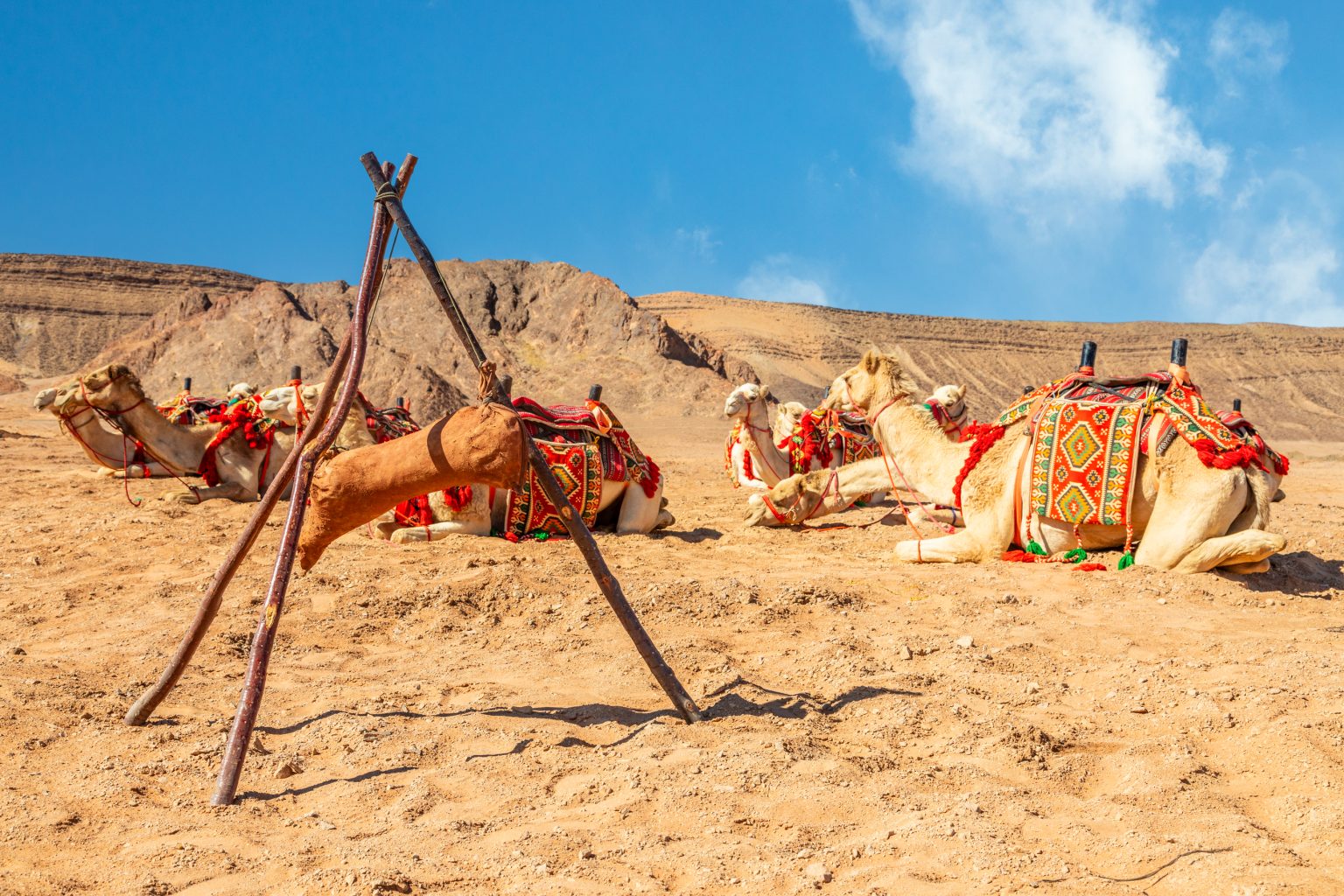
There is a soft sun in the desert early in the morning.
Light spreads slowly across endless sands, and time itself seems to loosen its grip. When you climb onto a camel and fall into its steady rhythm, breathing becomes slower, deeper, more natural. It feels as if you are traveling backward through centuries.
- The Camel at the Heart of Arabian Culture
- Best Places for Camel Trekking in Saudi Arabia
- What to Expect on a Camel Trek
- Sharing Time with the Bedouin
- What to Bring
- Best Time for Camel Trekking in Saudi Arabia
- Responsible and Ethical Travel
- Two-Day Camel Trek Itinerary in AlUla
- Why Camel Trekking in Saudi Arabia Stays with You
In Saudi Arabia, camel trekking is not an adrenaline activity or a race. It is a return. A return to the rhythm that shaped Arabian life, connected civilizations, and carried caravans across vast horizons.
To ride a camel here is to follow the paths of prophets, poets, and nomads. Every step carries memory, and every silence feels like music.
The Camel at the Heart of Arabian Culture
The camel, or “Jamal” in Arabic, is far more than an animal in Saudi Arabia. It is a symbol of pride, endurance, and trust.
For generations, Arab tribes and traders depended on camels to cross deserts that seemed endless. They provided milk, food, transport, and companionship, forming a bond between human and animal shaped by survival.
Cultural meaning of the camel includes:
- Known as the “Ship of the Desert” for its unmatched endurance
- Celebrated in Saudi poetry, songs, and proverbs
- Central to festivals and heritage events
- Honored annually at the King Abdulaziz Camel Festival
Camel trekking in Saudi Arabia is less about sightseeing and more about understanding the soul of the land and its people.
Best Places for Camel Trekking in Saudi Arabia
AlUla Desert
AlUla offers one of the most visually striking camel trekking experiences in the Kingdom. Towering sandstone formations and golden valleys create a landscape shaped by time.
Key highlights include:
- Riding between sandstone canyons and ancient Nabataean tombs
- Proximity to Hegra (Madain Saleh), a UNESCO World Heritage Site
- Sunset rides through glowing rock formations
The desert here feels alive, changing color with the light, revealing layers of history with every step. Ideal for photographers, artists, and history lovers.
The Empty Quarter (Rub al Khali)
The Empty Quarter is the ultimate desert journey, vast and humbling in scale.
What defines this experience:
- Multi-day treks led by experienced Bedouin guides
- Camping beneath untouched star-filled skies
- Immersion in absolute silence and endless dunes
This is not a casual excursion. It is a profound encounter with space, solitude, and survival. Best suited for experienced travelers and true desert explorers.
Najran Desert
Located in southern Saudi Arabia, Najran blends cultural depth with desert beauty.
What makes Najran special:
- Ancient caravan routes and hidden oases
- Rock art sites and traditional mountain villages
- Encounters with diverse local cultures
Here, the rhythm of camel bells, warm winds, and Bedouin songs slow the mind and ground the journey. Perfect for travelers drawn to culture and history.
Wadi Disah and Tabuk Region
Wadi Disah in northwestern Saudi Arabia is known for lush valleys, but its surrounding sandy plains offer gentle camel rides.
Key features:
- A rare mix of mountains and desert landscapes
- Local Bedouin guides with deep regional knowledge
- Short, scenic treks suitable for beginners
Ideal for families and travelers seeking a softer introduction to camel trekking.
What to Expect on a Camel Trek
Camel trekking in Saudi Arabia is about embracing slowness and presence. A typical experience includes:
- Pickup from your hotel or desert camp
- Preparing the camel and safety guidance
- A calm ride through dunes or valleys
- Breaks for tea, rest, and photography
- Optional Bedouin meals or overnight camps
Dawn and dusk rides are especially magical, with cooler air and golden light stretching across the sand.
Sharing Time with the Bedouin
Bedouin hospitality is an essential part of camel trekking in Arabia.
You may experience:
- Welcoming dates and Arabic coffee (kahwa)
- Storytelling and poetry by the fire
- Learning traditional camel care and desert skills
As Bedouins say, “The desert teaches silence, and the camel teaches patience.” Together, they teach peace.
What to Bring
Essentials:
- Light, breathable clothing and a scarf
- Sunglasses, hat, and sunscreen
- Reusable water bottle
- Comfortable closed shoes
- Camera for golden-hour photography
Optional items:
- Notebook for reflections
- Binoculars for wildlife spotting
- Extra batteries or power bank
Tip: Avoid strong perfumes around camels. They respond best to natural scents.
Best Time for Camel Trekking in Saudi Arabia
Seasonal guidance:
- November to March: 18–28°C, ideal conditions
- April to May: 25–35°C, best early mornings
- June to September: 35–50°C, sunrise treks only
The most beautiful months are November to February, when the desert is cool, clear, and calm.
Responsible and Ethical Travel
Respect for animals and culture is essential:
- Choose operators who prioritize camel welfare
- Avoid rides during extreme heat
- Support family-run Bedouin camps
- Reduce plastic use and waste
- Respect local customs and dress codes
Kindness gives the journey meaning.
Two-Day Camel Trek Itinerary in AlUla
Day 1: Early arrival in AlUla, meet your Bedouin guide, and begin trekking near Madain Saleh. Picnic lunch in the desert, sunset ride, dinner, and stargazing.
Day 2: Dawn camel ride, breakfast, visit a nearby oasis community, then return to AlUla.
A short journey that lingers in memory.
Why Camel Trekking in Saudi Arabia Stays with You
In the Saudi desert, time slows.
You stop chasing it and begin to feel it.
Each step of the camel, each grain of sand, each quiet horizon carries an ancient rhythm. Camel trekking is not simply travel. It is transformation.
You do not leave the desert unchanged.